
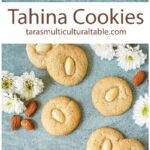
King Solomon’s Table: A Culinary Exploration of Jewish Cooking from Around the World, written by Joan Nathan, brings together over 170 recipes of the Jewish diaspora alongside personal stories and memories. A few highlights include Csúsztatott Palacsinta (Hungarian Apple Pancakes), Defo Dabo (Ethiopian Sabbath Bread), Fideos Tostados (Toasted Pasta in a Cinnamon-Spiked Tomato Sauce), Green Chile Relleno Latkes, and Salyanka (Georgian Beef Stew with Red Peppers). I will also be sharing Joan’s recipe for Tahina Cookies following the review.
Disclosure: I received a copy of this book from Alfred A. Knopf in exchange for my honest review. All comments and opinions are my own.
Joan Nathan
Joan Nathan is a James Beard Award-winning author of eleven books including Quiches, Kugels, and Couscous; The New American Cooking; Jewish Cooking in America; and The Children’s Jewish Holiday Kitchen.
She is also a frequent contributor to The New York Times, Tablet magazine, and was the host of the nationally syndicated PBS television series Jewish Cooking in America with Joan Nathan.
King Solomon’s Table
Joan begins King Solomon’s Table with a history of Jewish food and the background of King Solomon. She has spent decades researching and preserving Jewish food traditions and her passion shines across the pages.
You will learn about a cuisine that dates back over three thousand years and its transformation through the influence of other cultures. During her travels, one thing Joan noticed is that no matter where in the world Jewish cuisine has traveled to, it is all bound together through the same traditions and the laws of kashrut.
Chapters are divided based on course: Pantry, Morning, Starters, Salads, Soups and Their Dumplings, Breads, Grains and Such, Vegetables, Fish, Poultry, Meat, and Sweets.
The photography is provided by Gabriela Herman. Sixty full-page, beautiful color photos accompany about a third of the recipes.
Measurements are listed in US Customary and Metric for the ingredients. Every recipe includes a headnote with background information, history, stories, and notes. The name of each dish is written in English and occasionally the original language. There is a guide to the basic pantry with descriptions and foundation recipes for staples like za’atar, harissa, preserved lemons, and zhug.
Tahina Cookies
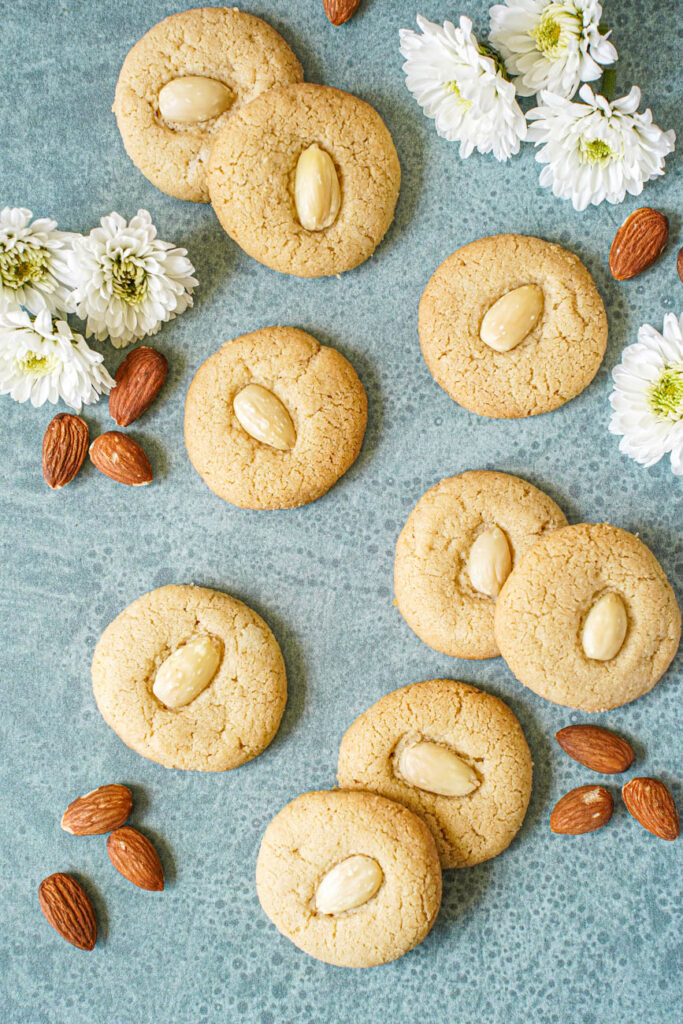
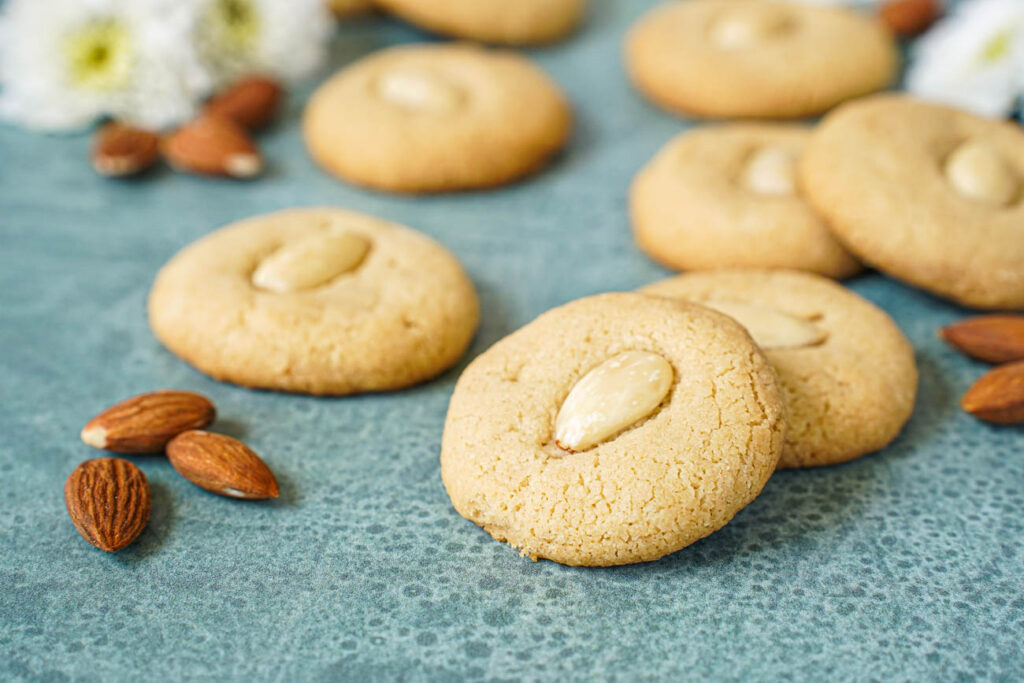
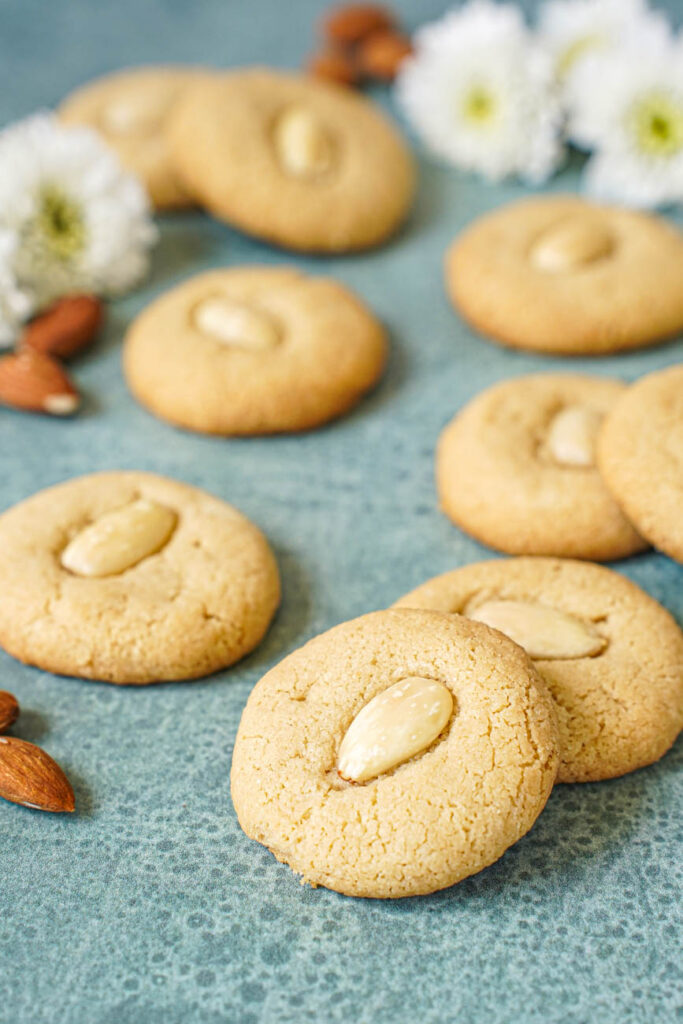
Joan was inspired to make this Tahina Cookie recipe after trying some in an Israeli coffee shop in Manhattan. They have a tender, melt in your mouth texture with a fragrant blend of vanilla and tahina.
The cookies also come together in minutes with no rest or chilling times. Simply beat together butter (or oil) and sugar until creamy, then add in the flour, salt, baking powder, vanilla, and tahina.
Form each piece of marble-sized dough into a round, arrange on baking sheets, top with a blanched almond, and bake until lightly golden.
Allow the Tahina Cookies to cool slightly on the baking sheets before handling. They will be fragile while still warm.
A Few Tahina Cookie Tips
To blanch the almonds, boil them in water for 60 seconds. Drain and allow to cool briefly before pressing each out of the skin. Don’t be tempted to boil them longer or the almonds will soften.
Do not pack in the flour when measuring or you may end up with too much. To measure flour, gently spoon it into the measuring cup and level with a knife without pressing down. The most accurate way to measure is by weight.
The exact baking time may vary based on the size of the cookies. For me, it was closer to 13 minutes.
Tahina (Tahini) is a sesame seed paste created from ground toasted or raw sesame seeds. It is becoming more readily available in the international or health food section of most larger supermarkets. Make sure you stir the tahina well before using, especially down to the bottom of the container.
If you are unable to find it, you can also make your own. I have seen multiple recipes, but have not tried any myself yet.
Other Dishes

I also made Matbucha (North African Cooked Tomato Salad), Pita Bread, Crunchy Saffron Rice, and Poached Salmon with Ginger-Cilantro Butter and Spinach.
Matbucha (not photographed) is a cooked tomato salad from North Africa. Roasted bell peppers are combined with seasoned cooked tomatoes. It can be made ahead of time and even tastes better a day or two later so it works well for the Sabbath.
Pita Bread is named after the word pitter, which means “split.” This refers to the pocket formed in the center during baking from the steam. Joan mentions that the trick is to roll the pita out, let rest a few minutes, then roll again right before transferring to the oven.
Crunchy Saffron Rice is a lightly golden and fluffy rice that is cooked until all the water absorbs and a crust forms on the bottom (when the pot it flipped over, it ends up on top). It actually took me a few months to finally get this rice perfect with that wonderfully crisp crust. I grew up making rice exclusively in the rice cooker and didn’t really know what I was doing when it came to making rice on the stove.
The Poached Salmon with Ginger-Cilantro Butter and Spinach is an elegant meal without much effort required. First a court bouillon is prepared as the base for poaching the salmon. The fish is paired with a homemade ginger-cilantro butter and a little wilted spinach.
King Solomon’s Table is a great pick for those wanting to learn more about Jewish cuisine around the world. Recipes range from weeknight meals to breads that require time to proof and overnight dishes that can be prepared ahead in preparation for Sabbath. Tips are provided throughout for things like making your own hot paprika mix if you can’t locate the spice or differentiating between Warqa and Filo.
Most of the ingredients can be found in the average American grocery store. Some may require further searching such as dried rose petals, cardamom pods, brik leaves, farmer cheese, tamarind paste, curry leaves, tahina, chickpea flour, Asian eggplant, yuca, guava paste, and saffron threads.
Tahina Cookies Recipe
Excerpt from King Solomon’s Table
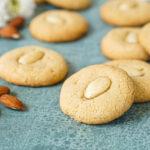
Tahina Cookies
Ingredients
- 8 tablespoons (1 stick/113 grams) unsalted butter at room temperature, or 1/2 cup (120 milliliters) vegetable oil
- 1/2 cup (100 grams) granulated sugar
- 1 cup plus 2 tablespoons (135 grams) all-purpose flour sifted
- 1/4 teaspoon salt
- 1/2 teaspoon baking powder
- 1 teaspoon vanilla
- 1/2 cup (120 milliliters) tahina tahini, well stirred
- 1/4 cup (20 grams) blanched and peeled almonds
Instructions
- Preheat the oven to 350˚F (180˚C) and line two baking sheets with parchment paper.
- In the bowl of a standing mixer with a paddle attachment, cream the butter or oil and sugar.
- Mix in the flour, salt, and baking powder, then the vanilla and the tahina.
- Roll the dough into balls about the size of a large marble and put on the parchment-lined baking sheets.
- Press an almond in the center of each, slightly flattening the cookies.
- Bake for about 15 to 20 minutes (start checking at 10 minutes- mine were done at closer to 13 minutes), rotating sheets halfway through, until lightly golden and beginning to crisp.
- Note: Allow the cookies to cool slightly on the baking sheets before handling. They will be more delicate while still warm.
Liz @ I Heart Vegetables
I love flipping through new cookbooks! (I have a big stack at home that I just got at the library!) And those cookies sound yummy!