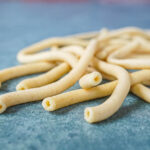
Bucatini
A recipe for Bucatini from the cookbook, Buona Pasta! This homemade pasta is pushed through an extruder into long strands with a hollow center.
Servings 2 Servings
Ingredients
- 1 cup (180 grams) semola rimacinata flour
- 75 milliliters warm water about 1/3 cup
Instructions
To Make the Low-Moisture Semolina Dough:
- On a clean, flat surface or in a large bowl, make a well in your flour.
- Add the water to the well. Using a fork, pull flour into your well and slowly mix it until it resembles a batter.
- Once your moisture becomes thick enough that there isn't a risk of overflowing, you can start bringing more of the flour into your well. Soon, your moisture will be fully incorporated into your flour and will start to look flaky.
- Use your hands, adding some pressure to your dough, and bring those flakes together so they start to become one solid piece.
- Start hand kneading it on your flat surface. The kneading motion is simply applying pressure to your dough, to not only mix your ingredients together but also to activate and strengthen the gluten in your dough, which helps produce a bouncy and pliable pasta (the process should take 5-10 minutes).
- Always cover your dough (with a bowl, towel, or plastic wrap) after kneading, to keep the moisture in and to keep your beautiful dough from developing a skin. And just as importantly, your dough needs to rest to help it relax. Ideally, you want to let it rest for at least 30 minutes at room temperature, to keep your dough relaxed and pliable.
- If you are going hours between kneading and rolling out your dough, you can refrigerate it, covered. Just be sure to remove your dough from the fridge at least 30 minutes prior to rolling out, to allow it to come to room temperature.
- Cut your dough into 1 1/2- inch (4-centimeter) pieces, roll them into balls, and flour them well.
- Choose the bucatini disk and assemble it into your extruder attachment to get ready to extrude your pasta.
To make Bucatini with an Extruder:
- While your extruder is running, drop your floured dough ball into the opening of the extruder.
- Once the dough catches, drop in your next dough ball, to keep the pasta flowing, especially since you're making a long pasta that needs more pasta extruded before you cut each piece.
- Once your pasta is pushed through the extruder and at your ideal length- bucatini is usually 10 to 12 inches (25 to 30 centimeters) long- cut the pasta, using the cutter attached to the machine.
- I (Katie) like to lay out my bucatini on a floured, flat surface between each cut, to help it keep its hollow shape- you'll have plenty of time to do this, since it's such a long pasta. You want to make sure the hollow center of the bucatini remains hollow, so be gently when handling your pasta!
- Continue to add your dough balls to the top of your machine, until you've extruded all your pasta dough.
- If you're not cooking your pasta within the hour, place it on a cutting board and stick into the freezer until you're ready to cook it (within a day or once frozen, transfer to a freezer bag or vacuum-sealed bag for longer storage) to prevent your pasta from sticking.
- When it's time to cook your pasta, do not thaw it; instead, transfer the frozen pasta directly from the cutting board to your salted boiling water. It will take almost the same amount of time to cook, maybe a minute more depending on how long it's been frozen.
Notes
Katie provides multiple different methods and tips on bringing together and storing the dough. I have included the steps I specifically used. Check out the Buona Pasta cookbook for the full range of options.