
A recipe for Chocolate Nama Yatsuhashi inspired by our time in Kyoto Station! This confection from Kyoto is made by folding a thin, chocolate rice flour base over a decadent chocolate ganache or chocolate white bean filling.
Over the summer, we spent a couple of weeks in Japan spending time with friends and trying all the incredible food.
I will be covering our travels in a series of posts along with recipes inspired by our experiences. Today, I am sharing our time in Kyoto Station and a recipe for Chocolate Nama Yatsuhashi!
Check out the rest of our travels:
Kyoto Station (京都駅)
For this trip, we spent three days in Tokyo, then a week in Kyoto before going back to Tokyo for a few more days.
We stayed at Mimaru Kyoto Station just across the street from Kyoto Station’s south entrance and ended up spending quite a lot of time either eating or transiting through this massive transportation hub.
The first Kyoto Station (京都駅) was built in 1877 using red brick and was replaced in 1914 with a cypress-based building to accommodate the growing number of people. It burned down in November 1950 due to an electric iron left on in a changing room and was rebuilt again using concrete.
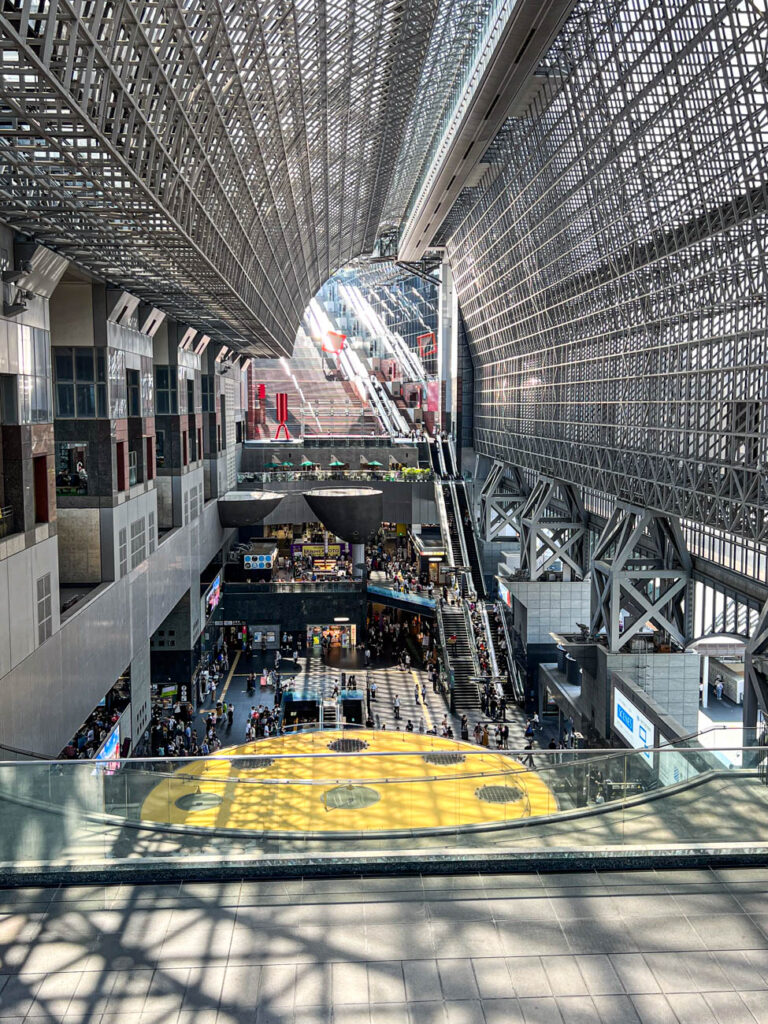
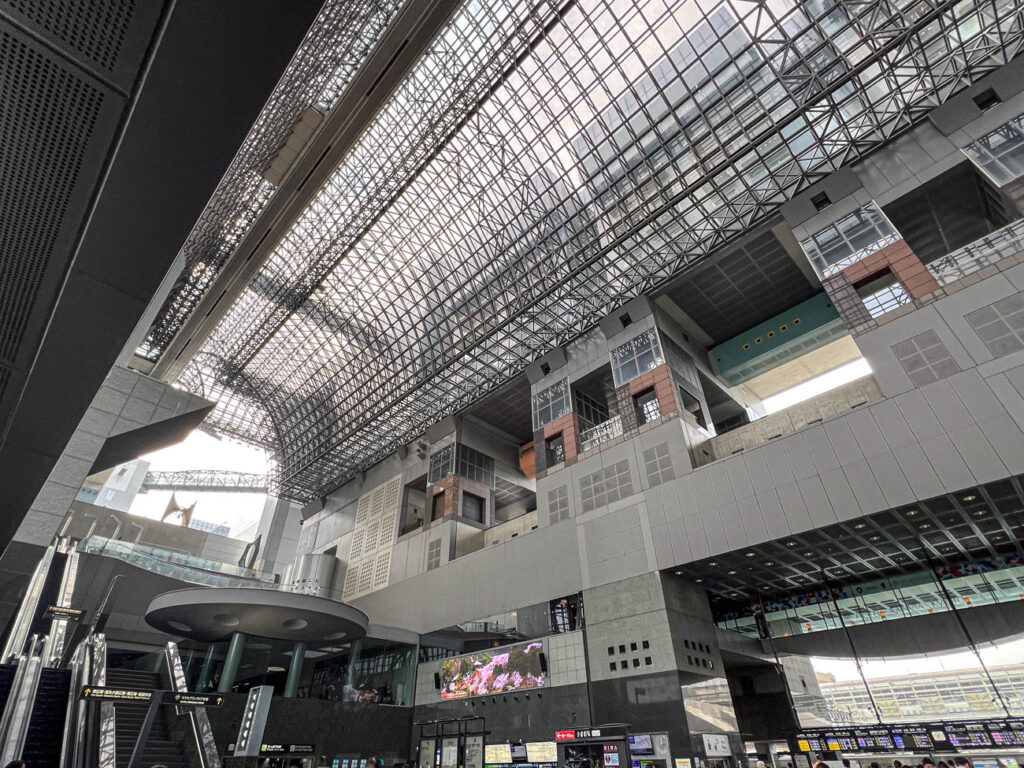
The gorgeous steel and glass building seen today was designed by Architect Hiroshi Hara and after taking a little over 3 1/2 years to complete, it opened to the public in September 1997.
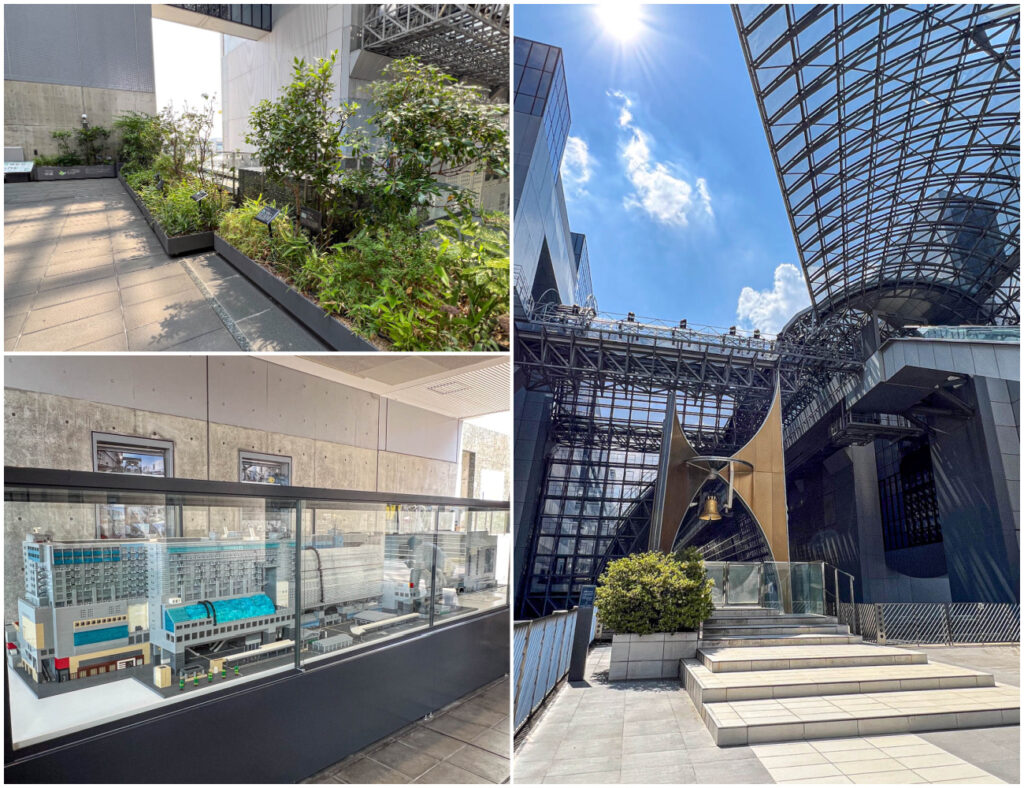
The bustling station is often the first stop for visitors entering Kyoto with connections to the Shinkansen, JR Lines, Kintetsu Railways, Karasuma Subway Line, buses, and taxis.
Along with these transportation options, there are restaurants, department stores, observation decks, souvenir shops, hotels, other facilities, and even a skywalk spanning across 15 levels.
I am including below a few of the places we came across during our week in Kyoto, some researched and planned ahead of time and others stumbled across during the handful of instances we got lost/only slightly turned around.
Getting to Kyoto Station
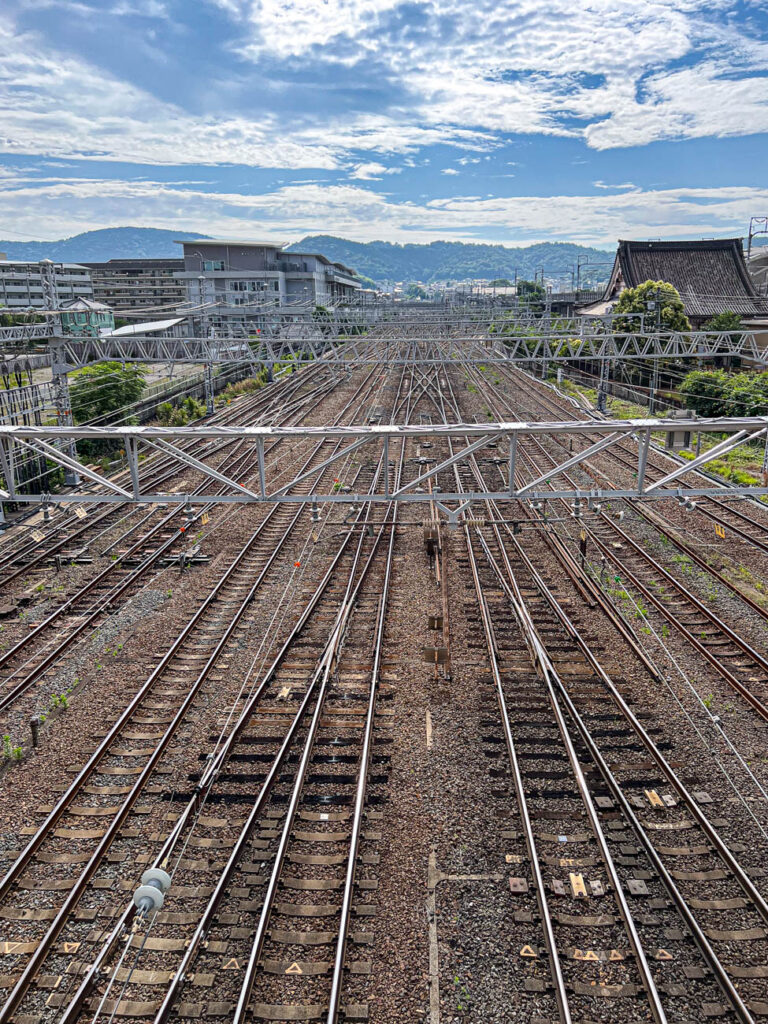
We arrived in Kyoto Station via the Tokaido Shinkansen (東海道新幹線) from Shinagawa Station (品川駅) in Tokyo. You can also board in Tokyo Station (東京駅).
I booked tickets with seat reservations (highly recommended, especially if not solo and during peak travel days/holidays) using the smartEX App (available in English) and it was easy to have the QR codes on my phone to scan through the gates without any extra steps, lines, or ticket machines.
As a note, the app is only available at the time of this post (2025) to book routes for the Tokaido, Sanyo, and Kyushu Shinkansen lines.
There are three types of Shinkansen on this track from fastest to slowest: Nozomi (limited stops- a little over 2 hours), Hikari (a few more stops, about 2 1/2 hours), and Kodama (stops at all the stations along the line, 3 1/2 hours).
From Shin-Osaka Station (新大阪駅), the Tokaido-Sanyo Line takes about 30 minutes.
From Kansai International Airport (関西国際空港, KIX), Kyoto Station is about 70 minutes via the JR Haruka Limited Express or 1 1/2 hours via the Limousine Bus.
Ekiben
As this was our first time using the Shinkansen, one of the highlights on our transit days was picking out lunch to take with us for the train ride.
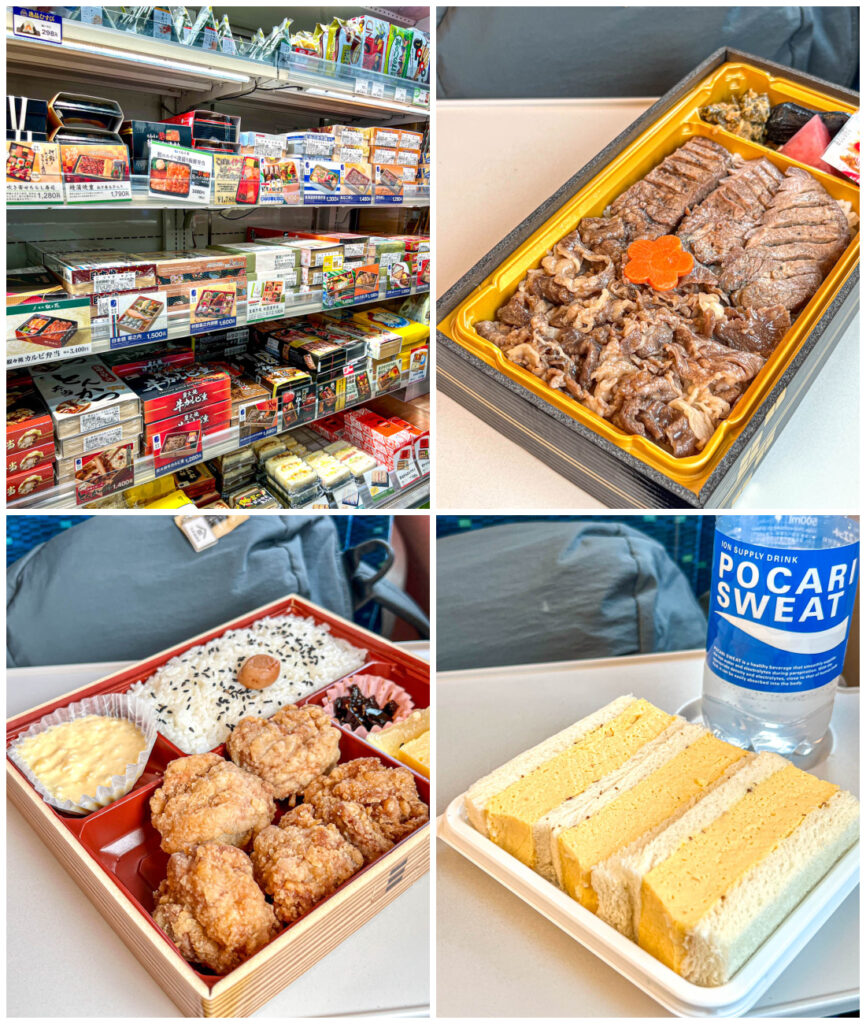
Ekiben (駅弁) are a popular option on long distance trains (don’t eat on the local trains/buses). They come in a variety of styles from basic sandwiches to more intricate themed/seasonal boxes.
On the way to Kyoto Station, we picked up a Grilled Steak and Thinly Sliced Beef Bento, Karaage (Fried Chicken Bento), and Egg Omelet Sandwich (Dashimaki Tamago-style) from a small stand in Shinagawa Station after going through the gates.
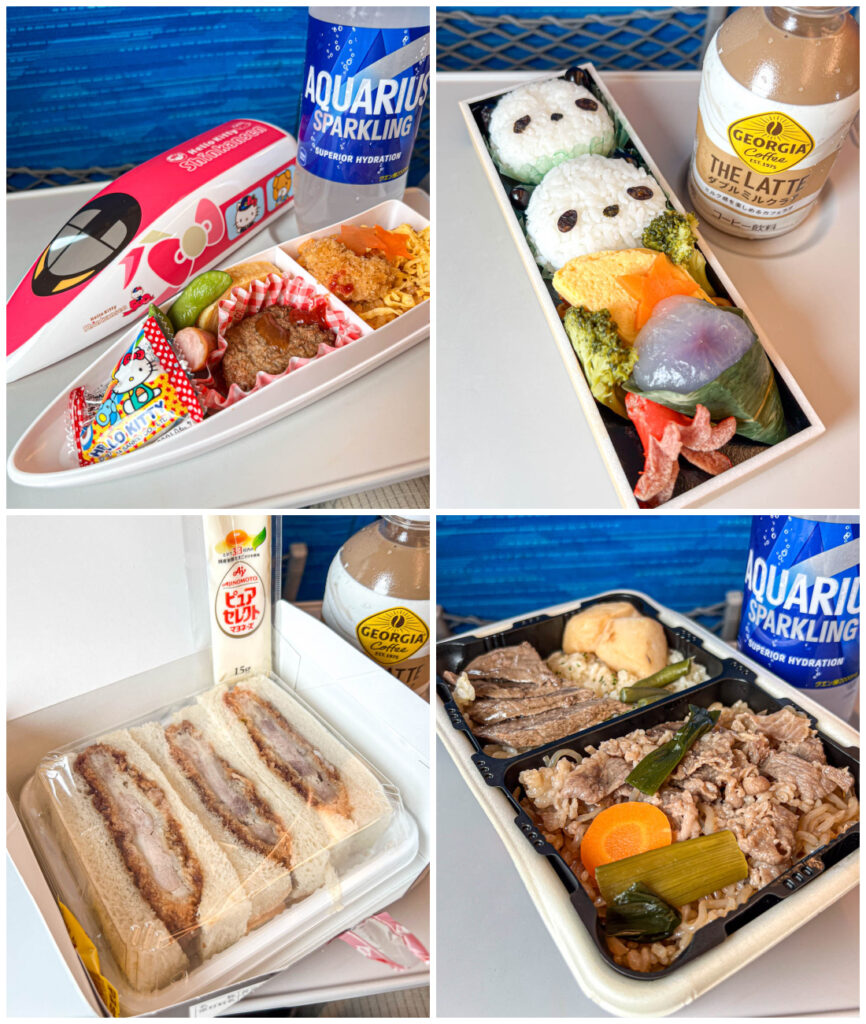
Before going back to Tokyo, we picked up a few more Ekiben from Tabi Bento Ekiben Nigiwai Kyoto (旅弁当駅弁にぎわい) located up the escalators north of the Shinkansen Central ticket gates. This small shop was packed with such a fun regional variety of bento (both cold and heated options):
- 500系ハローキティ新幹線弁当- 500 Series Hello Kitty Shinkansen Bento with chicken rice, thin egg strips, Hamburg steak, demi-glace sauce, thick omelet, sausage, edamame, and Hello Kitty jelly.
- パンダくろしお弁当- Panda Kuroshio Bento- themed lunchbox designed for the Panda Kuroshio train which runs between Kyoto to Wakayama (home to the Adventure World which was home to pandas until earlier this year).
- カツサンド- Katsu Sando- Pork cutlet sandwich.
- あっちっち神戸のすきやきとステーキ弁当 – sukiyaki and steak lunch box. This one came with a string to pull to activate a heating pad inside.
Pasta More
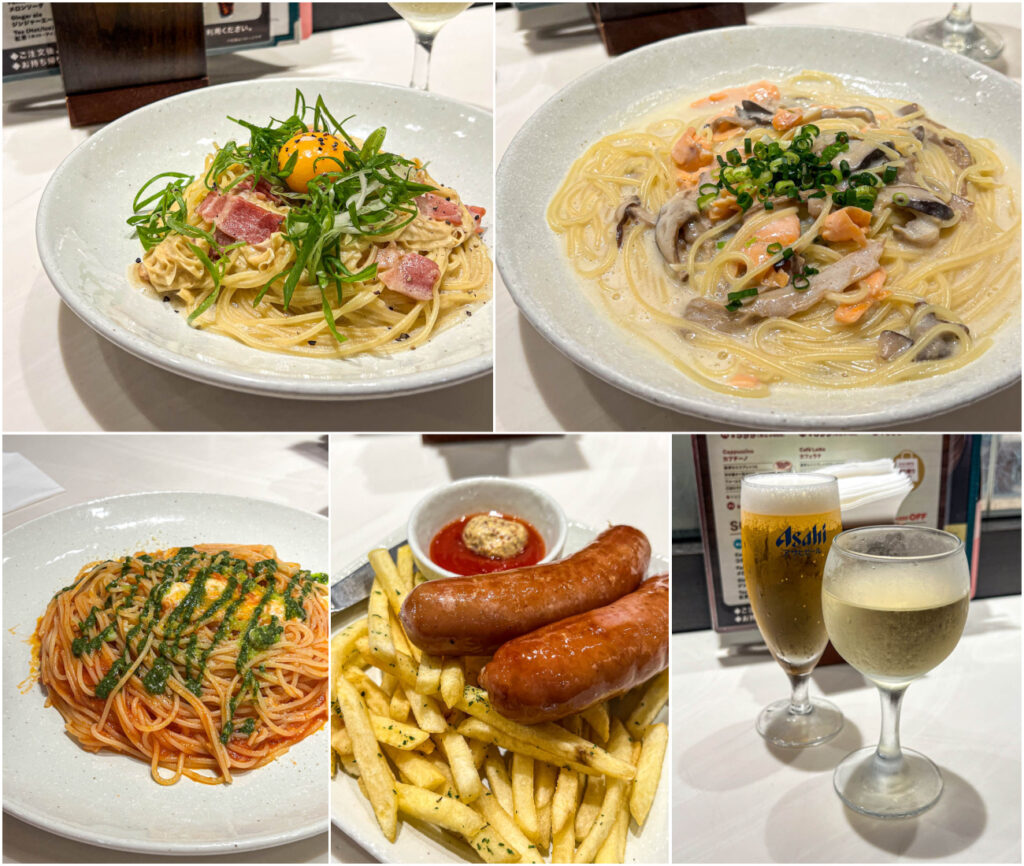
After checking into our hotel, Evan requested we go to dinner at Pasta More (パスタモーレ) for our first evening in Kyoto.
Located just inside the Shinkansen Hachijo East Exit (新幹線八条東口) at the beginning of Asty Road, Pasta More features set meals, seasonal pasta, comforting favorites, and unique options highlighting Kyoto ingredients.
The restaurant has a selection of table and counter seating. At peak hours, there may be a wait. The menu is available in Japanese and English. We ordered the following:
- 湯葉と九条葱の京風カルボナーラ – Kyoto- Style Carbonara with Tofu Skin and Kujo Green Onion. This is what I picked and I absolutely loved the flavors with the focus on Kyoto Yuba and Kujo Negi. I definitely want to remake this at home someday.
- スモークサーモンときのこの西京味噌クリーム – Smoked Salmon and Mushrooms with Saikyo Miso Cream.
- とろけるモッツァレラのトマト&大葉ソース – Melty Mozzarella with Tomato and Perilla Sauce. Evan enjoyed this so much, he asked Chad to take him back to the restaurant for lunch a couple of days later.
- ソーセージとポテトの盛合せ – Sausage and French Fries Platter.
Sizuya
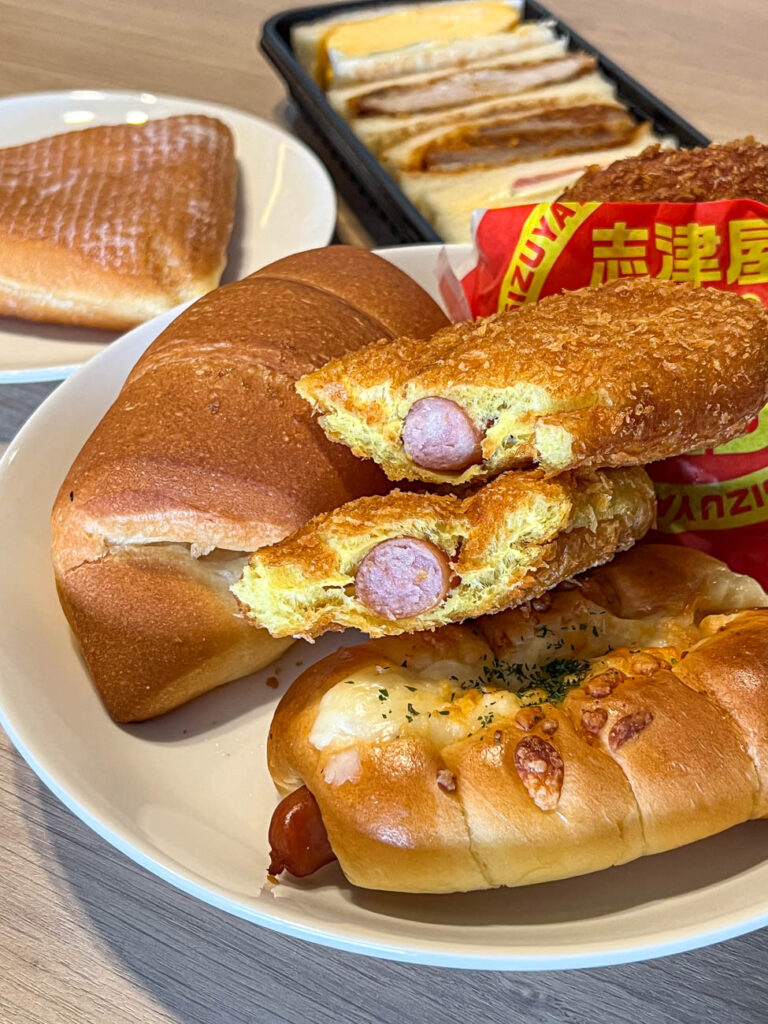
Further left along the Asty Road walkway is Sizuya (志津屋 京都駅店).
Sizuya is a Kyoto-based bakery operating since 1948 with locations now across the city. Their small shop in Kyoto Station is currently open daily 7am to 9pm. During my visit, there was a variety of both sweet and savory options along with sandwiches and limited/specialty items.
I took the following back to the hotel for the family:
- ニューバード – local Kyoto bread. Sausage wrapped in curry flavored dough, then coated in breadcrumbs and fried until crisp.
- 志津屋ビーフカレーパン – Sizuya Beef Curry Bread.
- ウインナーパン – Sausage Bread.
- 塩パン – Salted Bread with Butter Filling.
- トライアングル – Triangle. Triangular shaped donut with custard cream filling.
- カツミックサンド – Katsu Mixed Sandwich. Sandwiches with cutlets, ham, eggs, and vegetables.
Estación Café
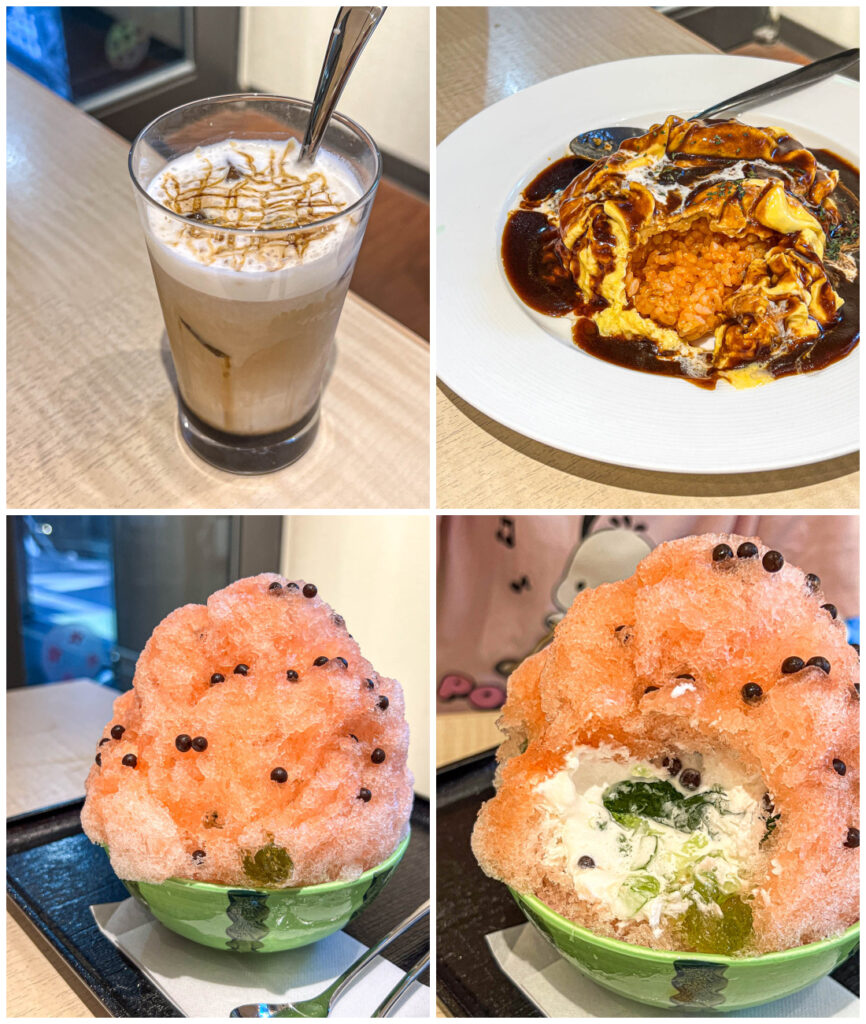
While Claire and I were walking through Kyoto Station (and maybe being slightly lost), we came across Estación Café directly after stepping off an escalator to the basement level from the central hall.
She was immediately drawn to the Kakigori (shave ice) display in the window and asked to stop by.
In addition to Kakigori, the menu also has a variety of coffee, tea, specialty drinks, breakfast, lunch sets, Omurice, sandwiches, cake, and more.
We ordered the Kokuto (Okinawan Dark Brown/Black Sugar) Latte (黒糖ラテ), Watermelon Kakigori (スイカのかき氷 – watermelon shave ice with condensed milk espuma, kiwi jelly, and pearl chocolate), and Omelet Rice with Demi-Glace (デミグラスソースオムライス).
Kineya
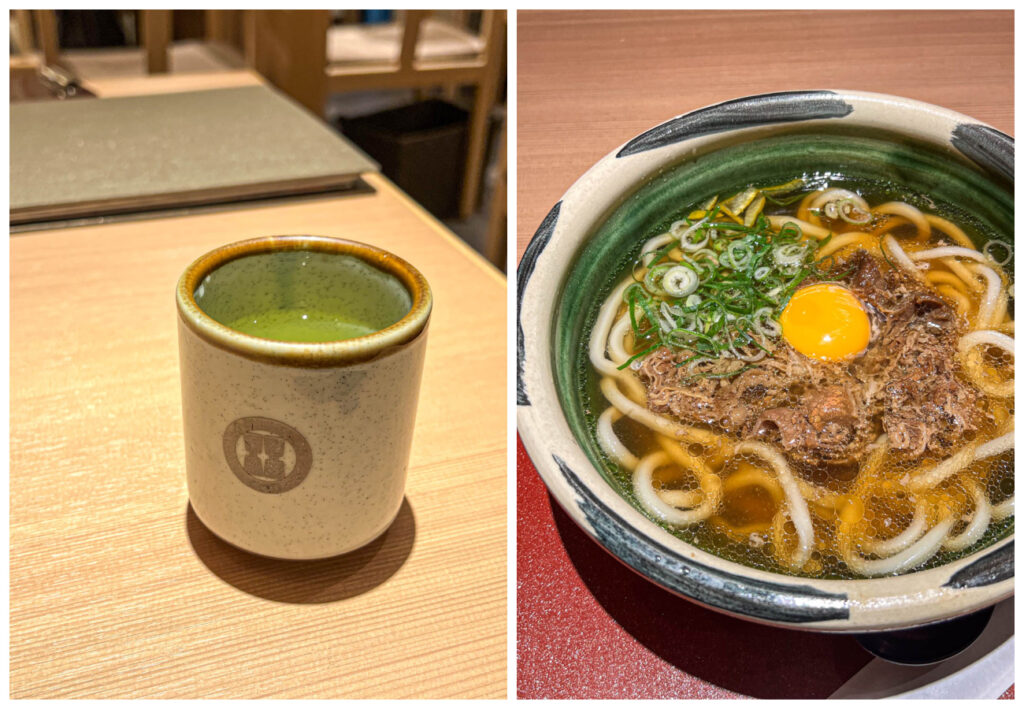
One day while walking around solo, I was drawn to Kineya in Kyoto Porta situated in B1F of Kyoto Station.
This chain restaurant focuses on Sanuki Udon originating from the island of Shikoku. The menu has a selection of udon (hot and cold), soba, and set meals.
I went with one of my favorites, Beef Udon in a dashi soy sauce broth (牛肉だし醤油うどん). It was perfect for a quick and comforting lunch.
Saryo Fukucha
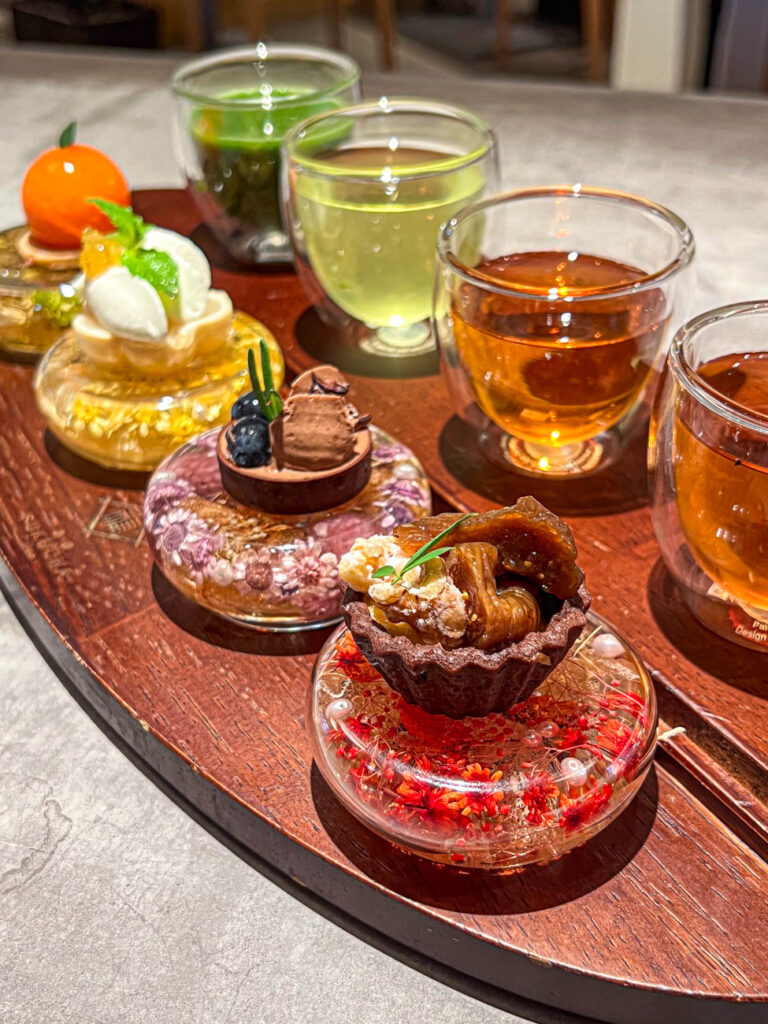
During another solo trip, I stopped by Saryo Fukucha (茶寮フクチャ).
Saryo Fukucha opened on the second level of Kyoto Station in April 2019 (additional stores in Shijo and Uji) by tea brand, Fukujuen. They feature premium Uji tea sets, pairings, intricate desserts, and light meals along with a take-out menu and gift options.
I enjoyed the Traditional Tea Sweets Pairing Set with four beautifully styled small desserts alongside four cups of tea:
- Fig Pairing Tea – ほうじ茶とイチジク。 A cup of cold brewed Hojicha with a Walnut and Fig Tart. The almond cream tart was topped with semidried figs and caramelized walnuts.
- Blueberry Pairing Tea- 和紅茶とブルーベリー。 Gentle-tasting Japanese black tea with a delicate, sweet aroma. The accompanying dessert is 「ミルティーユショコラ」- Myrtille Chocolat- made with ganache and wild blueberries.
- Yuzu Pairing Tea (my personal favorite)- 煎茶と柚子。 Uji Sencha paired with Yuzu Cream Monaka- the monaka (rice-based wafer) is filled with white bean paste, light cream, and yuzu compote.
- Orange Pairing Tea- 抹茶とオレンジ。 Rich Uji Matcha alongside an equally rich Chocolat Orange- 「ショコラオランジュ」 smooth white chocolate mousse with orange peel compote to accent and bring out the flavor of the matcha.
Ramen Koji
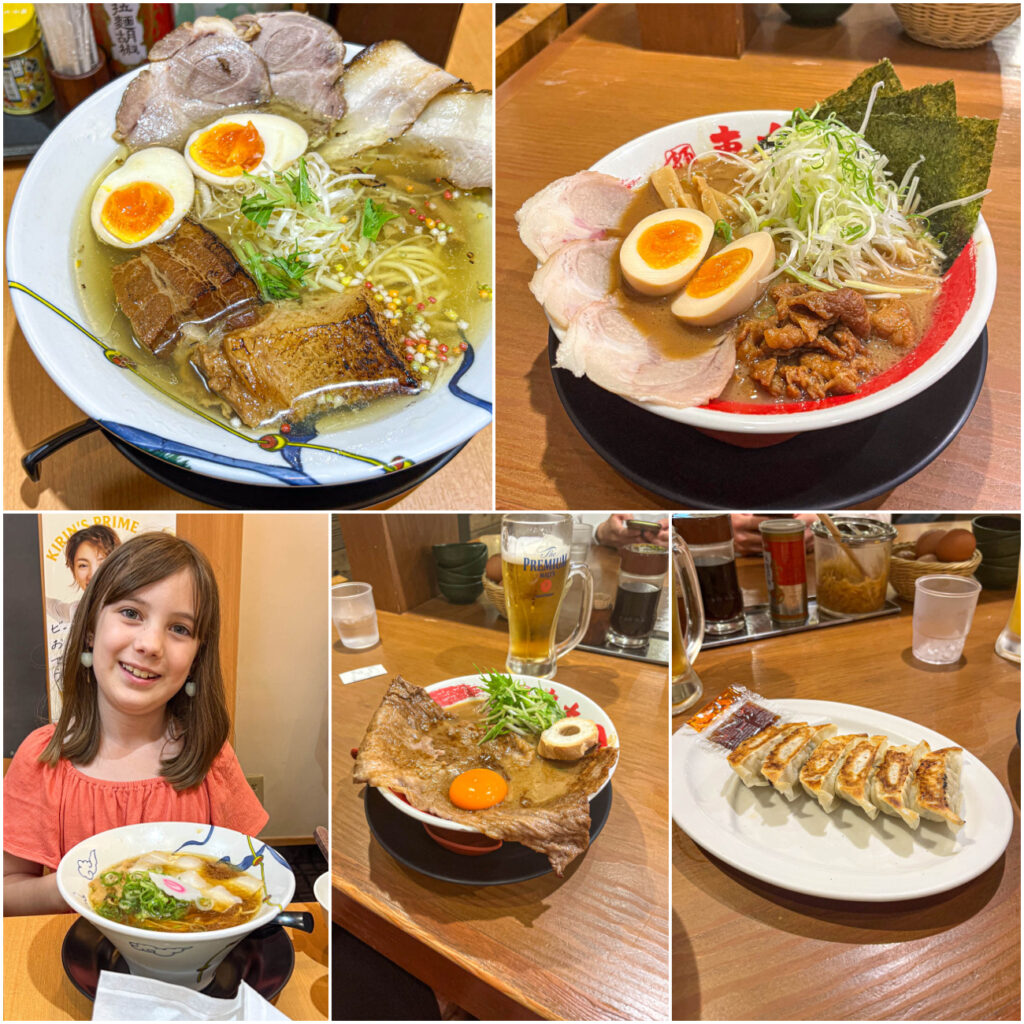
For an easy dinner, we stopped by Ramen Koji during our first full day in Kyoto.
Ramen Koji is a collection of 9 ramen shops and 1 cafe on the 10th floor of the Isetan Department Store (western side of Kyoto Station) and is accessible via the JR Kyoto Isetan South Elevator.
They feature different styles of ramen from all across Japan. Ordering is via vending machines at the front of each restaurant (Japanese and English). Some shops have seating for 4 people, but we ended up splitting 2 and 2 just to make it easier.
Claire and I went to Nakamurashoten (中村商店). Based in Takatsuki, Osaka, their specialty is a light chicken-based salt ramen with medium-thin straight noodles. I ordered the Specialty Golden Salt Ramen with a seasoned egg and two kinds of roast pork (金の塩スペシャル). She enjoyed the basic shoyu ramen/Chuka Soba (中華そば).
Evan and Chad went to Ramen Todai (ラーメン東大). From Tokushima on Shikoku Island, they feature a rich pork bone broth combined with a secret soy sauce, raw egg topping, and straight noodles- often paired with rice. They ordered the Todai Special (東大スペシャル) and Wagyu Beef Sukiyaki Ramen (和牛 すき焼き ラーメン).
Souvenirs
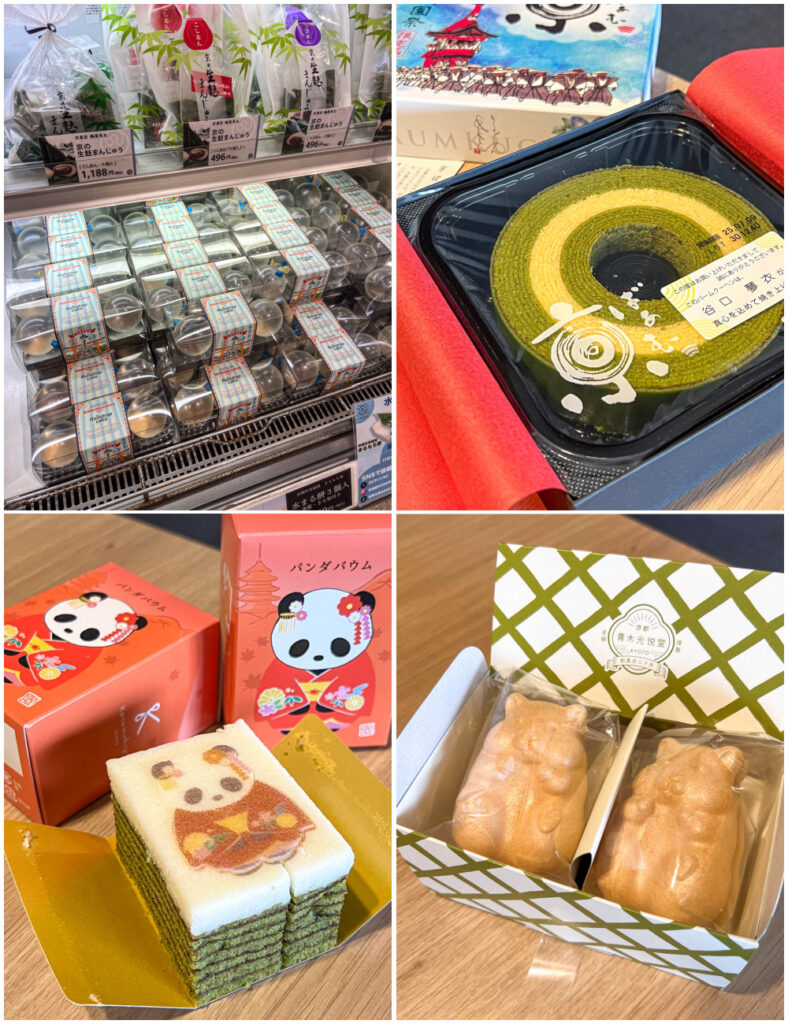
While researching for our time in Kyoto, I had so many places on my list. We were only staying for a week, but I think I wrote down enough that it would take us a solid month to get through (this happens every time).
Luckily, the souvenir shops in Kyoto Station (particularly the ones in Asty Road and Kyoto Tower Sando) have packaged versions of many favorite local favorites and specialty dessert spots.
So, I ended up being able to grab a few on the walk back to the hotel from some of the places I wasn’t able to visit in person due to location or just timing.
Yatsuhashi
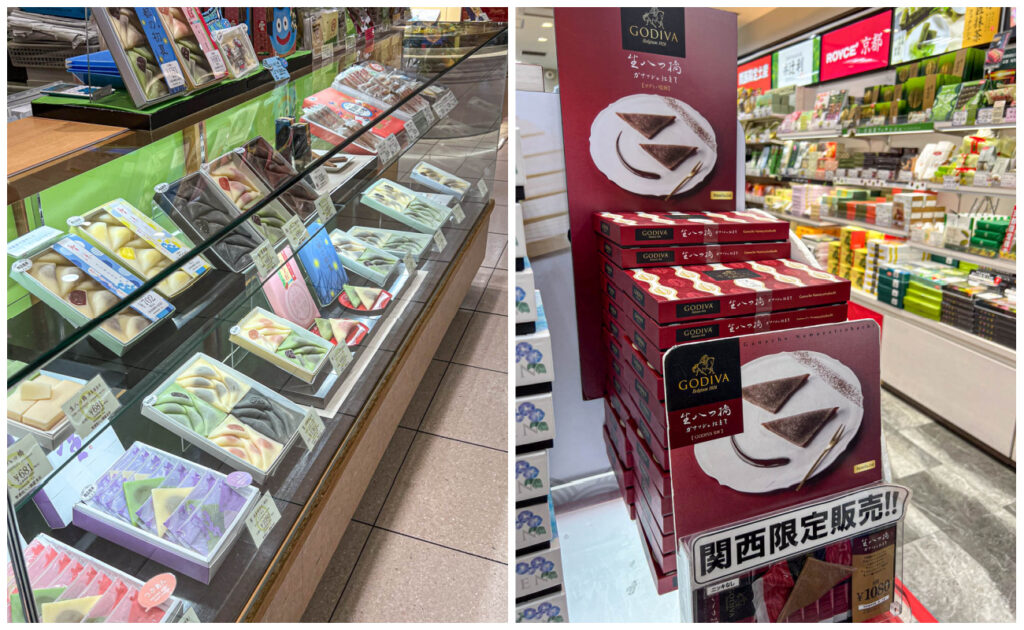
One of the sweet treats we saw on display nearly everywhere across the station was Yatsuhashi (八ツ橋). A regional favorite from Kyoto, this wagashi comes in a few forms and so many different flavors.
Traditionally, the confection is made with a blend of rice flour, sugar, and cinnamon. It can be found baked with a hard texture and curved to resemble a Japanese harp or fresh/raw (called Nama Yatsuhashi, 生八ツ橋) with a soft and chewy texture.
We mostly came across Nama Yatsuhashi in the shops, often folded over with a red bean or other flavored filling (餡入り生八ツ橋, つぶあん入り生八ツ橋).
The traditional version has a light cinnamon flavor. Now, you will find everything from this and matcha to strawberry, black sesame, chocolate, peach, yuzu, and I even saw a package of Ramune Nama Yatsuhashi in the souvenir shops within the Shinkansen gates.
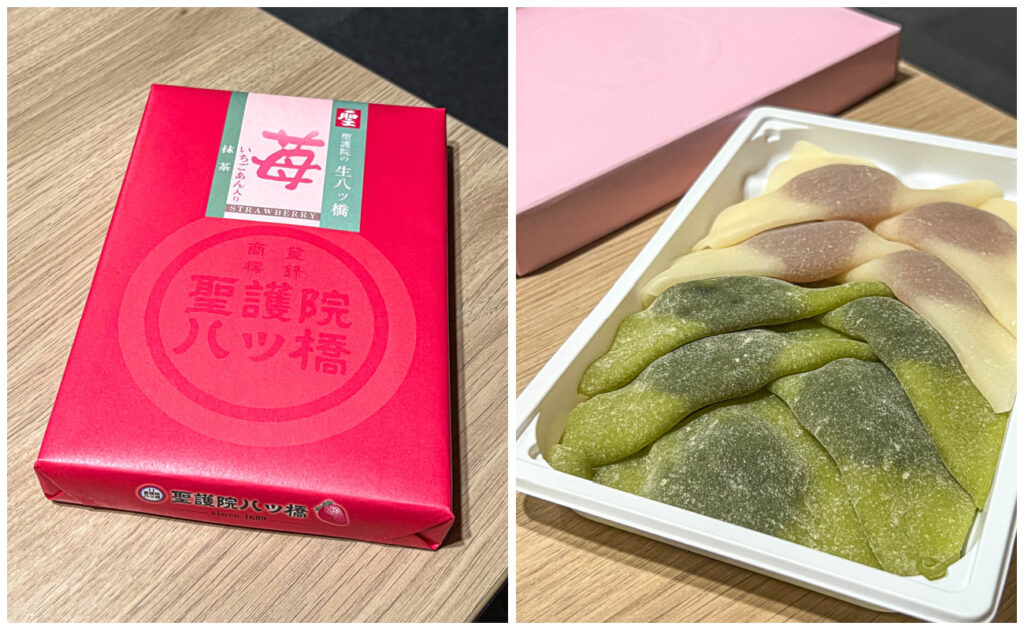
As a note, the fresh/unbaked Nama Yatsuhashi has a short shelf life due the texture and how it is prepared. Keep note of the date written on the package- often within 5-10 days of purchase. It definitely wasn’t long enough for us to take back home (but we enjoyed plenty in the hotel- do not refrigerate).
Karucha Kyoto
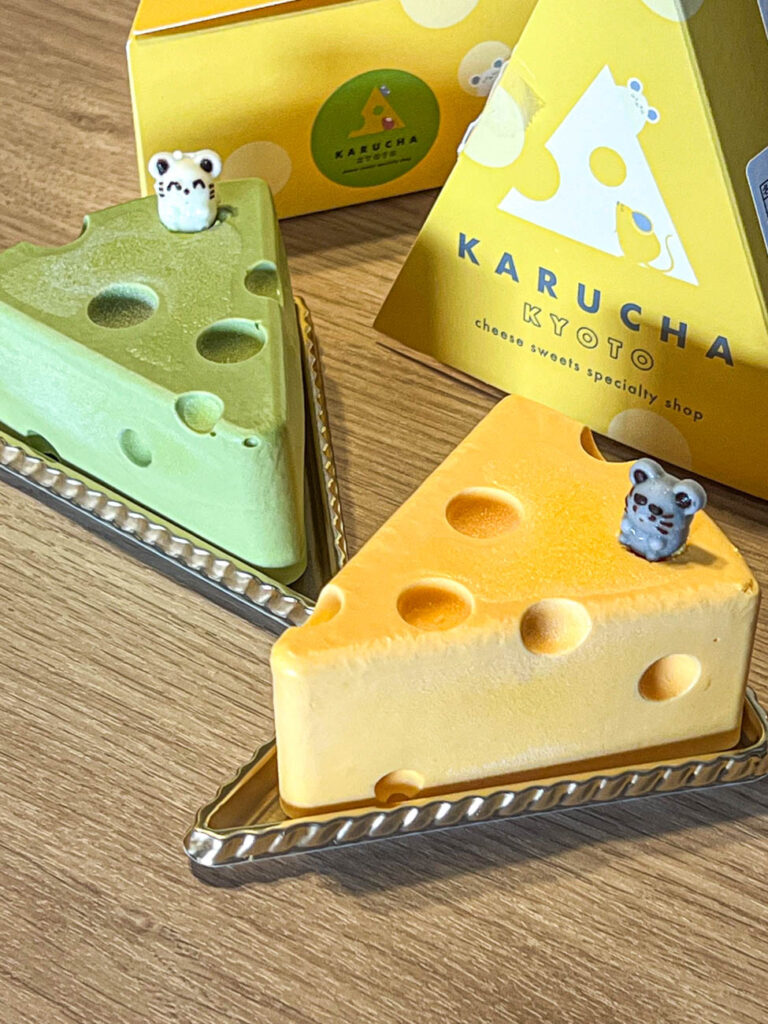
Karucha Kyoto was on my list of places to visit and I was so excited to come across their cheesecakes in the refrigerated section of the souvenir shop in Asty Road.
The original cafe is located at 51 Matsuyacho in Nakagyo Ward. They are known for their creative cheesecakes made in the shape of a cheese wedge with an adorable mouse resting on the top.
Malebranche
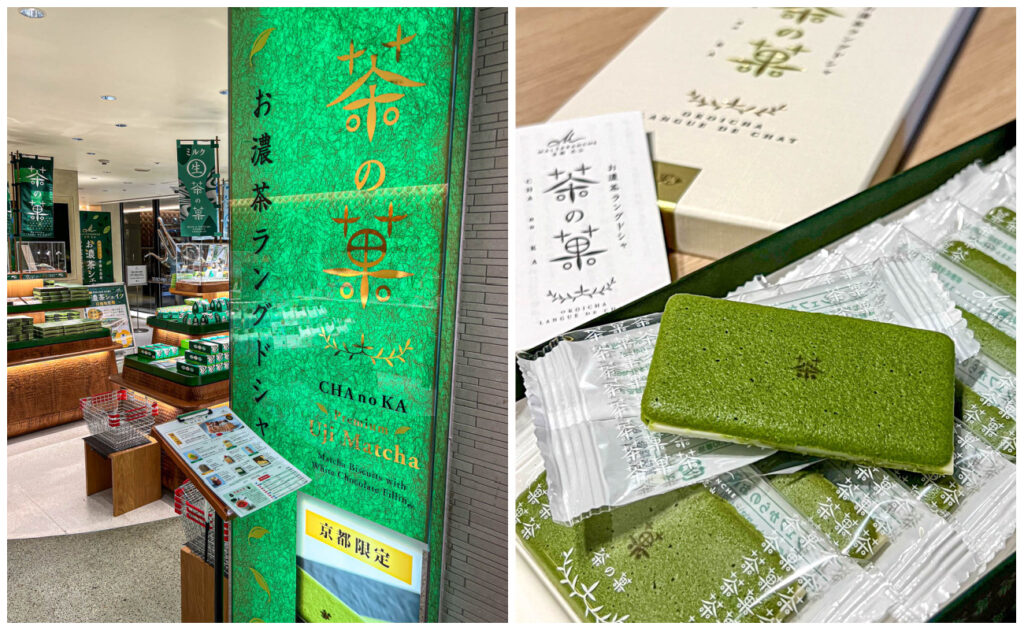
My friend Yoko recommended Malebranche while we were in Kyoto and they are now a favorite for us too! There are multiple stores in Kyoto with even a few within Kyoto Station.
Malebranche is a confectioner especially known for OKOICHA Langue-de-chat “CHA no KA (茶の菓).” This Langue de Chat (sandwich cookie) has an okoicha (strong green tea) base with a delicate white chocolate center. Claire decided she loved matcha after trying these cookies for the first time.
Along with Asty Road, we also enjoyed browsing and picking up a few things from the Depachika (department store food market) in the basement level of the JR Kyoto Isetan.
I recommend going during off hours during the weekday. It was definitely more busy during rush hour and on the weekends.
Kyoto Tower
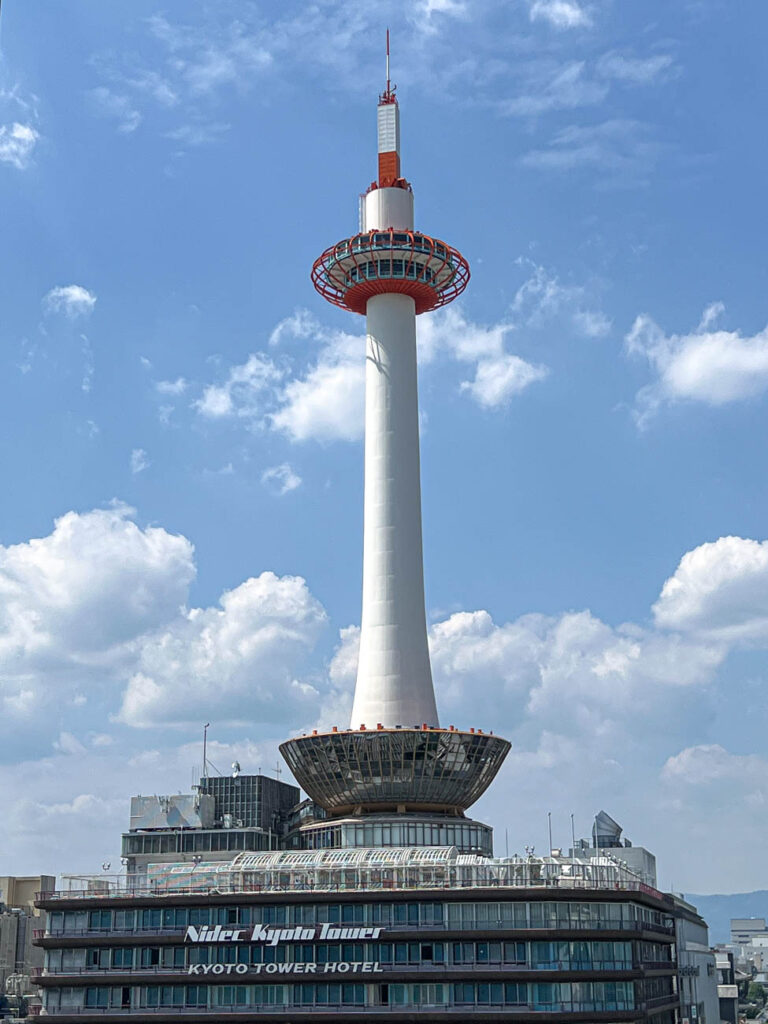
Just north of Kyoto Station (and connected via the underground walkway) is Kyoto Tower (京都タワー) – the tallest building in Kyoto at 131 meters (430 feet). It opened to the public in 1964, just a couple of months after the beginning operation of the Shinkansen and the 1964 Tokyo Olympics.
We did not go up to the observation deck (at 100 meters/328 feet), but I have heard that you can see all the way to Osaka Castle on a clear day.
Kyoto Tower Sando
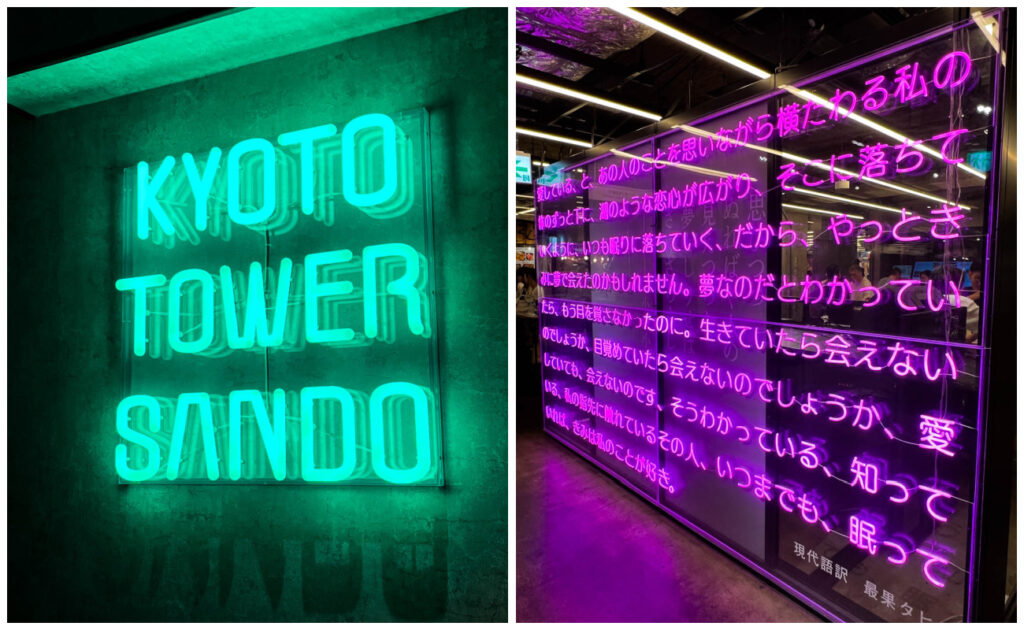
The base of the tower is home to Kyoto Tower Sando (京都タワーサンドバル). This area features a food hall, marketplace, and workshops across multiple levels.
On 1F, there is a market with local sweets and souvenirs. You can also buy tickets here to the observation deck. In the basement on B1F, there is a spacious food hall with plenty of seating. We ended up stopping by twice for dinner. 2F has workshops dedicated to Kyoto culture from wagashi and sushi making to traditional crafts.
The Roots of all evil.
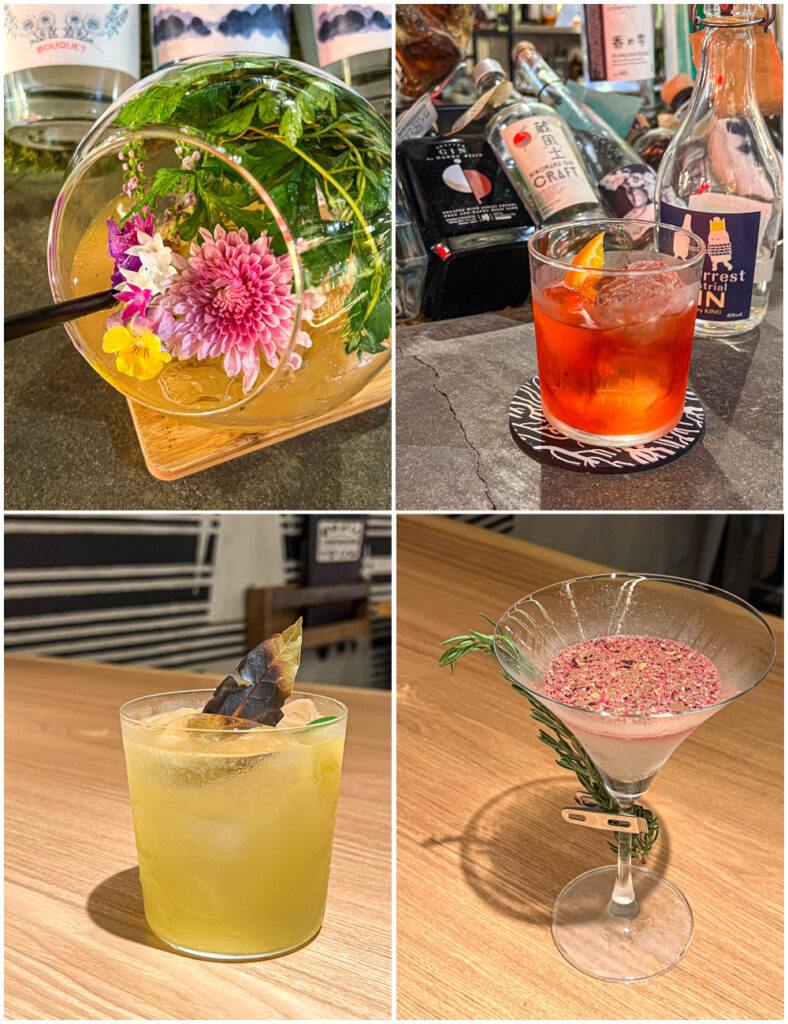
The Roots of all evil. is a craft gin and cocktail bar located in the Kyoto Tower Sando Food Hall. They have over 100 craft gins from Japan and abroad plus ingredients unique to Japan and Kyoto.
During our first visit, we picked the ボタニカルガーデン – botanical garden (flower and herb gin and tonic with six types of flowers, six types of herbs and spices, and absolutely gorgeous edible flower and herb garnish) and ネグローニ Negroni (Gin, Sweet Vermouth, Campari, Orange- Chad decided on Yumarrest Industrial Gin Ordinary King as the base).
We enjoyed the cocktails so much that we went back once more before leaving Kyoto to try the 惚れ薬 Love Potion (Bombay, Cardamom Syrup, Rose Powder, Hibiscus Powder) and スライヴィング・シティ Thriving City (Thriving Gin, Suze, Japanese Citrus, and Ginger Beer).
Wagyu Steak & Burger Nick Stock
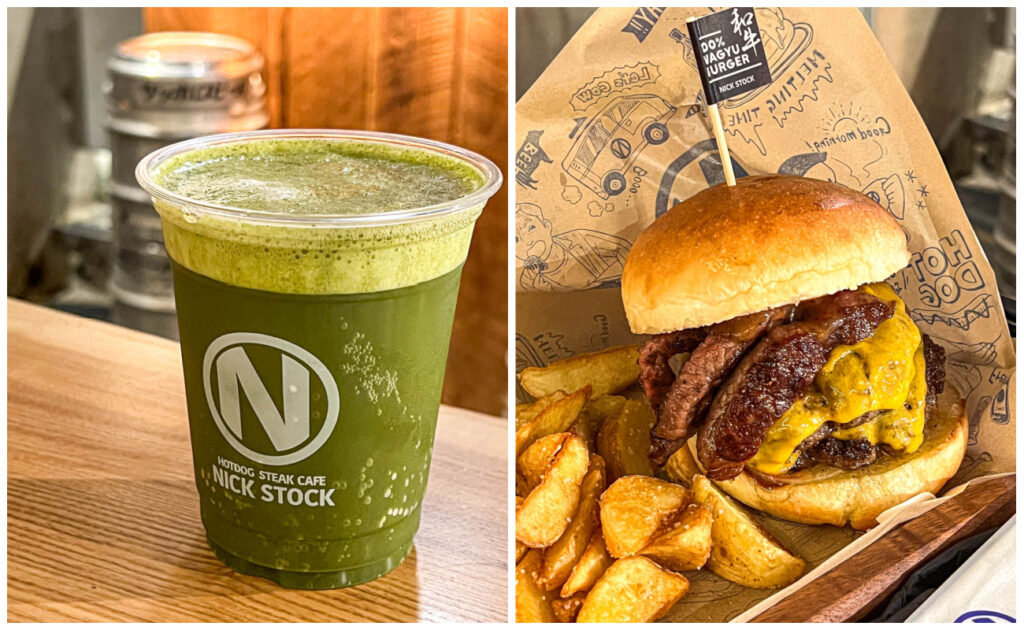
While at Kyoto Tower Sando, our teenage son requested the %100 Wagyu Tower Burger from Wagyu Steak & Burger Nick Stock. This gourmet hamburger has two beef patties, cheese, and strips of wagyu steak to finish.
While ordering Evan’s burger, Chad tried the Matcha Beer. He said it was a nice experience to try once, but isn’t completely sure on the combination of matcha and beer.
Pancake Room
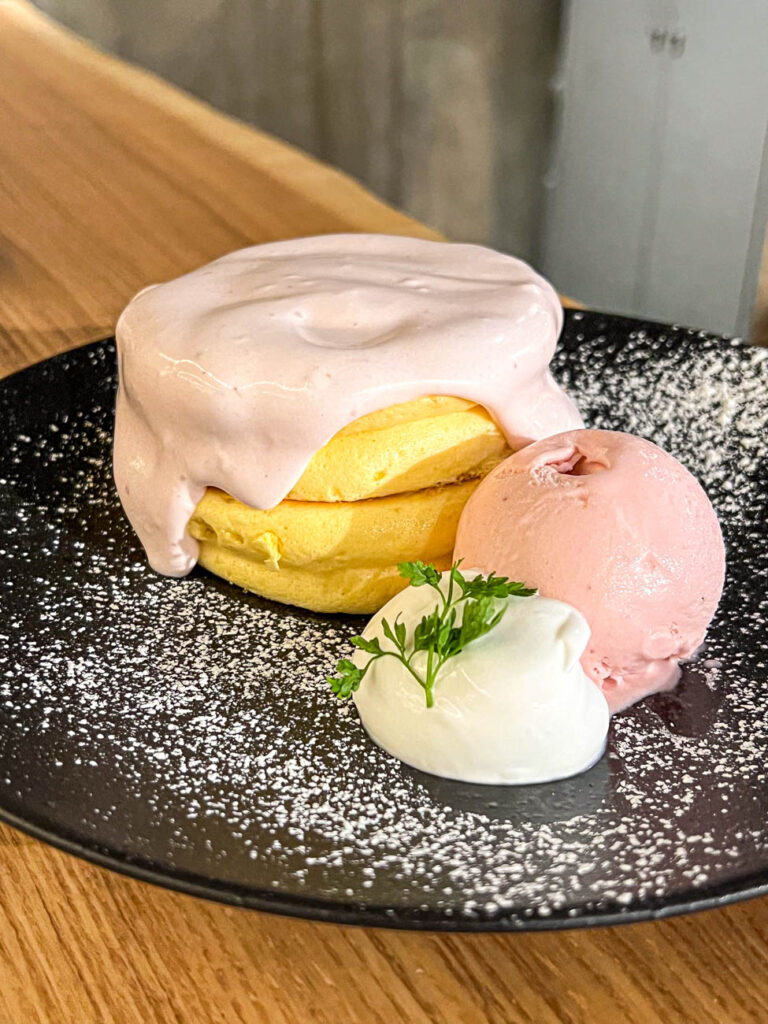
Meanwhile, Claire picked out the Strawberry Cream Fountain Pancakes (ストロベリーファウンテンとちおとめアイス添え) from Pancake Room.
These light and fluffy souffle pancakes were topped with a strawberry cream sauce and served alongside ice cream, whipped cream, and a dusting of powdered sugar.
Kyoto Senmaru Shakariki Murasaki
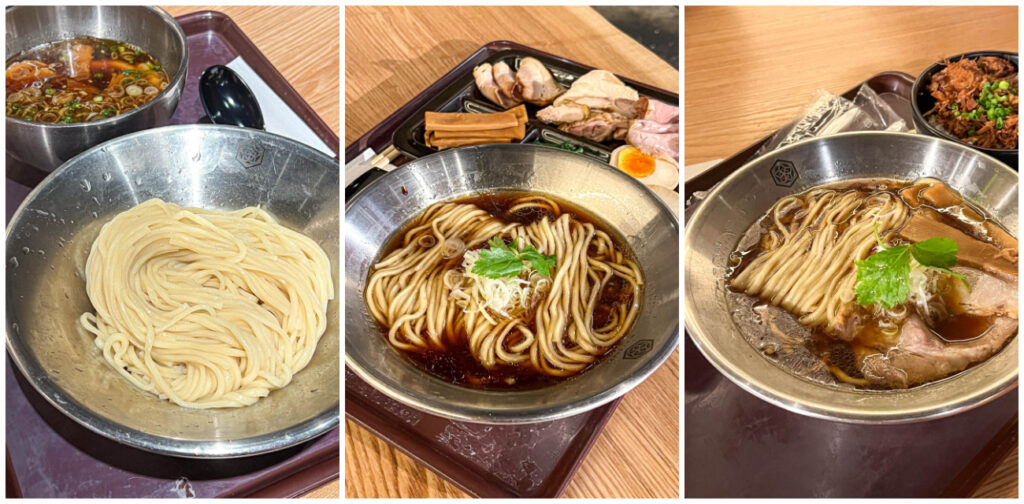
Another favorite stop in Kyoto Tower Sando was Kyoto Senmaru Shakariki Murasaki (京都千丸 しゃかりき むらさき).
We stopped by during both visits to try an assortment of ramen. I especially enjoyed the Tsukesoba (つけそば). These chilled noodles were served separate from the broth for a refreshing dinner option when the outside temperatures were pushing 100˚F (38˚C).
Kyoto Tower Sando Market
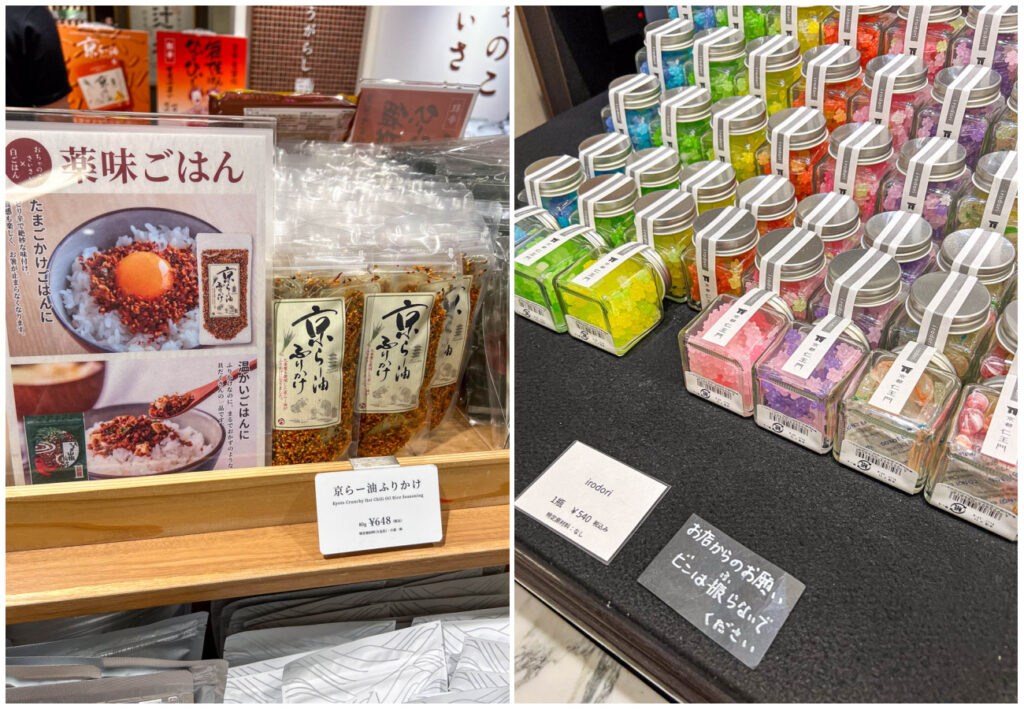
After dinner, we stopped by the market on the first level to take home a couple of souvenirs. There are many stalls featuring Kyoto-based products from candy and specialty Baumkuchen to cookies, chocolates, and spices.
I picked up a bag of Kyoto Crunchy Hot Chili Oil Rice Seasoning (京らー油ふりかけ) and have been adding it to almost everything from my Egg Yolk Onigiri to rice bowls and even pasta with olive oil, balsamic vinegar, fresh mozzarella, and tomatoes.
Chocolate Nama Yatsuhashi
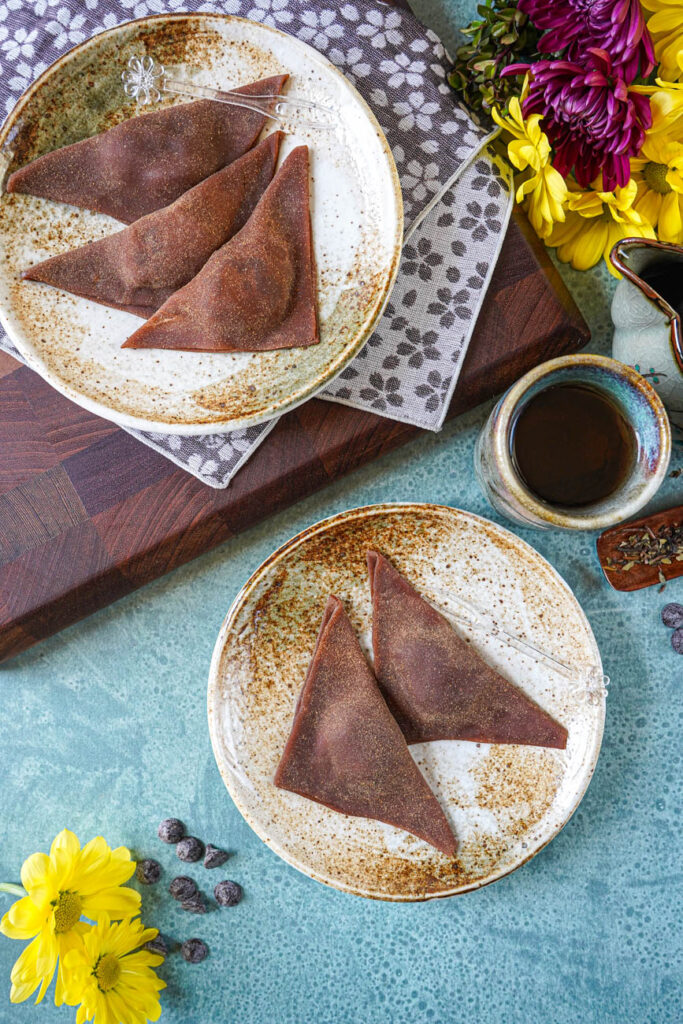
Inspired by our time walking through Kyoto Station, I wanted to learn how to make Nama Yatsuhashi (生八つ橋) at home- especially since their shelf life was too short to bring packages back with us.
Yatsuhashi is a traditional wagashi that originated in Kyoto with a naturally gluten-free rice flour base. There are a few different types from the hard baked version to the soft and chewy strips or triangles folded over a red bean filling.
Just One Cookbook has already gone into amazing detail on how to make Cinnamon and Matcha Nama Yatsuhashi, so I wanted to focus on one of the more limited flavors.
One that stood out to me was the Chocolate Nama Yatsuhashi (チョコレート生八つ橋/チョコの生八ツ橋) only sold in the Kansai region as a collaboration with Godiva.
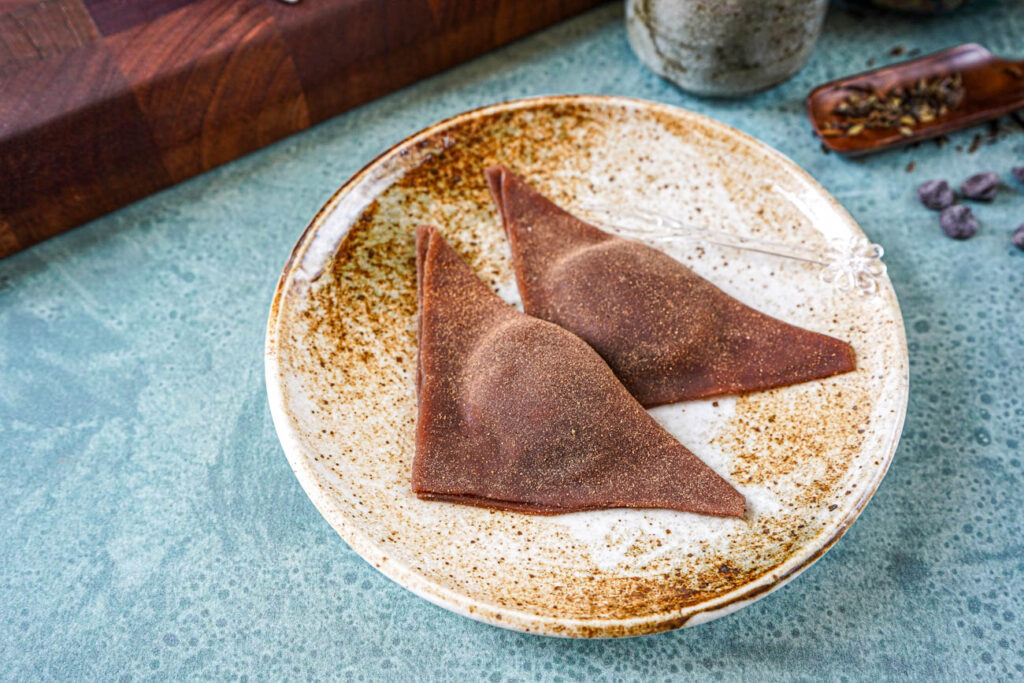
This fun fusion pairs the traditional Nama Yatsuhashi with a decadent chocolate flavor. Cocoa powder is mixed right into the rice flour dough, then paired with either a chocolate ganache or chocolate white bean filling.
They were wonderful as an afternoon treat alongside a cup of Harney & Sons Tiramisu Tea (white tea, Hojicha, cocoa, vanilla, cacao, brandy flavor).
Notable Ingredients
To get that notable texture, the base is made with a blend of two types of rice flour- Shiratamako (to make the dough glossy and elastic) and Joshinko (to make the dough chewy and firm).
Shiratamako (白玉粉) is a glutinous rice flour made from Japanese short grain glutinous rice (もち米, mochigome). It has a coarse texture, so I blended it with hot water to dissolve before adding the remaining ingredients.
Joshinko (上新粉) is a (non-glutinous) rice flour made by finely grinding short grain Japanese rice (粳米, uruchi-mai).
Kinako (きな粉) is a powder made from roasted soybeans. It is often used as a coating in desserts.
For those in the Los Angeles area, I used to get the rice flours and Kinako at Mitsuwa or Tokyo Central in Torrance.
For those in Northern Virginia, I have been able to find them at Marufuji in Vienna.
Shiroan (白あん) is a sweet and creamy white bean paste. In the United States, I have only been able to find store-bought Shiroan online at Umami Insider and in person at Nijiya Market in Torrance, California. If you want to make your own, Chopstick Chronicles has a recipe for Homemade Shiroan. If you are unable to locate it, simply make the chocolate ganache filling.
Forming the Chocolate Nama Yatsuhashi
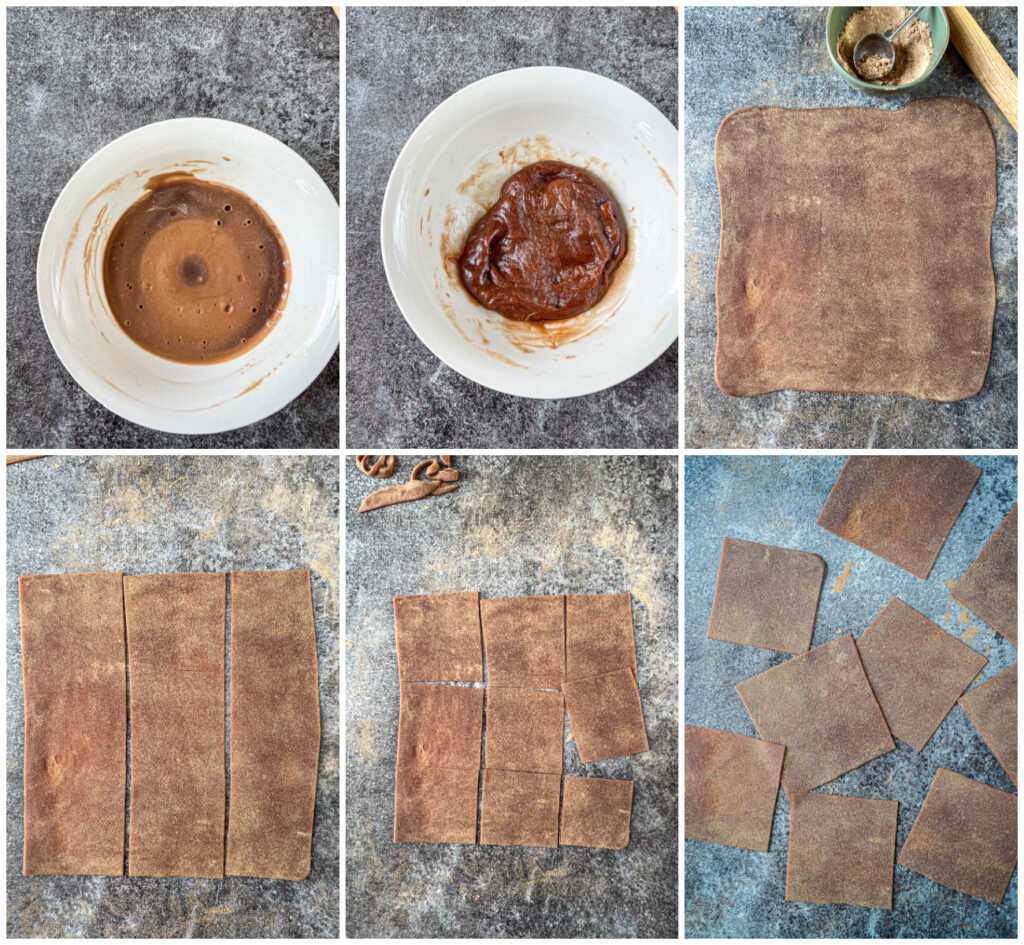
The soft and chewy base comes together easily using the microwave. You just have to work quickly while it is still warm.
After mixing everything together in a large bowl, cover lightly with plastic and microwave for a minute. Stir to evenly combine and microwave again for a minute, repeating the process for 30 more seconds, and if needed another 30 seconds for 3 minutes total.
The exact amount of heating required may vary depending on the strength of your microwave. I usually do need all 3 minutes. If you do not have a microwave, the bowl can also be placed in a steamer basket and steamed, covered, over simmering water for about 15 minutes.
Once the dough is an even, shiny color with thick and sticky texture, turn out onto a kinako cocoa powder-dusted work surface. Dust the top with more kinako and roll into a thin 9 inch (23 centimeter) square about 1/16 inch (1.5 millimeters) thick.
Use a sharp knife or pastry cutter to cut the sheet into 9 equal squares, about 3 x 3 inches (7-8 x 7-8 centimeters).
Do not waste any of the scraps! They are delicious on their own (and my kids actually preferred them without the filling). You can also make them as simply Nama Yatsuhashi by cutting the rolled out dough into about 3 x 1 inch (8 x 2.5 centimeter) strips and disregarding all of the filling instructions.
A Few More Chocolate Nama Yatsuhashi Tips
I have seen some Japanese recipes add a small splash of rum.
Make the fillings (the ganache, chocolate white bean, or both) before forming the base. The Chocolate Nama Yatsuhashi I came across in Kyoto Station had a chocolate ganache filling. I personally preferred the texture of the chocolate white bean paste.
Cover the bowl loosely with plastic wrap when microwaving. There should be a little space for excess steam to escape.
This Chocolate Nama Yatsuhashi is best within a day, stored at room temperature in an airtight container. With time, the texture will become hard and brittle. Do not refrigerate as this will speed that process up.
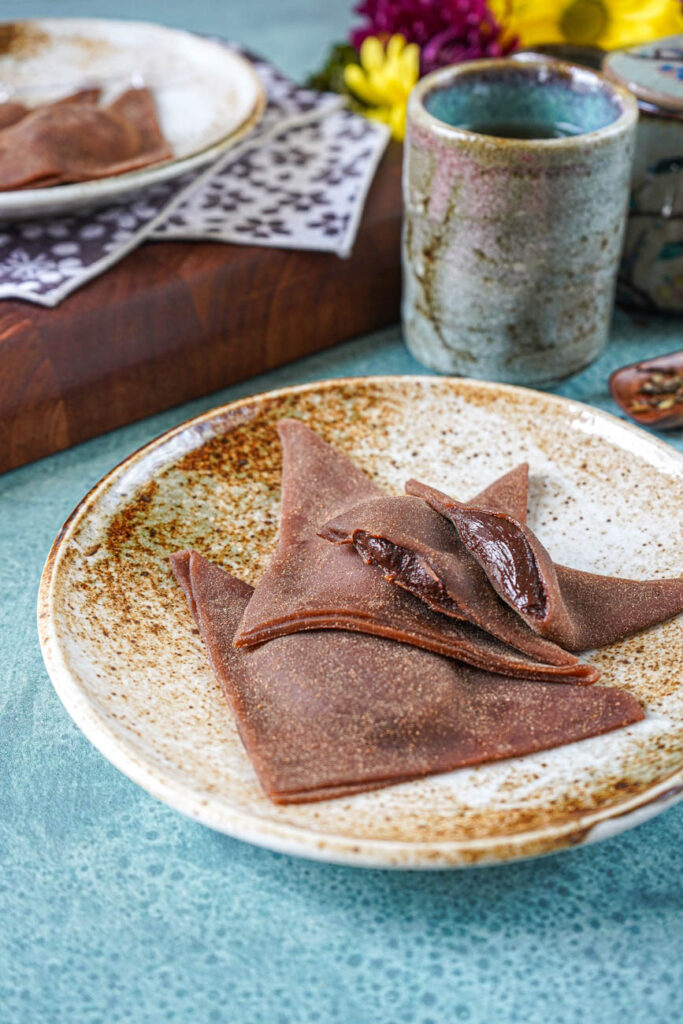
Chocolate Nama Yatsuhashi Recipe
Adapted from Just One Cookbook
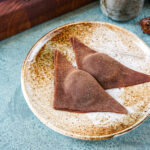
Chocolate Nama Yatsuhashi
Ingredients
Chocolate Ganache:
- 1/4 cup (60 milliliters) heavy cream
- 3 ounces (85 grams) bittersweet chocolate chips or chopped
Chocolate White Bean Filling:
- 1 ounce (30 grams) bittersweet chocolate chips or chopped
- 6 tablespoons (100 grams) Shiroan white bean paste
For Dusting:
- 2 tablespoons (14 grams) Kinako roasted soybean flour
- 1 tablespoon (5 grams) unsweetened cocoa powder
Chocolate Nama Yatsuhashi:
- 1/3 cup (40 grams) Shiratamako
- 1/4 cup (60 milliliters) hot water
- 1/2 cup (60 grams) Joshinko
- 1/4 cup (50 grams) granulated sugar
- 1 tablespoon (5 grams) unsweetened cocoa powder
- 1/4 cup (60 milliliters) hot water
Instructions
To make the chocolate ganache:
- Pour the cream into a small saucepan and place over medium heat.
- Place the chocolate chips in a medium, heat-safe bowl and set aside.
- Once the cream is steaming, but not yet at a boil, remove from heat and pour over the chocolate in the bowl.
- Allow to rest for 30 seconds, then whisk together until completely melted and smooth.
- Cover the bowl and refrigerate until firm enough to scoop into rounds, about 1 hour.
To make the chocolate white bean filling:
- In a medium bowl, melt the chocolate in 30 second increments, stirring in between, until melted and smooth.
- Fold the chocolate with the white bean paste until evenly combined. Cover the bowl and set aside at room temperature until ready to use.
To make the dusting powder:
- In a small bowl, stir together the Kinako and cocoa powder until evenly combined. Set aside.
To make the Chocolate Nama Yatsuhashi:
- Place the Shiratamako in a large microwave-safe bowl.
- Add 1/4 cup (60 milliliters) of the hot water and mix well with a whisk or spatula until there are no lumps remaining.
- Mix in the Joshinko, sugar, and cocoa powder, followed by another 1/4 cup (60 milliliters) hot water until evenly blended. If still too powdery, slowly add another small splash of water.
- Cover the bowl lightly with a sheet of plastic wrap.
- Microwave the bowl for 1 minute.
- Fold the dough with a lightly wet spatula to evenly mix, then microwave again for 1 minute.
- Repeat this process and microwave for 30 more seconds, then, if needed, another 30 seconds to create an evenly glossy and sticky dough.
- Dust a large work surface with some of the Kinako cocoa mixture.
- Place the hot, just microwaved dough on the kinako-covered surface and dust the top with a little more of the kinako mixture.
- Quickly roll the dough with a rolling pin, dusting as needed, into a thin 9 inch (23 centimeter) square sheet about 1/16 inch (1.5 millimeters). If necessary, use your hands to lightly stretch the dough into a more even shape.
- Use a sharp knife or pastry wheel to cut the sheet into 9 even squares (about 3 x 3 inches/7-8 x 7-8 centimeters).
- If you did not get the squares completely even, use a sharp knife to cut off any excess pieces.
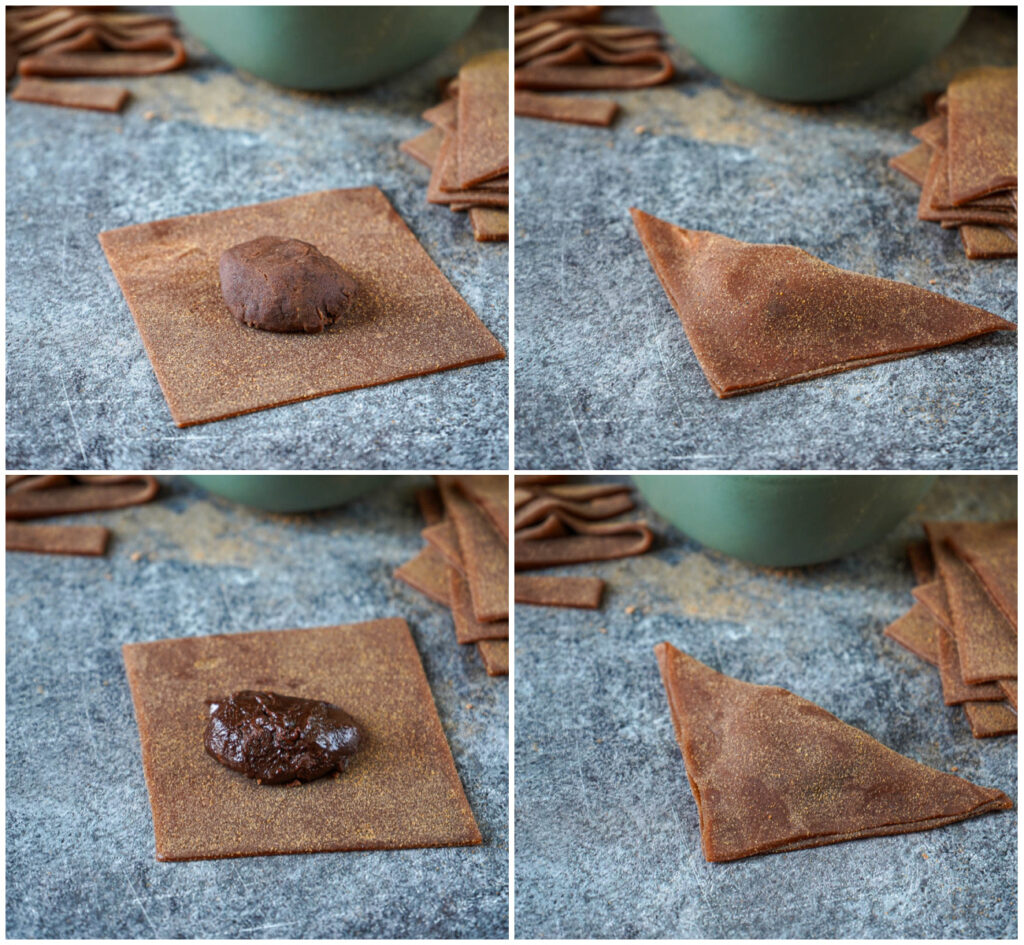
- Place a 1/2 ounce (15 gram) spoonful of either the chocolate bean paste or chocolate ganache in the center of a square.
- Fold the square over from corner to opposite corner to form a triangle. If needed, wet the edges lightly with water to help them stick.
- Repeat the process with the remaining squares and filling.
- Brush off any excess Kinako.
- Serve immediately or store in an airtight container at room temperature for up to a day. Do not refrigerate.
Leave a Reply