


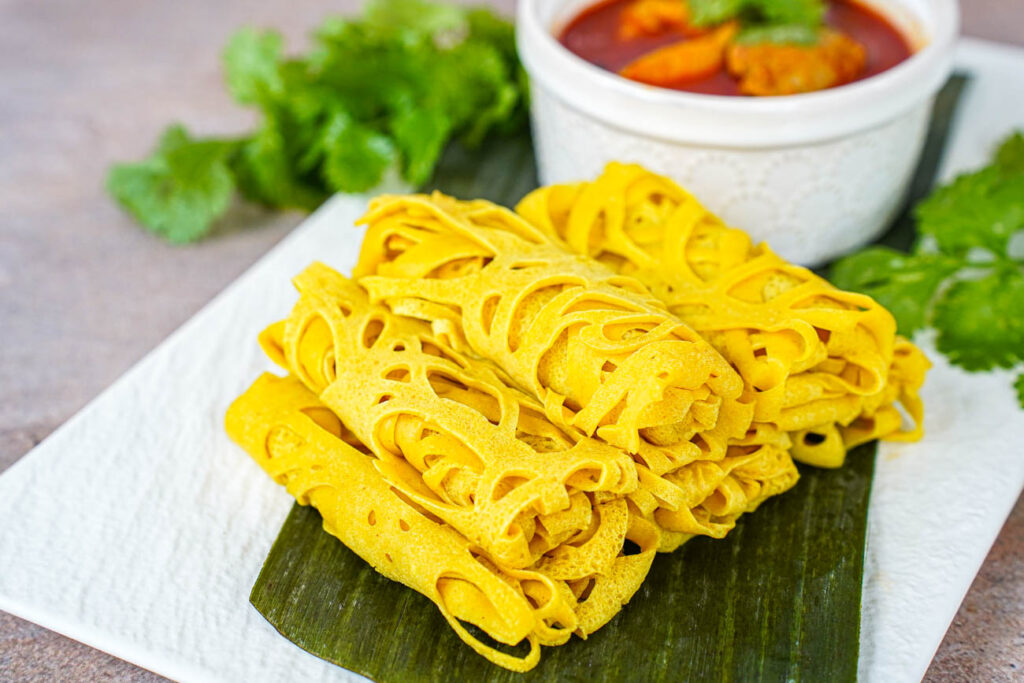
A recipe for Roti Jala (Net Bread) inspired by my time in Seattle, Washington! These Malay coconut and turmeric-based pancakes have an intricate, lacy pattern perfect for soaking up curry and other sauces.
Seattle, Washington
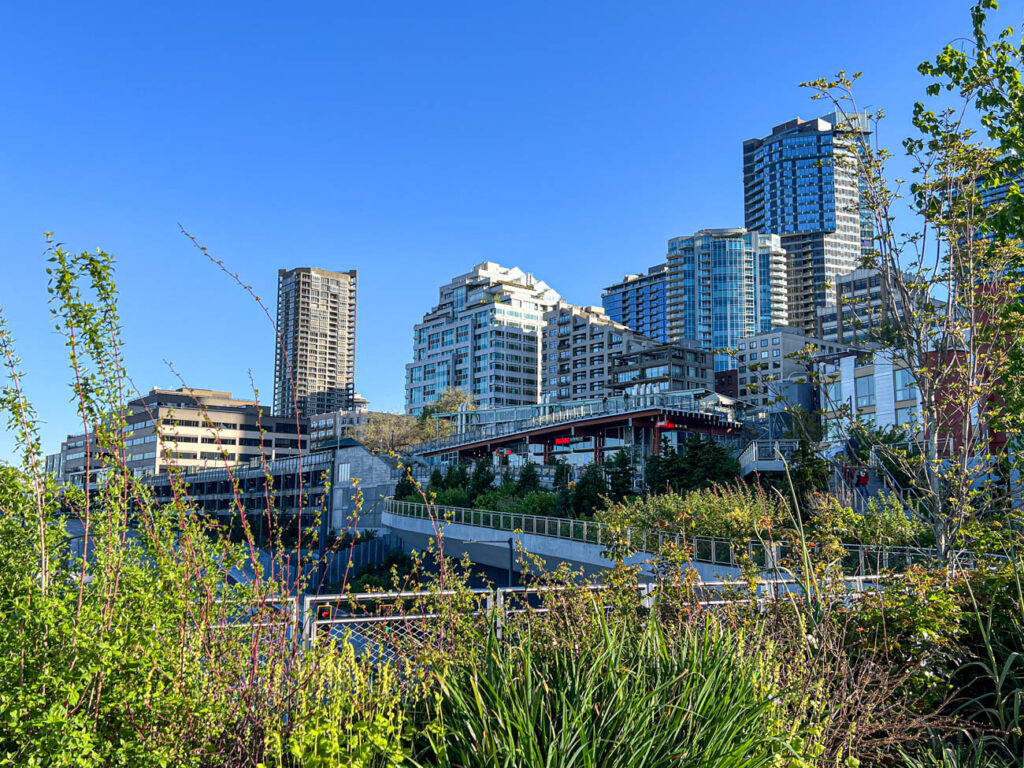
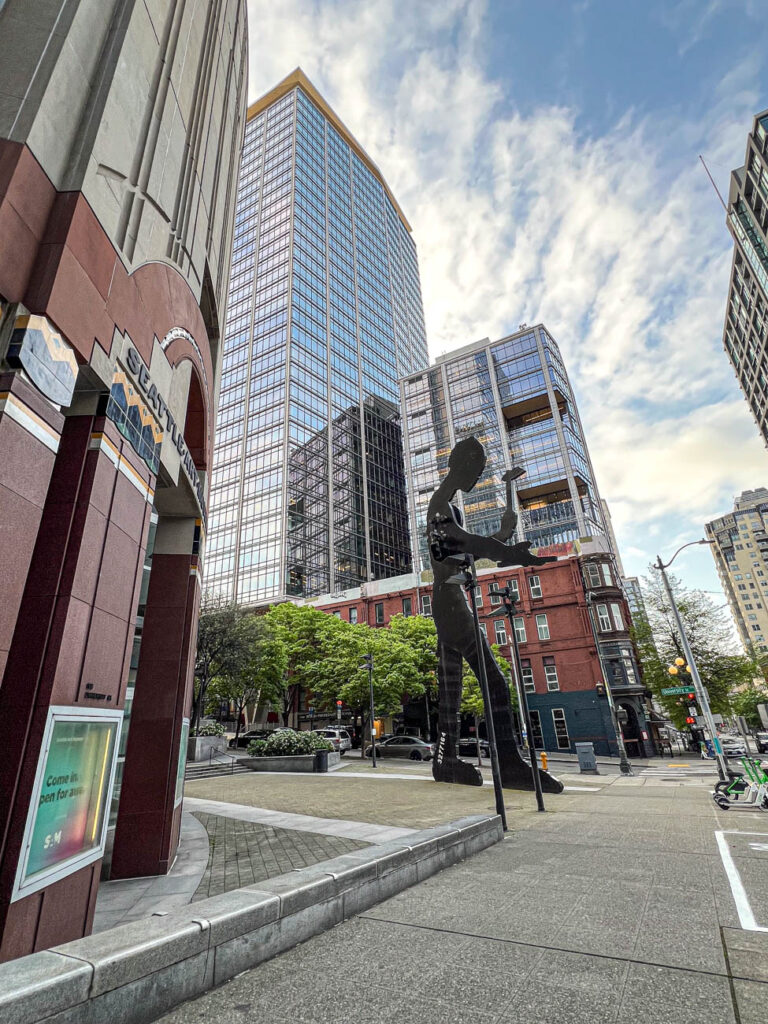
In April 2026, I spent a couple of days exploring Seattle’s Pike Place Market, Space Needle, Waterfront, and Chinatown-International District (CID).
I previously posted a recipe for Almond Cardamom Syrup with a focus on Pike Place Market.
Today, I am covering the rest of my time in Seattle along with a recipe for Roti Jala (Net Bread) inspired by my visit to Kedai Makan in Seattle’s Belltown neighborhood!
Victrola Coffee
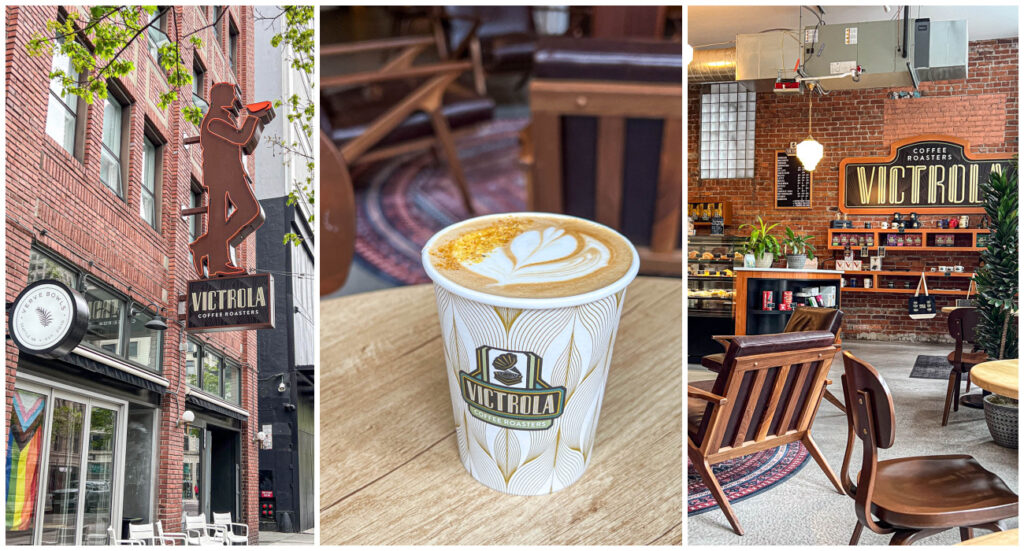
I started my first morning with coffee from Victrola Coffee’s Pine Street Downtown location.
Victrola Coffee Roasters first opened in 2000 and now has seven locations across Seattle. Their café at 108 Pine Street is easy walking distance from Pike Place Market and the waterfront with relaxed indoor seating or coffee, tea, and pastries to go.
I went with their seasonal Blood Orange Ginger Latte. It was incredibly comforting and unique with a house-made blood orange syrup and a hint of ginger.
Art on the Table
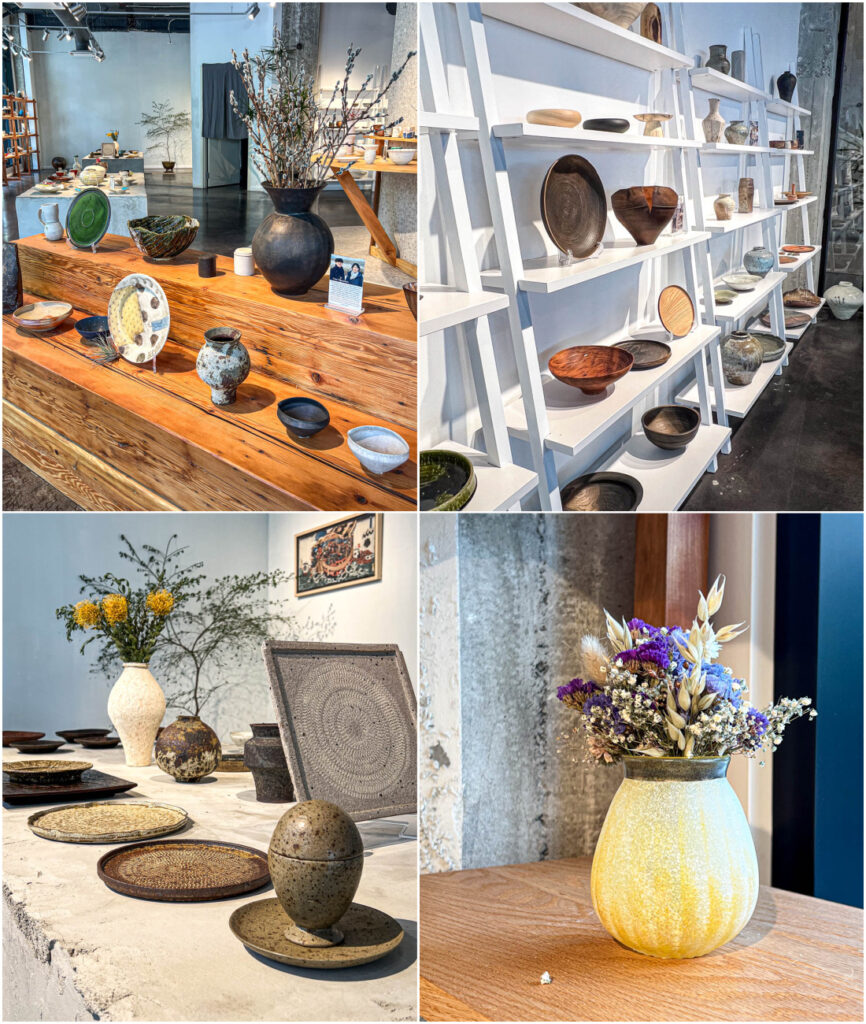
I happened to walk by Art on the Table on the way back to the hotel and was immediately drawn in by the beautiful styling.
Located at 1601 2nd Avenue, this specialty shop showcases handmade Japanese ceramics, glass, woodworks, and kitchenware with a focus on the artisans behind the art.
MUTO
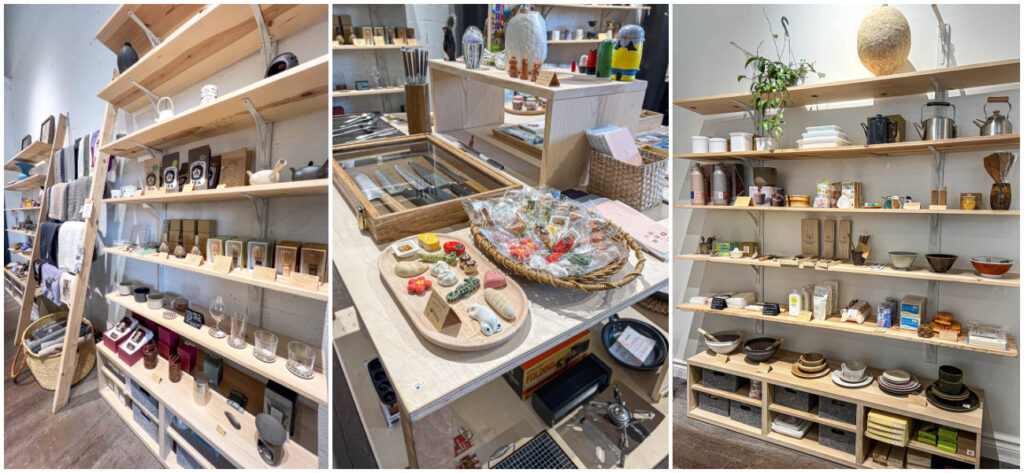
Just down the road (and a sister store to Art on the Table) is MUTO at 1610 1st Avenue. This fun store has an assortment of Japanese-based stationery, houseware, kitchen and dining items, bento supplies, and unique accessories.
I ended up taking home a Tamagoyaki chopstick rest and some stickers for the kids. There is also a second location at Bellevue Square.
Moore Coffee
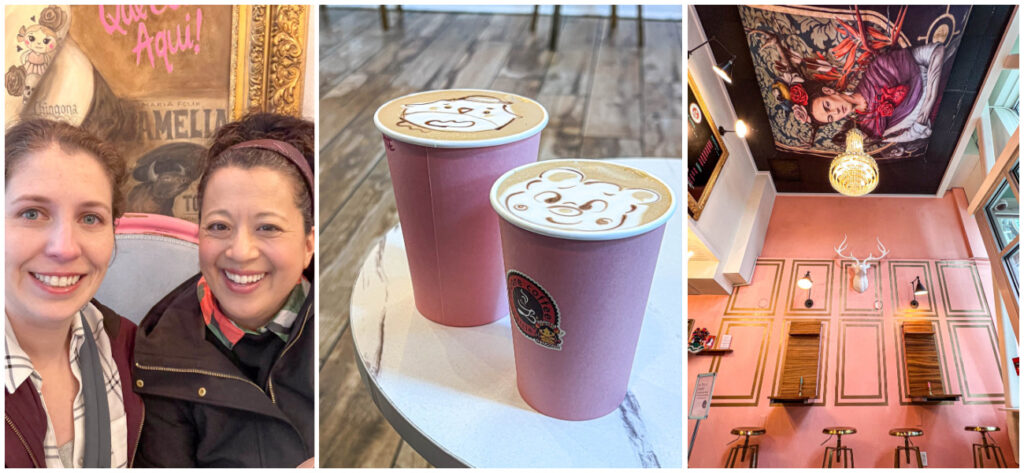
During this visit to Seattle, I got to meet Terumi of An Emerald City Life in person! Our first stop was Moore Coffee at 112 Stewart Street before spending some time at the Seattle Art Museum.
Moore Coffee is a Latina owned coffee shop featuring specialty coffee and tea with artistic latte art plus small plates and pastries.
The original shop on 2nd Avenue was under renovation during our visit, so we went to their smaller location around the corner on Stewart Street. There is a handful of indoor seating or you can get the drinks to go.
Terumi ordered a Latte and I went with the Cafe Madrid- a sweet and creamy latte inspired by Spain.
Belltown
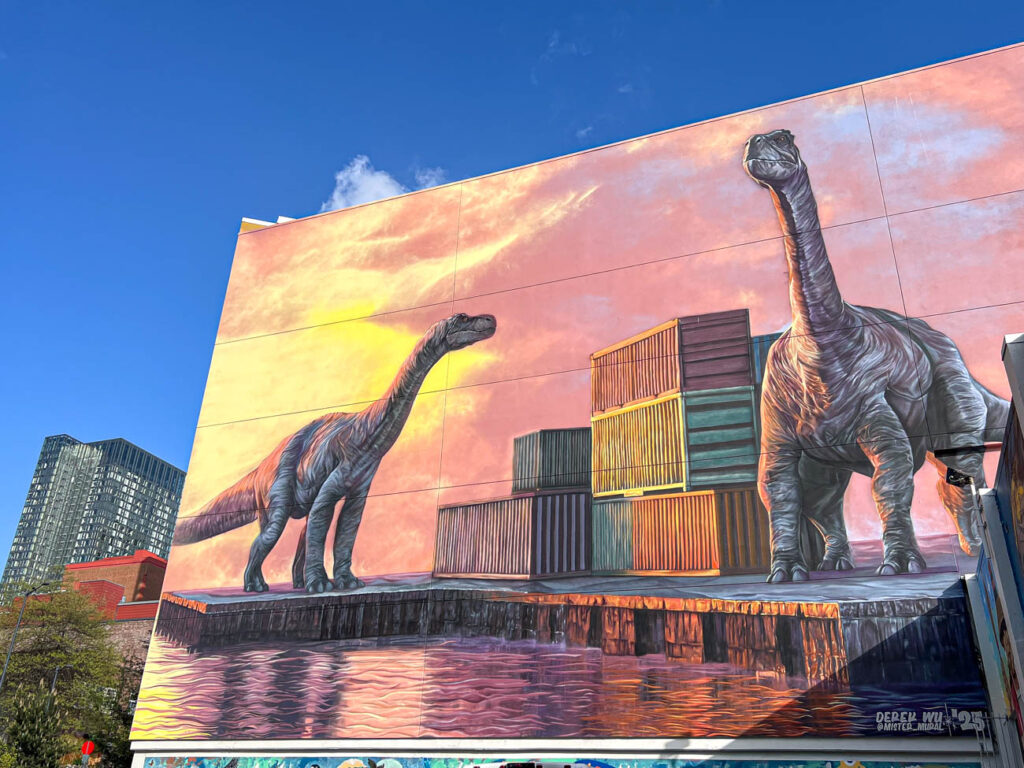
Belltown is one of the densest neighborhoods in Seattle and centrally located along the Elliott Bay between Pike Place Market and the Space Needle.
Kedai Makan
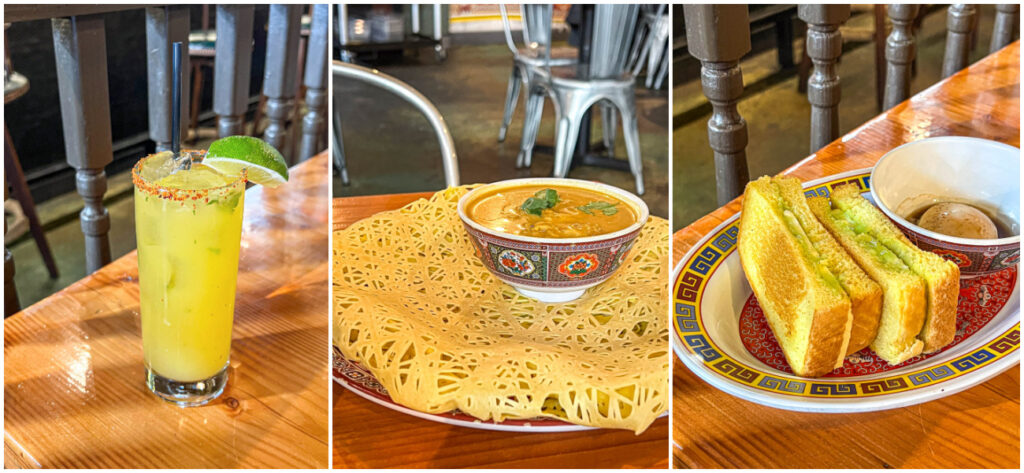
While researching restaurants, I was excited to learn about Kedai Makan and made dinner reservations for my first day in the city.
Kedai Makan has a location in Belltown at 2234 1st Avenue (0.3 mile/483 meters from Pike Place Market) with a second spot in Capitol Hill. They are currently open daily for lunch and dinner with a wonderful variety of Malaysian classics, smaller plates, desserts, cocktails, and non alcoholic drinks plus vegetarian, vegan, and gluten-free options.
I overdid lunch and did not have room for a full meal, so instead went with a couple of smaller plates:
- Kedai Spice- cocktail with tequila, orange, lime, Thai basil, and Thai chili.
- Roti Jala- net bread with flour, egg, turmeric, and coconut. I picked chicken curry for pairing, but chickpea curry was also an option.
- Kaya Toast– Toast with Kaya jam (coconut Pandan), butter, and a poached egg.
Mixed Pantry
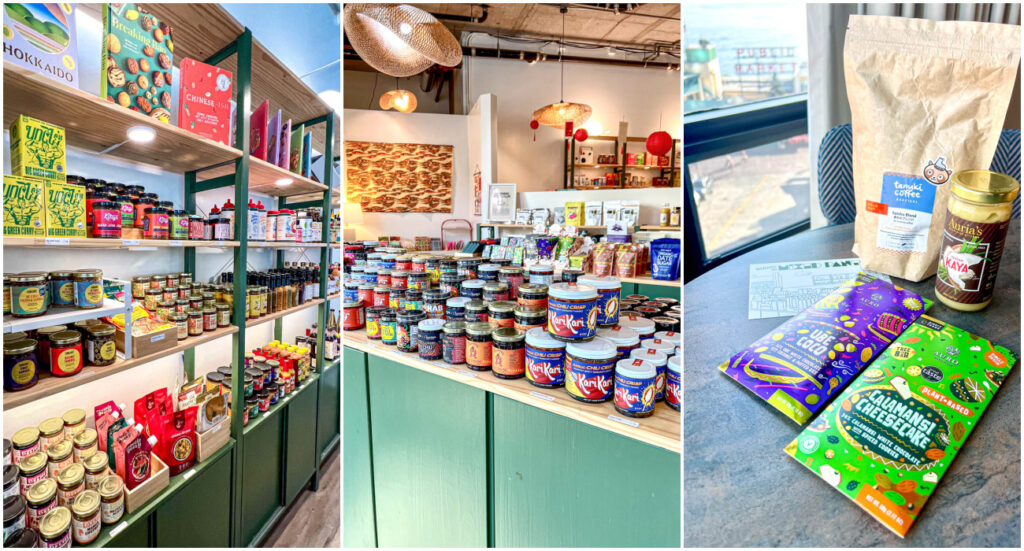
While walking to Kedai Makan, I spotted Mixed Pantry across the street at 2233 1st Avenue and it was such a wonderful visit.
This incredible shop features curated pantry staples from across Asia along with cookbooks, smaller kitchen items, and textiles. I picked up some coffee for Chad, plus Kaya Jam (it was fresh on my mind after enjoying the Kaya Toast) and chocolate with Filipino-inspired flavors.
Space Needle
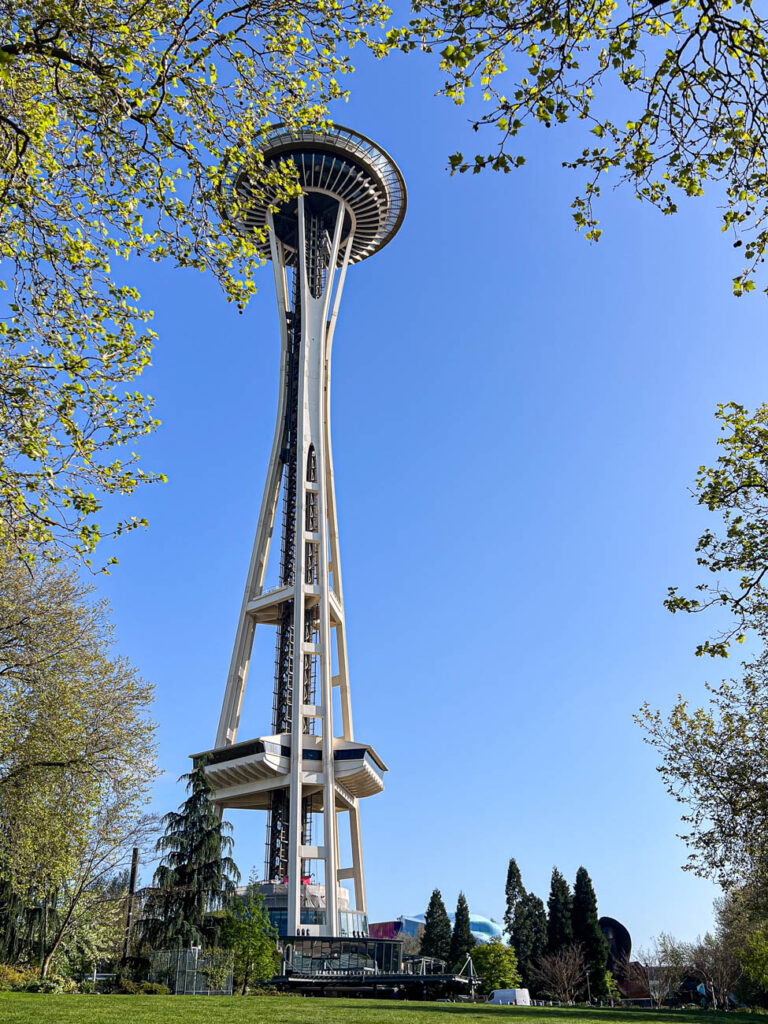
Seeing the Space Needle in person has been on my bucket list for a while now and I am so glad I finally got to fit it into this visit!
Built for the 1962 World’s Fair, the Space Needle rises up from the Seattle Center on the site of an old fire station to an impressive 605 feet (184 meters) and is now one of the most recognizable structures in Seattle.
At the time of its construction, it was the tallest building west of the Mississippi River and, on April 19th, 1999, was designated as an official City of Seattle historic landmark.
With the most recent renovation in 2017-2018, The Loupe at 500 feet (152 meters) is currently the world’s only revolving glass floor. It makes a full rotation in about 45 minutes using 12 motors.
The previous wire barriers have also been replaced with glass panels for a fully panoramic view of the surrounding skyscrapers, Elliott Bay, and Lake Union. On clear days, you may also be able to see all the way across Puget Sound to the islands and mountains in the distance and possibly Mount Rainier.
As a note, I am very sensitive to changes in motion and definitely started to feel a little dizzy after about 15 minutes on the rotating platform. If I were to visit again, I would probably take about 1/2 a motion sickness tablet first.
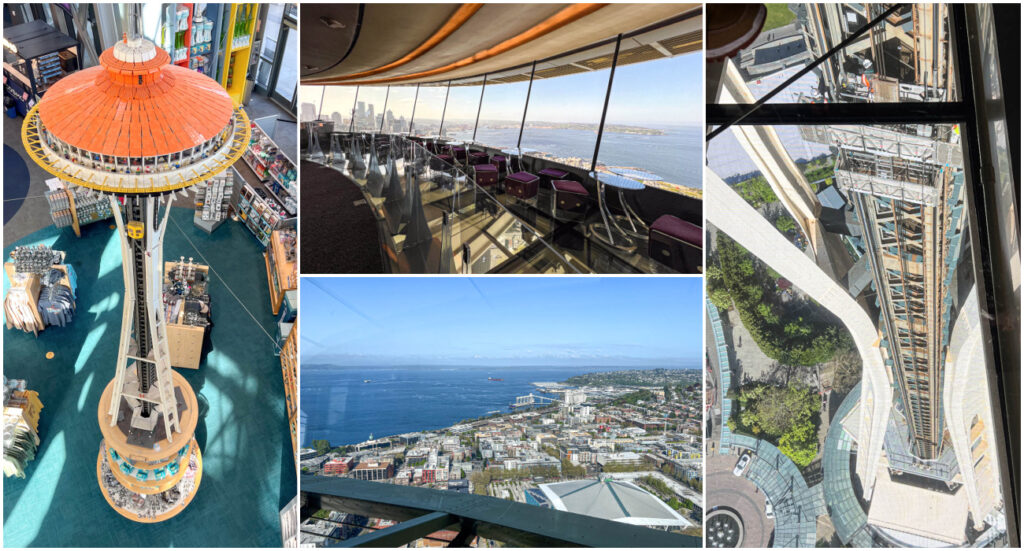
For peak seasons and hours (particularly summer and sunset), getting tickets through the official website ahead of time is recommended (but I personally did not do this as I was keeping an eye on the weather and trying to get the clearest moment). If you are planning on visiting Chihuly Garden and Glass, there is a combination ticket available.
If buying online, arrival times are scheduled in 15 minute increments. Allow about 30 minutes to get from the entrance to the observation deck. Along the walkway to the elevator, there are photos and descriptions covering the Space Needle’s history. No large bags are permitted, but there is a free 2 hour bag check.
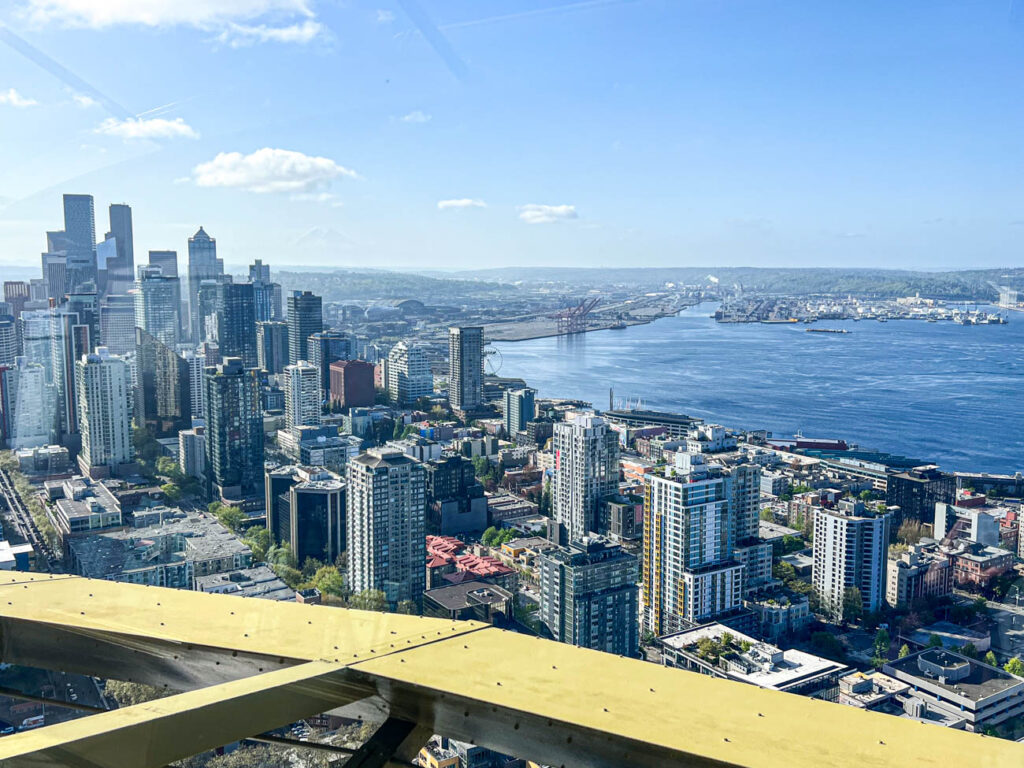
I walked 1 mile (1.6 kilometers) from Pike Place Market, but there is a monorail from Westlake Center to Seattle Center that takes about 3 minutes.
My original plan was to walk there and take the monorail back, but I was still slightly dizzy after reaching the ground and opted to avoid public transportation for a bit.
Chinatown-International District
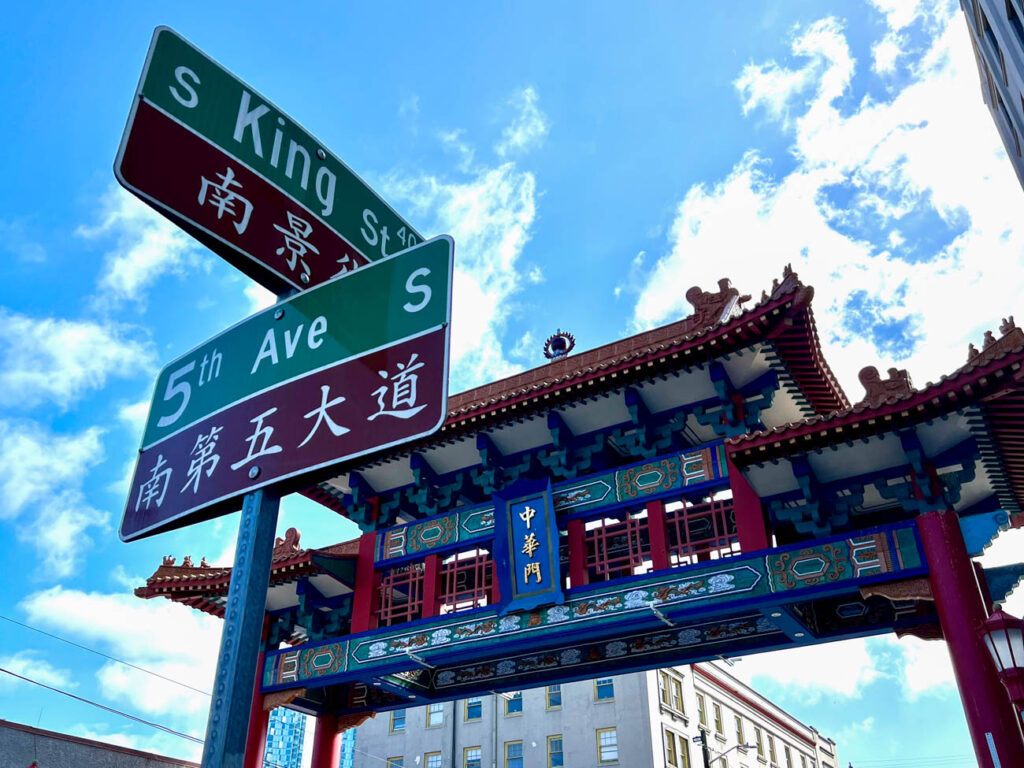
Seattle’s Chinatown-International District (CID) is located just south of Downtown Seattle and is one of the city’s oldest neighborhoods with a history dating back to the 19th century.
From Pike Place Market, I walked to the Symphony Station and took the Light Rail only a couple of minutes to the International District/Chinatown Station.
Fuji Bakery
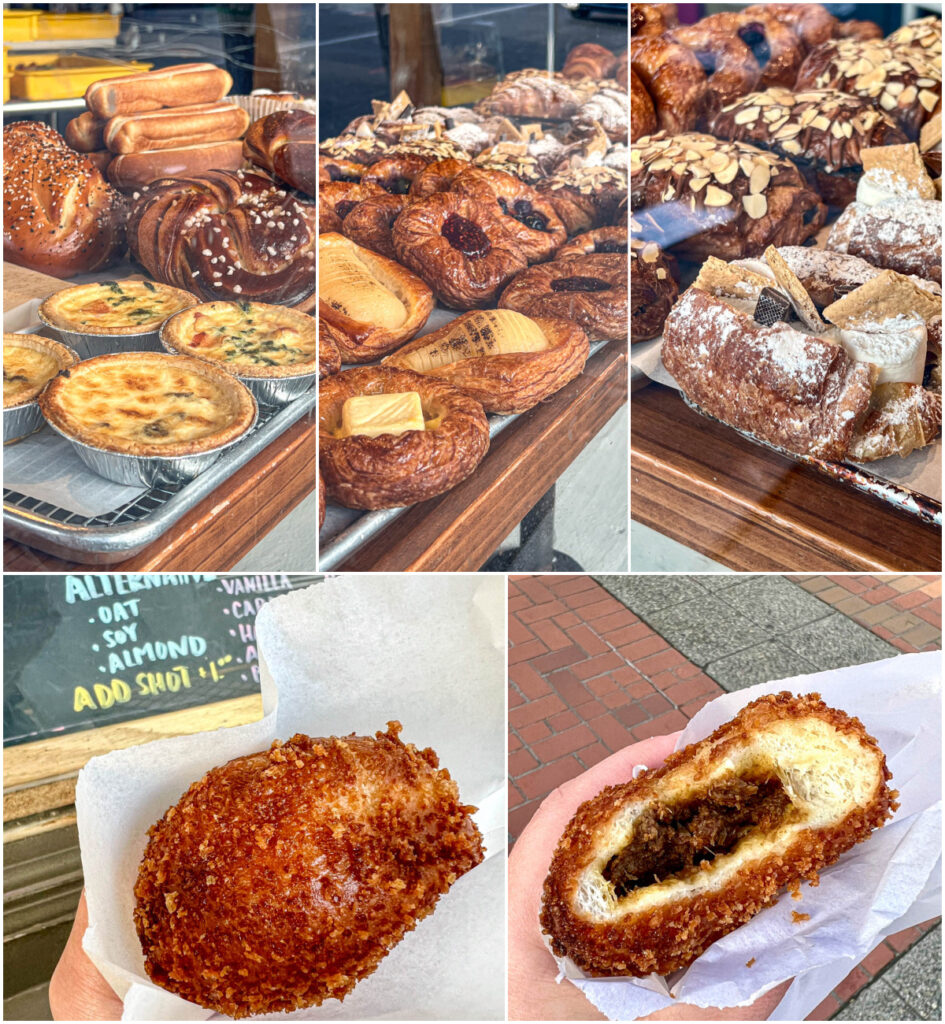
My very first stop after arriving in Chinatown-International District was Fuji Bakery for Curry Pan! Located at 526 S King Street with a second spot in Elliott/Interbay, this artisan Japanese-French bakery has a stunning assortment of cakes, croissants, doughnuts, savory treats, bread, and more.
I especially loved their signature Beef Japanese Curry Bread (Kare-Pan). The chewy bread base is filled with a house-made beef curry, coated in breadcrumbs, and deep-fried until golden.
Hood Famous Bakeshop
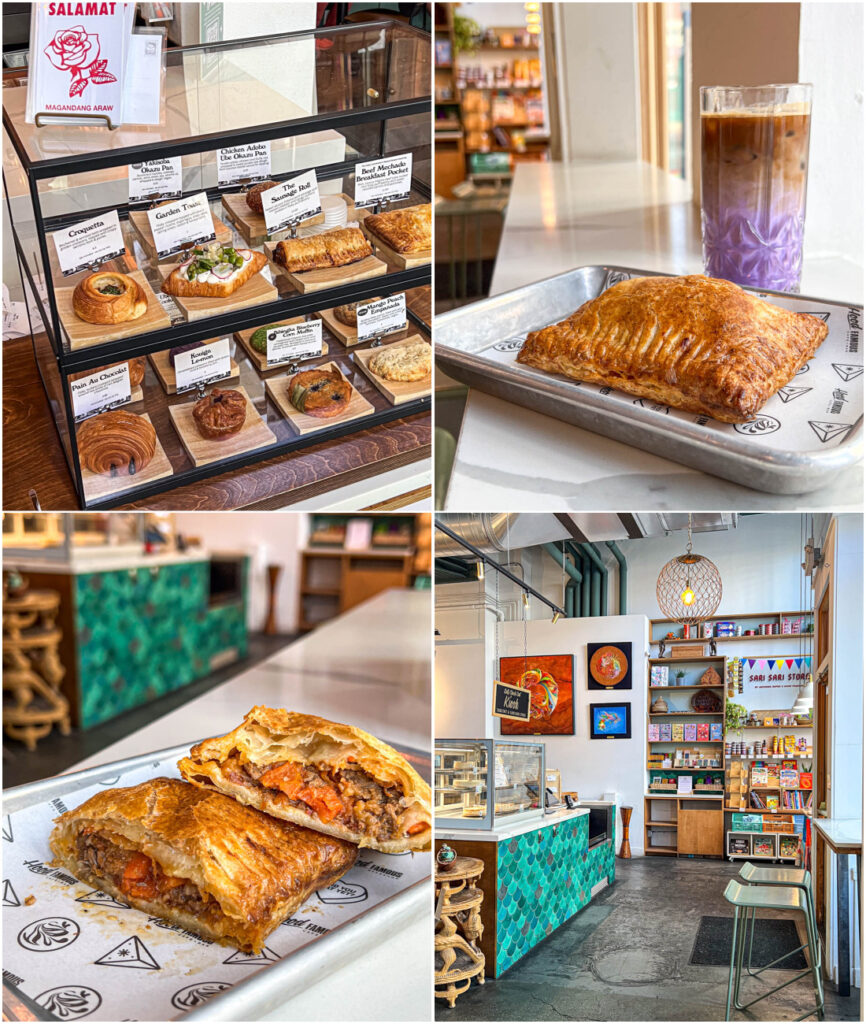
Another favorite stop was Hood Famous Bakeshop at 504 5th Avenue S #107a.
Hood Famous Bakeshop is just across the street from the light rail station with variety of sweet and savory pastries, cheesecake, cookies, coffee, tea, other signature drinks, and more. The Sari Sari Store in the corner also features pantry items, apparel, and books. As a note, this location is closed on Mondays.
There were so many amazing options, but I went with the Iced Ube Latte (housemade ube simple syrup, two shots pulled espresso, milk, ice) and Beef Mechado Breakfast Pocket (Filipino braised beef tomato stew with potatoes and carrots in a golden puff pastry).
Kinokuniya
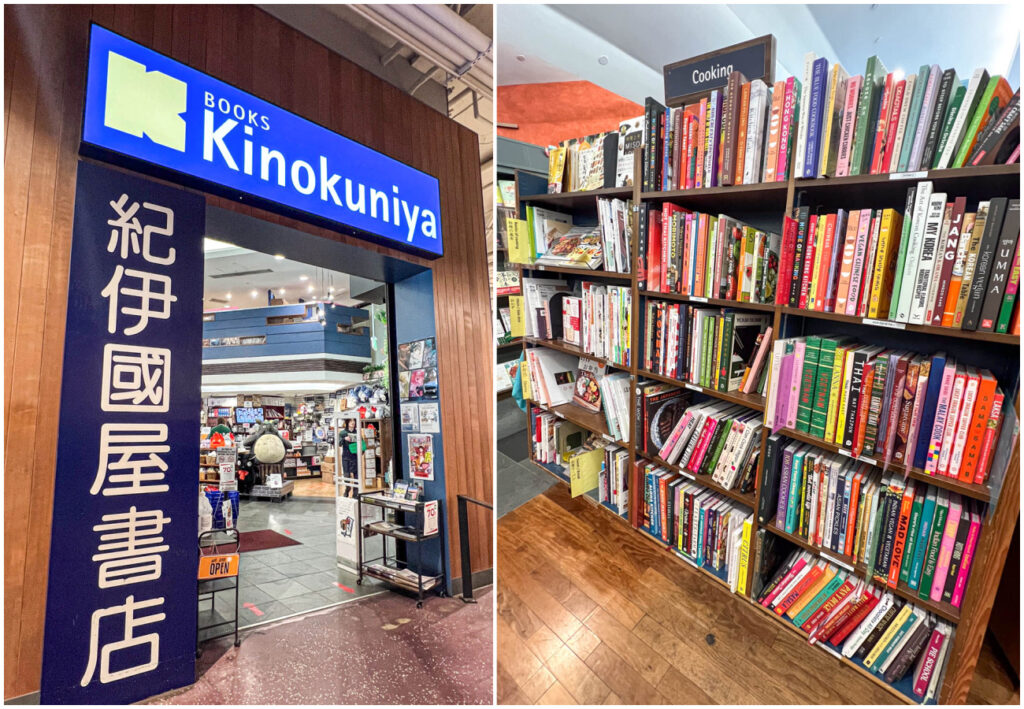
One of my main reasons for visiting CID was actually the Kinokuniya within Uwajimaya (large Japanese grocery store with a food court) at 600 5th Avenue S.
Kinokuniya is a Japanese bookstore with an assortment of cookbooks (many English favorites and Japanese options as well) plus a large section for learning Japanese, other books in English, manga, DVDs, stationary, and more.
I have so far visited their locations in Torrance, Little Tokyo, New York City, and the primary flagship store in Shinjuku, Tokyo and now get to add Seattle to the list!
Seattle Waterfront
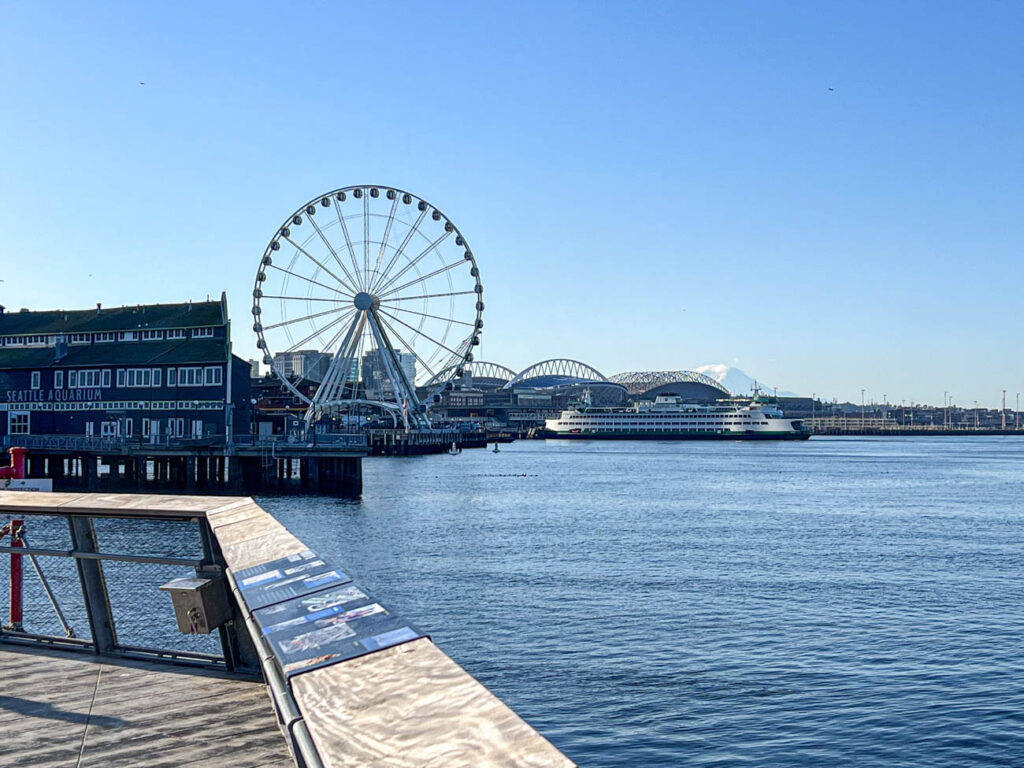
The waterfront is another part of Seattle that recently underwent a massive renovation with the project’s completion in September 2025.
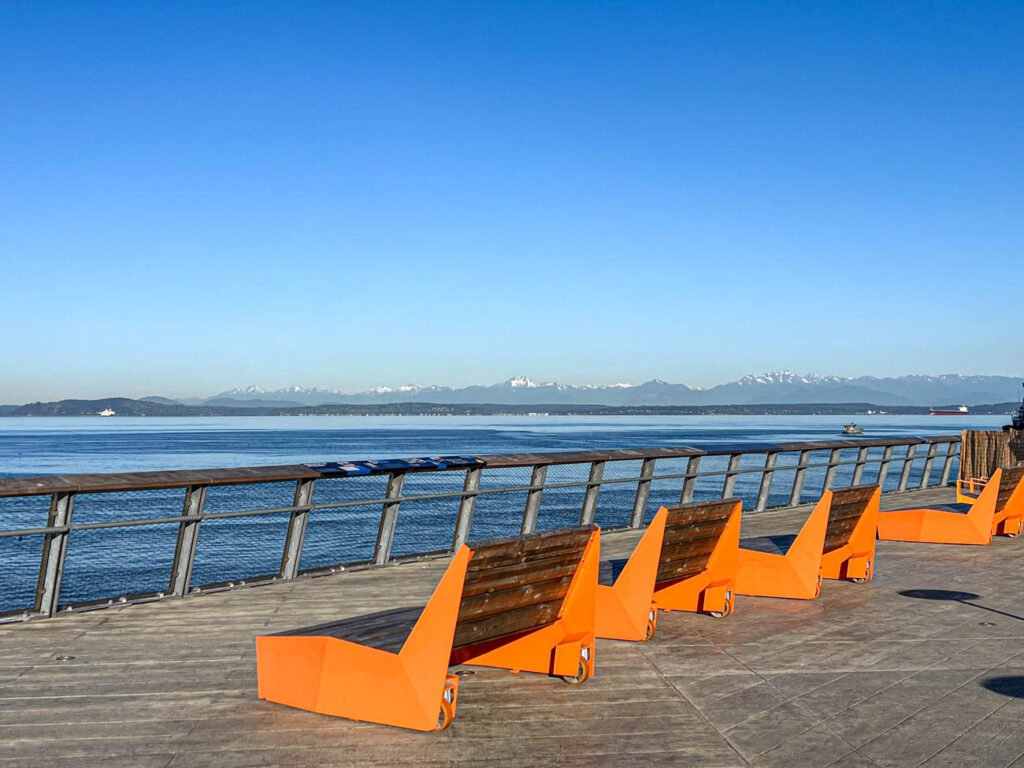
Stretching from Olympic Structure Park to Pioneer Square, this area along Elliott Bay is filled with public parks, restaurants, attractions such as the Seattle Aquarium and Seattle Great Wheel, cruises, and shopping.
Boon Boona Coffee
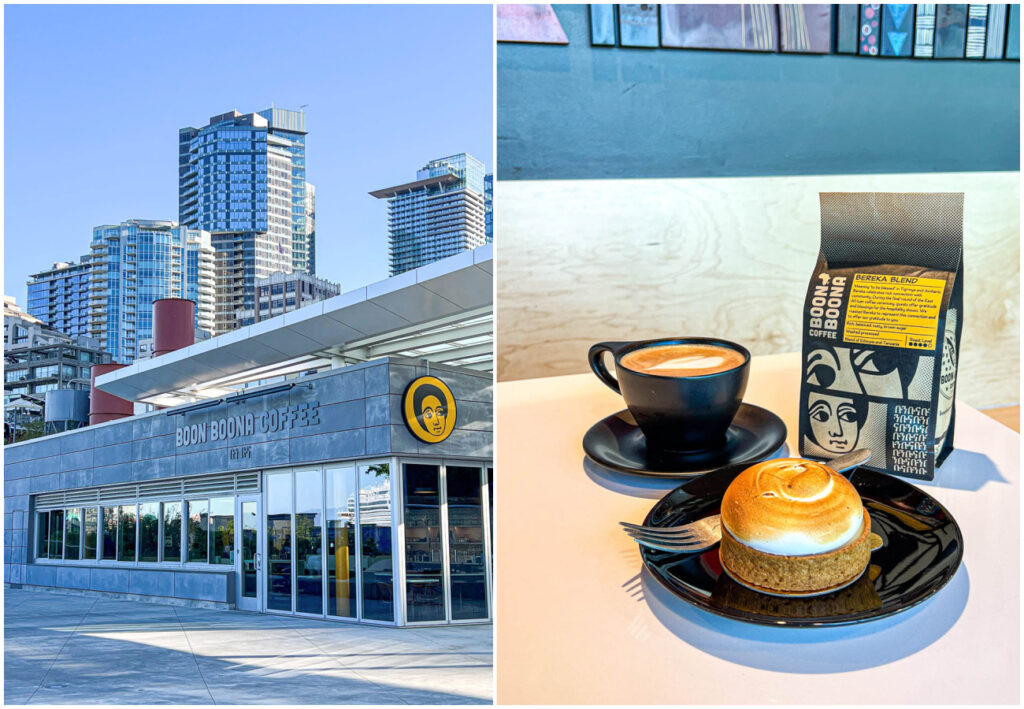
Boon Boona Coffee started in Renton and opened their Overlook Walk location earlier this year shortly before my visit.
They are now open 8-8 daily with an assortment of coffee, tea, wine, beer, and sweet/savory treats inspired by Eritrean cafes. There is indoor and outdoor seating with beautiful views of the water.
I started the day with a Coconut Kisses Mocha (house-made ganache and coconut almond syrup) and a Lemon Tart. I also picked up a bag of Bereka Blend Coffee to take home (sourced from Ethiopia and Tanzania- rich, balanced, and nutty with brown sugar notes).
Ivar’s Acres of Clams
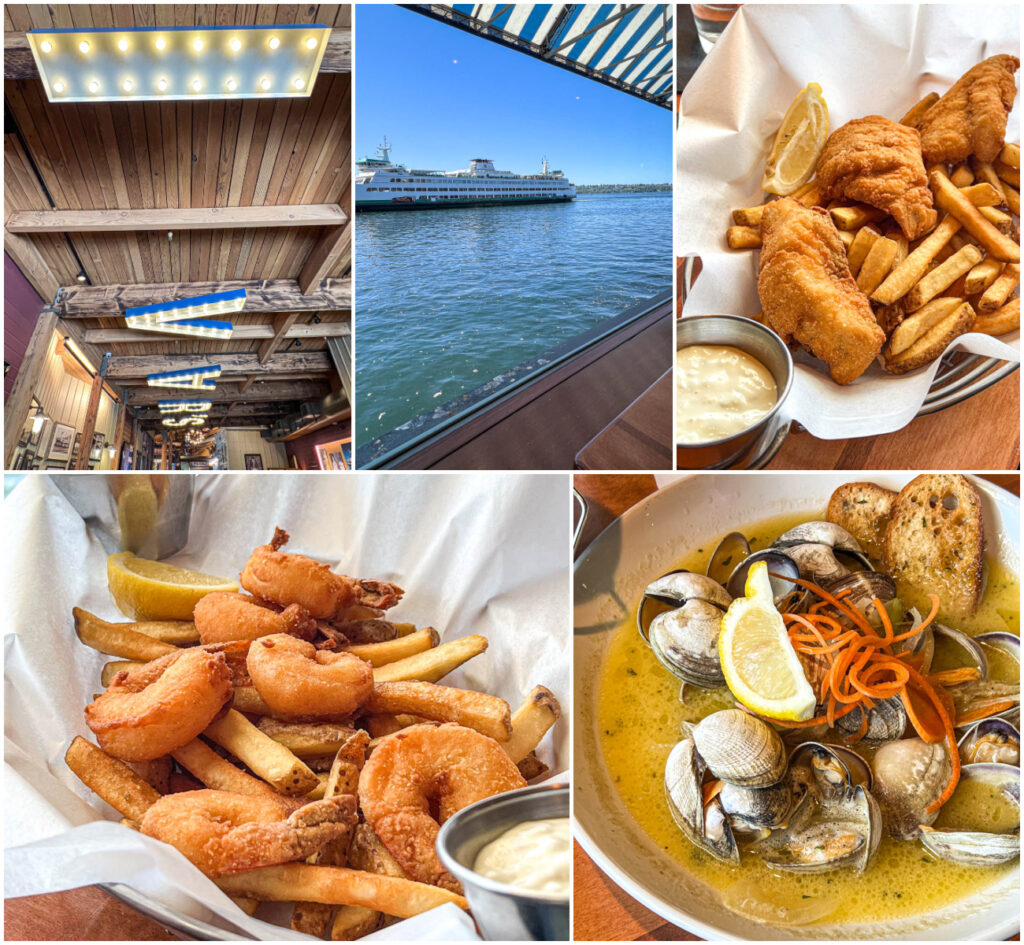
Before heading to the airport, my friends took me to Ivar‘s Acres of Clams on the Seattle Waterfront.
It was such a fantastic end to the trip with amazing views right on the water. Open for lunch and dinner since 1946 (with the original aquarium/seafood bar dating to 1938 and now 18 fast casual seafood bars and 3 waterfront restaurants in the area), they feature a variety of starters, soups, salads, classic seafood, Northwest favorites, sandwiches, drinks, desserts, and a kid‘s menu.
We enjoyed the Ivar’s World Famous True Cod Fish ‘n Chips (3 piece Alaska cod and French fries), Prawns ‘n Chips (6 piece jumbo prawns and French fries), and Fresh Sautéed Manila Clams (white wine, butter, fennel, mirepoix, grilled toast points).
Roti Jala (Net Bread)
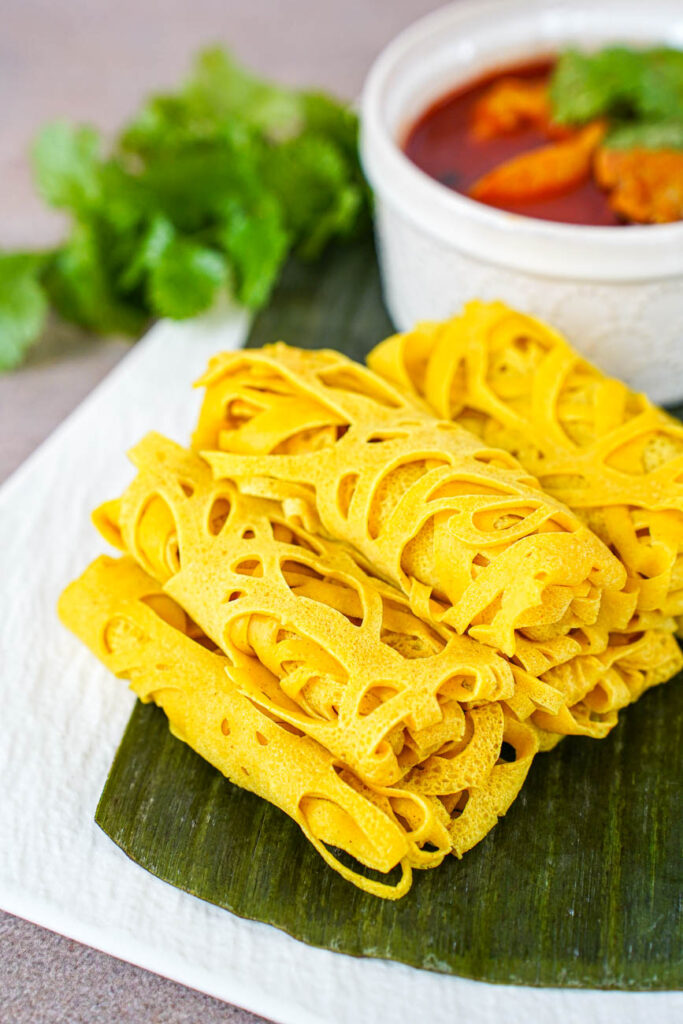
To pair with this post, I was inspired to make Roti Jala after my visit to Kedai Makan.
Also known as Roti Kirai, Net Bread, Roti Renjis, or Net Crepes/Pancakes, Roti Jala is a delicate Malay bread from Malaysia, Singapore, and parts of Indonesia. It has an intricate, lacy net-like pattern perfect for soaking up curry and other sauces.
It may look time consuming, but actually comes together relatively easily with only a few ingredients and a couple of notable tools. Simply whisk together the ingredients until smooth, then allow to rest briefly before straining and drizzling in circles across a hot pan.
Once set on one side, carefully remove from the pan and repeat with the remaining batter. At Kedai Makan, the Roti Jala were served flat to really show off the pattern. I opted to roll them into cylinders for easier handling. Another option is to fold into quarters.
Enjoy warm or at room temperature alongside chicken curry (Kari Ayam), a vegetable-based curry, Chicken Rendang, or other savory sauces.
Store leftover Roti Jala in the refrigerator in an airtight container for up to three days between sheets of parchment paper.
A Few Roti Jala (Net Bread) Tips
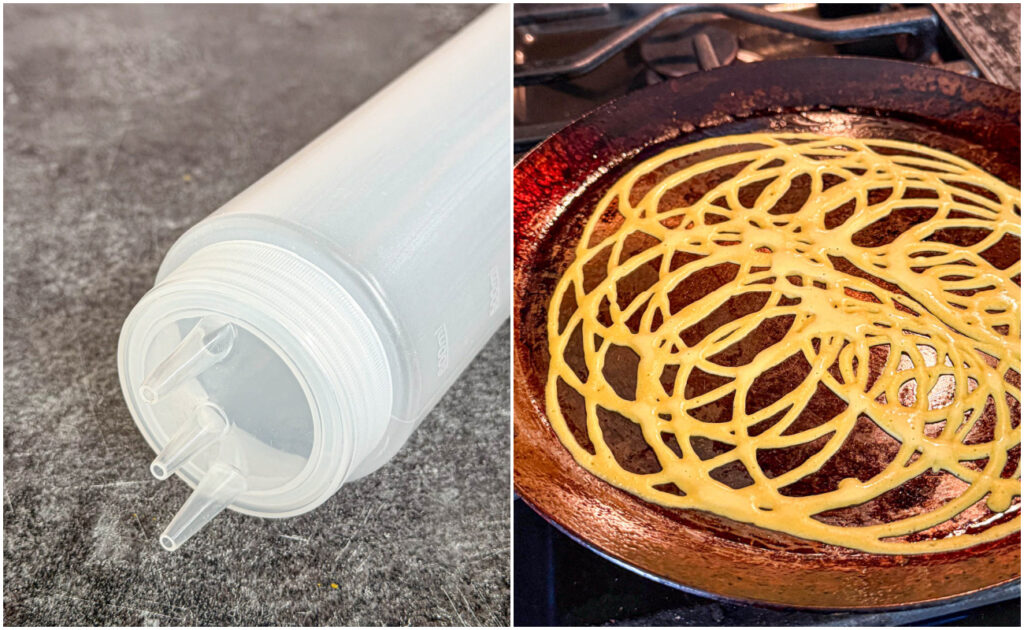
Traditionally, Roti Jala is made with a funnel-like dispenser that has multiple spouts to create the net-like pattern while swirling over a hot pan. I was able to find one online with three spouts by searching for Roti Jala Dispenser or Three Hole Squeeze Bottle.
I whisked the batter by hand, but have also come across recipes that mix everything together in a blender until smooth.
Strain the rested batter before adding to the squeeze bottle or Roti Jala maker. If any lumps remain, it will clog the nozzles.
The exact amount of water may vary based on your coconut milk and how the flour was measured. Mix the canned coconut well before using, then add just enough water to create a slightly thin batter that is easily able to be squeezed through a dispenser but still hold the delicate shape in the pan.
Allow the batter to rest for about 20 minutes to give the flour a chance to relax and create a softer texture before straining.
Use a non-stick or greased pan to keep the batter from sticking. It will be very delicate and may tear if difficult to remove. I personally went with my well-used steel crepe pan.
Cook the Roti Jala on one side only until the top is set with no moisture remaining. This should take about one minute. Adjust the heat as needed between low and medium-low as needed to cook the bottom without adding color and giving the top a chance to heat through.
If undercooked or if the resting time is skipped, the Roti Jala may have a rubbery texture.
If the pattern melts together in the pan, the batter may be too thin. Slowly whisk in a little more flour, strain, and try again until thick enough to easily squeeze through the bottle and hold its shape. If it is too thick to squeeze through the dispenser or mold, slowly whisk in a little more water.
Looking for a vegan option? Love is in My Tummy has a recipe for Vegan Roti Jala without the use of eggs.
The vibrant yellow color is naturally created with the ground turmeric. I have also seen green Roti Jala with pandan or blue with butterfly pea flower.
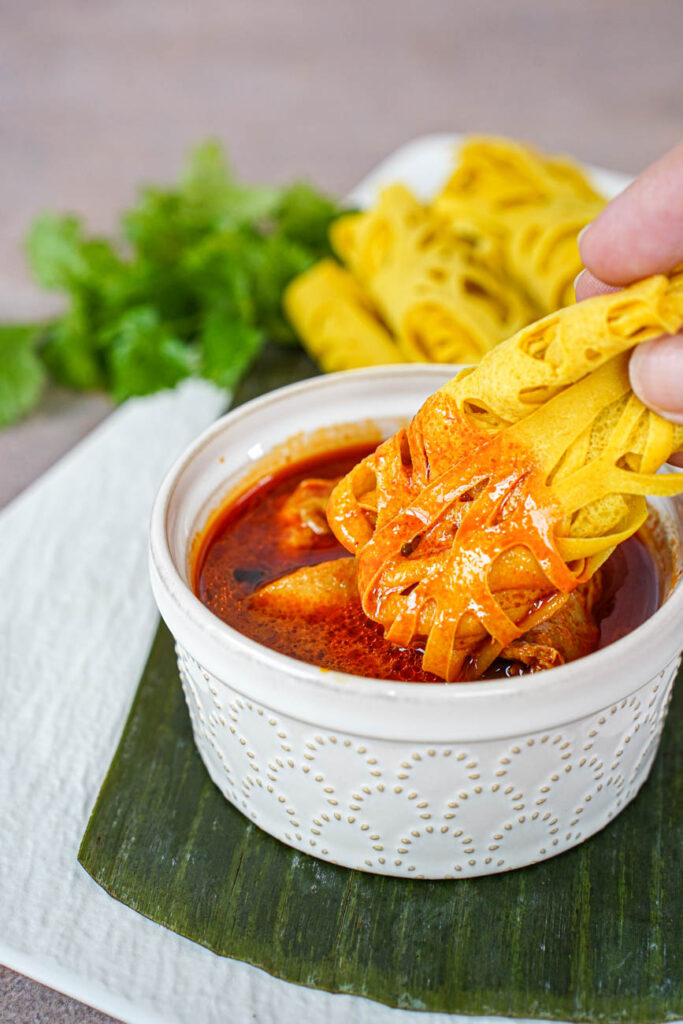
Roti Jala (Net Bread) Recipe
Adapted from Wok and Skillet
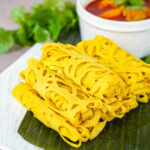
Roti Jala (Net Bread)
Ingredients
- 1 cup (125 grams) all-purpose flour
- 1/2 teaspoon ground turmeric
- 1/4 teaspoon fine salt
- 1 large egg
- 3/4 cup (180 milliliters) canned coconut milk mixed well before measuring
- 1/2-3/4 cup (120-180 milliliters) water
- vegetable oil for pan-frying
- chicken or vegetable-based curry for serving
Instructions
- In a large bowl, whisk together the flour, turmeric, and salt.
- Whisk in the coconut milk and egg, then slowly whisk in the water to create a smooth batter thin enough for drizzling while still holding its shape. If too thick, slowly add a little more water. If too thin, whisk in a little more flour. Alternatively, all the ingredients can be blended in a large blender until smooth.
- Cover the bowl with a towel or plastic wrap and set aside at room temperature for 20 minutes.
- Whisk the mixture again, then strain through a fine mesh sieve. Transfer to a roti jala maker/dispenser or squeeze bottle with at least 3 holes.
- Place a wide skillet over medium low heat and grease with a very thin layer of vegetable oil using a towel or oil brush.
- Once heated, use the squeeze bottle to make swirls of batter across the pan in a lacy pattern.
- Cook just until the top is set, about 1 minute, then transfer to a plate using a wide spatula. The bottom should not brown. Repeat with the remaining batter, greasing the pan as needed.
- Serve warm or at room temperature with desired curry or other sauce. Keep flat or fold as desired- either into quarters or by folding in the sides and rolling up into a cylinder.
Mimi Rippee
Well I’ve been to Malaysia but it seems I missed out on these! Amazing!