
Effortless Japanese Cooking: Super Delicious Homestyle Recipes, written by Akino Ogata, features a comforting collection of over 100 recipes designed for the home cook with easy-to-follow step-by-step instructions and photography. A few highlights include Crispy Eggplant in Broth, Tuna Tataki with Garlic Chips, Hiroshima-style Okonomiyaki, Green Tea Soba Salad, and Fluffy Japanese Pancakes. I will also be sharing her recipe for Tatsutaage (Marinated Fried Chicken) at the end of the post.
Disclosure: I received this book from Tuttle Publishing in exchange for my honest review. All comments and opinions are my own.
Effortless Japanese Cooking is currently available for preorder and set to release on October 13th, 2026.
Akino Ogata
Akino Ogata is a professional pastry chef and the creator behind Kitchen Princess Bamboo, “a YouTube channel where she shares authentic Japanese cooking, family favorites and trending recipes with over 400,000 international subscribers.”
She is currently based in Nara, Japan and spent part of her childhood on Amami Oshima. This is Akino’s debut cookbook.
Effortless Japanese Cooking
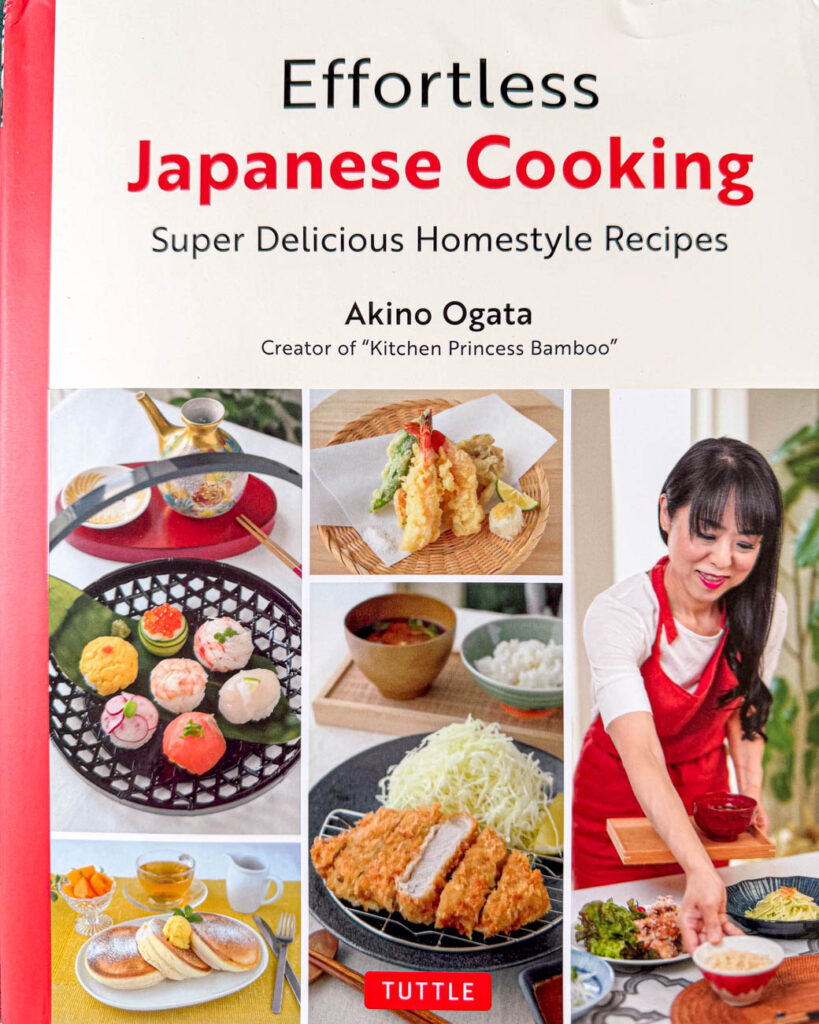
Akino begins Effortless Japanese Cooking with an introduction of her family and how they inspired her passion for cooking.
For those new to Japanese cuisine, she has put together an incredibly helpful guide to basic tools and pantry essentials. She also covers seasonal menu planning, bento assembly for kids and adults, and make-ahead tips. I especially love the notes on repurposing leftovers to avoid waste.
Chapters are divided according to the following: Vegetables in the Spotlight, Eggs & Tofu: Everyday Protein, Seafood Stories & Traditions, Hearty Meat and Poultry Dishes, Noodles and Rice, and Mochimochi Fuwafuwa: Japanese Sweets & Drinks. The contents page has a list of included recipes with page number for easy reference.
Akino also provides the photography. Every recipe is paired with a photo of the finished dish. There are also multiple step-by-step photos demonstrating specific techniques such as mixing cheesecake batter and assembling tuna tartare.
Measurements are listed in US customary and metric. Titles are written in English or Romanized Japanese. Each recipe has a headnote with background information, yield, helpful tips, ingredient notes, and serving ideas.
In case you are looking for even more options, there is a reference guide at the end of the book with QR codes for additional online recipes and variations.
Tatsutaage (Marinated Fried Chicken)
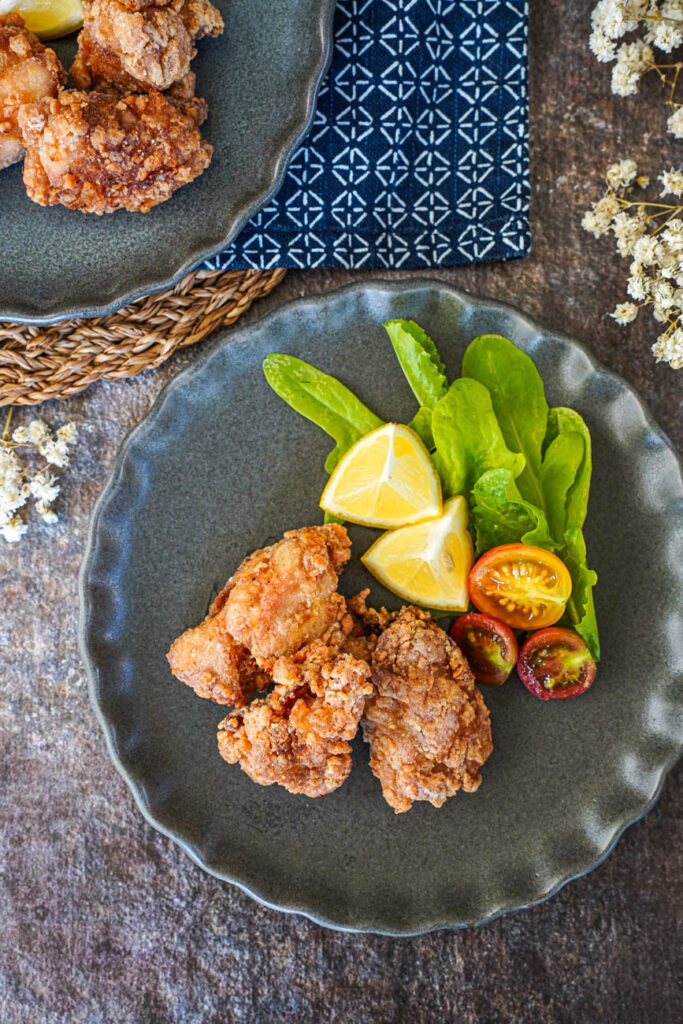
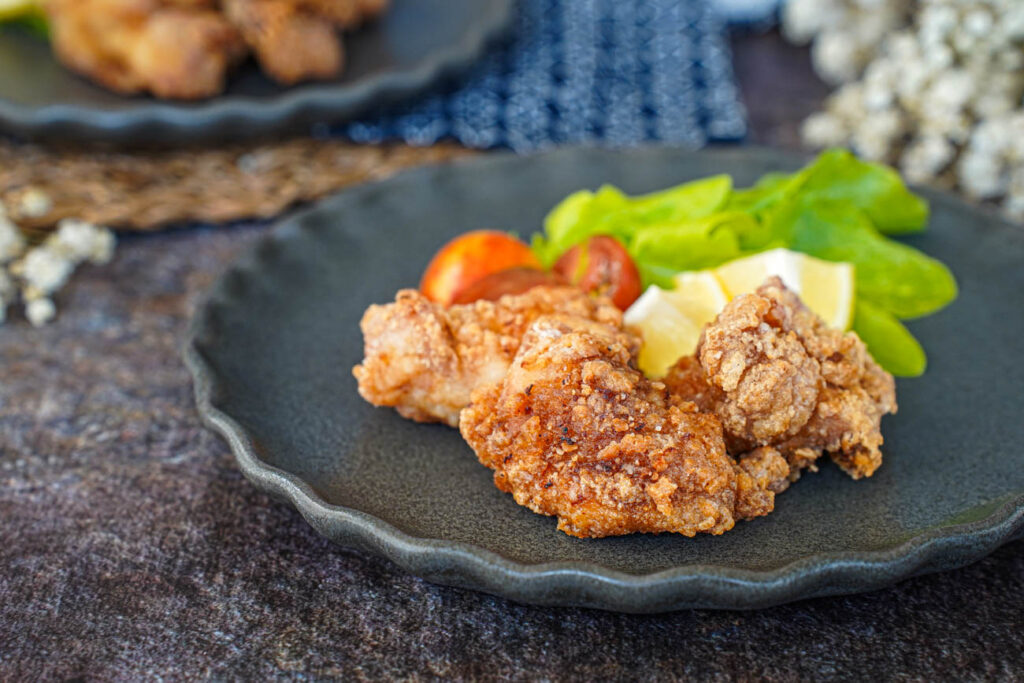
My daughter was especially excited to see the recipe for Karaage (唐揚げ, Fried Chicken) in the Hearty Meat and Poultry Dishes chapter. It is her absolute favorite.
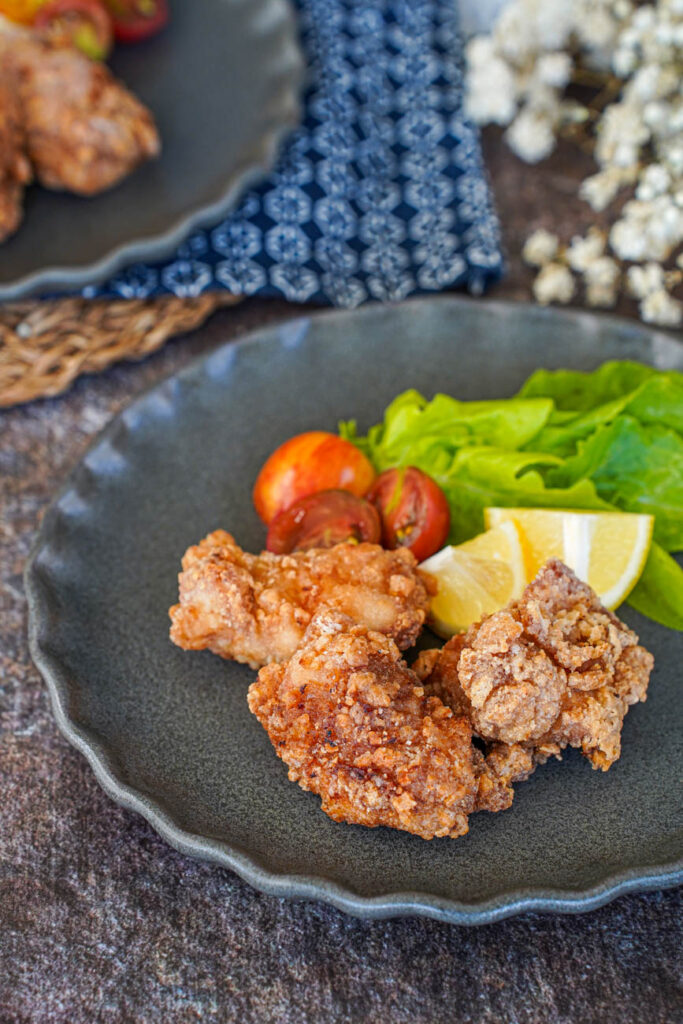
There are many different types of Karaage and Akino highlights Tatsutaage (Tatsuta-age, 竜田揚げ) in Effortless Japanese Cooking. Inspired by the Tatsuta River in Nara Prefecture, bite-size chicken pieces are first marinated in a soy sauce mixture, then coated in pure potato starch before frying until golden.
Akino states, “the golden-brown chicken, tinted by soy sauce, is said to resemble autumn leaves reflected on the river’s surface.”
We enjoyed the Tatsutaage while still warm alongside lettuce, cherry tomatoes, and lemon wedges. They are also a good make-ahead option for bento boxes.
Notable Ingredients
Traditionally, Tatsutaage is coated in potato starch (Katakuriko) before frying. This creates a particularly crisp and crunchy texture. Katakuriko (片栗粉) is available in larger grocery stores in the gluten free or specialty flour sections and markets with Japanese ingredients. It is also available online.
You can swap it in equal amounts with other coatings such as wheat flour (more soft and fluffy), cornstarch (thin and light), rice flour (crisp and slightly sweet), or mochiko (smooth and thin). If using mochiko, keep an eye on them in the oil. This coating darkens more quickly.
For best results, use a boneless, skin-on chicken thigh. I have been able to locate boneless chicken thighs with the skin still on at Wegmans and Marufuji in Northern Virginia. While living in Los Angeles, I would usually get it from Mitsuwa or Tokyo Central.
A Few Tatsutaage Tips
Cut the chicken into similar bite-size pieces so they all cook evenly.
If doubling the recipe to serve more people, fry the chicken in batches to not overcrowd the pan.
Akino recommends draining the cooked Tatsutaage on a wire rack, not paper towels, to keep the coating completely crisp.
In the online bonus section, you can find variations for using chicken breast, chicken wings, tofu, tuna, and pork. There are also a few ways to dress up the Karaage with a sweet and sour coating, sweet soy sauce, hot and spicy option, and a chicken nanban topping.
More Dishes
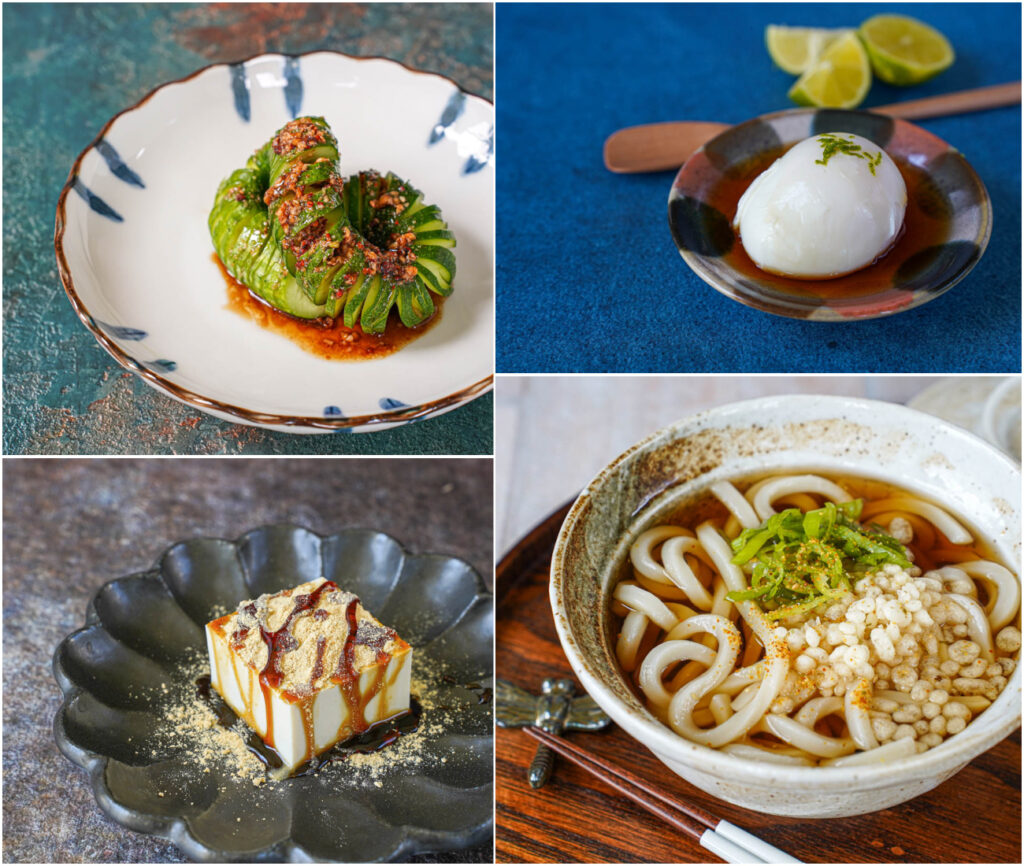
I also made Cucumber “Snakes,” Hot Springs Eggs, Chilled Tofu with Toppings, and Classic Udon.
I grew Japanese cucumbers in the garden this summer and used the last harvest to make these Cucumber “Snakes.” It was so fun! The cucumbers are very thinly sliced in a couple of directions to create a flexible, snake-like texture. There are a few different sauce options. I especially enjoyed the Chili Garlic Sauce and Sweet Vinegar Sauce.
The Hot Spring Eggs are named after the traditional method of gently cooking the eggs in natural hot springs. In this at home version, they are lightly heated for 30 minutes in a covered pot until just barely set with a creamy, custard-like center. Akino has shared multiple serving ideas from rice to salad and noodles. We had them with a light Sudachi-infused sauce.
The Chilled Tofu with Toppings pairs a tofu block of choice with an assortment of sweet and savory accompaniments to create an easy, yet versatile dish. I went with a dessert style by topping silken tofu with kinako (toasted soybean flour) and kuromitsu (Japanese black sugar syrup). If the syrup is unavailable, it can be swapped for honey or maple syrup.
The Classic Udon was another request by my daughter. Frozen udon noodles are heated until tender, then paired with a dashi-based udon broth, dried wakame (she left it off of hers), tenkasu (tempura bits), chopped green onion, and a pinch of shichimi togarashi. Other topping recommendations include kamaboko or a hot spring egg.
Effortless Japanese Cooking is a wonderful pick for those interested in making Japanese classics at home. Many of the recipes come together in minutes with only a bit of prep. There is a heavy focus on seasonal flavors with options ranging from light snacks, soups, and salads to hearty meals, baked treats, and tea.
Having a market with Japanese ingredients nearby will be helpful in locating items such as dried wakame, katsuobushi flakes, kombu, dried hijiki, aburaage, shiso, sashimi-grade seafood, konnyaku, mochiko, red bean paste, fresh yakisoba noodles, and doubanjiang. Substitutions are provided when possible.
Tatsutaage (Marinated Fried Chicken) Recipe
Excerpt from Effortless Japanese Cooking
Tatsutaage (Marinated Fried Chicken)
Ingredients
- 1 boneless, skin-on chicken thigh 10 ounces (300 grams)
- 1 teaspoon fresh ginger juice
- 1 teaspoon grated garlic
- 1 tablespoon soy sauce
- 1 tablespoon mirin
- 3-4 tablespoons potato starch or alternate coating (wheat flour, cornstarch, rice flour, mochiko)
- canola oil for frying
- lemon wedges for serving
Instructions
- Trim excess fat, skin and sinew from the chicken thigh and cut it into about 10 bite-size pieces.
- Place the pieces in a plastic bag and add the ginger juice, grated garlic, soy sauce and mirin.
- Seal and massage from the outside to coat evenly. Marinate for 10-15 minutes.
- Transfer the marinated chicken to another bag or a clean bowl. Add the potato starch and shake or toss until all pieces are evenly coated.
- Heat 2 inches (5 centimeters) of oil in a large skillet to 320˚F (160˚C). When it's ready, small bubbles will form slowly around the tip of a disposable chopstick dipped in the oil.
- Lightly dust the chicken again with the potato starch, shaking off the excess, then carefully add to the oil.
- Fry for 2-3 minutes, until the chicken starts to firm up, then flip. Continue cooking for another 2-3 minutes, turning occasionally until light golden.
- Increase the heat to 356˚F (180˚C) and fry for another 1-2 minutes until crispy and golden.
- Fully cooked chicken vibrates slightly when touched with chopsticks in the oil. As you remove the chicken, hold it just above the oil for a few seconds to allow excess oil to drip off.
- Transfer to a wire rack to finish draining, and serve immediately.
Leave a Reply