
The Japanese Pantry: From Sake to Soy, Essential Ingredients for Japanese Home Cooking, written by Emiko Davies, showcases Japanese staples alongside traditional and innovative recipes for all seasons and skill levels. A few highlights include Kissaten Fried Eggs (Kissaten no Medamayaki), Hijiki Onigiri, Umeboshi-Braised Chicken (Tori no Umeni), Pressed Sushi with Marinated Mackerel (Shimesaba no Hakozushi), and Black Sesame Chiffon Cake (Kurogoma Shifon Keiki). I will also be sharing her recipe for Tsukune (Chicken Meatballs) following the review.
Disclosure: I received a copy of this book from Smith Street Books in exchange for my honest review. All comments and opinions are my own.
Emiko Davies
Emiko Davies is a food writer, photographer, and author. She was born in Australia to a Japanese mother and Australian father, spent her adolescence in China, studied Fine Art in the US, and has lived in Tuscany since 2005 with her family.
Her work has been featured in numerous publications such as Financial Times, Gourmet Traveller, Food & Wine, Food52, Peddler Journal, and Corriere della Sera. She is also the author of multiple books including Gohan, Florentine, Tortellini at Midnight, and Acquacotta.
In Tuscany, Emiko runs a cooking school and natural wine bar with her sommelier husband.
The Japanese Pantry
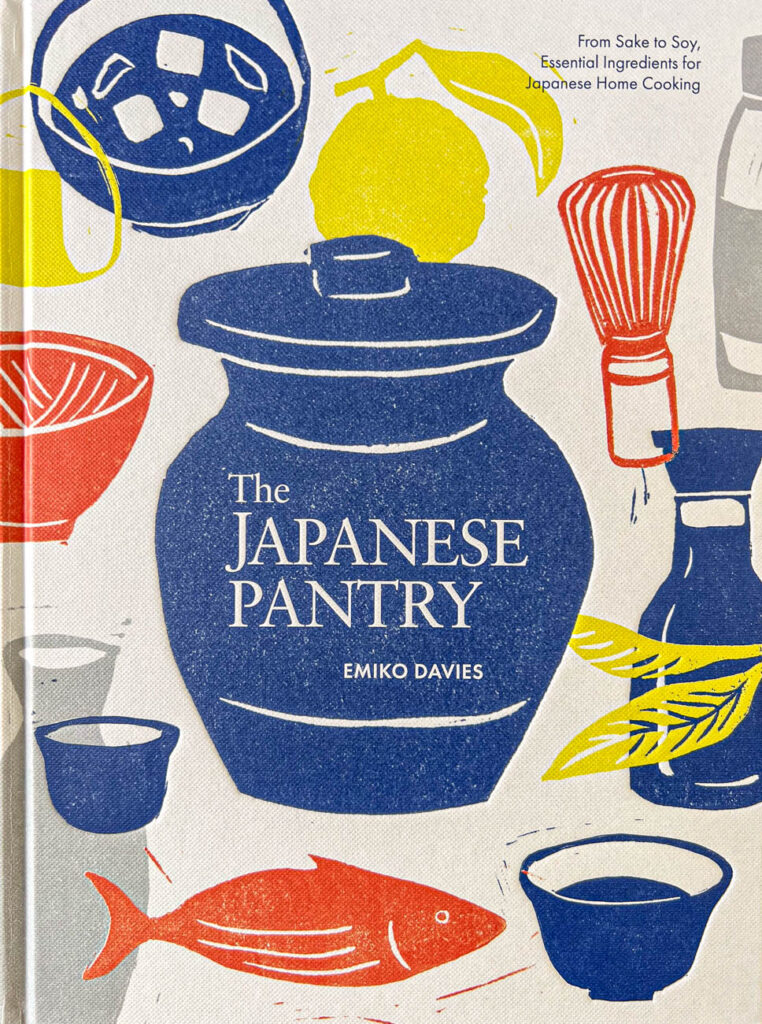
Emiko begins The Japanese Pantry with an introduction of Japanese staples and essential flavors, plus an overview of how she has built her own Japanese pantry while living in Italy.
She has divided the book based on seven notable ingredients: Soy Sauce, Miso, Seaweed, Sake, Rice Vinegar, Sesame, and Tea. The beginning of each chapter shares the history, artisans/companies, uses, and variations of that particular ingredient along with a list of included recipes for easy reference.
The pages are also filled with essays covering additional information from the importance of Koji and religious influences on meat to the science behind umami. In the back of the book, Emiko has included historical references and recommendations for further reading.
The photography is provided by Emiko Davies, Yuki Sugiura, and Junichi Miyazaki. Most of the recipes are paired with a quarter to full-page photo of the finished dish. There are also a few step-by-step photos demonstrating specific techniques such as folding Gyoza and filling Yubeshi.
Measurements are listed in Metric and US Customary. Titles are written in English and Japanese. Each recipe has a headnote with background information, yield, serving ideas, ingredient notes, and helpful tips.
Tsukune (Chicken Meatballs)
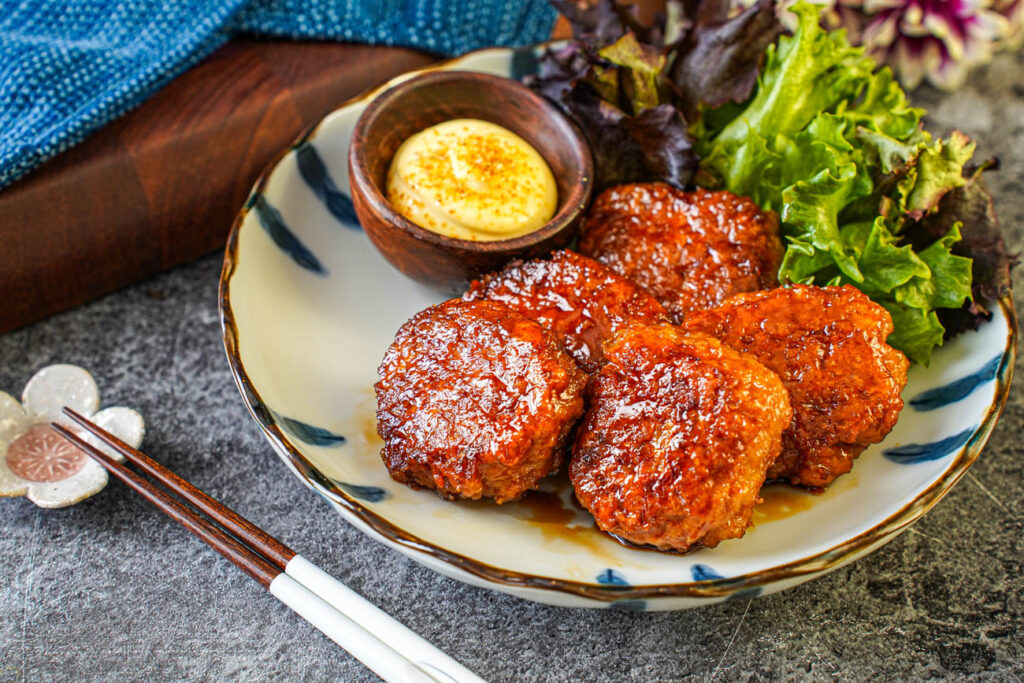
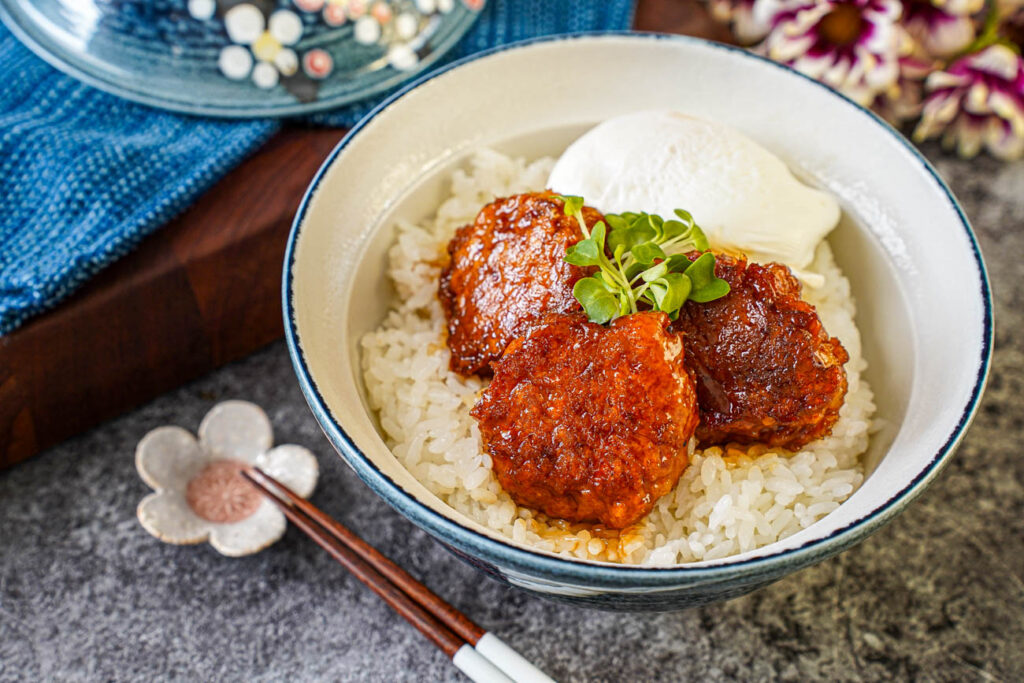
To pair with this review, I made Emiko’s recipe for Tsukune (つくね, Chicken Meatballs)!
Featured in the Soy Sauce chapter, these chicken-based meatballs are coated in a sweetened soy sauce to create a caramelized glaze perfect for contrasting with the light, springy texture of the meat.
Tsukune can be featured in a variety of styles. The family especially enjoyed them as written alongside mayonnaise and shichimi togarashi for an Izakaya-style snack.
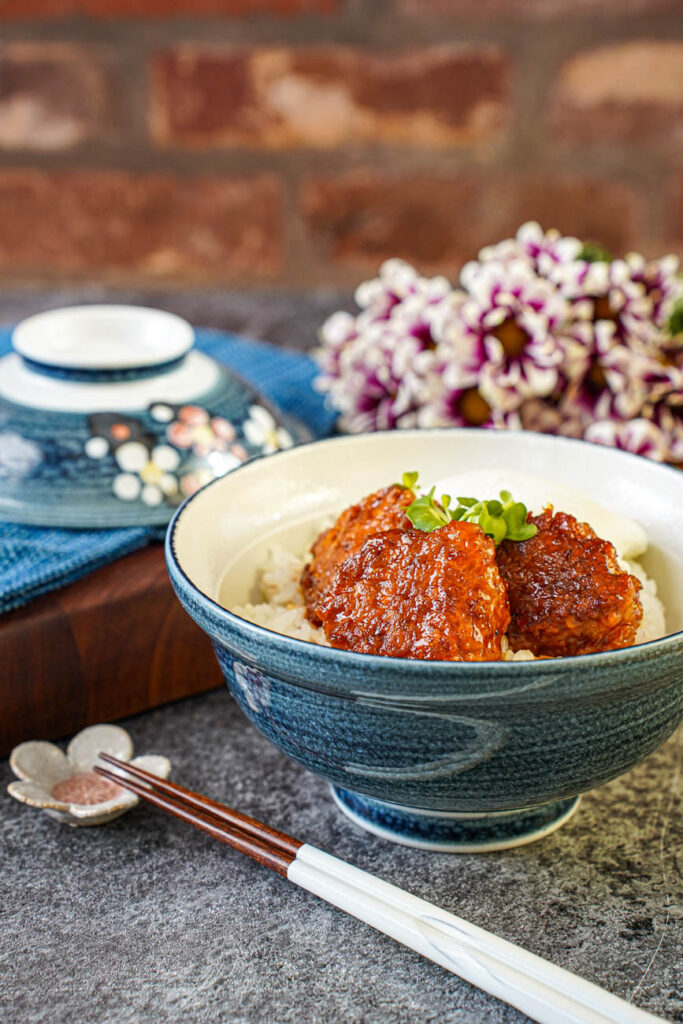
I paired a few with rice, a poached egg, and bok choy sprouts to make Tsukune Donburi (つくね丼, Chicken Meatball Rice Bowl).
They can also grilled on skewers or used in hot pots (donabe).
Notable Ingredients
Shichimi Togarashi is a Japanese seven-spice chili seasoning blend. The exact spices may vary based on the brand.
The version I use has a combination of black peppercorns, red chile flakes, garlic, freshly ground ginger root, nori, toasted white and black sesame seeds, and orange zest.
For those in Northern Virginia, I have been able to find Shichimi Togarashi and most of the ingredients in the book at Marufuji. For those in Los Angeles, I would usually go to Mitsuwa, Tokyo Central, or Nijiya.
A Few Tsukune Tips
Emiko states the chicken can be swapped for white fish if desired. Just keep in mind that the patties will be flatter since the fish is softer.
For a vegan version, swap the chicken for fork-mashed tofu (not silken as it has too much moisture).
More Dishes
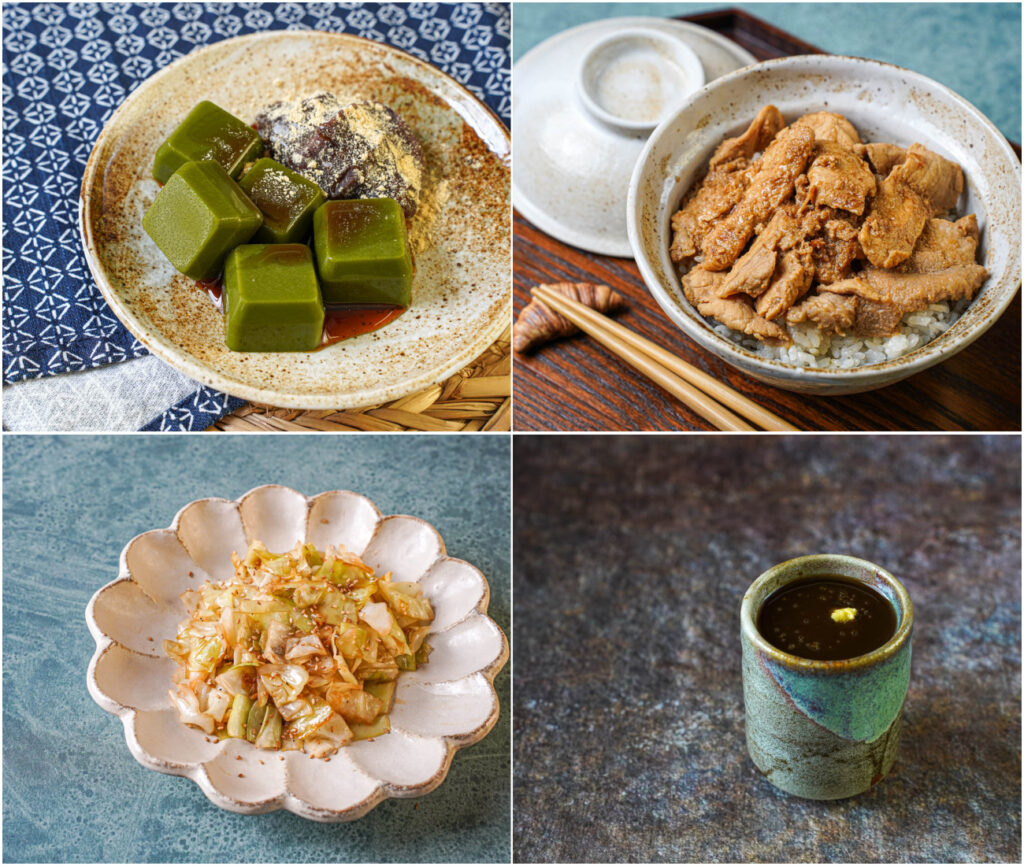
I also made Matcha Kanten Jelly, Ginger Pork (Shogayaki), Stir-Fried Sesame Cabbage (Kyabetsu no Sote), and Sweet Arrowroot Tea (Kuzuyu).
The Matcha Kanten Jelly comes from the Seaweed chapter. Kanten is “a freeze-dried vegetable gelatin made from tengusa seaweed.” In this easy recipe, the kanten is used to set matcha into individual cubes. They were so refreshing paired with kuromitsu syrup (or maple or condensed milk), anko (red bean paste), and kinako (roasted soybean powder).
The Ginger Pork (Shogayaki) is in the Sake chapter. Emiko uses the sake to help tenderize the thin slices of pork before simmering in a soy sauce and serving over rice. For a vegan version, the pork can be swapped for eggplant or mushroom.
The Stir-Fried Cabbage Salad (Kyabetsu no Sote) recipe comes from the Sesame chapter. Bite-sized pieces of cabbage are sautéed in sesame oil with a little salt and served with a sprinkling of sesame seeds to finish. Overall, it takes less than 10 minutes for a quick side with only a handful of ingredients.
The Sweet Arrowroot Tea (Kuzuyu) can be found in the Tea chapter. I made this last month when I wasn’t feeling the best and it was such a comforting drink. Kuzu starch (or arrowroot) is simmered with sugar and hojicha until thickened and served with a little grated ginger.
The Japanese Pantry is a fantastic pick for those interested in learning more about Japanese staple ingredients and how to incorporate them in approachable, homestyle dishes. Most of the recipes come together within an hour (and often 30 minutes), while a few others require a bit more prep, fermenting, or baking time. There are Japanese meal lists with Ichiju-Sansai menu ideas, one-pot dishes, making ahead, vegan options, refreshing recipes, and more to get started.
Having a Japanese market nearby will be helpful in locating items such as kombu, katsuobushi, shishito peppers, shiso leaves, yuzu, shiratamako, lotus root, sashimi grade seafood, black sesame paste, and genmaicha. Substitutions are provided when possible.
Tsukune (Chicken Meatballs) Recipe
Excerpt from The Japanese Pantry
Tsukune (Chicken Meatballs)
Ingredients
Tsukune:
- 300 grams (10 1/2 ounces) boneless chicken thighs or chicken mince
- 4 centimeters (1 1/2 inches) ginger grated
- 1/4 teaspoon salt
- 1 egg white
- 3-4 tablespoons potato starch
- 1 tablespoon vegetable oil
- shichimi togarashi optional
- mayonnaise optional
Teriyaki Sauce:
- 2 tablespoons mirin
- 2 tablespoons sake
- 3 tablespoons soy sauce
- 1 tablespoon sugar or honey
Instructions
- If you're using chicken thighs, mince them in a food processor, including any skin or fat- they make for juicier meatballs. Add the ginger, salt, egg white and potato starch and pulse to fully combine.
- If you're using mince, mix it all together in a bowl until well combined and a bit sticky.
- With wet hands, roll the mixture into 12 balls and slightly flatten.
- Mix the teriyaki sauce ingredients in a bowl.
- Heat the vegetable oil in a non-stick pan over medium-high heat.
- Fry the meatballs for about 2 minutes on each side until golden brown.
- Reduce the heat to medium and add the sauce to the pan, allowing it to sizzle for a moment.
- Flip the meatballs so the sauce coats them on all sides- do this quickly so the soy sauce doesn't burn.
- Serve immediately, perhaps with a sprinkle of shichimi togarashi and some mayonnaise.
Leave a Reply