
A Day in Seoul: A Korean Cookbook, written by Julian Kim, features over 80 beloved recipes inspired by the city from breakfast, lunch, and dinner to sweet treats and late night snacks. A few highlights include Gilgeori Toast (Korean Street Toast), Sogogi Mechurial Jangjorim (Braised Beef in Soy Sauce), Tangsuyuk (Sweet and Sour Pork), Patbingsu (Shaved Ice with Red Bean Topping), and Kimchi-Jeon (Kimchi Pancakes). I will also be sharing his recipe for Dakgalbi (Spicy Stir-Fried Chicken) following the review.
Disclosure: I received a copy of this book from Smith Street Books in exchange for my honest review. All comments and opinions are my own.
Looking for more books in the A Day in Series? Check out my reviews for A Day in Tokyo and A Day in Hong Kong.
Julian Kim
Julian Kim is a culinary storyteller, food entrepreneur, culinary ambassador, and the founder of Seoul Cooking Club. This culinary experience in Seoul is “dedicated to helping international visitors understand Korean culture through the rituals, stories and philosophy that surrounds Korean food.”
He spent over sixteen years immersing himself in the food cultures of cities abroad such as London, Abu Dhabi, Shanghai, and Almaty; has been featured on European TV; and has conducted over 900 food tours back in South Korea.
A Day in Seoul
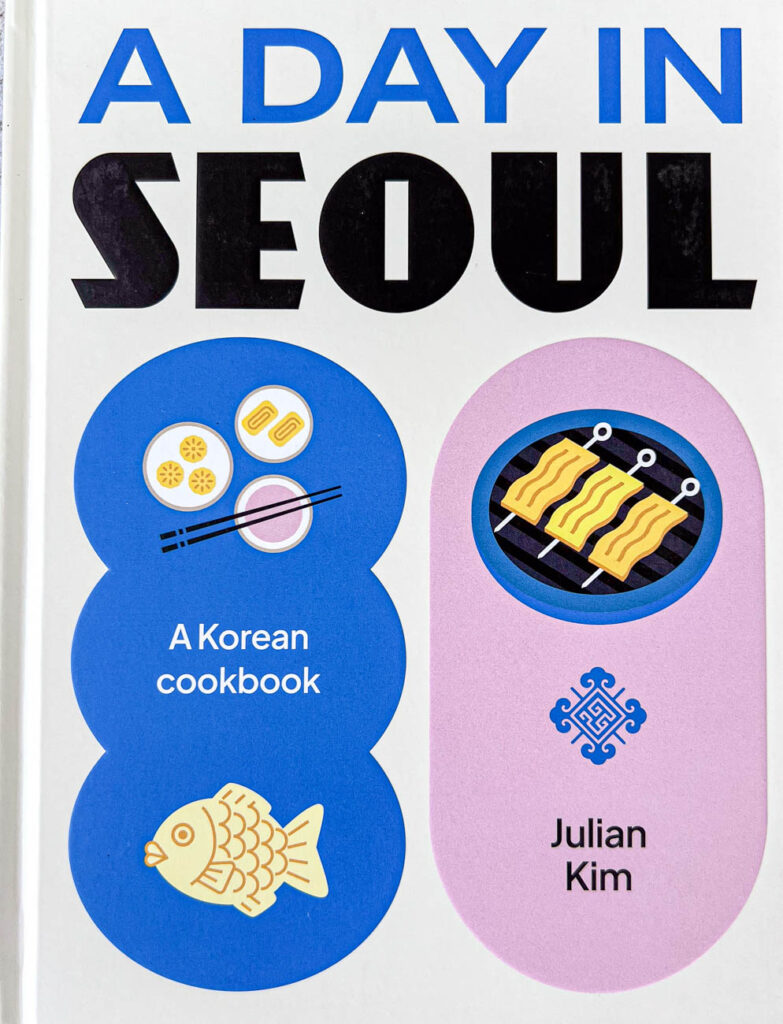
Julian begins A Day in Seoul with a short introduction, a few chef’s notes, and tips for travelers planning to visit Seoul in person. He states, “A Day in Seoul is a heartfelt journey through the alleyways, markets and stories that simmer in every kitchen of this city.”
This journey is divided into three parts: Early, Mid, and Late with dishes spanning from traditional royal court cuisine to more recent street food favorites. I especially loved the closer look at traditions surrounding the food from Jeong Culture and Korean BBQ to Fermented Foods and Noodles. For those unfamiliar with Korean ingredients, there is also a glossary in the back of the book.
The photography is provided by Rochelle Eagle with styling by Lee Blaylock. Most of the recipes are paired with a half to full page photo of the finished dish. The pages are also filled with scenes of the markets, restaurants, people, and landscapes of Seoul.
Measurements are listed in grams/milliliters and ounces. Titles are written in Romanized Korean and English. Each recipe has a headnote with background information, yield, helpful tips, ingredient notes, and serving ideas.
Dakgalbi (Spicy Stir-Fried Chicken)
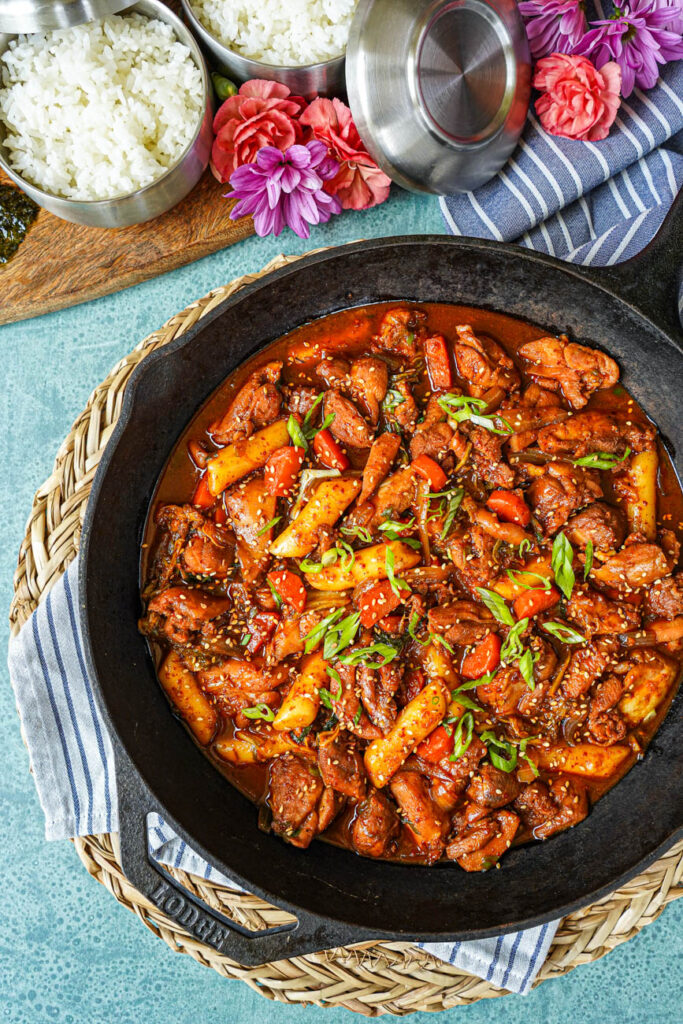
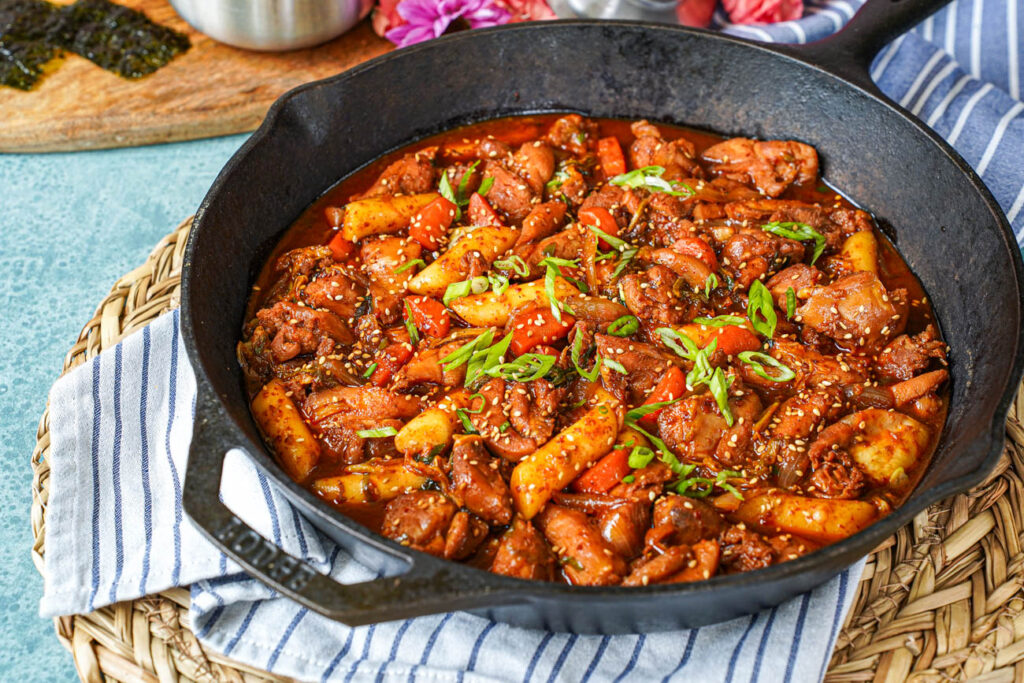
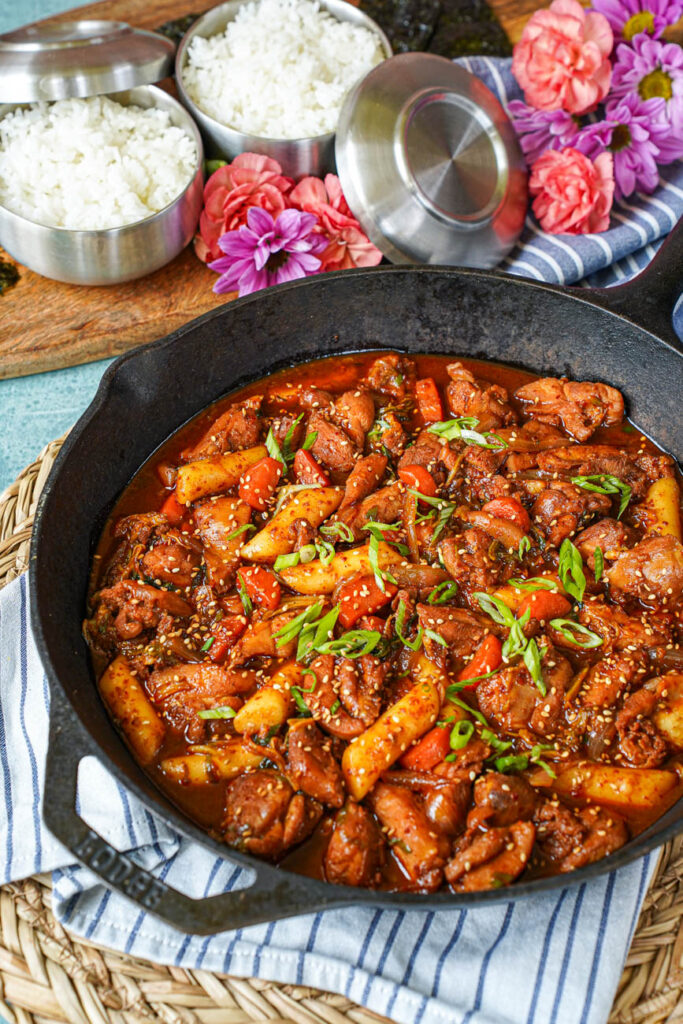
To pair with the review, I made Julian’s recipe for Dakgalbi (닭갈비, Dak-Galbi, Spicy Stir-Fried Chicken)!
Originally from Chuncheon in Gangwon-do about 90 kilometers (56 miles) northeast of Seoul, this one-pan meal is packed with flavor and traditionally cooked right at the table.
For this at-home version, marinated chicken pieces (thigh or breast- I went with thigh) are stir-fried with a variety of vegetables and optionally tteokbokki-tteok (rice cakes) until everything is tender and the vibrant gochujang sauce has thickened.
Serve the Dakgalbi immediately with a sprinkling of sesame seeds and alongside freshly cooked rice. Julian also recommends other accompaniments such as Kimchi, Gyeran-mari (rolled omelette), Gyeranjjim (steamed egg custard), and Gim Gui (toasted seaweed sheets).
Have leftover sauce in the pan? Toss in cooked rice and stir-fry until coated and crisp around the edges.
Notable Ingredients
Mirim (미림) is a sweet Korean cooking rice wine. It is used to tenderize meat, remove odors, and add a subtle sweetness to sauces and glazes.
Wombok (배추, Napa Cabbage, Chinese Cabbage) is a long cabbage with broad, pale green leaves.
Tteokbokki-Tteok (떡볶이 떡) are cylindrical rice cakes made from steamed rice flour. They have a chewy texture that contrasts nicely with the chicken and vegetables. They may be found in the refrigerated section and sometimes frozen. If using frozen, thaw in the refrigerator overnight before preparing.
Jin Ganjang (진간장) is a Korean all-purpose soy sauce used for seasoning, marinades, and sauces.
Gochujang (고추장, red pepper paste, red chili paste) is a fermented condiment traditionally made by aging gochugaru (Korean red pepper), chapssal (glutinous rice), yeotgireum (barley malt), mejugaru (fermented soybean), and salt in a clay pot in the sun during cooler months. Versions range from mild to extra spicy.
Gochugaru (고춧가루) is a hot Korean red chili powder ground either coarse or fine depending on the use.
Oligo Syrup (올리고당, Oligosaccharide syrup) is a thick syrup that adds a more gentle, subtle sweetness compared to corn syrup.
For those in Northern Virginia, I was able to locate all of these ingredients at Lotte Plaza Market in Chantilly. While living in Los Angeles, I would get them from H Mart in Torrance.
A Few Dakgalbi (Spicy Stir-Fried Chicken) Tips
I cooked the Dakgalbi in a 12 inch (30.5 centimeter) cast iron pan to get as much surface area as possible. This helps create a more caramelized texture on the edges of the chicken and later more crisp, charred bits of rice when stir-frying in the leftover sauce.
This recipe pairs the chicken with rice cakes, onion, carrot, cabbage, and spring onions. I really really love rice cakes, so I may have added slightly more than 10. Other common additions include sweet potato, perilla, and/or potato.
I also occasionally see Dakgalbi topped with shredded Mozzarella (치즈닭갈비) to contrast the heat from the sauce.
More Dishes
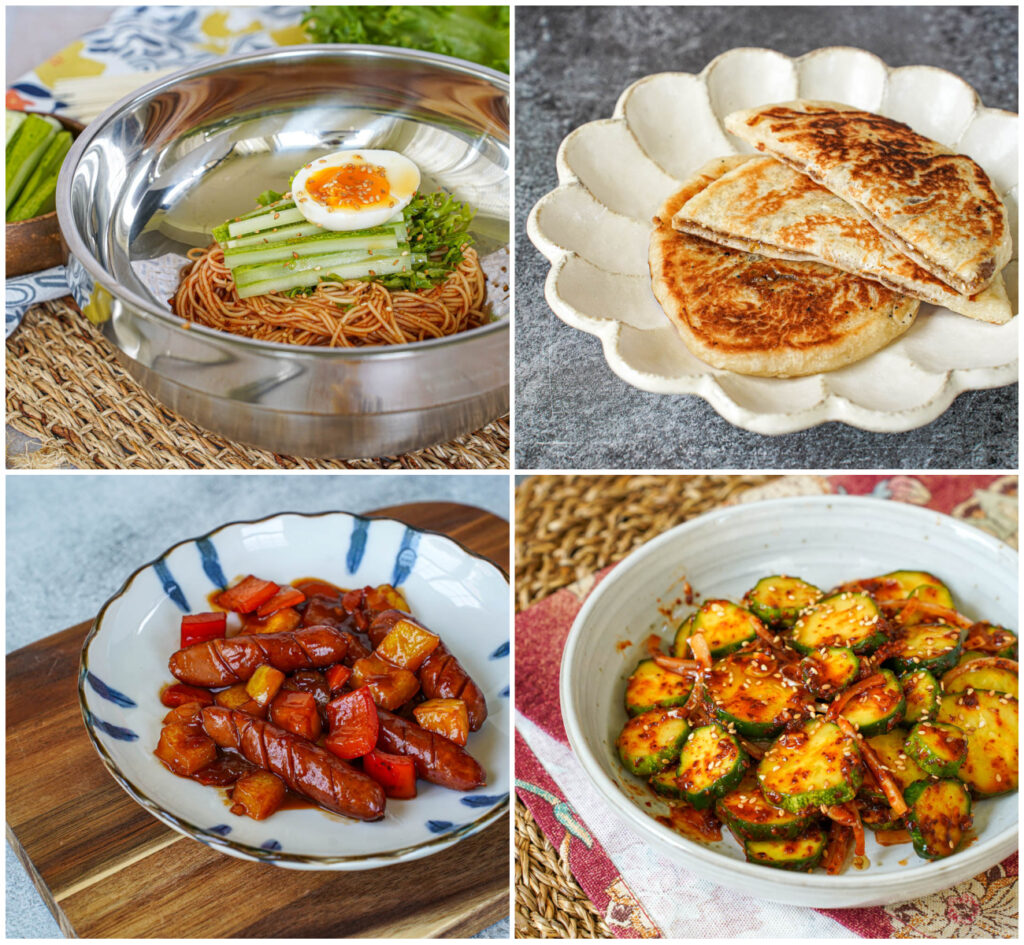
I also made Bibim-Guksu (Spicy Noodles), Hotteok (Syrup-Filled Sweet Pancakes), Sosiji Yachae Bokkeum (Stir-Fried Sausage with Vegetables), and Oi Muchim (Cucumber Salad).
Bibim-Guksu (Spicy Noodles) is a vibrant cold noodle dish perfect for summer. Somyeon (thin wheat noodles) are coated in a sweet and spicy gochujang sauce, then topped with shredded lettuce, cucumber, a hard boiled egg half, and sesame to finish. The sauce can even be prepared the day before (and this is recommended) for a quick and easy lunch.
I made the Hotteok (Syrup-Filled Sweet Pancakes) to use up some peanuts and sesame seeds I had leftover in the pantry during our move. This sweet, cozy treat has a slightly chewy yeast-based dough filled with a crisp and syrupy center of mixed nuts, brown sugar, and cinnamon.
The Sosiji Yachae Bokkeum (Stir-Fried Sausage with Vegetables) was a particular favorite with the family. Small sausages are stir-fried in a spicy ketchup based sauce with onions, carrots, and bell peppers. Overall, it comes together in minutes for a quick and easy side dish or drinking snack for adults.
I made the Oi Muchim (Cucumber Salad) using our first cucumber harvest! Sliced cucumbers are briefly tossed in salt to draw out excess moisture, then drained and coated in a tangy gochugaru-based dressing with onion and spring onion. It is finished with a drizzle of sesame oil and sesame seeds.
A Day in Seoul is a great pick for those interested in Korean cuisine and notable recipes found throughout Seoul. Recipes range from quick and easy meals to comforting stews and fermented foods that take a bit more time. There is also a nice assortment of meat, vegetable, and seafood-based options for every season.
Having a Korean market nearby will be helpful in locating items such as braised burdock strips, danmuji, tuna extract, dried pollock slices, miyeok, dried gosari, eomuk, dried woodear mushrooms, Korean chives, dangmyeon, doraji, chunjang, glutinous rice, twigimgaru, and more.
Dakgalbi (Spicy Stir-Fried Chicken) Recipe
Excerpt from A Day in Seoul
Dakgalbi (Spicy Stir-Fried Chicken)
Ingredients
- 600 grams (1 pound 5 ounces) boneless chicken thighs or breasts
- 1 tablespoon mirim Korean cooking rice wine
- vegetable oil for stir-frying
- 100 grams (3 1/2 ounces) wombok Chinese cabbage, cut into bite-sized pieces
- 1/2 white onion sliced lengthways about 1 centimeter (1/2 inch) thick
- 1/2 carrot sliced into half-moons about 1 centimeter (1/2 inch) thick
- 10 pieces tteokbokki-tteok cylindrical rice cakes, optional
- 1 spring onion scallion, sliced diagonally
- toasted sesame seeds for sprinkling
Marinade:
- 60 milliliters (1/4 cup) jin ganjang Korean soy sauce
- 2 tablespoons gochujang Korean chilli paste
- 2 tablespoons gochugaru Korean chilli flakes
- 2 tablespoons mirim Korean cooking rice wine
- 1 tablespoon oligo syrup
- 1 tablespoon white sugar
- 1 tablespoon minced garlic
- finely ground black pepper to taste
Instructions
- Cut the chicken into bite-sized cubes. Place in a bowl, sprinkle with the mirim and mix gently to coat.
- Leave to marinate for 5 minutes.
- In a separate bowl, combine the marinade ingredients. Mix well until a smooth sauce forms.
- Add the marinade to the chicken and mix well, ensuring all the chicken pieces are evenly coated. Cover and leave to marinate in the fridge for at least 30 minutes.
- Heat a wok over medium heat. Add a drizzle of vegetable oil.
- Add the marinated chicken and begin to stir-fry, reducing the heat to medium-low if the sauce starts to burn. If it seems too dry or is sticking, add a small amount of water (1-2 tablespoons) to prevent burning.
- Cook slowly for about 10 minutes, turning now and then, until the chicken is about 80 percent cooked through.
- Add the cabbage, onion, carrot and rice cakes, if using. Add a small amount of water (2-3 tablespoons) to help the vegetables cook. Mix together well and continue to stir-fry for 5-10 minutes until the cabbage is tender, and the sauce has reduced and thickened.
- Add the spring onion and stir-fry for another minute or two, until the spring onion is tender-crisp.
- Transfer to a serving platter, sprinkle with sesame seeds and serve with warm freshly cooked rice. Kimchi and mildly flavored side dishes such as Gyeran-mari (rolled omelette), Gyeranjjim (steamed egg custard), and Gim gui (toasted seaweed sheets) would also be lovely accompaniments.
Leave a Reply