


A recipe for Fränkische Weinsuppe (Franconian Wine Soup) inspired by my time in Würzburg, Germany! This creamy soup is flavored with a blend of vegetables and white wine.
Last fall, I spent a little over a week traveling through Austria (for the first time!) and Germany.
I am finishing the series today with my time in Würzburg and a recipe for Fränkische Weinsuppe (Franconian Wine Soup) inspired by my travels. It was such an incredible ending to my trip to finally see my friend, Sandra, and her city.
- Kaspressknödel (Austrian Cheese Dumplings) and Innsbruck
- Schlutzkrapfen and Innsbruck
- Petersilienerdäpfel (Parsley Potatoes) and Salzburg
- Salzburger Nockerl and Salzburg
- Kaisersemmel (Kaiser Rolls) and Wolfgangsee
- Linzer Torte and Linz
Würzburg

Würzburg lies in the Franconian (Franken) region of northern Bavaria along the Main River.
This historic city is especially known for its local wine, Baroque and Rococo architecture, regional Franconian cuisine, the UNESCO World Heritage Site- Würzburger Residenz, Festung Marienberg, a high density of churches, and Julius-Maximilians-Universität Würzburg/University of Würzburg.
It is also the second largest city in Franconia (Nürnberg is the first) and the starting point of the Romantic Road (Romantische Straße).

Getting to Würzburg

I reached Würzburg via a couple of trains from Salzburg, Austria. The overall trip was about 4 1/2 hours. From Munich, there are direct trains at a little over 2 hours.
It is also a little over an hour from Frankfurt am Main (and Frankfurt Airport/FRA), a little less than an hour from Nuremberg, almost 3 hours from Düsseldorf, 3 hours from Leipzig, and 4 hours from Berlin.
If using the trains, I highly recommend downloading the Deutsche Bahn app. The app is available in English and it is easy to search for additional trains along the route in case a train is late and/or a tight connection is missed.
If buying tickets separately, a Flexpreis ticket offers more flexibility. If traveling with a larger group or during busier times/along popular routes, getting reserved seats is recommended.
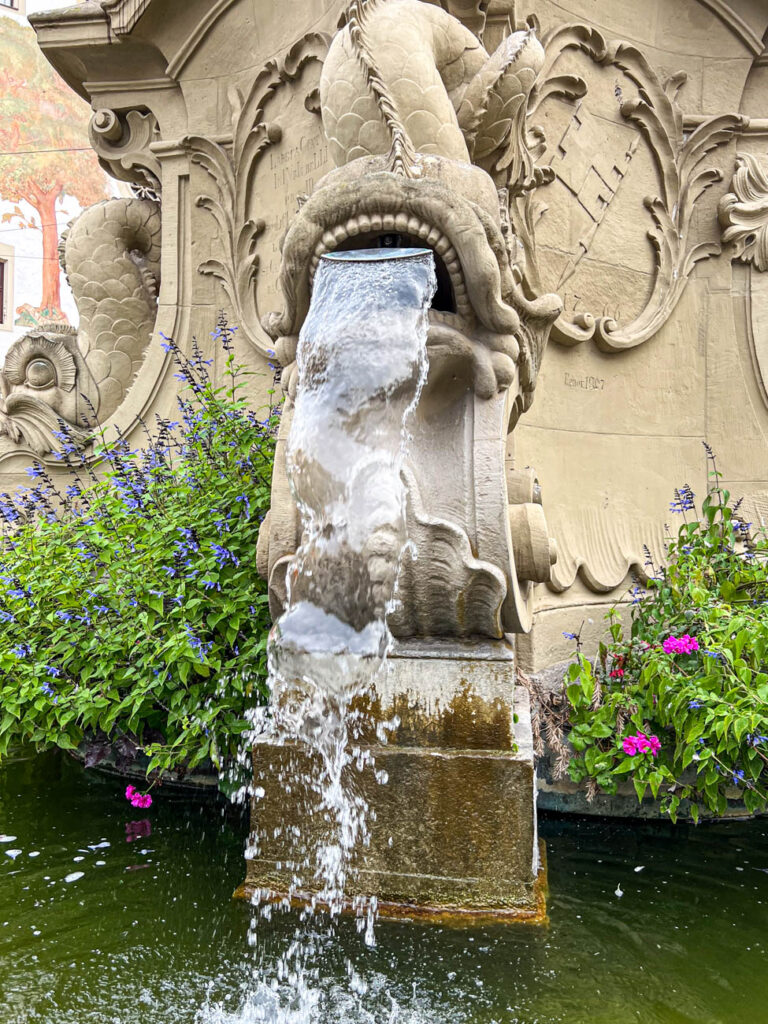
Once I was in the city, much of the area was very walkable and pedestrian-friendly.
The only time I took public transportation was going between Würzburg Hauptbahnhof and my hotel in the city center (tram 4/5- only 2 stops, about 5 minutes). For those single trips, I purchased one way tickets from the machine by the tram stop.
The Barthels Boutique Hotel

I stayed at The Barthels Boutique Hotel during my two nights in Würzburg. Located at Martinstraße 21, the hotel opened in November 2023 and is a newer addition to the city center.
The building has 42 individually designed rooms with nature, stone, flow, and festival themes; vibrant murals; a unique industrial-style seating area and bar on the ground level; and a rooftop terrace.

I booked a Double Room Relax in the nature style.
This air conditioned room is equipped with a boxspring bed, desk, rain shower, large freestanding bathtub (in the main sleeping area- great for a solo trip, but would have been less so if traveling with friends or my teenage children), flat screen television, soundproof windows (could only lightly hear the bells from the cathedral next door), hair dryer, and toiletries.
Overall, it was such a comforting stay and I especially loved that the hotel was situated directly across from the back entrance of Hugendubel!
Hugendubel
Hugendubel is a German-based bookstore chain with shops across the country. This location at Kürschnerhof 4-6 features a vast assortment of books from novels and English options to travel, cookbooks, children’s books, and more across two levels. There is also a large display for Würzburg specific books and souvenirs.
I ended up walking through the store often and brought home two cookbooks- Perfekte Zimtschnecken by Maren Thobaben (which is being released in English soon as Sweet Buns!) and Fränkische Tapas: Das Kochbuch by Matthias Wendler and Valerie Hammacher.
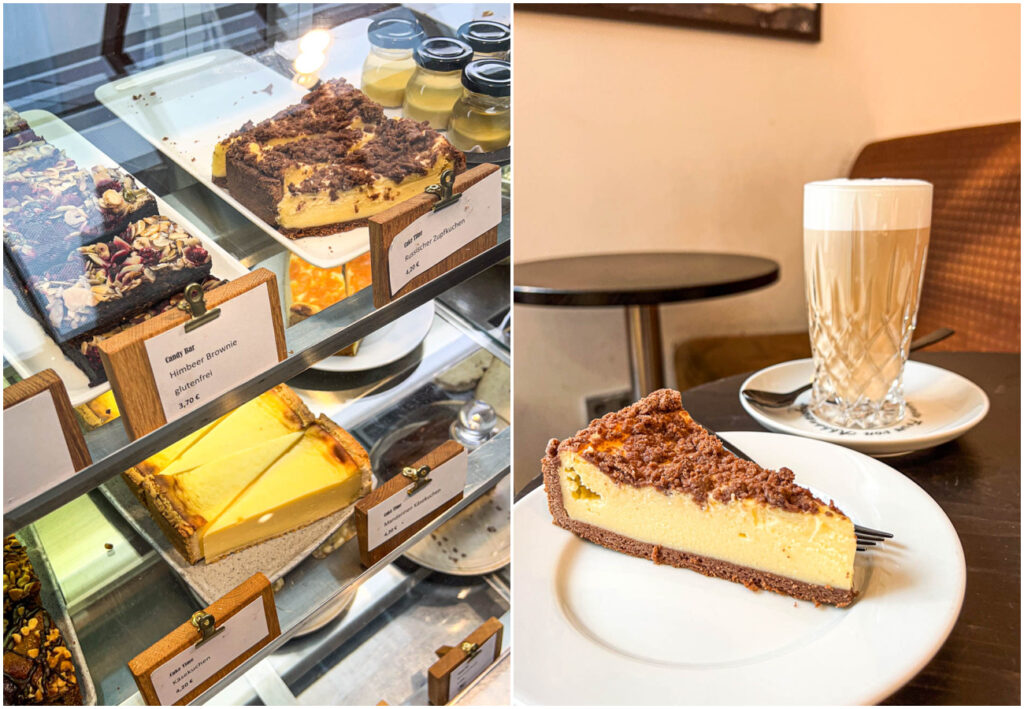
My friend Sandra also met me here for Kaffee und Kuchen (coffee and cake) before she took me on a tour of the city. I decided on a slice of Russischer Zupfkuchen (cheesecake with chocolate base and pieces over the top) and a Latte Macchiato.
Würzburger Dom

Just steps away from the hotel and bookstore is Würzburger Dom (Dom St. Kilian zu Würzburg, Würzburg Cathedral) at Domstraße 40. Dedicated to St. Kilian and the seat of the diocese of Würzburg, this cathedral is the fourth largest Romanesque church in Germany.
Construction began in 1040 with later additions of Gothic and Baroque elements. On March 16th, 1945, most of Würzburg was destroyed and the cathedral was heavily damaged. Restoration focused on the original Romanesque architecture and the church was reconsecrated in 1967.
Wirtshaus am Dom

For my first evening in Würzburg, my friends took me to dinner at Wirtshaus am Dom and I had such a wonderful meal. This fränkische Wirtshaus is located by Würzburger Dom and features local Franconian cuisine along with seasonal specialties. Reservations are available via OpenTable.
We enjoyed the following:
- Silvaner | Winzer Sommerach | Franken | QbA | trocken- mineralisch und fruchtig (dry- mineral and fruity).
- Würzburger Kochkääs mit Kümmel und Krustenbrot- Würzburg-Style cooked cheese with caraway seeds and crusty bread.
- Fränkische Weinnudeln- Bandnudeln in Silvanersauce mit Walnüssen und Trauben. Franconian Wine Noodles- ribbon noodles in a Silvaner wine sauce with walnuts and grapes.
- Schweinekrustenbraten an Dunkelbiersauce mit Kartoffelklößen, dazu Krautsalat- crispy roast pork in a dark beer sauce with potato dumplings and cabbage salad on the side.
Residenz Würzburg

One of the absolute highlights of the city is Residenz Würzburg (Wurzburg Residence). Designed by architect Balthasar Neumann for Prince-Bishop Johann Philipp Franz von Schönborn, construction took sixty years- from 1720 to 1744 with landscaping of the gardens from 1765 to 1780 and completion of the interior in 1780.
In 1981, it was listed as a UNESCO World Heritage to recognize the building as one of the “most homogeneous and extraordinary of the Baroque palaces.” Notable features include the magnificent 23 meter (75 ft) high (18×30 meter/59×98 ft total area) unsupported vault staircase- the largest Baroque staircase in Germany; Apollo and the Four Continents– the largest continuous ceiling fresco in the world; and the Hofkirche (Court Church).
Reconstruction to restore the building and the interior rooms in their original style took place from 1945 to 1987.

The incredibly opulent interior holds nearly 400 rooms with 40 open to public viewing. Tickets can be purchased online or at the ticket office onsite. At the time of this post (2026) guided tours in German are available every full and half hour with English tours at 11:00 and 15:00.
Lockers are located around the corner from the ticket office (1 Euro deposit) to store bags and items larger than 35 x 30 x 12 centimeters. I spent about 2 hours taking in the interior and walking through the gardens.
Radio Gong
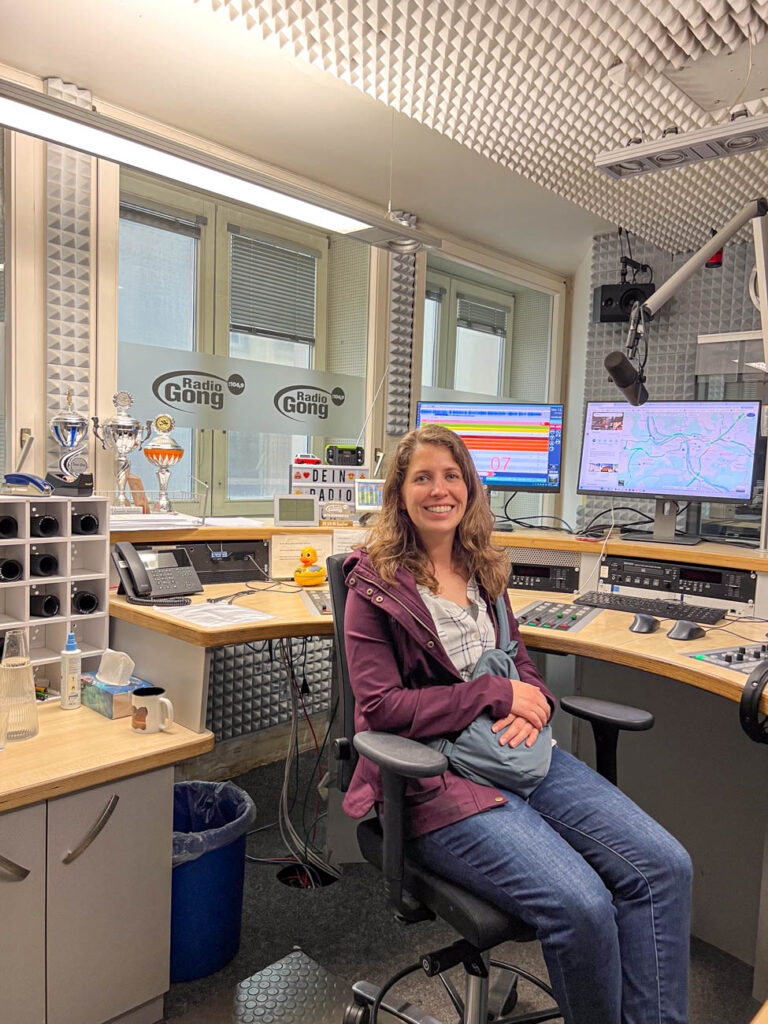
After walking through the gardens, we stopped by Radio Gong Würzburg to meet Sandra’s husband and take a tour! It was so exciting to get a behind the scenes look at how the radio station is run.
Broadcasting on 106.9 FM (plus live stream via their website and the station’s smartphone app), Radio Gong Würzburg shares the news, weather, local Würzburg and Mainfranken events, and German/International music.
Düll Die Brotbäckerei

Founded by Sebastian Düll in 2021, Düll Die Brotbäckerei at Theaterstraße 9 is a specialty bakery focusing on a curated selection of artisanal loaves.
I was drawn to the Baguette (ate half immediately after returning to the hotel and saved the other half for a train snack). Other options during my visit included Roggenmischbrot (mixed rye bread), Weißbrot (white bread), Roggenvollkorn (whole grain rye), Weizenmischbrot (mixed wheat bread), and Dinkelbrot (spelt bread).
Marienkapelle

Marienkapelle (St. Mary’s Chapel) dominates over the Marktplatz with its striking red and white exterior. This 14th-century Gothic Roman Catholic church was built over the foundation of a synagogue that was destroyed in 1349.
Instead of being funded by a parish, merchant stores known as swallow shops (Schwalbenlädle) were created directly into the base of the building to cover the costs. Today, the church is jointly administered by the Roman Catholic parishes of the Würzburger Dom and Kollegiatstift Neumünster.
Grüner Markt
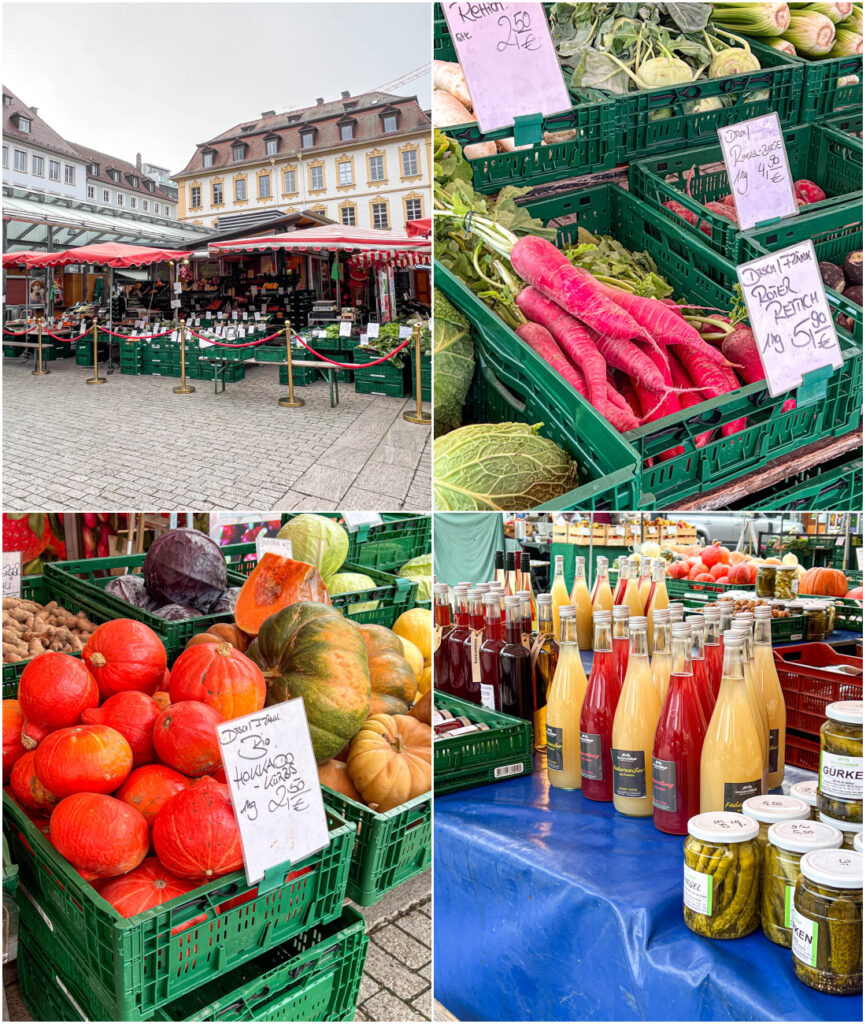
The Grüner Markt (Green Market) is a local market open year-round in the Unterer Marktplatz. At the time of this post (2026), it is open on Tuesdays, Wednesdays, and Fridays 7:00-18:00 plus Saturdays from 7:00 to 16:00.
Stalls feature regional produce, fresh meat, fish, dairy, pastries, pasta, flowers, and more. I also saw Federweißer (young wine that is still actively fermenting) during my visit in October!
La Rue04

La Rue04 is a small café located around the corner from Marienkapelle at Katharinengasse 4.
They feature specialty coffee, matcha, other drinks, small bites, seasonal dishes, and homemade baked goods for dine in (walk in only, no reservations) or take away.
The Vanilla Latte and Cardamom Bun were such a wonderful pairing.
Café Senza Limiti

Café Senza Limiti was another favorite café stop. This barrier-free inclusion café at Augustinerstraße 6 features pastries, coffee, and sandwiches with an Italian flair plus a breakfast menu on weekends from 9-12.
The menu on their website is available in Leichte Sprache (clear layout for accessibility) and there is a braille version at the counter.
I decided on the Cornetti Dolci (with pistachio cream filling- other options were plain, chocolate, and Spekulatius) and a Pumpkin-Spice Latte.
Backöfele

For my last evening in Würzburg, I had a solo dinner at Backöfele.
Backöfele has been serving local Franconian cuisine in a rustic, cozy setting for over 40 years. Their menu features seasonal favorites along with an extensive wine list, appetizers, soups, salads, grilled meat/fish, hearty classics, vegetarian options, and desserts. Reservations are available via Open Table.
I ordered a glass of 2024/2025 Silvaner (Weingut am Stein | trocken) along with Zwiebelschmorbraten vom Rind mit geschmelzten Zwiebeln in Soße und Kartoffelklößen (braised onion beef with Franconian onion sauce and potato dumplings).
Alte Mainbrücke

The Alte Mainbrücke (Old Main Bridge) was originally built between 1473-1543 to replace a previous bridge from 1120. It was Würzburg’s only connection over the Main between the city center and Marienberg Fortress until 1886.
This is a favorite spot to enjoy a glass of wine while people watching or taking in the scenery (tradition known as Brückenschoppen with generous wine pours at 0.25 liters). There are a couple of stands selling the drinks with a deposit (return the glass before leaving). I particularly enjoyed the Brückenrosé trocken- Staatlicher Hofkeller, Würzburg.
Panoramaweg Marienberg

From the bridge, I took a relaxed, scenic walk/hike up to Festung Marienberg (Marienberg Fortress). During my visit, Festung Marienberg was closed for renovations so I only walked around the outside to get a closer look at the vineyards and sweeping views of the city below.
Construction on Marienberg Fortress began in the 1200s and it was the ruling seat of the Würzburg prince-bishops until 1720. Today, the fortress also houses Museum für Franken (currently open during the renovations). This museum focuses on Franconian culture with local artwork and the largest collection of sculptures and woodcarvings by Tilman Riemenschneider.

There are a few different paths to walk up and around the fortress. One option is to turn slightly to the right/north after exiting the bridge and take Tellsteige up to the path. Look for the red signs labeled “Festung Marienberg über Tellsteige.” Walking up took me about 40 minutes with way too many stops for photos.
As a note, there are a few sets of stairs. For a more direct route, Bus 9 (Die Kulturlinie) operates seasonally and goes to the top of the hill.

Overall, I had such an incredible first visit to Würzburg. I was able to see everything within this post in 1 1/2 days, but I do recommend 2-3 days to enjoy the highlights of the city at a relaxed pace.
Fränkische Weinsuppe (Franconian Wine Soup)
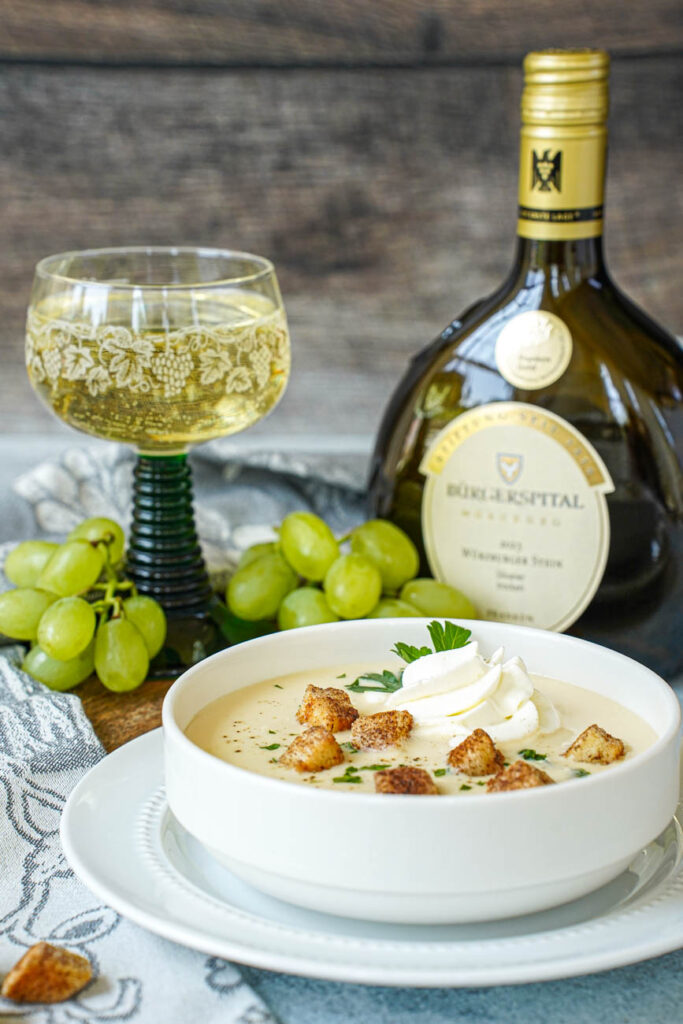
For this post, I wanted to make something to really showcase the wine and flavors of the region. After searching through a few options, I was particularly inspired by the recipe for Würzburger Weinsuppe/Fränkische Weinsuppe over on inFranken.
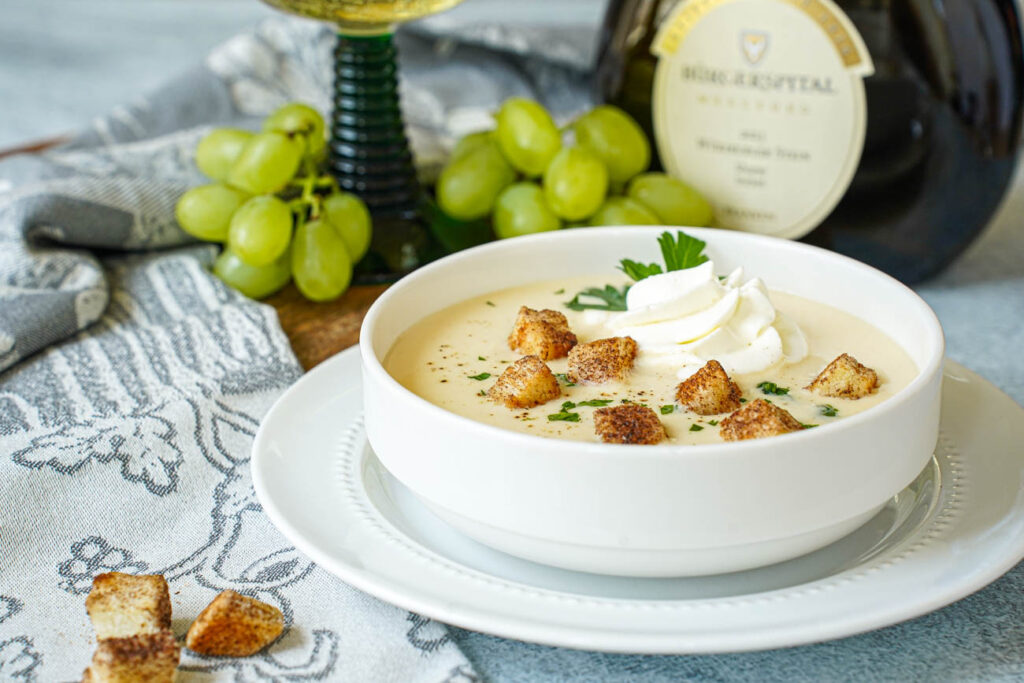
Fränkische Weinsuppe (Franconian Wine Soup) is a smooth and creamy wine-based soup paired with cinnamon dusted croutons. It is such a comforting starter and took me right back to my walk through the vineyards surrounding Festung Marienberg.
It also comes together in only about 30 minutes! Start by sautéing diced root vegetables in butter until softened, then dust with flour and pour in the wine, vegetable stock, and cream.
Bring the mixture to a simmer and cook, stirring occasionally, until slightly thickened and all the flavors come together. Strain the soup through a fine mesh sieve, adjust the seasonings, and finish with a dollop of freshly whipped cream, chopped parsley, and a generous handful of cinnamon-coated croutons.
This Fränkische Weinsuppe is best immediately after cooking, while still warm and before the croutons soak in all the moisture from the broth. The whipped cream will also quickly start to melt.
Notable Ingredients

While researching recipes, most mentioned sautéing Suppengemüse in butter before adding the wine and broth. Suppengemüse can be found in bunches together at the local markets and grocery stores.
It generally includes carrots, celeriac (celery root), leek, and occasionally a sprig or so of parsley (or parsley root depending on the region). I realized after the fact that I actually saw them bundled at the Grüner Markt in Würzburg (photo above)!
Celeriac (Knollensellerie, celery root) is a knobby root vegetable with a brownish/greenish skin and white interior. For those in Northern Virginia, I have been able to locate it at Wegmans/other larger grocery stores and Lotte Plaza Market in Chantilly.
Silvaner is a crisp white wine particularly known in the Franken and Alsace regions. For those in Northern Virginia, I have been able to locate Silvaner at German Gourmet in Falls Church (but the price was high enough that I tested this recipe with other options such as Grauburgunder before using my single bottle of Silvaner). If unavailable, swap for another favorite dry white wine.
Silvaner and other local Franconian wines are sometimes bottled in a shape unique to the region known as Bocksbeutel. The flattened ellipsoid shape keeps it from rolling away!

Fränkische Weinsuppe (Franconian Wine Soup) Recipe
Adapted from inFranken

Fränkische Weinsuppe (Franconian Wine Soup)
Ingredients
- 2 tablespoons (28 grams) unsalted butter
- 1 small onion peeled and diced
- 2 medium carrots diced
- 1/2 celeriac (celery root) peeled and diced, or 1/4 if it is especially large (they seem to be smaller at my local grocery store)
- 1/2 leek washed between the layers and thinly sliced
- 1/4 cup (30 grams) all-purpose flour
- 2 cups (470 milliliters) vegetable stock
- 2 cups (470 milliliters) Silvaner or other dry white wine
- 1 cup (240 milliliters) heavy cream
- 2 bay leaves
- 1/2 teaspoon whole black peppercorns
- salt to taste
- 1/8 teaspoon freshly grated nutmeg
- 1/8 teaspoon granulated sugar
To Serve:
- 1/3 cup (80 milliliters) heavy cream
- 2 tablespoons (28 grams) clarified butter Butterschmalz
- 2 slices stale white bread cut into 1/2 inch (1.25 centimeter) cubes
- ground cinnamon
- finely chopped fresh parsley
Instructions
- In a wide pot, melt the unsalted butter over medium low heat.
- Once melted, add the onion, carrot, celeriac, and leek. Cook, stirring occasionally, until softened.
- Sprinkle the flour over the vegetables, then stir to coat evenly.
- Once evenly coated, slowly pour in the vegetable stock, while continuing to stir, then the wine.
- Pour in the 1 cup (240 milliliters) cream, then add the bay leaves and peppercorns.
- Bring the mixture to a low simmer and cook, stirring occasionally, for 20 minutes.
- While the mixture is simmering, whisk the 1/3 cup (80 milliliters) heavy cream either with a whisk in a large bowl or in a stand mixer with a whisk attachment just until stiff peaks form. Transfer to a bowl and refrigerate until ready to serve.
- Place the clarified butter in a large skillet over medium low heat.
- Add the bread cubes and toast, stirring often, until golden on each side.
- Remove from heat, then dust with cinnamon until evenly coated.
- Pour the soup through a fine mesh sieve into a large bowl (preferably with a spout). Add salt, nutmeg, and sugar. Adjust seasonings as needed.
- Transfer the soup between individual bowls, then top with dollops of the whipped cream, a few of the cinnamon bread cubes, and the chopped parsley.
- Serve immediately.
Mimi Rippee
Very interesting! I’ve never come across anything like this! Very intriguing.