
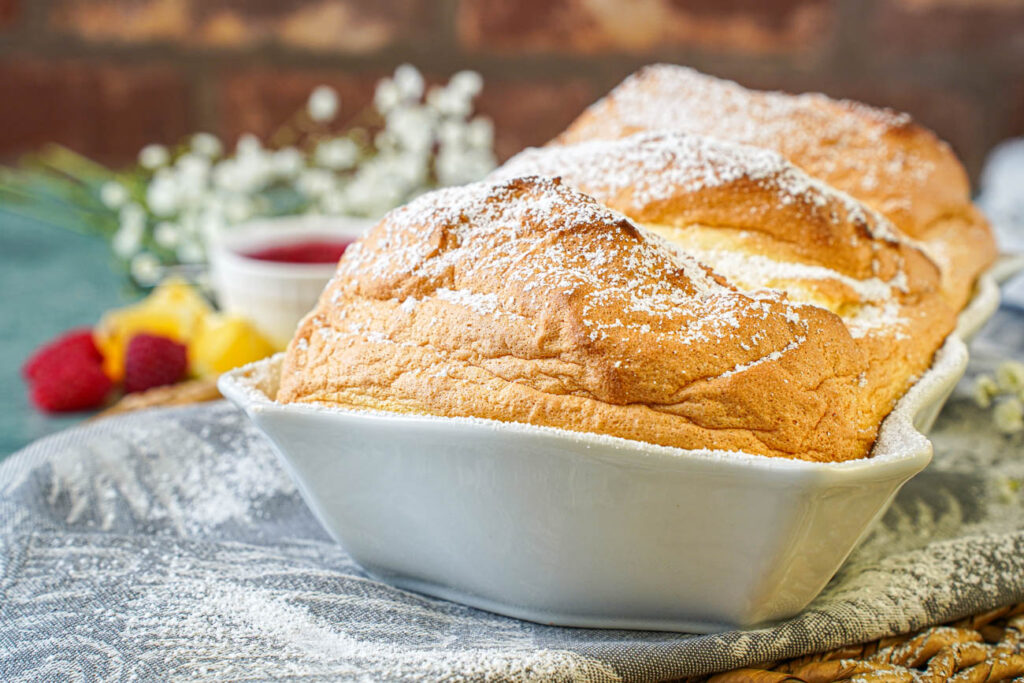
A recipe for Salzburger Nockerl inspired by my time in Salzburg, Austria. This souffle-like dessert is formed into three peaks to resemble the mountains surround Salzburg.
Last fall, I visited Austria for the first time! I spent a little over a week traveling through Innsbruck, Salzburg, Wolfgangsee, and Linz, then finished with a few days in Germany to see friends before returning home. I completely fell in love with the country and miss everything already.
Today, I am covering the second half of Salzburg (mostly areas west of Staatsbrücke plus Schloss Hellbrunn) and a recipe for Salzburger Nockerl.
Check out the rest of my trip:
- Kaspressknödel (Austrian Cheese Dumplings) and Innsbruck
- Schlutzkrapfen and Innsbruck
- Petersilienerdäpfel (Parsley Potatoes) and Salzburg
Salzburg
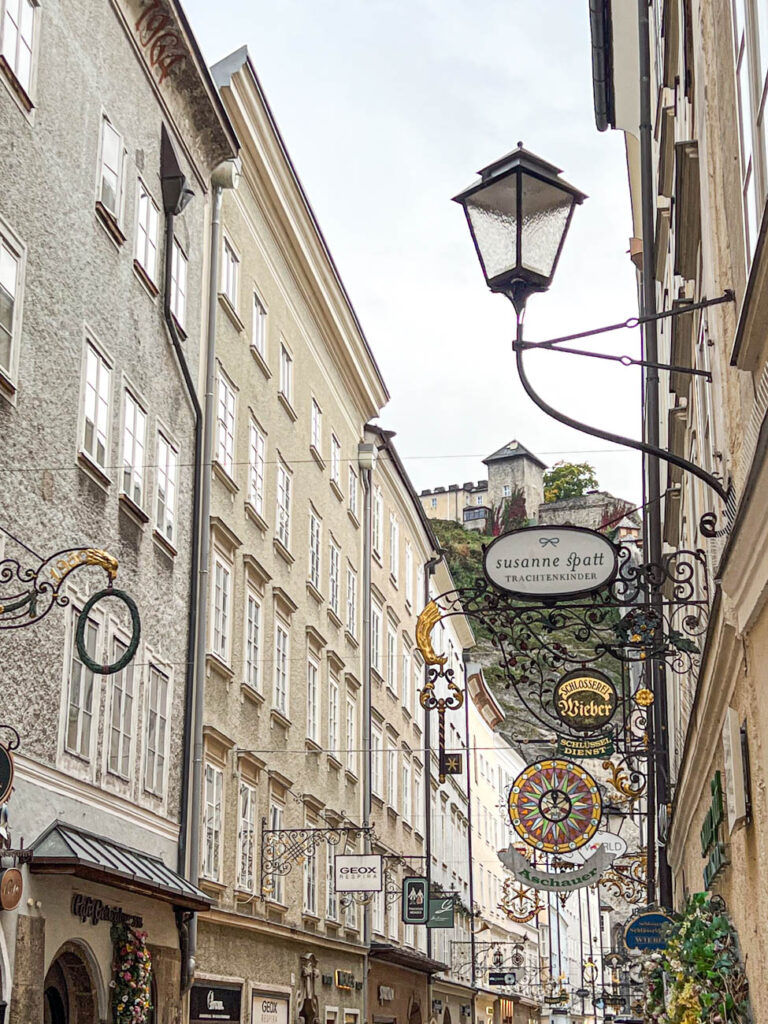
Salzburg is situated on the Salzach River in SalzburgerLand, Austria along the German border and the foot of the Alps.
This gorgeous city is packed with culture, incredible regional cuisine, Baroque architecture, and one of the best preserved city centers north of the Alps (designated a UNESCO World Heritage Site in 1996).
It is particularly known as the birthplace of Wolfgang Amadeus Mozart and (in the United States) for The Sound of Music filming locations.
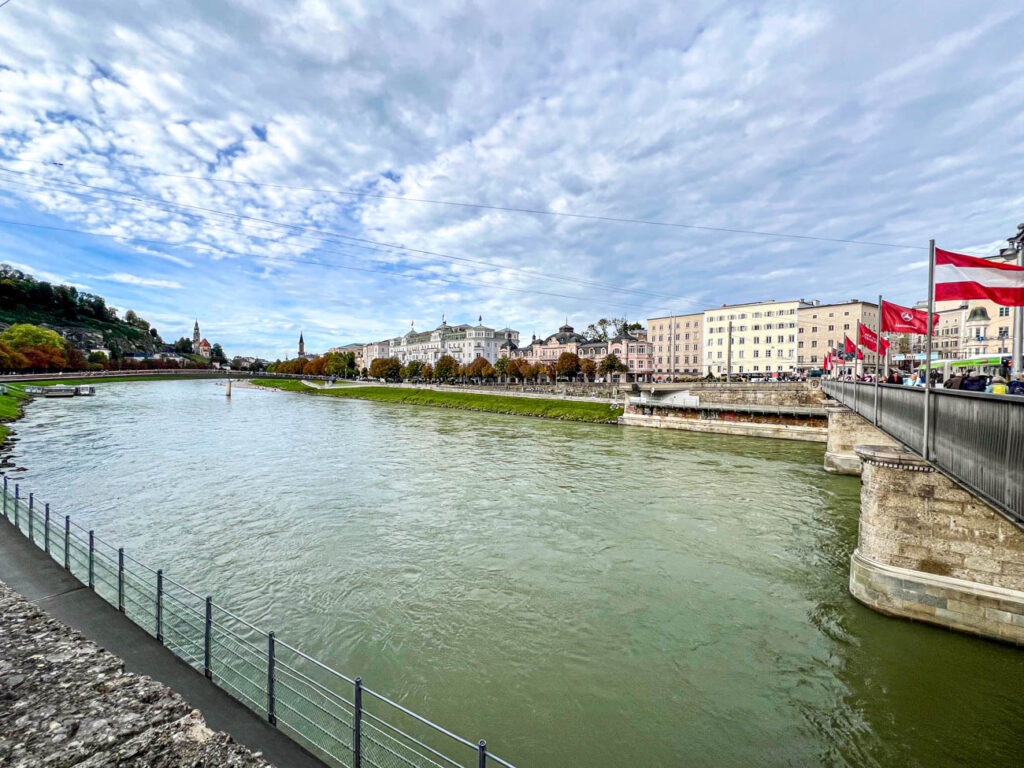
I got by using German, but often heard and saw English translations while in the restaurants, shops, and tourist attractions.
The area is fairly compact and easy to navigate in two/three days, during a long weekend, or even as a day trip from München.
I spent five nights and it was perfect for enjoying the city at a somewhat relaxed pace and fitting in two day trips to Linz and Wolfgangsee.
Getting to Salzburg
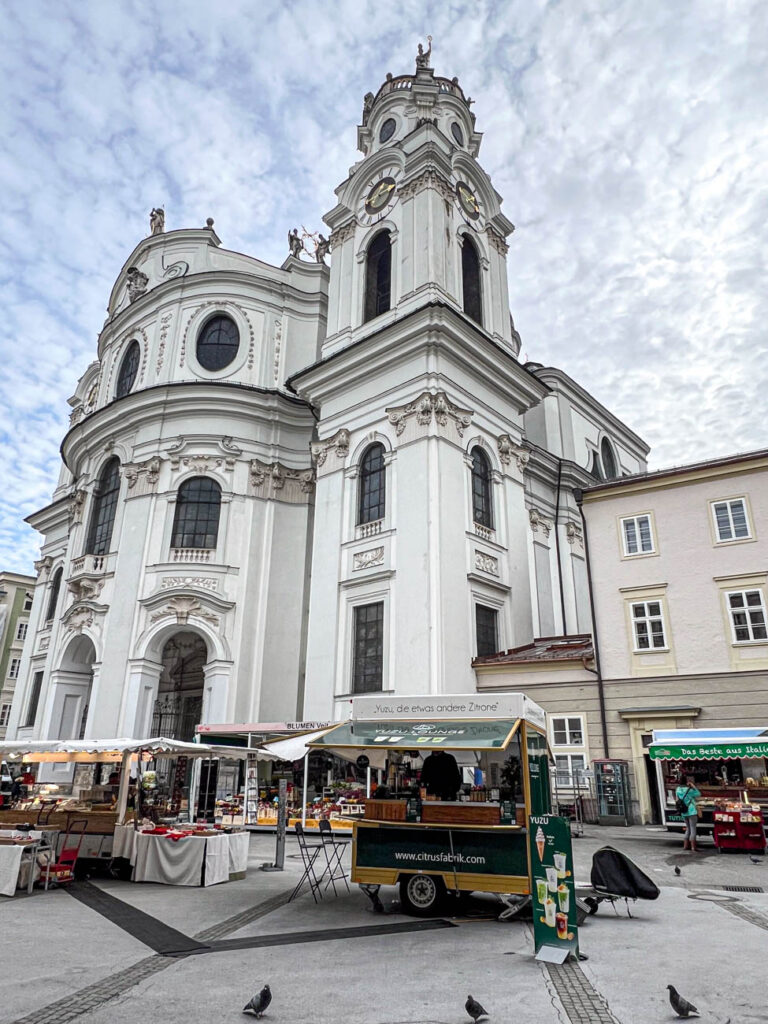
Salzburg can easily be reached via multiple locations across Central Europe. I arrived from Innsbruck using the Railjet Xpress (RJX) in a little under 2 hours. It is about 1 1/2 hours from Munich, 2 1/2 hours from Vienna, 5 hours from Frankfurt am Main, 5 1/2 hours from Prague, and 5 1/2 hours from Zürich.
If using the trains, I highly recommend downloading the ÖBB app (Österreichische Bundesbahnen). The app is available in English and it is easy to search for and book trains/buses along with seat reservations (also recommended, especially if traveling with more people).
Salzburg Airport (SZG) is the second largest airport in Austria and located about 5 kilometers (3 miles) southwest of the city center.
Nur Coffee
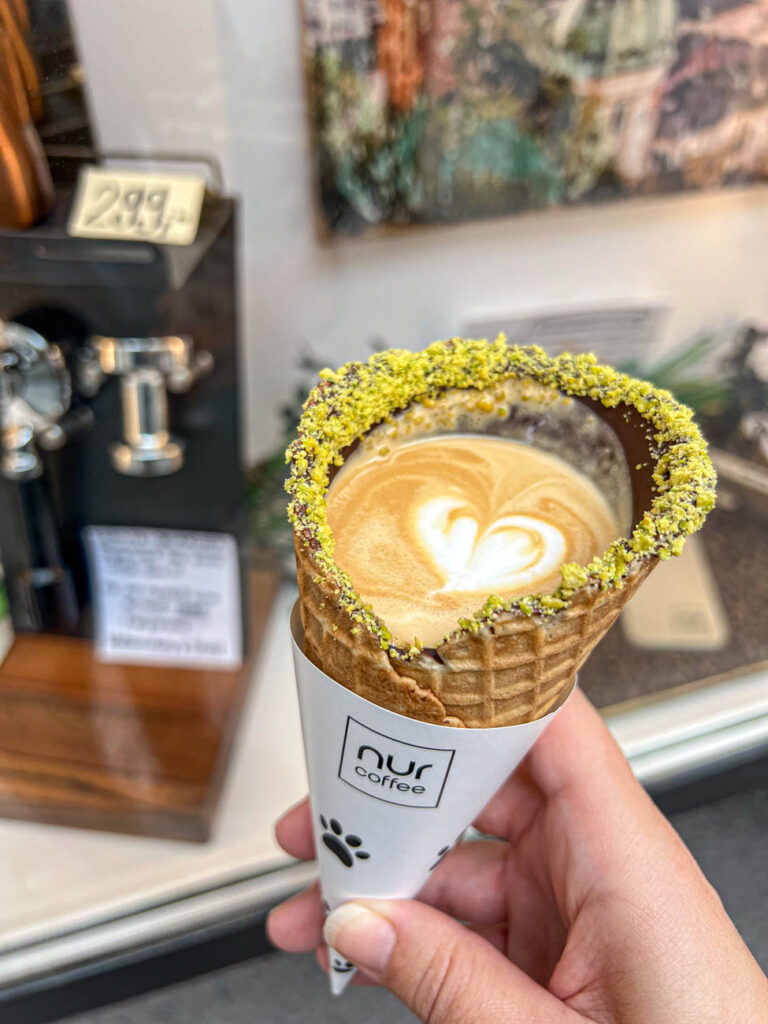
My very first stop after arriving in Salzburg was Nur Coffee at Bürgerspitalgasse 3 for some much needed caffeine.
This small coffee stand features only coffee (nur means only in German) in a fun assortment of options from Vienna-style classics to specialty and seasonal drinks. At the time of my visit, they were open daily and payment was only available by card.
I picked the Waffolino con Pistacchio- single espresso shot and foamed milk in a pistachio waffle cone.
Sternbräu
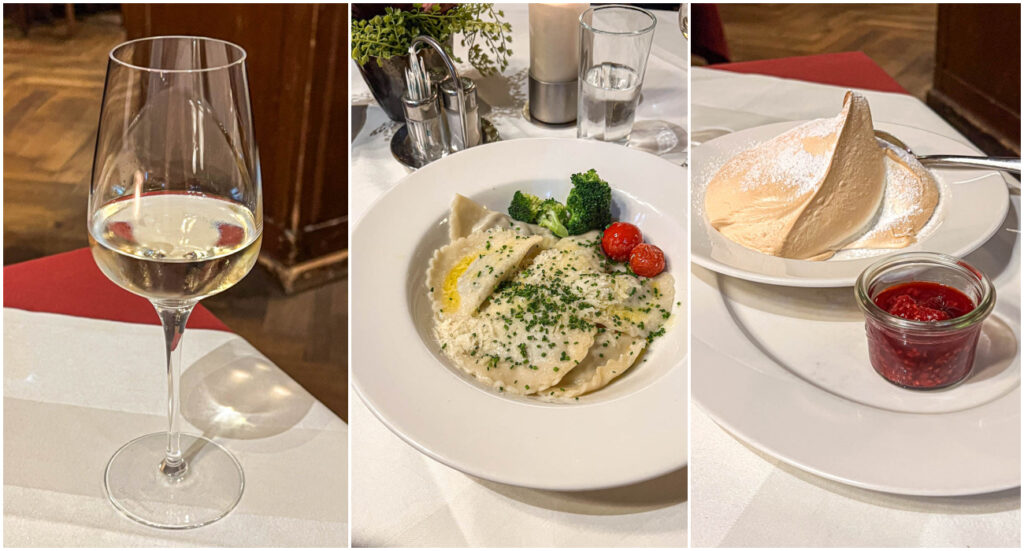
While narrowing down restaurants, I decided on Sternbräu because they had a single portion of Salzburger Nockerl on the menu!
Sternbräu was established in 1542 in the heart of Salzburg at Griesgasse 23 and features comforting Austrian classics. Indoor and outdoor seating is spread across two dining halls, five lounges, three pub gardens, and four new Trend-Locations. Reservations are available through their website (and recommended).
Salzburger Nockerl is a light and airy meringue-like soufflé with three peaks to symbolize (usually) the Mönchsberg, Kapuzinerberg, and Gaisberg surrounding Salzburg. The restaurant serves the dessert as a single peak- perfect for solo travelers who still want to try the dish, but can’t finish the traditional version on their own.
I also enjoyed the Schlutzkrapfen gefüllt mit Steinpilzen, dazu braune Butter (Pasta filled with porcini mushrooms and served with brown butter) and a glass of Sternwein Grüner Veltliner DAC, Weingut Leo Müller, Kremstal.
Balkan-Grill
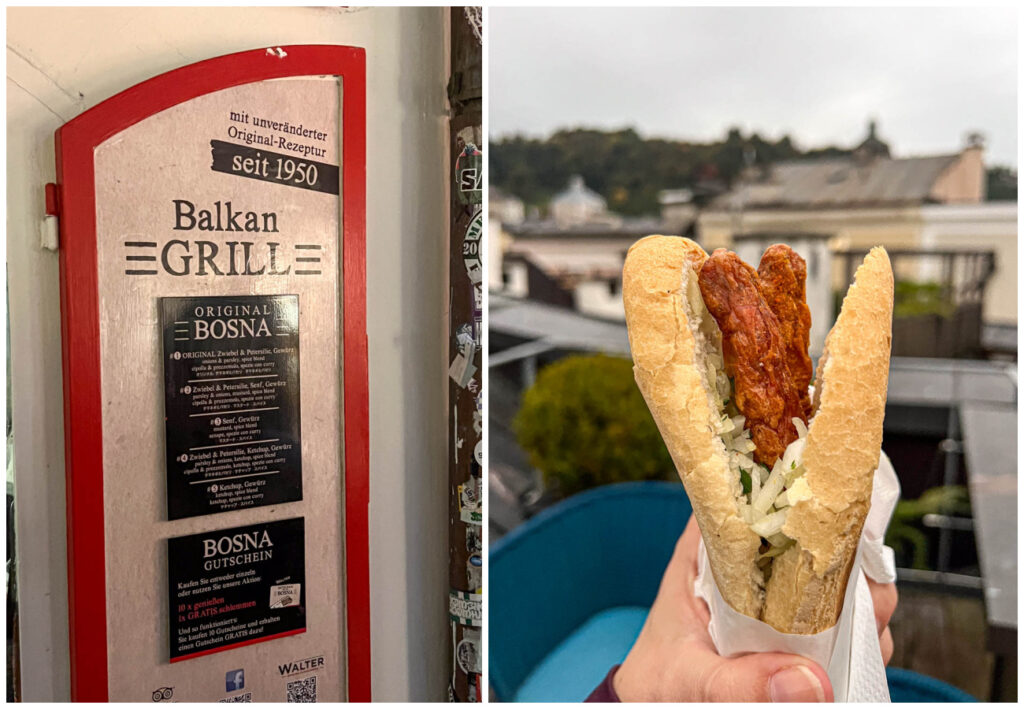
I stopped by Balkan-Grill for a quick dinner after arriving back in the city from Linz. This small stand is tucked away in an alley at Getreidegasse 33 and features Bosna for takeout with a handful of topping options.
An Austrian-Bulgarian fusion, the Bosna was created in 1949 by Zanko Todoroff in the Müller Bräustübl and he opened Balkan Grill the following year. I went with the original: Zwiebel & Petersilie, Gewürz (onion and parsley, plus a spice blend). It was the perfect ending to the day.
Keep in mind that the line can get long and the stand will shut down right at closing. I recommend arriving no later than 6 pm.
Mozarts Geburtshaus
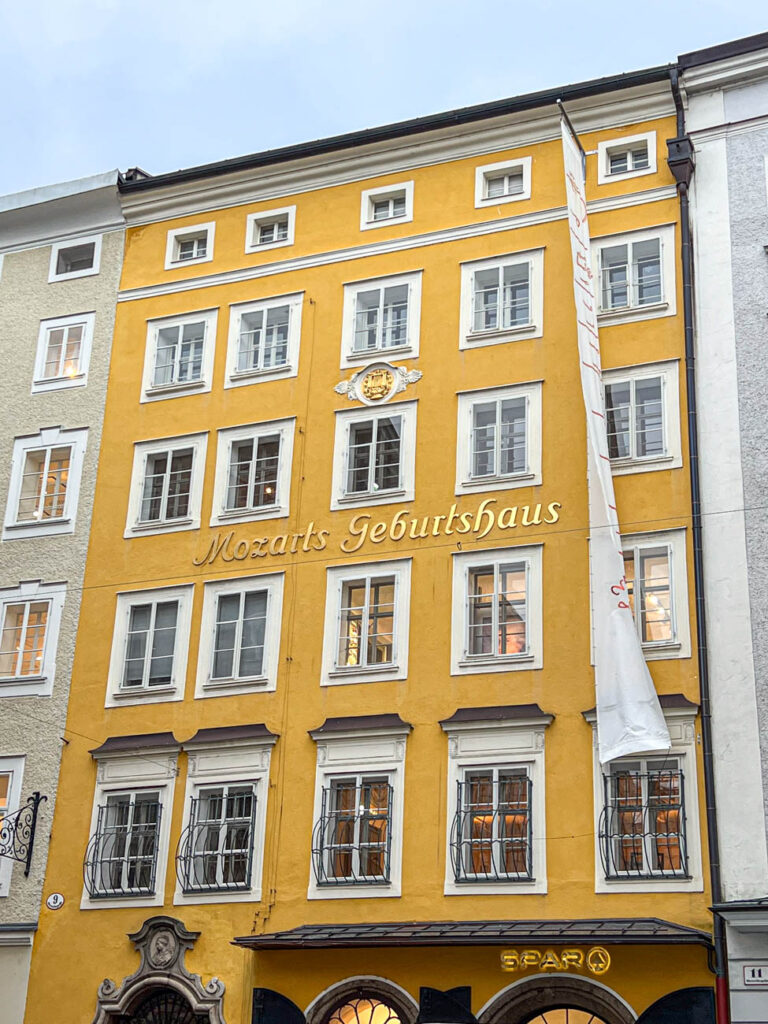
Wolfgang Amadeus Mozart was born in Salzburg on January 27th, 1756 and his birthplace at Getreidegasse 9 has been open to the public as a museum since 1880.
Mozarts Geburtshaus (Mozart’s Birthplace) and home until 1773 is a vibrant yellow building housing furniture, family portraits, letters, heirlooms, and even Mozart’s early instruments such as his first violin and clavichord.
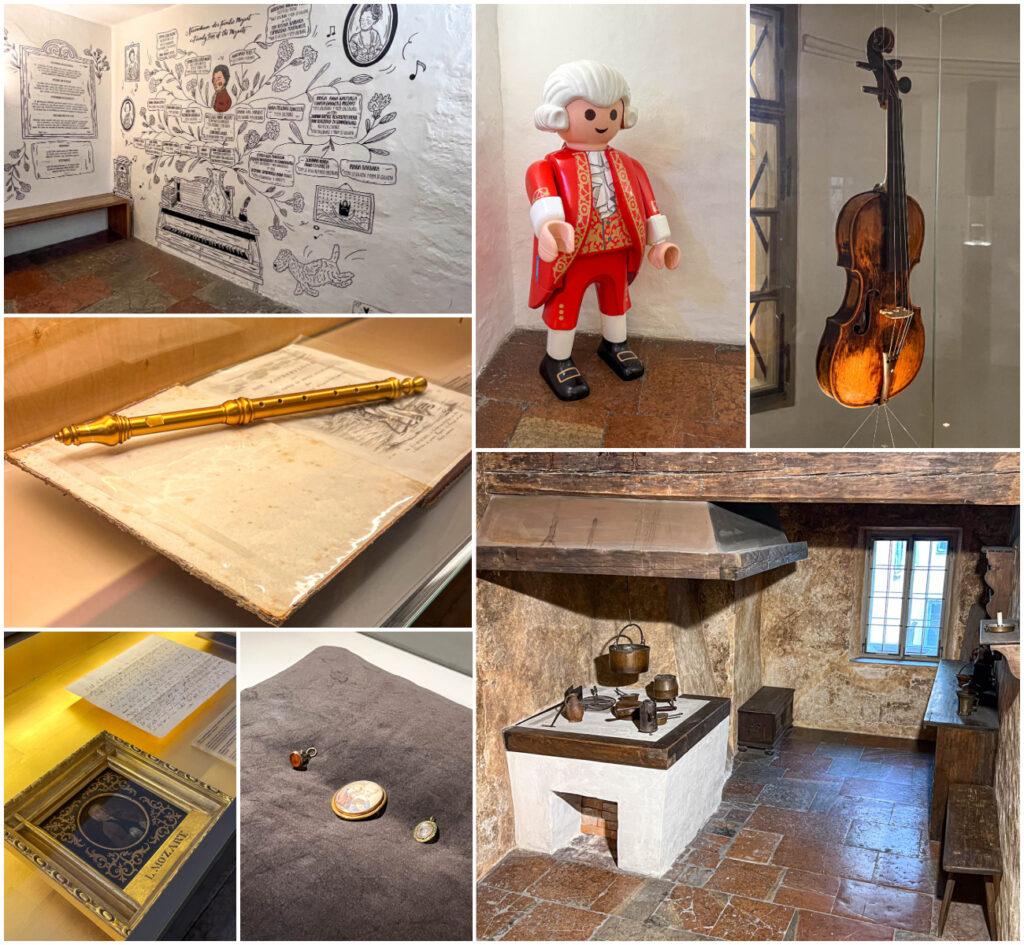
The museum is currently open daily, but check before visiting as hours may vary based on short-term events. One time admission is included with the Salzburg Card.
Allow roughly an hour to tour Mozarts Geburtshaus at a relaxed pace. Accessibility is not possible with a wheelchair and strollers are not allowed inside.
Mozart-Wohnhaus
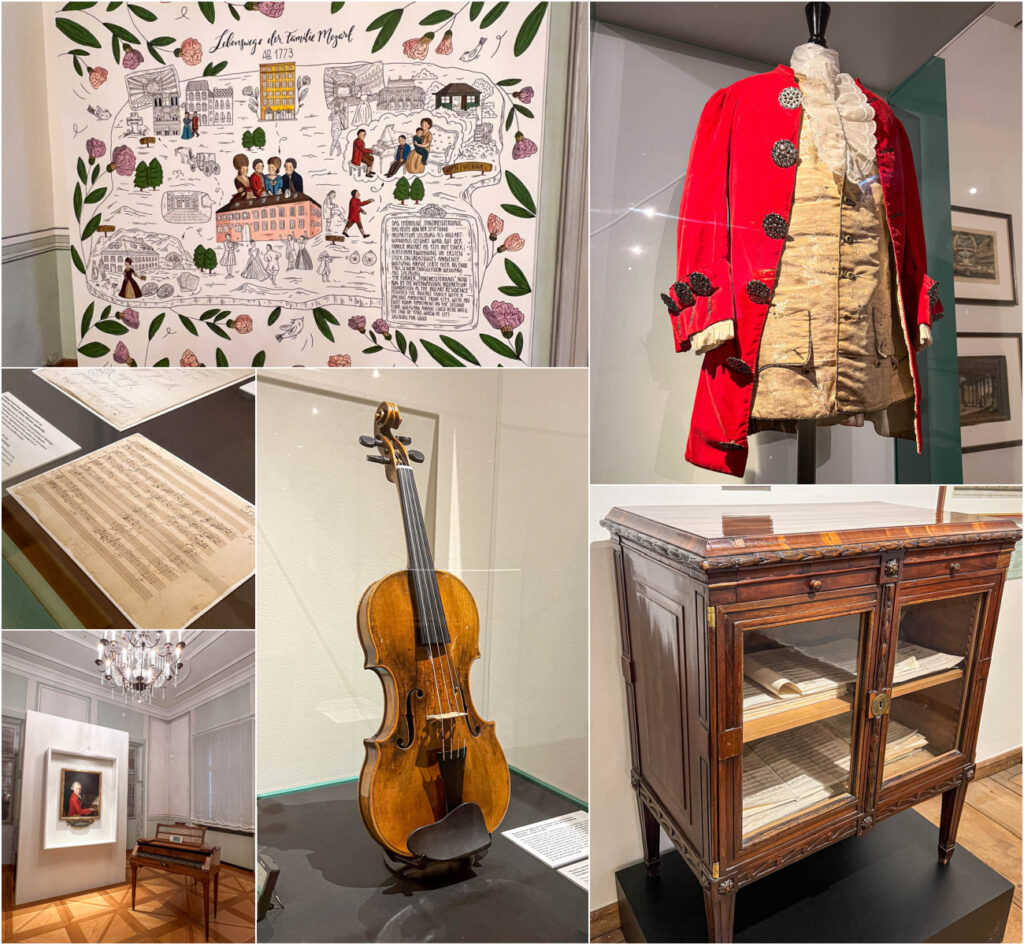
From Mozarts Geburtshaus, you can walk across the river about 400 meters (1/4 mile) north to Mozart-Wohnhaus (Mozart Residence) at Makartplatz 8.
Mozart Residence was Wolfgang Amadeus Mozart’s home from 1773 to 1787. Most of the building was destroyed during an air raid on October 16th, 1944, but it was reconstructed to the original building plans and reopened to the public on January 26th, 1996.
This eight-room apartment is now filled with original documents, portraits, and Mozart’s pianoforte.
The Museum is currently open daily and barrier free via the Theatergasse entrance. Allow for about 45 minutes to one hour to walk and read through the exhibits. Tickets are available online (do not use third-party providers), on site, and one time admission is included with the Salzburg Card.
Buchhandlung Höllrigl
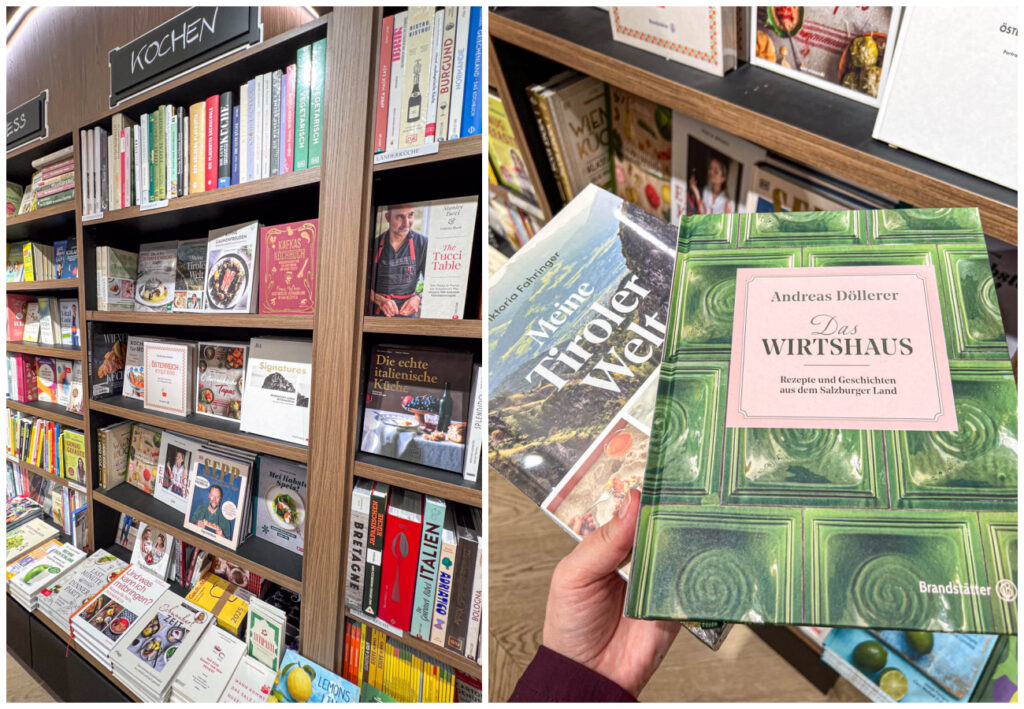
Founded in 1594, Buchhandlung Höllrigl at Sigmund-Haffner-Gasse 10 is the oldest bookstore in Austria and the second oldest among the German speaking countries (oldest is considered to be Korn & Berg in Nürnberg, Germany).
I went straight to the cookbook area (and took home Das Wirtshaus by Andreas Döllerer), but there is a large assortment across multiple genres with a particular focus on Salzburg-based books and an English section.
Mirabellgarten
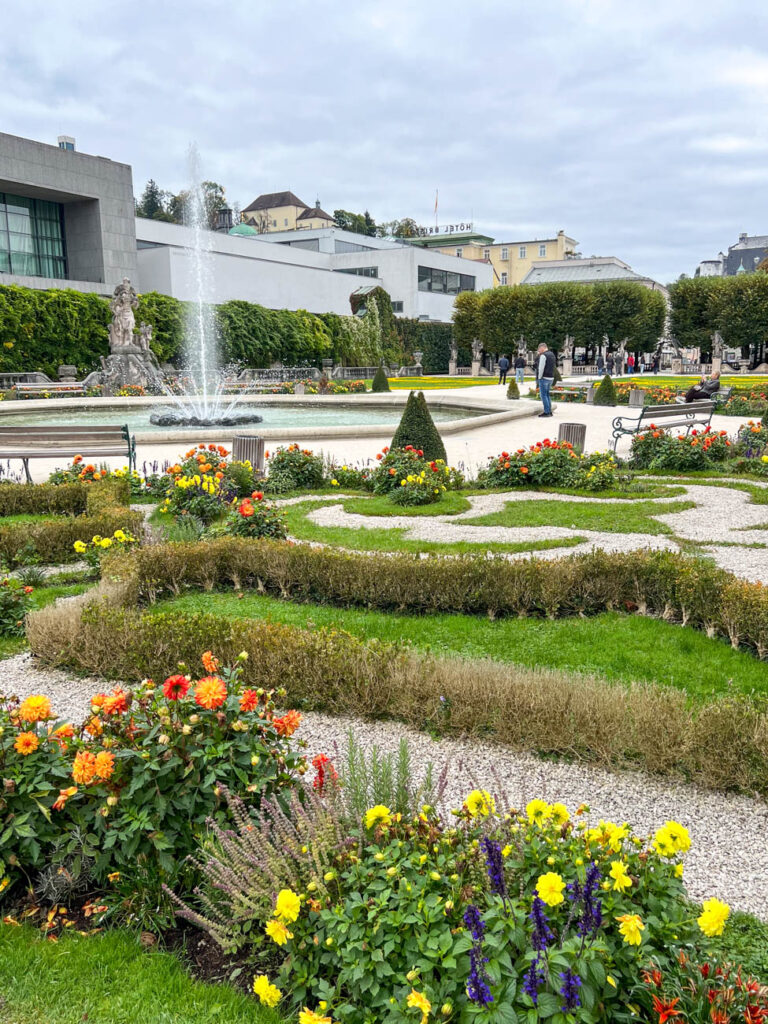
Mirabellgarten (Mirabell Garden) is situated north/east of the Salzach at Mirabellplatz 3. This gorgeous Baroque garden was designed around 1690 by Johann Bernhard Fischer von Erlach.
As a part of the historic center of Salzburg, the grounds were declared a UNESCO World Heritage Site in 1996/1997. It was also a filming location for “Do-Re-Mi” in The Sound of Music.
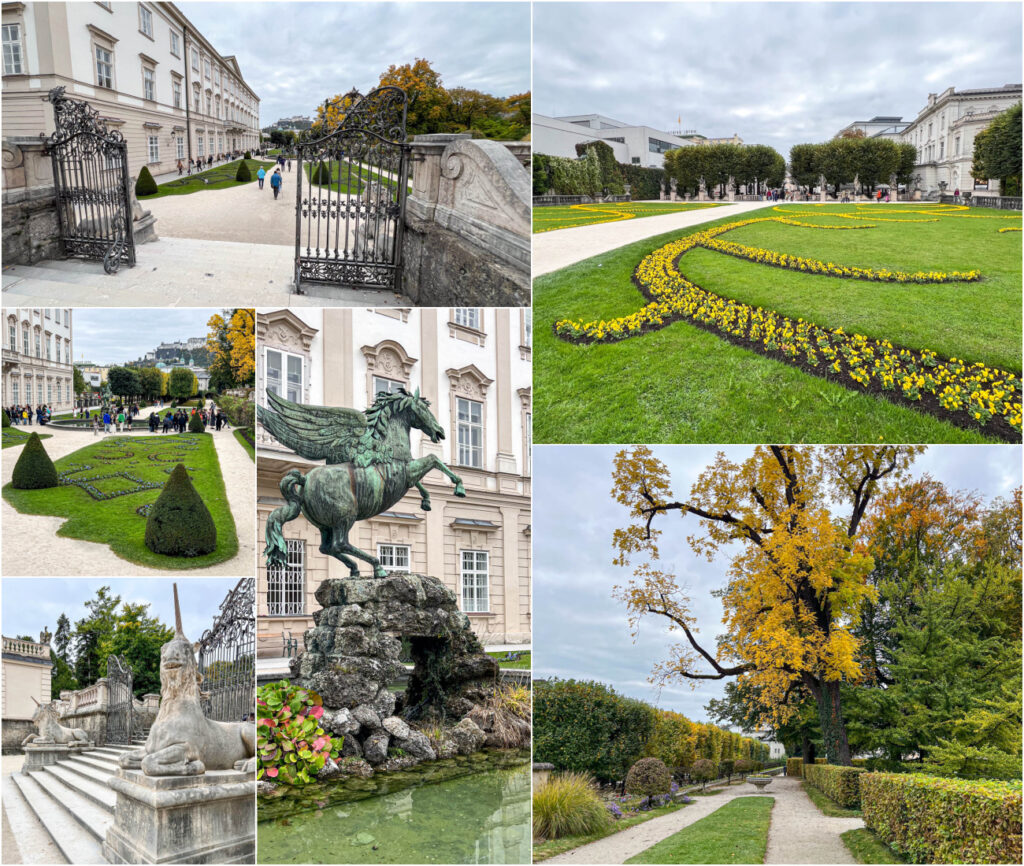
Notable features include the Grand Parterre with figures symbolizing the four elements, Pegasus Fountain, Heckentheater (hedge theater), and Zwerglgarten- the oldest dwarf garden in Europe (closed in winter).
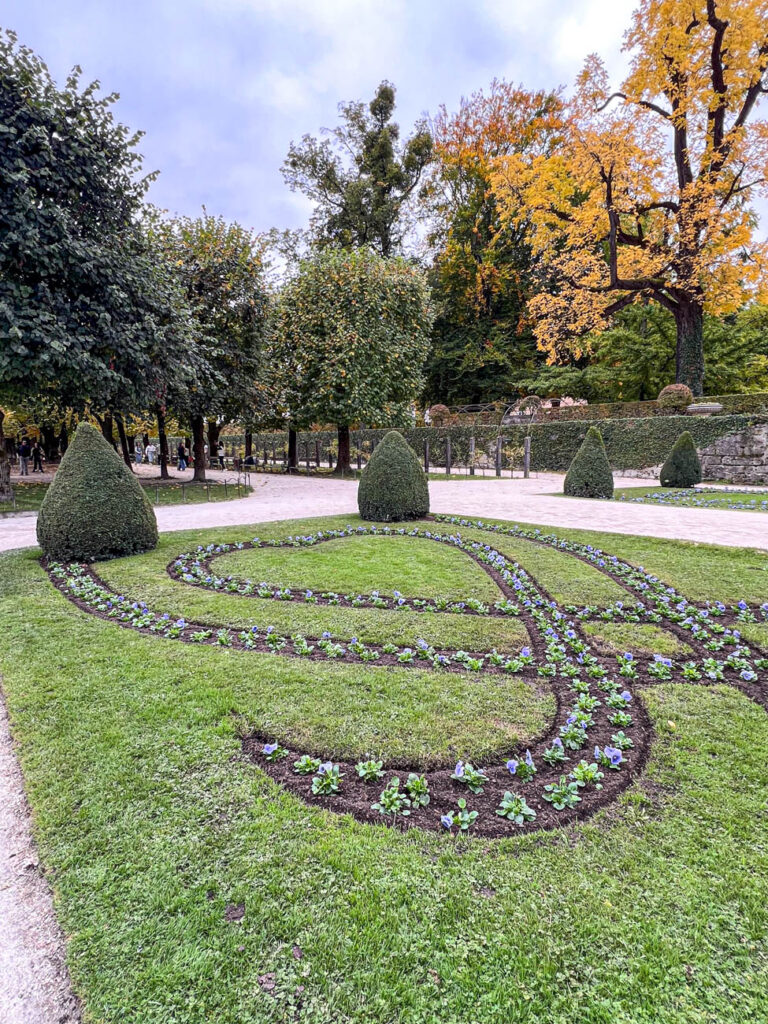
Admission to the gardens and open sections of Mirabell Palace is free. Allow 1-2 hours to enjoy the area at a relaxed pace.
Visiting early in the morning or late in the afternoon is recommended to avoid most of the crowds. Access is barrier free.
Schloss Hellbrunn
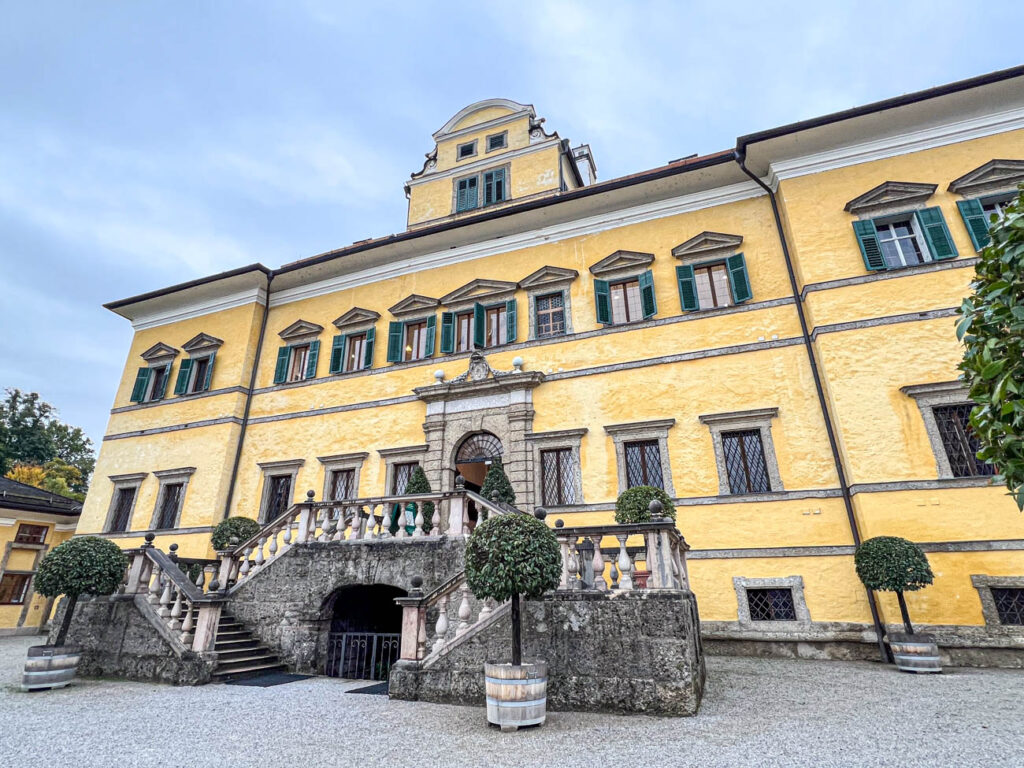
Schloss Hellbrunn (Hellbrunn Palace) is about 5 kilometers (3 miles) southeast of the city center and accessible via public transportation or by car. From the Rathaus stop (direction Untersbergbahn), Bus Line 25 is only about 13 minutes (12 stops) to the Salzburg Schloss Hellbrunn stop and a 350 meter (1/4 mile) walk to the entrance.
This early Baroque villa was built from 1613 to 1619 and is especially known for the fun and unique assortment of trick fountains situated across the grounds. It was a daytime residence for Prince Archbishop Markus Sittikus (he returned to Salzburg in the evenings), so there is actually no bedroom in the palace.
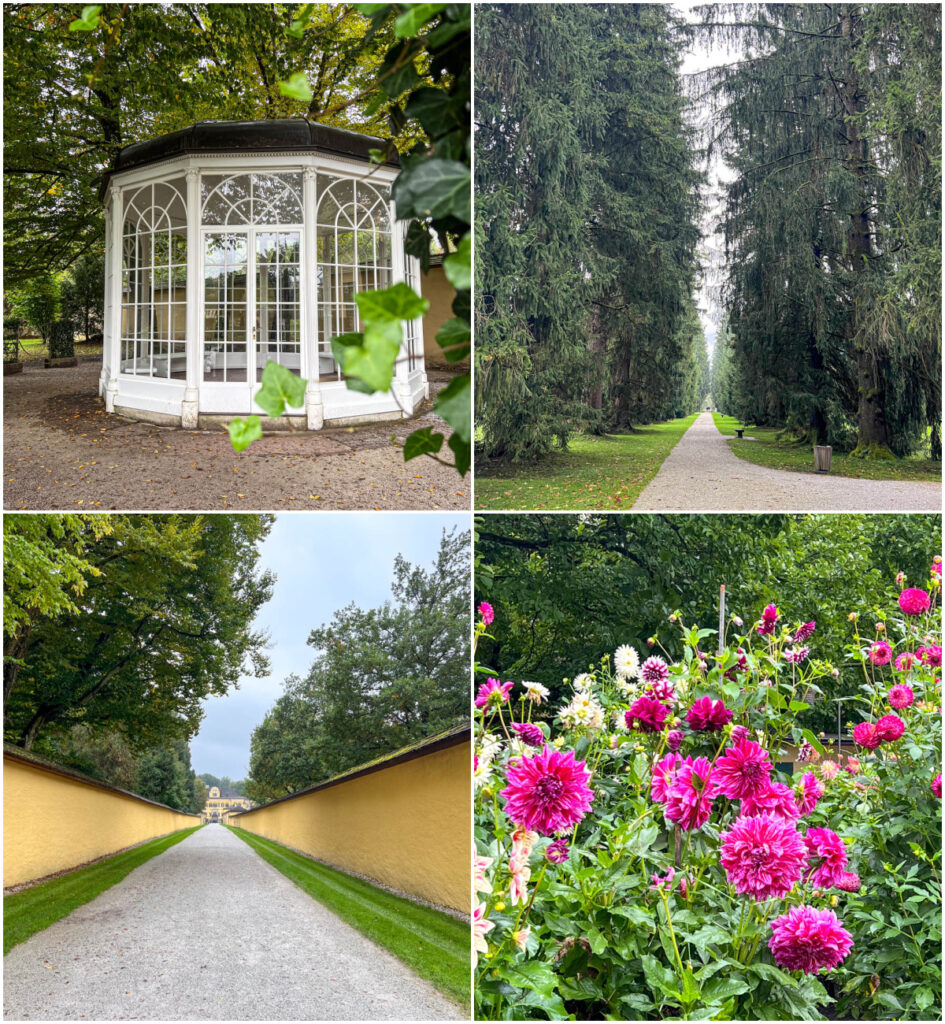
Schloss Hellbrunn is now open to the public seasonally from the end of March to the beginning of November. Check the hours before visiting. They vary based on the month. Tickets can be purchased online or onsite in the gift shop.
The park and the trick fountains are wheelchair accessible, but the palace itself is not.
The grounds are filled with relaxed walking paths surrounded by ponds (home to sturgeon and other large fish), gardens, and a white glass gazebo (another filming location in The Sound of Music).
Trick Fountains
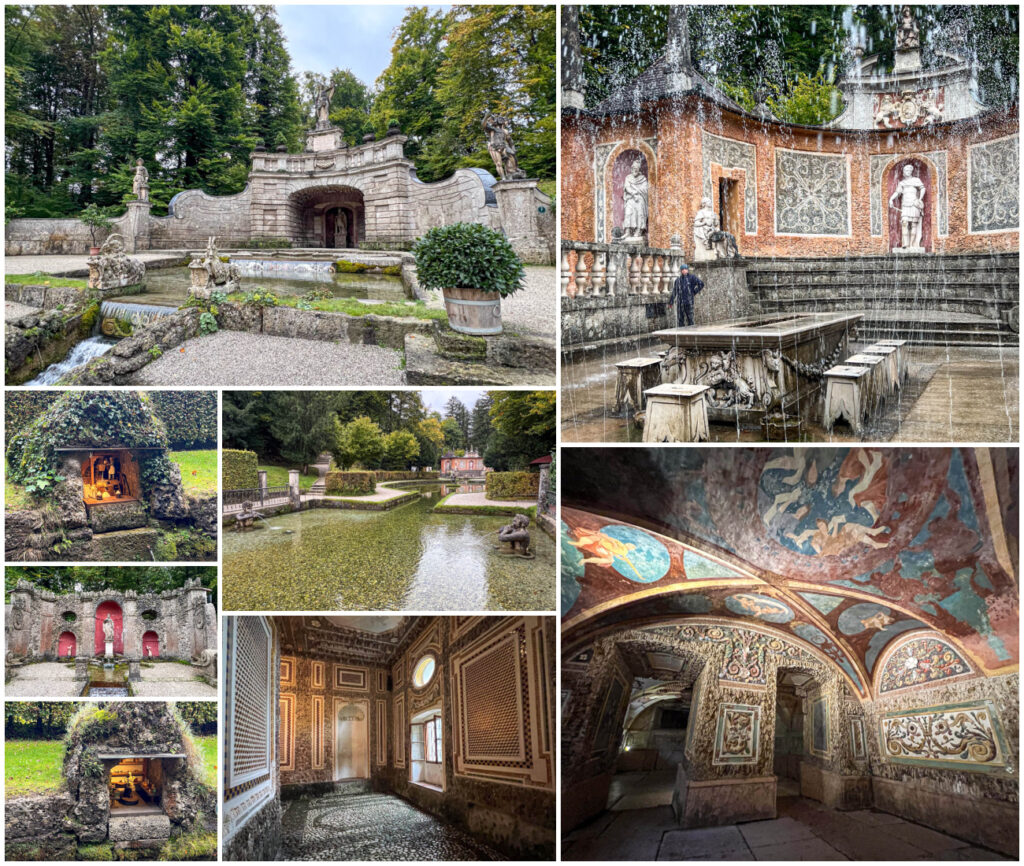
A highlight of my visit to Schloss Hellbrunn was definitely the tour of the trick fountains (Wasserspiele) and grottoes.
Particularly unique features include the stone table and seats surrounded by hidden fountains, the Mechanical Theater (Mechanisches Theater, 163 water-powered figures built in 1750 by Lorenz Rosenegger), and the artistic grottoes in a variety of styles.
Audioguides are available in multiple languages and included with the ticket to explain each site along the self-guided tour.
Volkskundemuseum
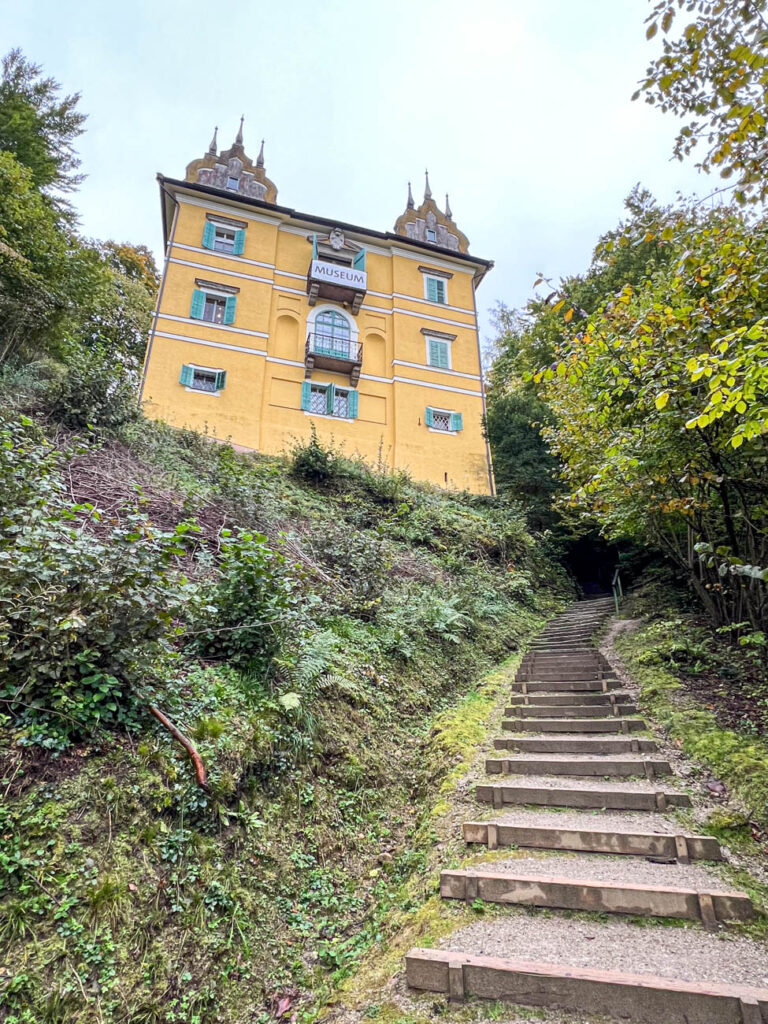
Volkskundemuseum (Folklore Museum) is located up a hiking path (unfortunately not barrier free) from Schloss Hellbrunn with beautiful views of the surrounding area.
The castle was built in 1615 for Prince Archbishop Markus Sittikus and has been open to the public as a museum since 1924.
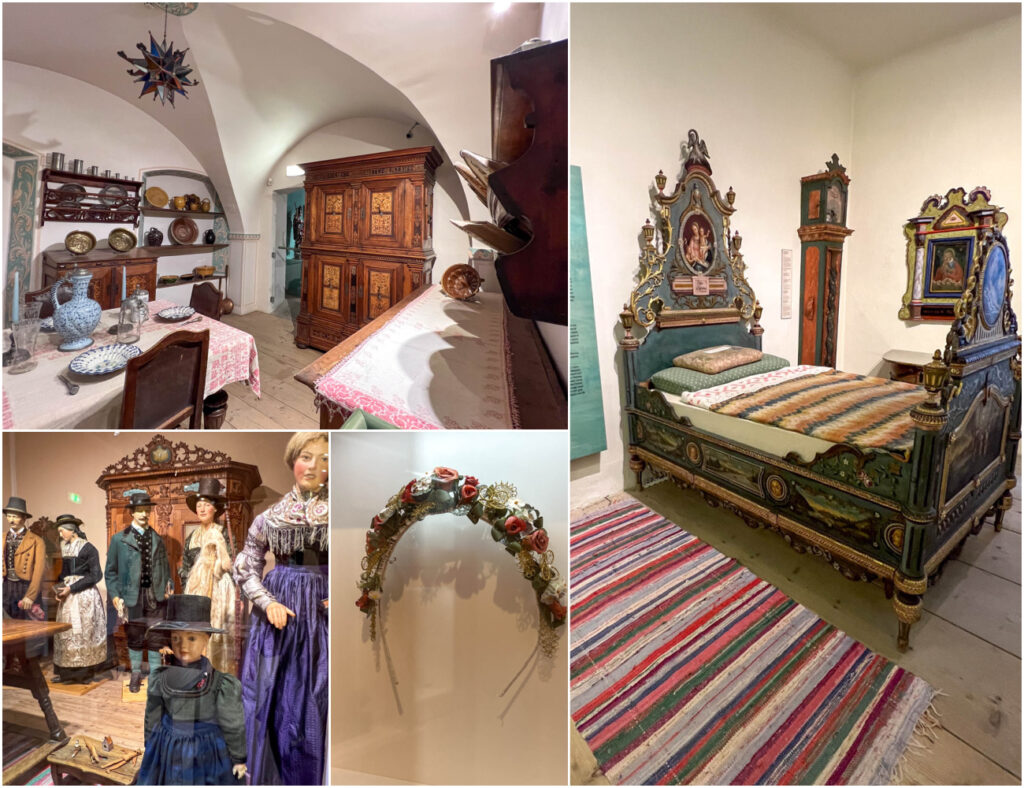
The rooms are now filled with collections surrounding Salzburg’s folk culture with traditional clothing, masks, celebratory items, furniture, and artwork.
As with Schloss Hellbrunn, the museum is currently open seasonally from the end of March to the beginning of November. Entry is included with the Salzburg Card. Allow for about 1 hour for a self-guided tour of the rooms.
Salzburger Nockerl
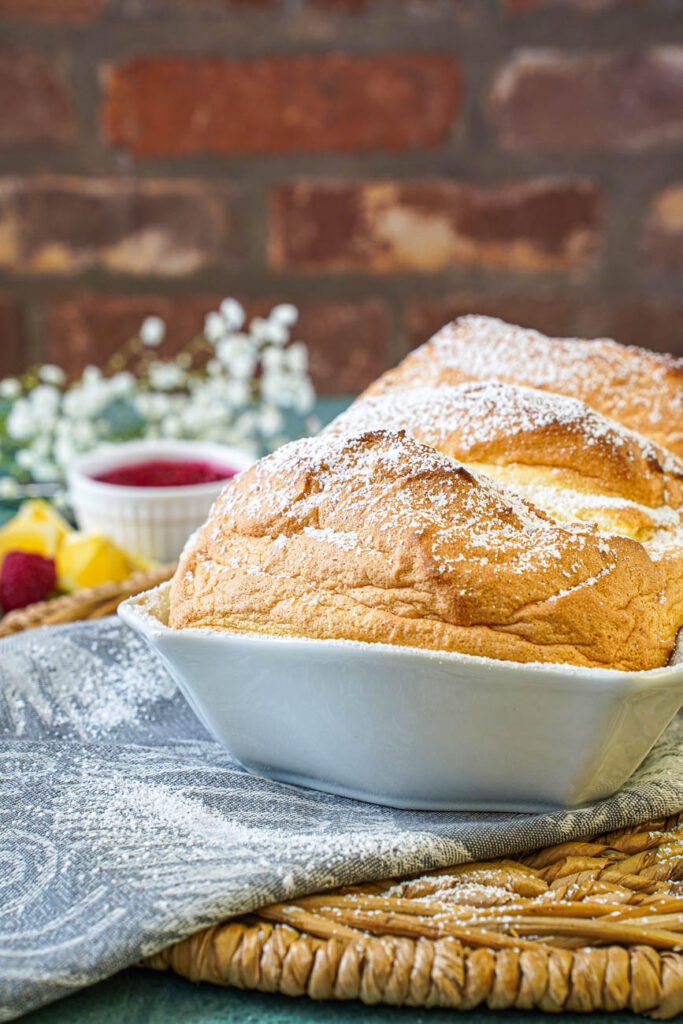
After trying Salzburger Nockerl (Salzburger Nockerln) at Sternbräu, I was so excited to learn how to make it at home.
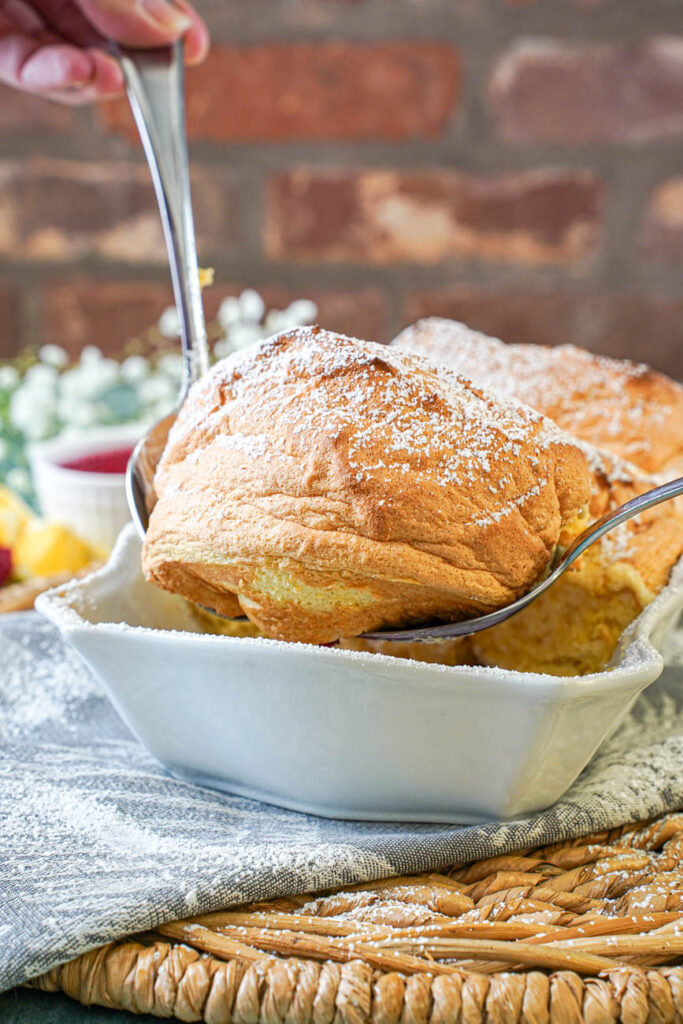
Dating back to the 1600s, this signature dish is inspired by the mountains surrounding the city with the souffle formed into three individual peaks in an oval baking dish. The exact peaks represented in the dessert vary based on the restaurant. I mostly see Mönchsberg and Kapuzinerberg with the third peak being either Rainberg or Gaisberg.
After assembling, the peaks are baked until golden brown across the tops with a creamy center. It is best served immediately from the oven (the mountains will quickly deflate after removing from heat) with a generous dusting of powdered sugar to mimic snow.
A Few Salzburger Nockerl Tips
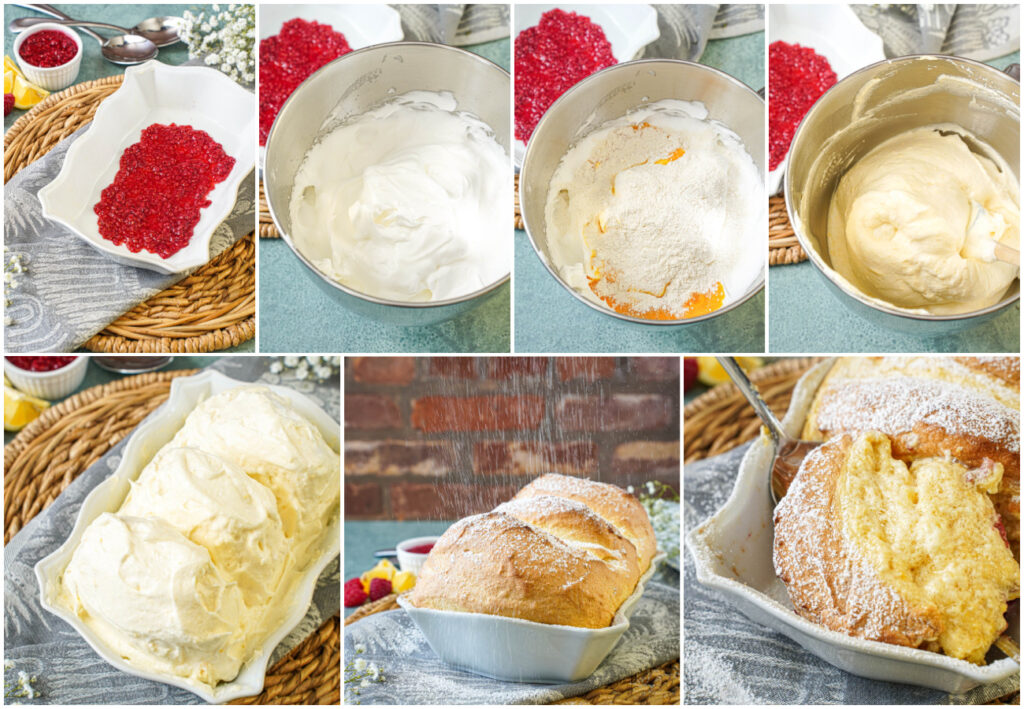
I lightly flavored the Salzburger Nockerl with vanilla sugar and lemon zest. The lemon zest is optional. Some recipes include a splash of rum.
Small packets of vanilla sugar can be found in the European section of many larger supermarkets, but it is easy to make at home.
Scrape out the seeds of one vanilla bean and mix well with 2 cups (400 grams) granulated sugar. Store in an airtight container with the scraped out vanilla beans at room temperature until ready to use.
You can swap the vanilla sugar for a tablespoon (12 grams) of granulated sugar and a teaspoon of vanilla bean paste.
Beat the egg whites just until stiff peaks form, then slowly beat in the sugar and vanilla sugar until shiny and glossy. Take care to not over-mix.
Sift the flour before folding with the stiff egg whites. This will help everything fold together smoothly without any lumps.
Do not open the door while baking. Releasing the heat will cause the peaks to deflate while in the oven.
Salzburger Nockerl for 1-2 People
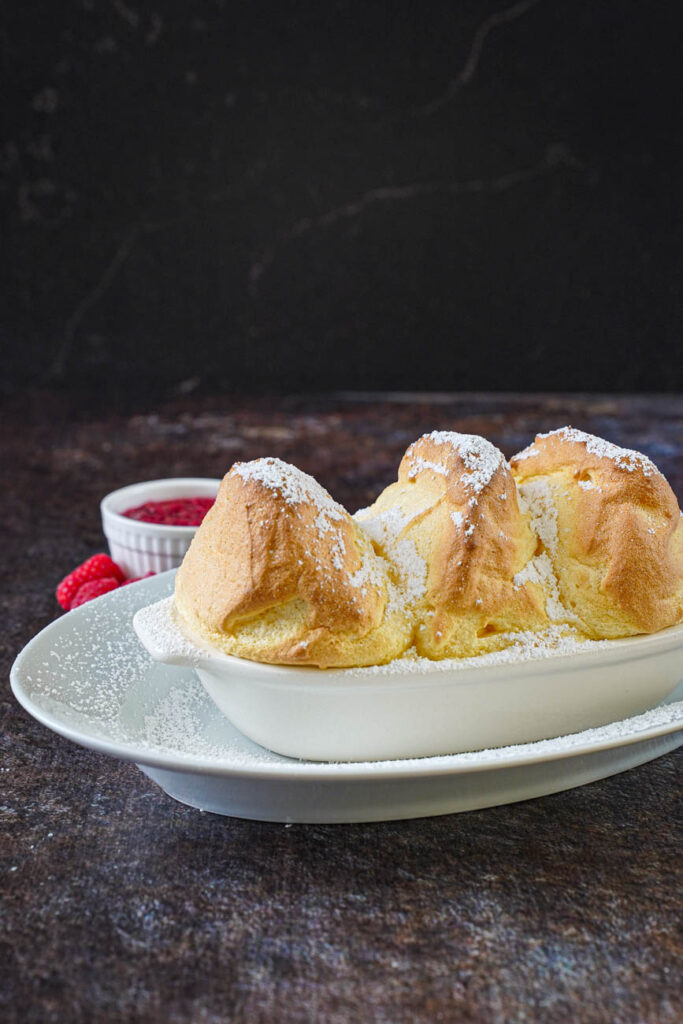
Since I tried the Salzburger Nockerl in Salzburg as a single serving, I wanted to make a version at home to mirror that smaller quantity as well.
To make Salzburger Nockerl for 1-2 people, follow the recipe as written with the following adjusted ingredients:
- 2 large egg yolks
- 2 tablespoons (15 milliliters) all-purpose flour
- zest from 1/4 lemon
- small pinch salt
- 3 large egg whites
- 3 tablespoons (38 grams) granulated sugar
- 1/2 tablespoon (6 grams) vanilla sugar
- powdered sugar for dusting
Arrange the three individual peaks (or one large one for Mönchsberg) in a greased gratin dish (with or without the berry sauce) about 6-7 inches (15-18 centimeters) in length.
Bake in a 400˚F (200˚C) oven just until golden brown across the top, about 6-8 minutes.
Salzburger Nockerl Recipe
Adapted from Servus
Salzburger Nockerl
Ingredients
- unsalted butter for greasing the pan
- raspberry or lingonberry sauce/compote for serving, optional
- 4 large egg yolks
- 1/3 cup (42 grams) all-purpose flour
- zest from 1/2 lemon
- pinch fine salt
- 6 large egg whites
- 1/3 cup (67 grams) granulated sugar
- 1 tablespoon (12 grams) vanilla sugar
- powdered sugar for serving
Instructions
- Grease an 8 inch (20 centimeter) long oval baking dish with butter.
- If desired, add a thin layer of the raspberry or lingonberry sauce across the bottom of the baking dish.
- Preheat oven to 400˚F (200˚C) with the rack in the center of the oven.
- In a small bowl, lightly beat together the egg yolks until smooth. Set aside.
- In another bowl, sift the flour, then add the lemon zest and salt. Set aside.
- In the bowl of a stand mixer fitted with a whisk attachment or a large bowl using a hand mixer, beat the egg whites just until stiff peaks form.
- While beating, slowly add the granulated sugar, then the vanilla sugar, until smooth and shiny.
- Pour the beaten egg yolks over the stiff egg whites, then add the flour.
- Use a rubber spatula to gently fold together the ingredients just until combined with no white streaks of egg whites remaining. Take care to not deflate the egg whites.
- Using a silicone bench scraper or large rubber spatula, arrange the fluffy egg mixture into three piles in the prepared baking dish. Use the spatula to gently shape each pile a mountain peak.
- Bake in the preheated oven until golden brown across the tops. It should still be creamy on the inside. Do not open the oven door while baking or the mountains will deflate.
- Serve the Salzburger Nockerl immediately from the oven with a dusting of powdered sugar and additional raspberry/lingonberry sauce on the side if desired. The mountain peaks will quickly start to deflate after removing from heat.
Notes
- 2 large egg yolks
- 2 tablespoons (15 milliliters) all-purpose flour
- zest from 1/4 lemon
- small pinch salt
- 3 large egg whites
- 3 tablespoons (38 grams) granulated sugar
- 1/2 tablespoon (6 grams) vanilla sugar
- powdered sugar for dusting
Leave a Reply