
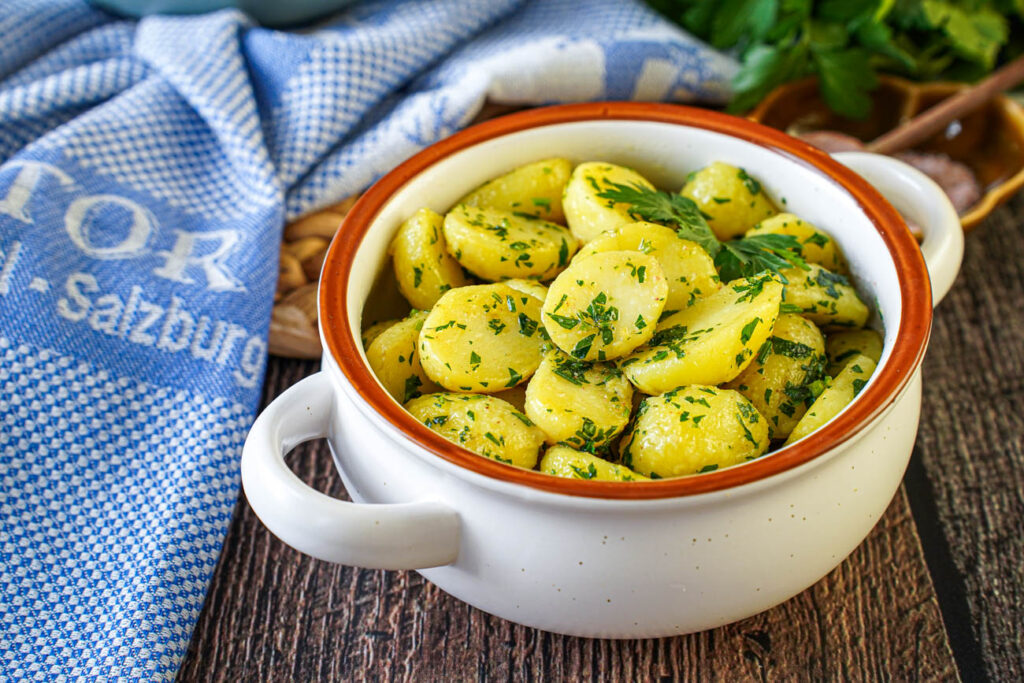
A recipe for Petersilienerdäpfel (Parsley Potatoes) inspired by my time in Salzburg, Austria! Boiled potatoes are tossed in butter and parsley for an easy and delicious side.
Last fall, I visited Austria for the first time! I spent a little over a week traveling through Innsbruck, Salzburg, Wolfgangsee, and Linz, then finished with a few days in Germany to see friends before returning home. I completely fell in love with the country and miss everything already.
Today, I am covering the first half of Salzburg (mostly areas southeast of Staatsbrücke) and a recipe for Petersilienerdäpfel (Parsley Potatoes).
Check out the rest of my trip:
Salzburg
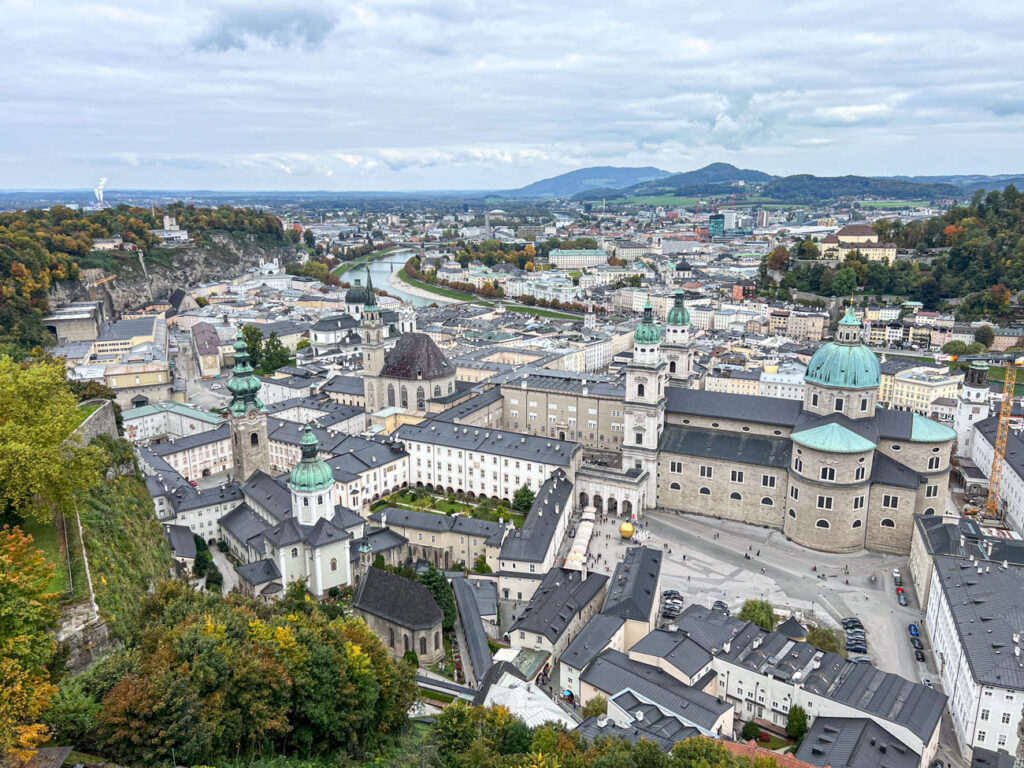
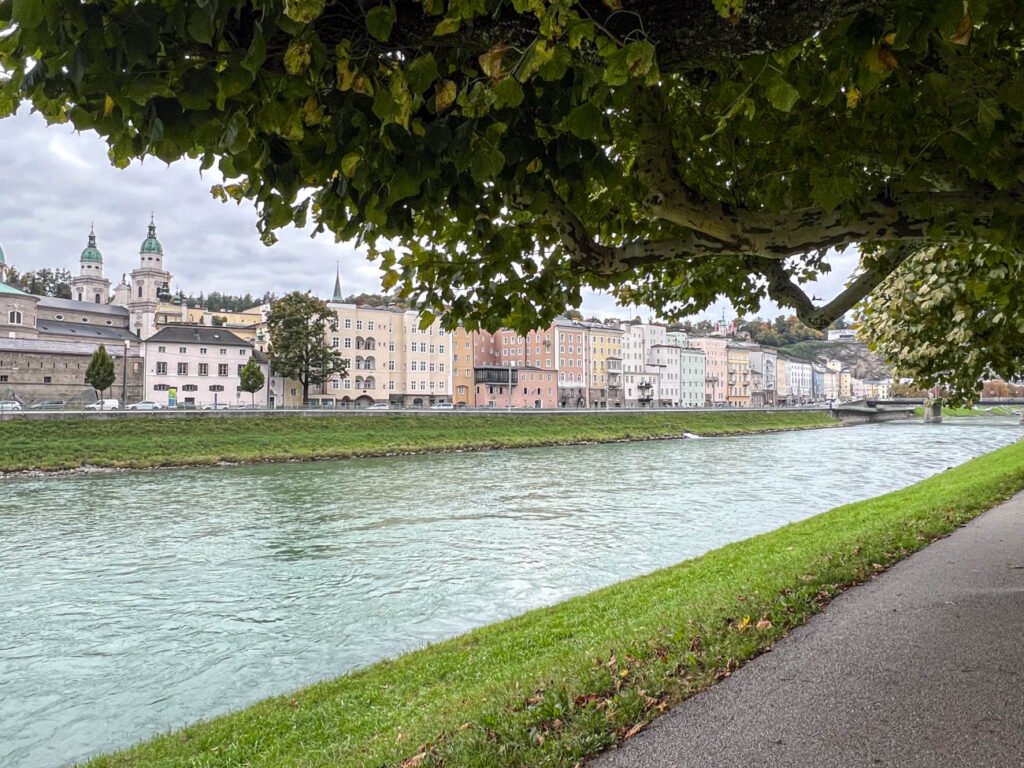
Salzburg is situated on the Salzach River in SalzburgerLand, Austria along the German border and the foot of the Alps.
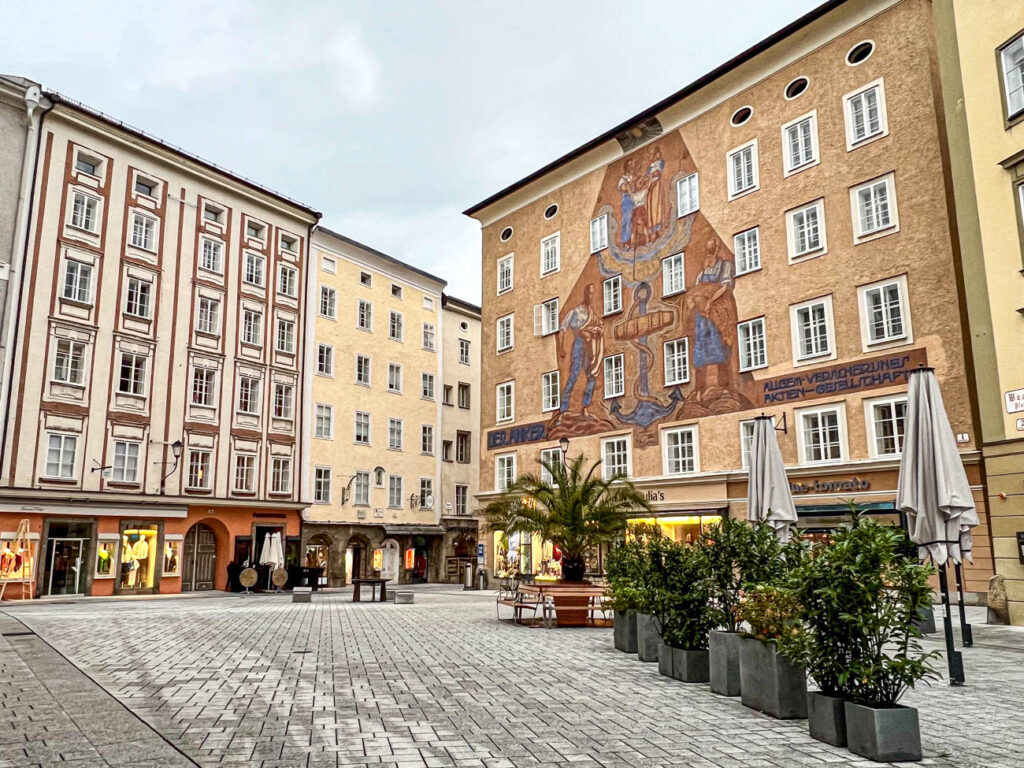
This gorgeous city is packed with culture, incredible regional cuisine, Baroque architecture, and one of the best preserved city centers north of the Alps (designated a UNESCO World Heritage Site in 1996).
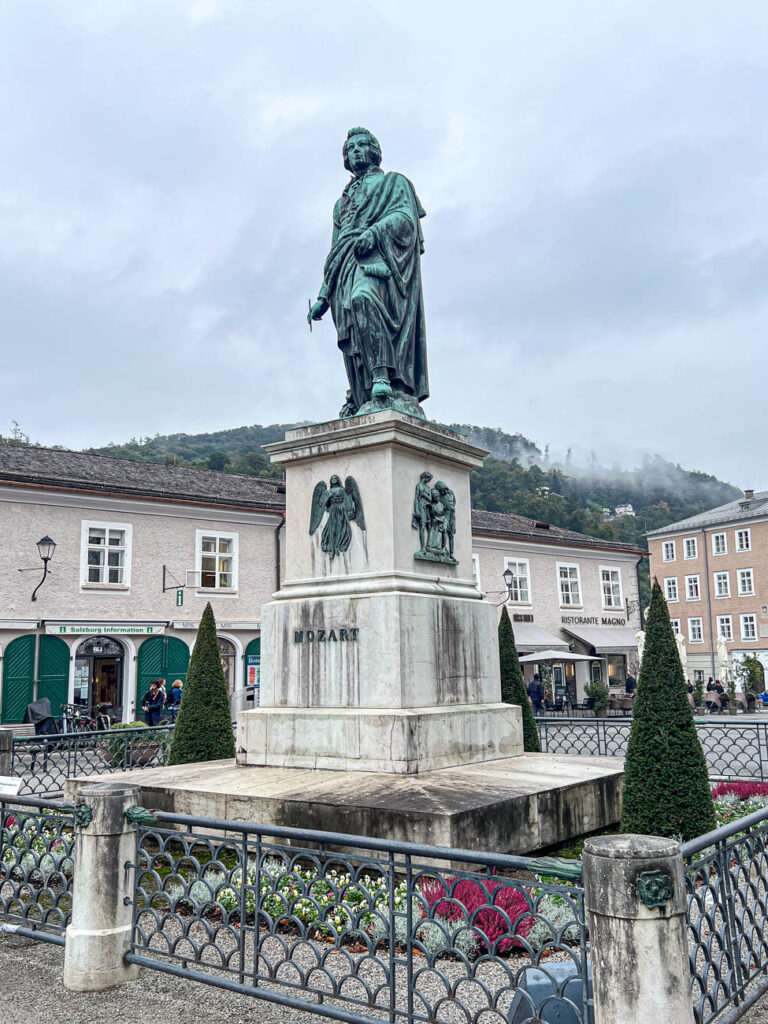
It is particularly known as the birthplace of Wolfgang Amadeus Mozart and (in the United States) for The Sound of Music filming locations.
I got by using German, but often heard and saw English translations (and sometimes Italian) while in the restaurants, shops, and tourist attractions.
The area is fairly compact and easy to navigate in two/three days, during a long weekend, or even as a day trip from München.
I spent five nights and it was perfect for enjoying the city at a somewhat relaxed pace and fitting in two day trips to Linz and Wolfgangsee.
Getting to Salzburg
Salzburg can easily be reached via multiple locations across Central Europe. I arrived from Innsbruck using the Railjet Xpress (RJX) in a little under 2 hours. It is about 1 1/2 hours from Munich, 2 1/2 hours from Vienna, 5 hours from Frankfurt am Main, 5 1/2 hours from Prague, and 5 1/2 hours from Zürich.
If using the trains, I highly recommend downloading the ÖBB app (Österreichische Bundesbahnen). The app is available in English and it is easy to search for and book trains/buses along with seat reservations (also recommended, especially if traveling with more people).
Salzburg Airport (SZG) is the second largest airport in Austria and located about 5 kilometers (3 miles) southwest of the city center.
After arriving at the Salzburg Hauptbahnhof (Main Station), I took a trolleybus (3, 5, or 6) to the Salzburg Rathaus stop (about 10 minutes) in the city center to reach my hotel.
My stay at Hotel Goldgasse included a Salzburg Verkehr Guest Mobility Ticket. This covered unlimited public transportation within SalzburgerLand.
I also purchased a Salzburg Card online for two (consecutive) days since I was trying to visit as many of the local sights as possible. It is available in 24, 48, or 72 hour increments. The Salzburg Card covers public transportation (except the S-Bahn) within the city, one time admission to all city tourist attractions and museums, and additional discounts.
Hotel Goldgasse
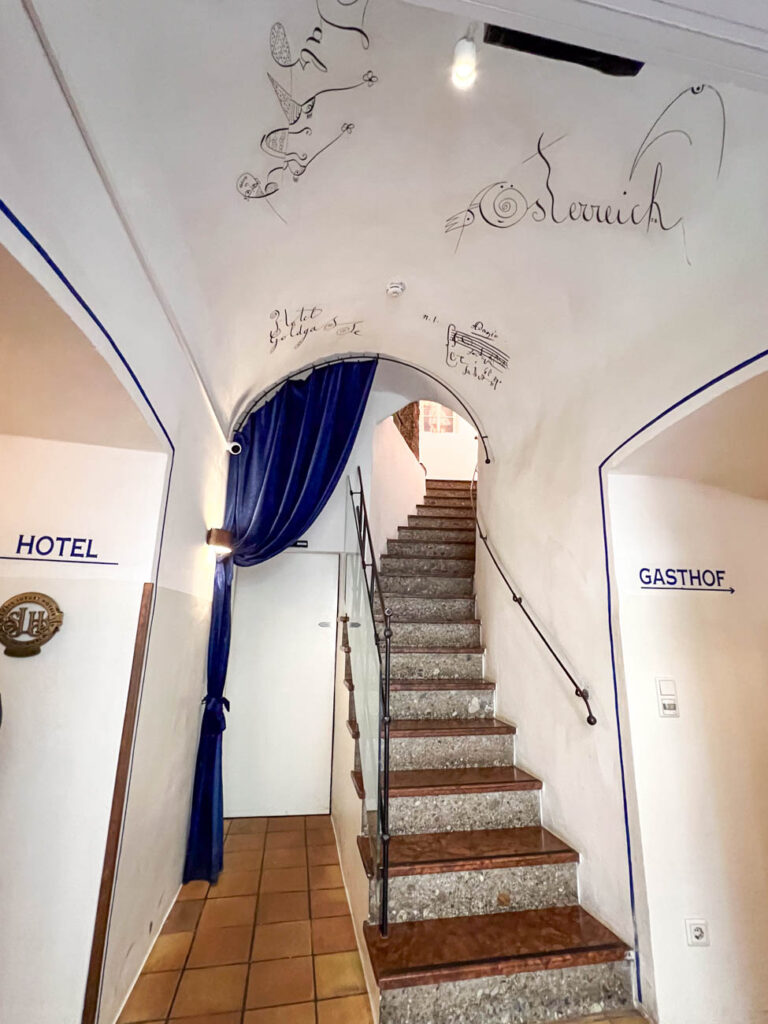
During my time in Salzburg, I booked the Rooftop Terrace Suite at Hotel Goldgasse.
Hotel Goldgasse is located in the heart of the city at Goldgasse 10. Everything within this post was easily walkable in about 5-10 minutes (minus Festung Hohensalzburg which I reached via a funicular).
This small boutique hotel is home to 16 unique rooms, each themed after a specific performance from the Salzburg Festival. Sizes range from the Double Room for a single person to the larger Junior Suites and Rooftop Terrace Suite.
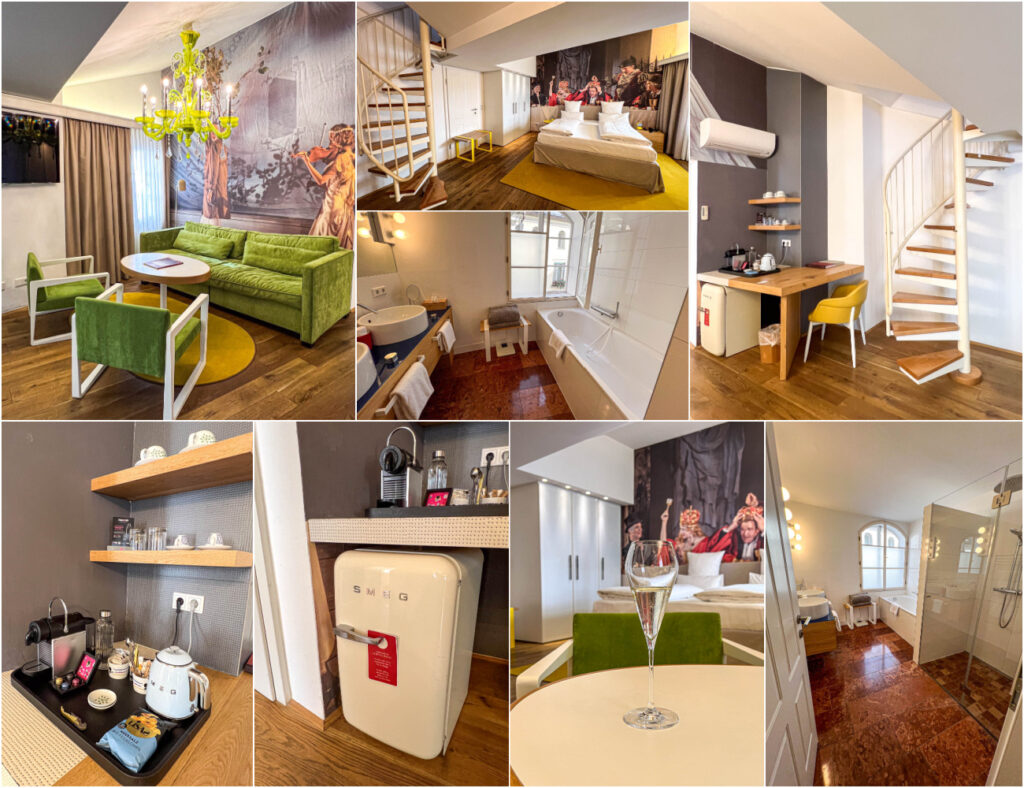
The Rooftop Terrace Suite (Dachterrassen Suite) has a king-size bed; separate seating area with a sofa and two chairs; large bathroom with two sinks, plenty of counter space, a bathtub, and shower; complementary first set of drinks from the minibar; coffee/tea with Nespresso coffee machine; air conditioning; television; free high speed WLAN; and a private rooftop terrace with a table and chairs accessible via a small winding staircase.
For larger groups, the room can be extended next door if available.
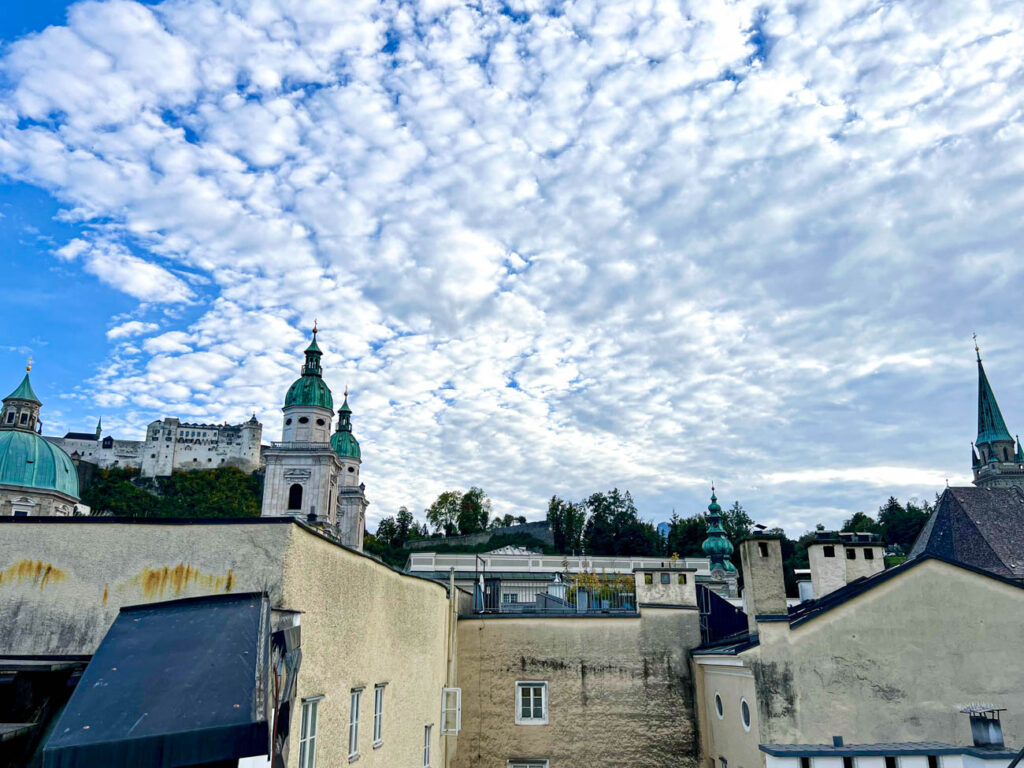
The hostess, Ulrike, greeted me nearly every morning as I was leaving for the day and every evening as I was returning. Her warming presence made me feel so welcome during my first visit to the city.
Gasthof Goldgasse
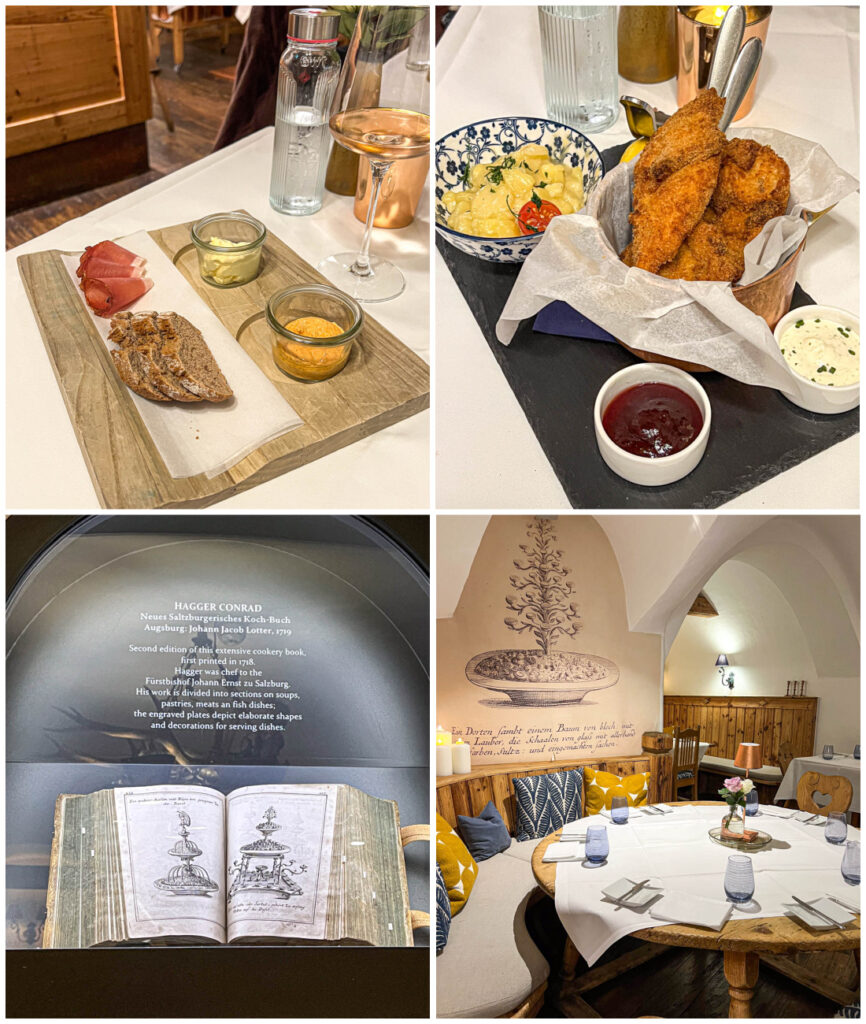
For my first evening in Salzburg, I made reservations at the hotel’s onsite restaurant- Gasthof Goldgasse.
This rustic, yet stylish restaurant is open daily for breakfast, lunch, and dinner with seasonal dishes and regional classics inspired by the historic cookbook, „Neue Salzburger Küche“ by Conrad Hagger on display in the dining room. Making a reservation is easy through their website and highly recommended. They were fully booked while I was there.
I enjoyed the following:
- Rosé 2023- Bründlmayer, Langenlois, Kamptal.
- Abendgedeck: Dinkel-Nuss Baguette, Bauernbutter, Strohschwein-Speck, Liptauer. Evening cover- spelt nut baguette slices, farmer‘s butter, smoked bacon, and cheese spread.
- Barockes Backhendl im Kupferpfandl- Ausgelöstes Almtaler Landhendl, 24 Stunden mariniert | Erdäpfelsalat | Knusperpetersilie | Preiselbeeren | Sauce Tartare. Baroque style deep fried chicken in a copper pot- boneless free range chicken marinated for 24 hrs and served with potato salad, crispy parsley, lingonberries, and tartar sauce.
Kaffee-Alchemie
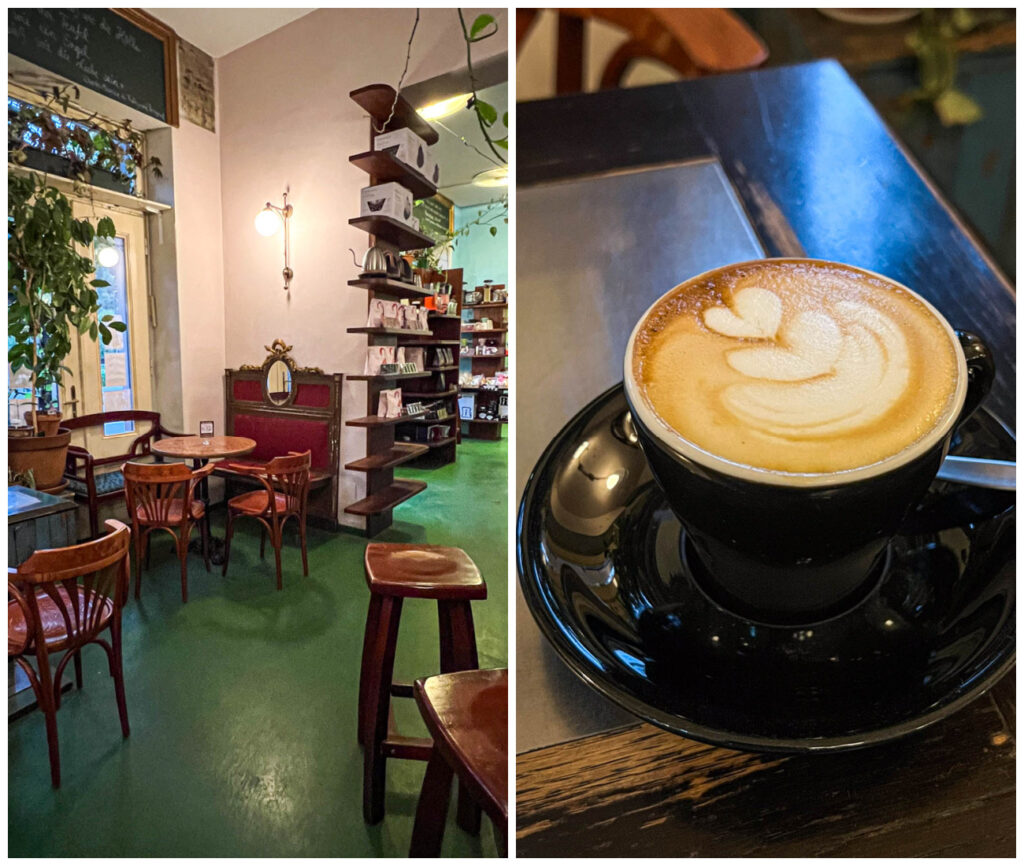
One morning before heading to Schloss Hellbrunn, I stopped by Kaffee-Alchemie for a Flat White.
This incredibly cozy cafe is situated next to the Mozartsteg bus stop (Buslinie 25 to go to Schloss Hellbrunn) at Rudolfskai 38 and it was a wonderful start to the day.
I only got the coffee, but they did have an assortment of treats and pastries on display.
Würstelstand am Alten Markt
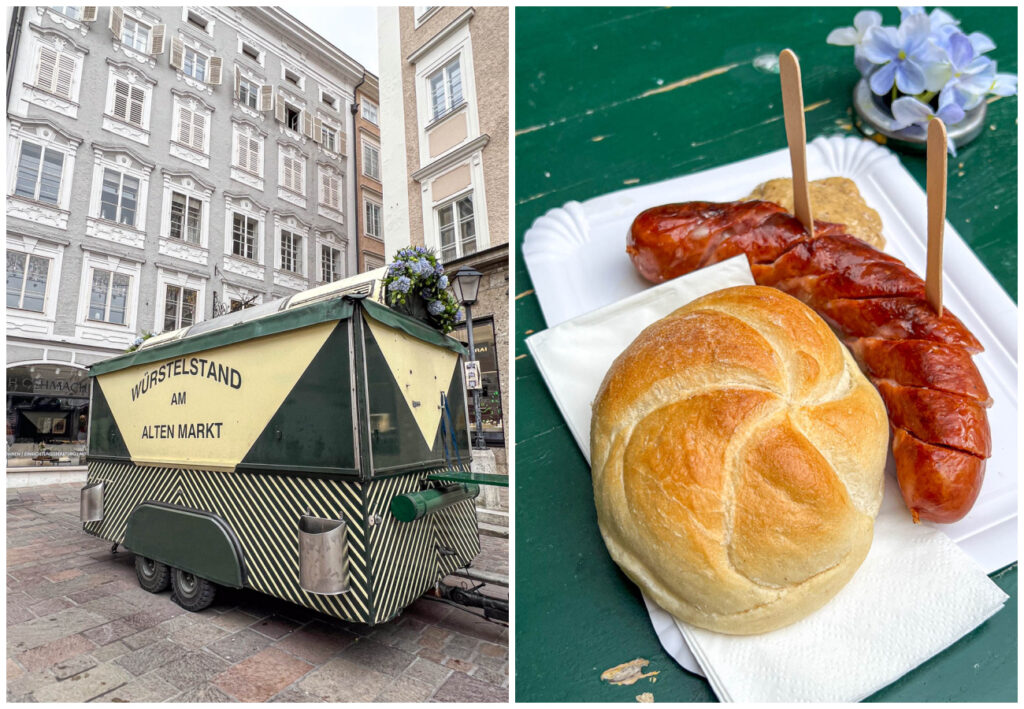
For a light meal or snack, Würstelstand am Alten Markt at Alter Markt 3 is a small stand offering a variety of local sausages.
I especially enjoyed the Käsekrainer. This lightly smoked pork sausage/Brühwurst is packed with small cubes of cheese. It was fantastic paired with a Kaisersemmel (Kaiser Roll).
Cafe Konditorei Fürst
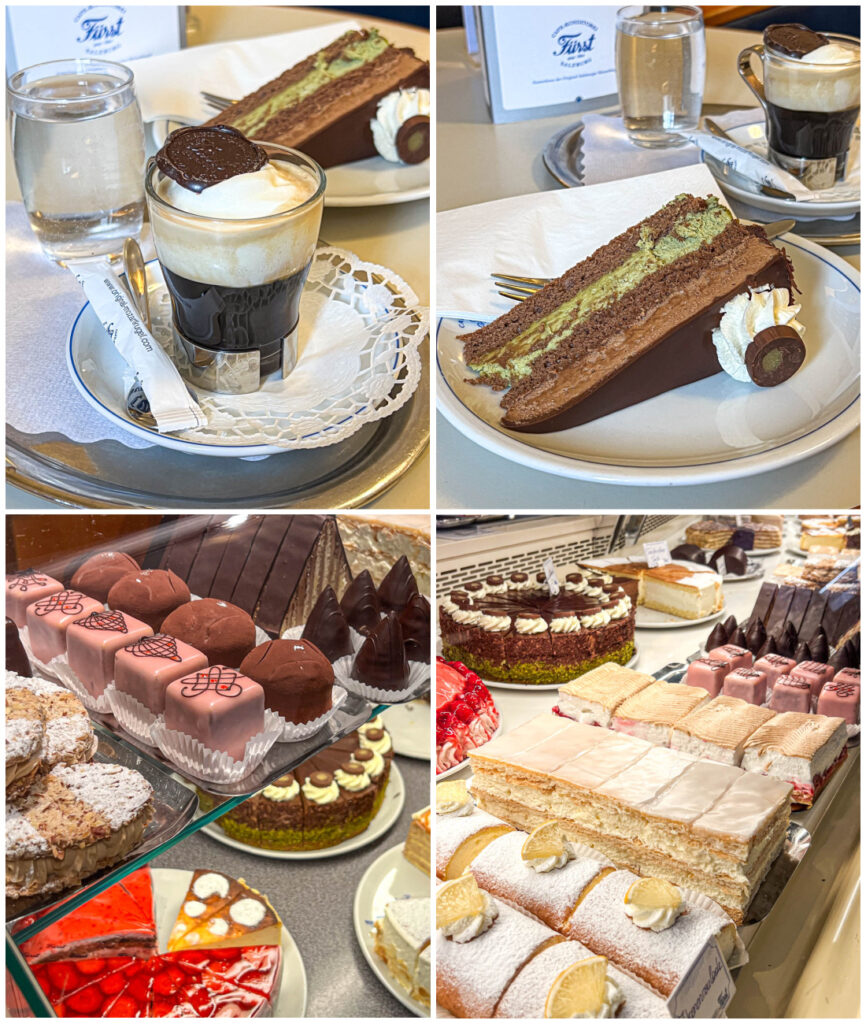
Café Konditorei Fürst is a historic café with locations across Salzburg. The original shop on Alter Markt at Brodgasse 13 dates back to the year 1884 and is now run by the fifth generation of the family.
This shop is filled with display cases of cakes, chocolates, and gift boxes on the ground floor with cafe seating on the upper level.
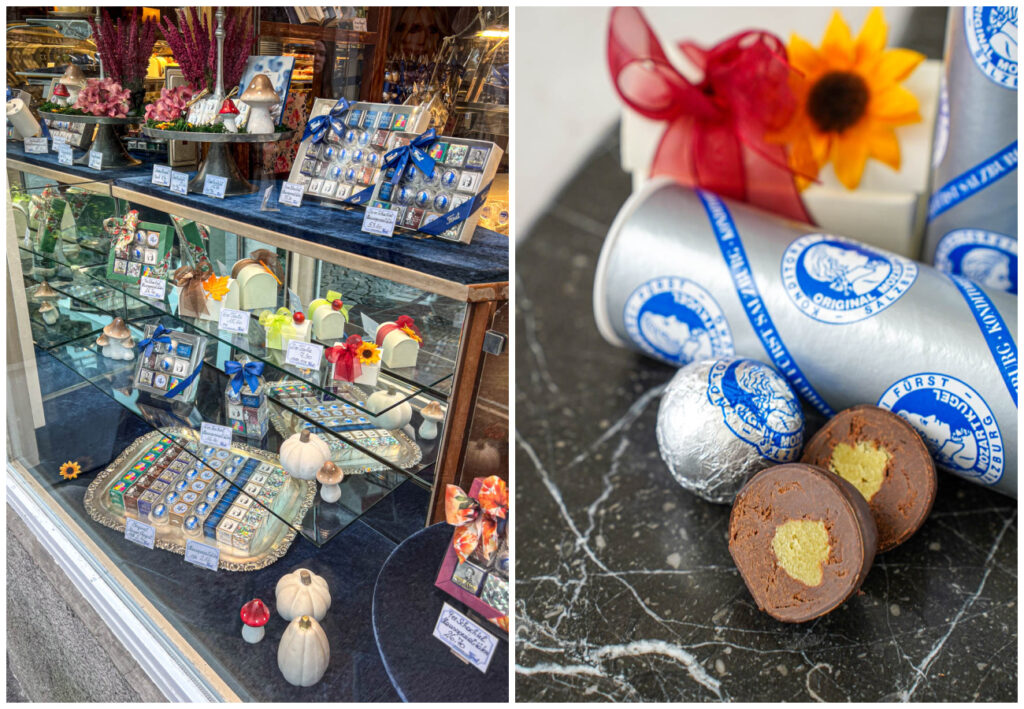
They also created the Salzburger Mozartkugel in 1890! This iconic treat has a pistachio marzipan center with nougat and a thin dark couverture coating.
I spent some time in the café upstairs with a slice of Mozarttorte (cake with chocolate, nougat and pistachio cream and a slice of the Mozartkugel on top) and Einspänner klein (small espresso with whipped cream).
Dom zu Salzburg
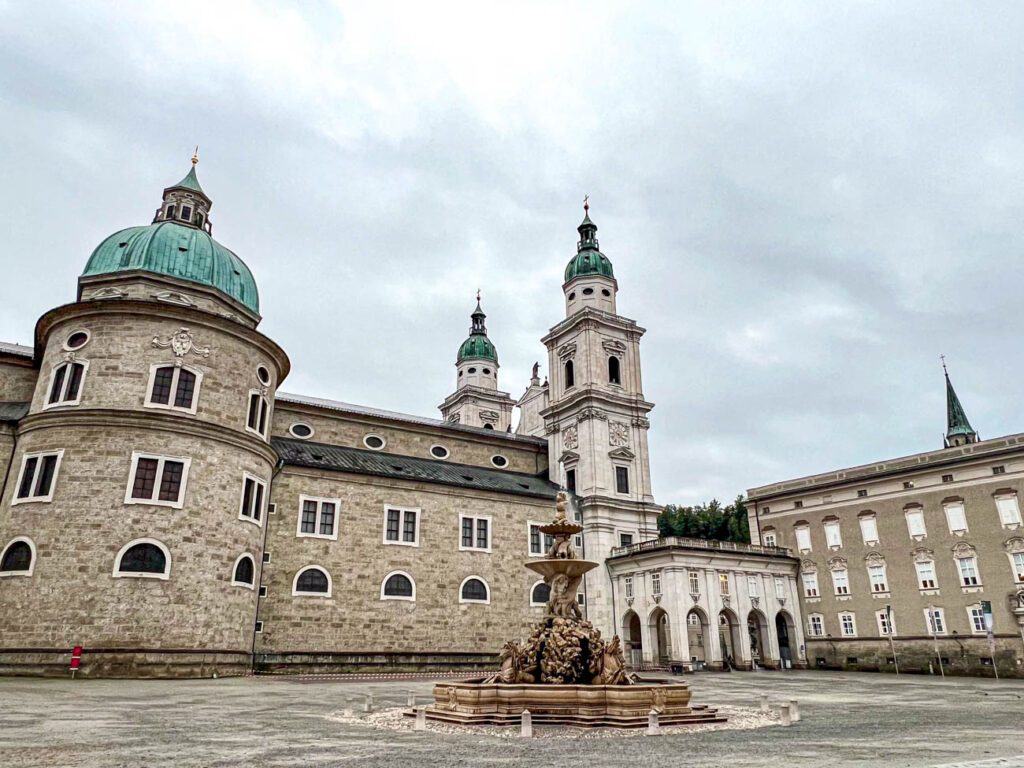
Dom zu Salzburg (Salzburger Dom, Salzburg Cathedral) is the first cathedral church in Salzburg and one of the first early Baroque churches north of the Alps.
The church was originally founded in the 8th century, then rebuilt and consecrated in 1628. It was consecrated again in 1959 following the restoration of the dome after World War II.
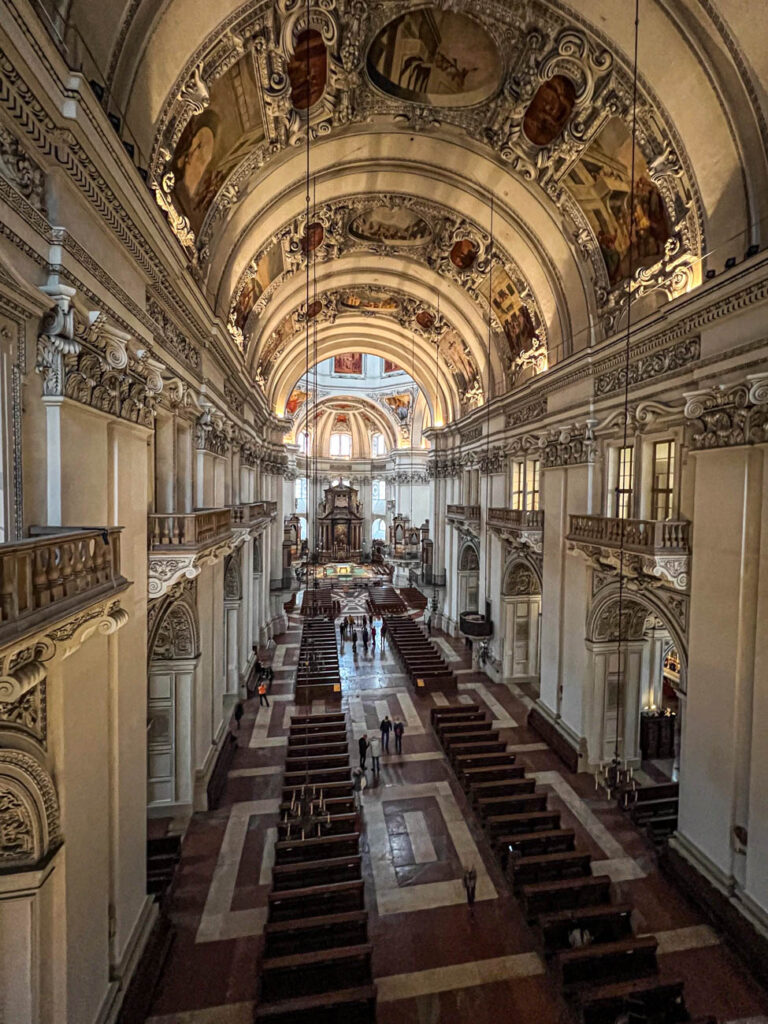
Wolfgang Amadeus Mozart was baptized here the day after his birth (the church still contains the baptismal font) and he later served as an organist for two years. Joseph Mohr (lyricist of „Stille Nacht, heilige Nacht“ -Silent Night, Holy Night) was also baptized here in 1792.
The opening hours for visitors vary based on the month. There is a preservation fee (currently 5 Euro) with a ticket booth just inside the gates. Audio guides are available for either a Complete Tour, Short Tour, or Children’s Tour.
You can also purchase tickets to attend Musik zu Mittag (Music at Noon) daily (except Sundays and Holidays) to listen to two organists play various organs and organ combinations for thirty minutes.
DomQuartier
The cathedral is also a part of DomQuartier, a massive museum complex with special exhibitions, the state rooms of the Residenz, Residence Gallery, the Cathedral Museum, and the Museum of St. Peter.
Tickets can be purchased online or on site at the box office. Allow 1 1/2 to 2 hours to walk through all the exhibits.
Cafe Tomaselli
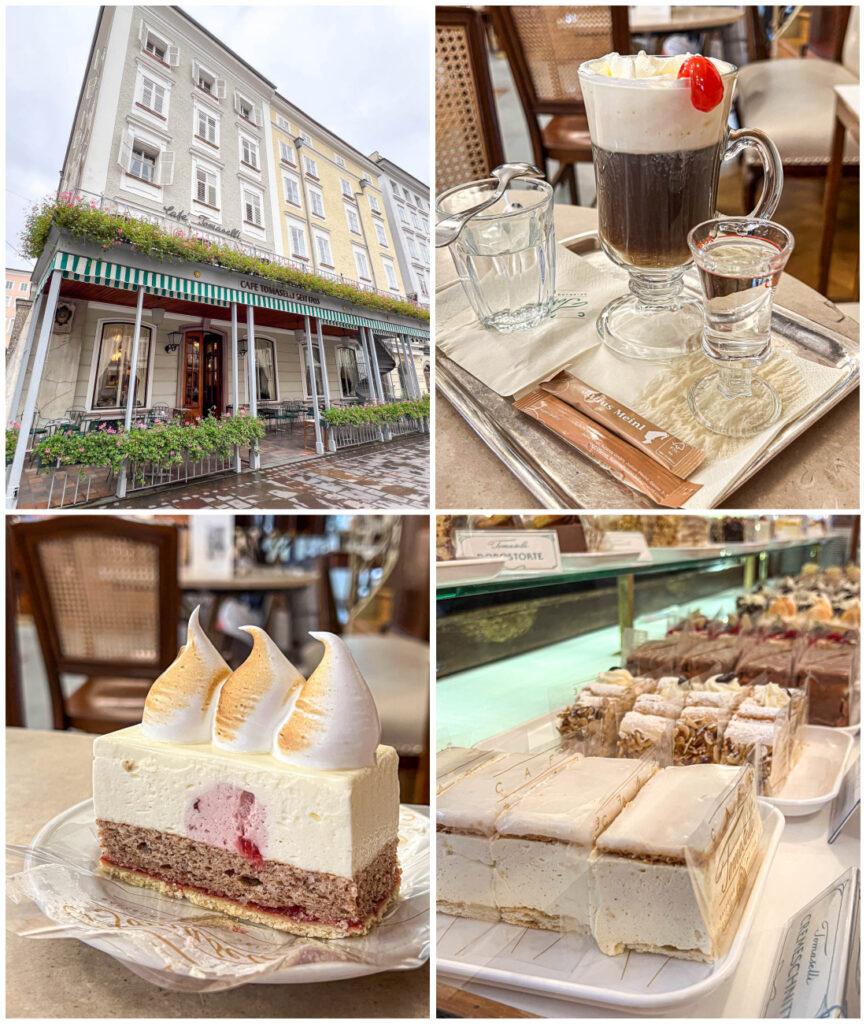
I had quite the indulgent start to my last day in Salzburg at Café Tomaselli.
Café Tomaselli was established in 1703 and is the oldest coffee house in Austria. Located at Alter Markt 9, they are open daily 7am to 7 pm (8 am opening on Sundays/holidays and the 1st level is open 9-4:30).
I originally planned to order breakfast, but then I saw the rows of cakes and pastries on display and quickly decided that was a better idea:
- Salzburger Nockerlschnitte- inspired by the notable Salzburger Nockerl dessert (which I also enjoyed on another day and will be sharing in the next post), this slice has layers of a shortcrust pastry base, marmelade, nut sponge cake, cream, and three airy meringue peaks on top to represent Mönchsberg, Rainberg, und Kapuzinerberg.
- Fiaker- a variation of Einspänner with coffee, whipped cream, and Kirschwasser.
Along with the amazing desserts, the menu also features specialty coffee, other drinks, breakfast, savory meals, and ice cream.
Saint Peter’s Abbey
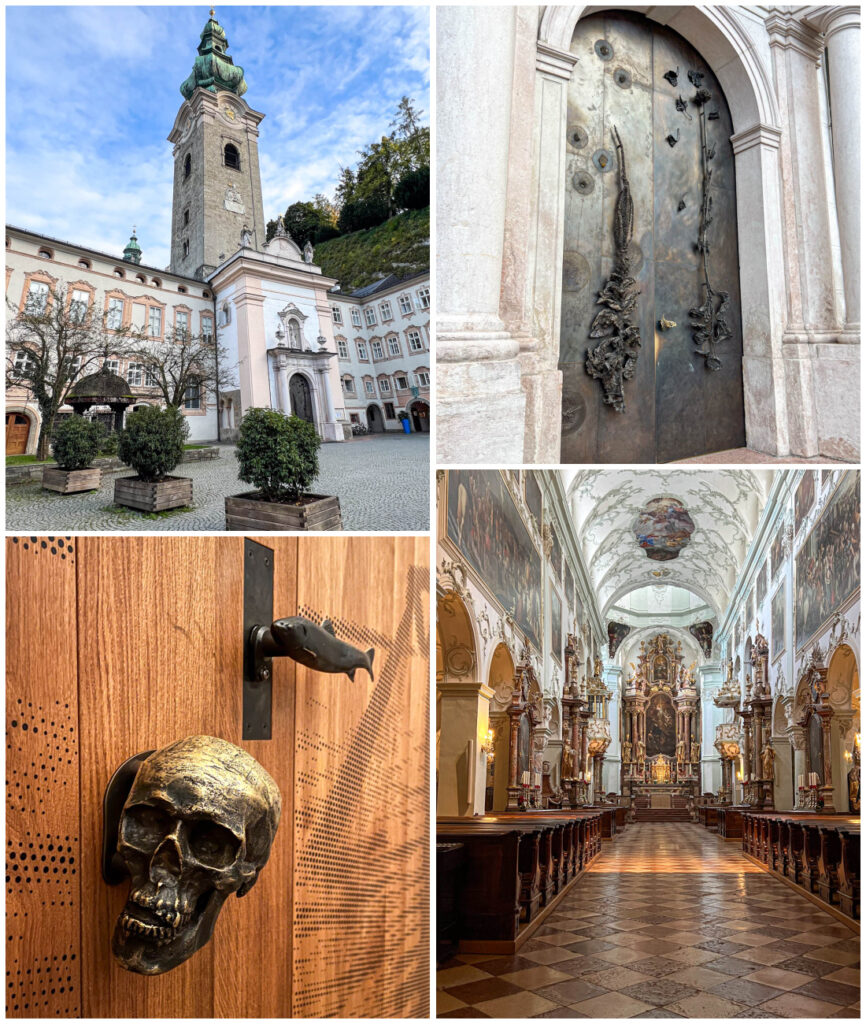
St. Peter’s Abbey (Stift Sankt Peter) was founded in the year 696 by St. Rupert and is considered one of the oldest monasteries in the German-speaking regions.
Stiftsbäckerei St. Peter
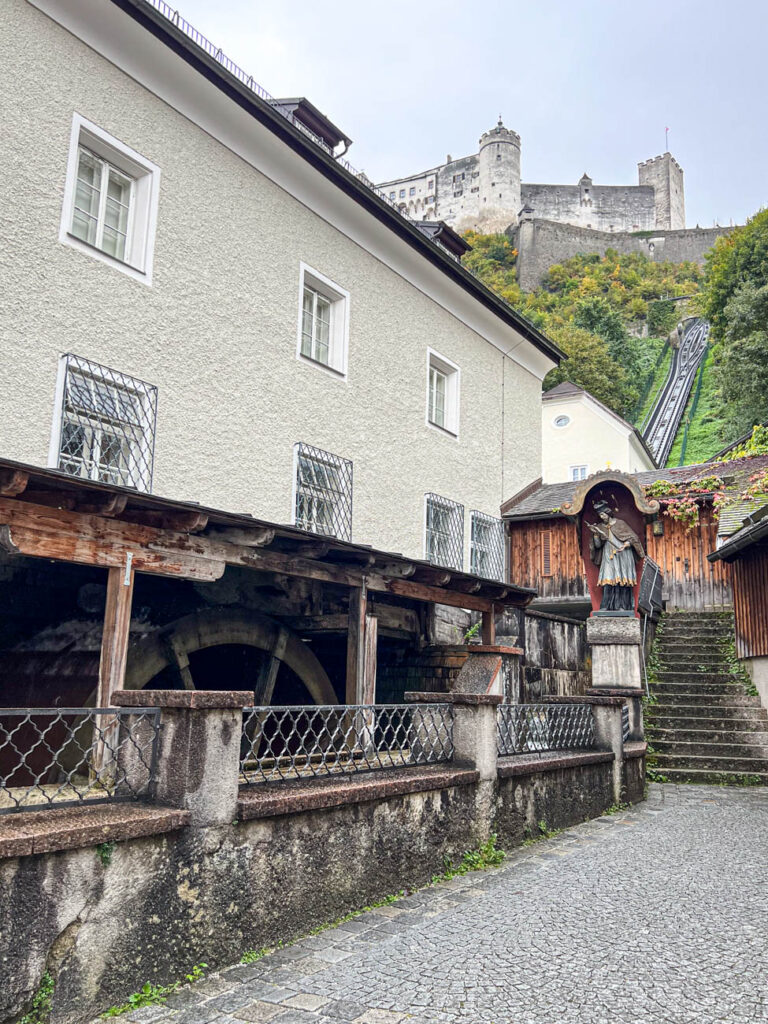
This area is also home to Stiftsbäckerei St. Peter!
Dating back to at least the 12th century, Stiftsbäckerei St. Peter has been baking bread using natural sourdough and a wood-fired oven in the heart of Salzburg at Kapitelpl. 8 for over 700 years.
I especially loved that the shop and kitchen are all in one space so you can see the baking process.
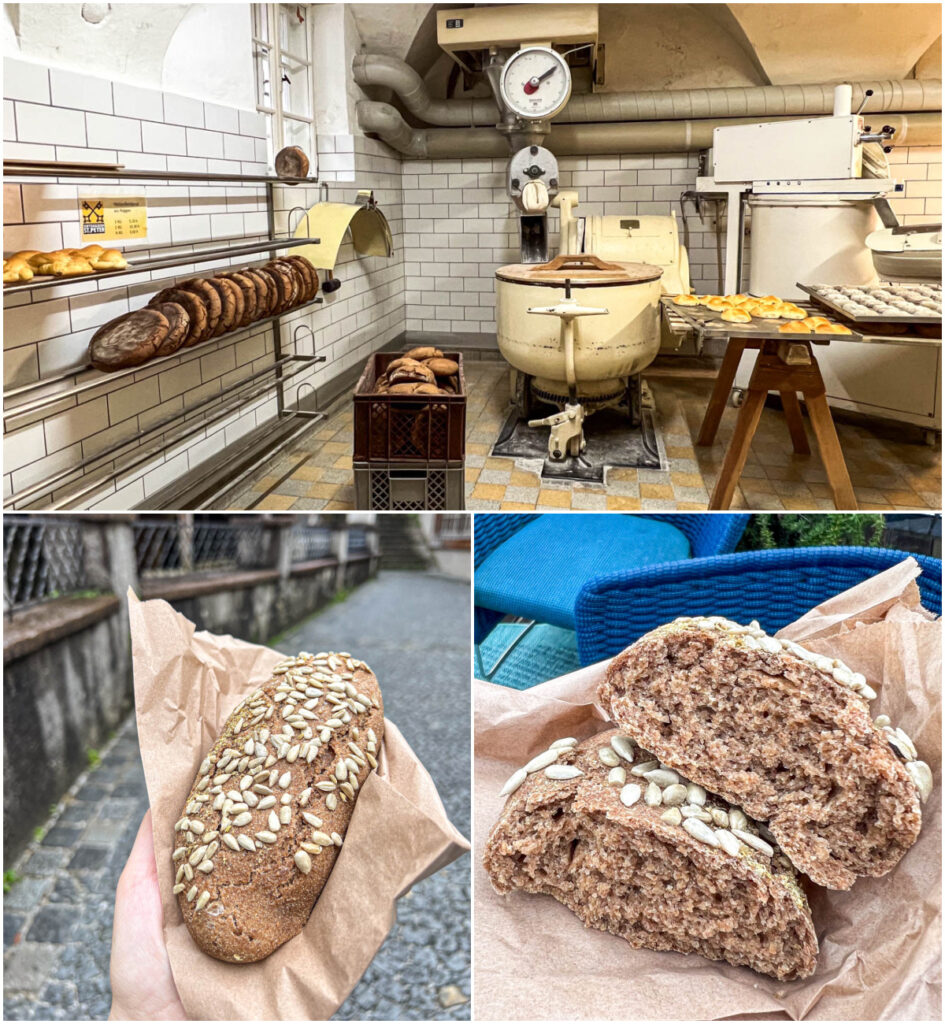
I picked the Gewürzweckerl aus dem Holzofen (spice rolls from the wood-fired oven), but they also had Vintschgerl (sourdough rye rolls), Brioche, and Milchbrotstriezel (milk bread) during my visit.
St Peter Stiftskulinarium
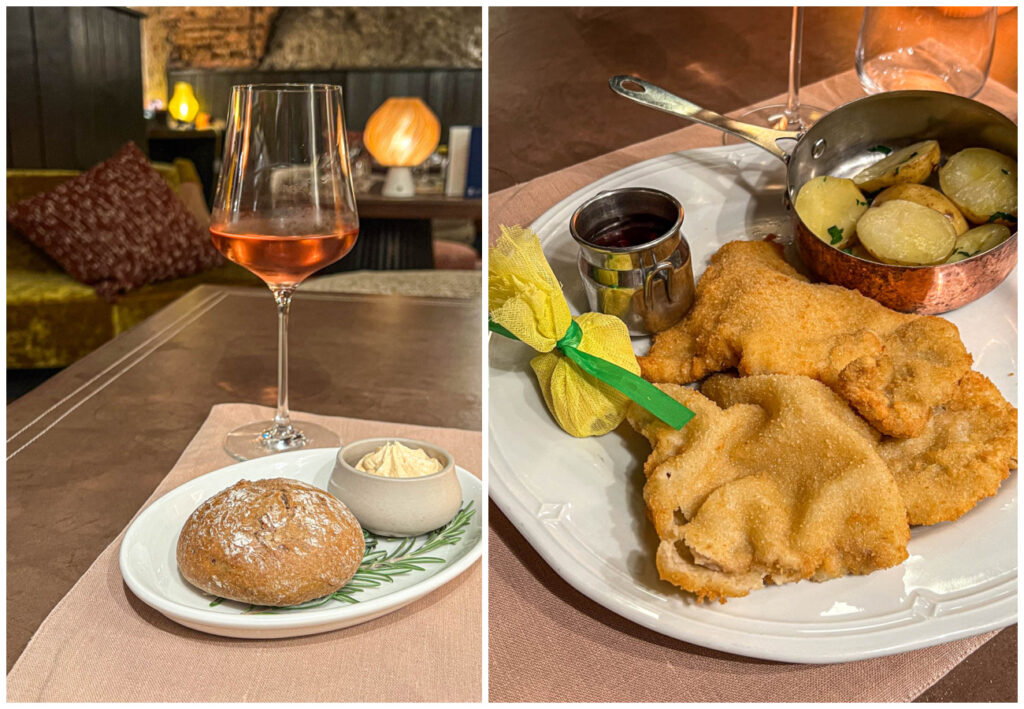
For my last evening in Salzburg, I had dinner at St. Peter Stiftskulinarium. Operating since at least 803 AD, it is the oldest restaurant in Europe and features classic Austrian dishes alongside more modern creations.
The dining area mirrors this blend of traditional and modern. Reservations can be made through their website. Since 1996, they have also hosted three-course Mozart Dinner Concerts in their Barocksaal (Baroque Hall).
I ordered the following:
- Rosé Donauschotter- Weinmanufaktur Clemens Strobl, Kirchberg am Wagram.
- Frisch gebackenes Hausbrot mit flaumiger Salzkaramellbutter (fresh, homemade bread with fluffy salted caramel butter).
- Wiener Schnitzel vom Salzburger Milchkalbsrücken mit Petersilienerdäpfeln (Wiener Schnitzel from Salzburg veal with parsley potatoes).
Petersfriedhof
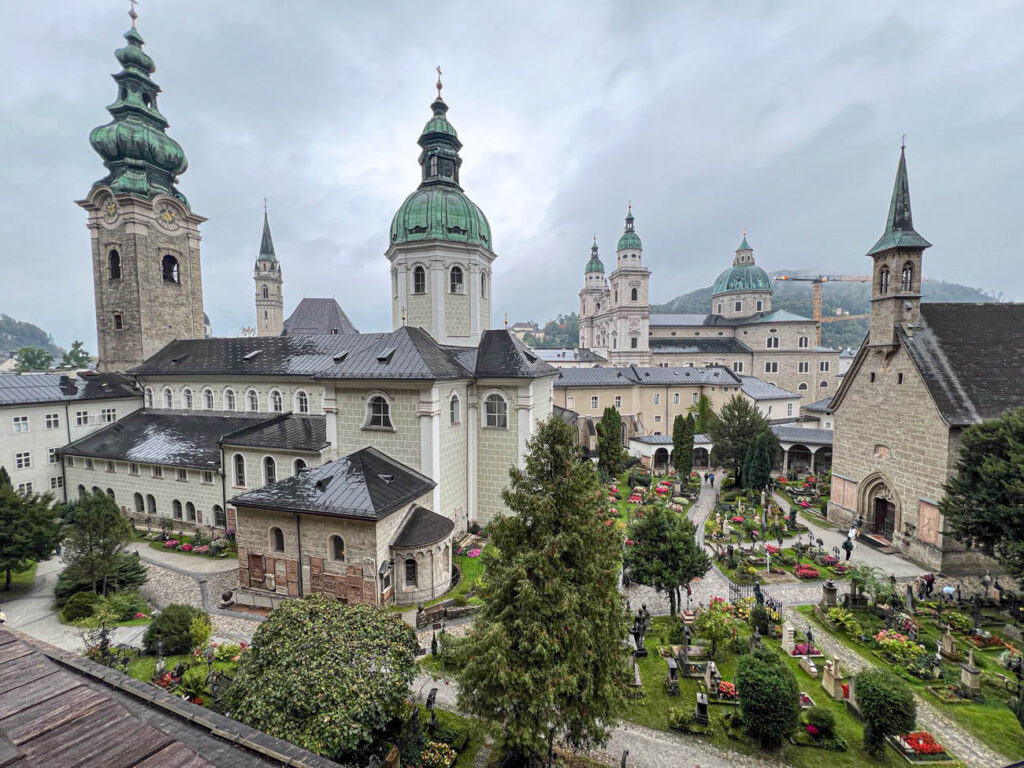
Petersfriedhof (St. Peter’s Cemetery) was founded alongside the monastery and is the oldest cemetery in Salzburg. The catacombs date even older and were carved directly into the rock of Mönchsberg.
Festung Hohensalzburg
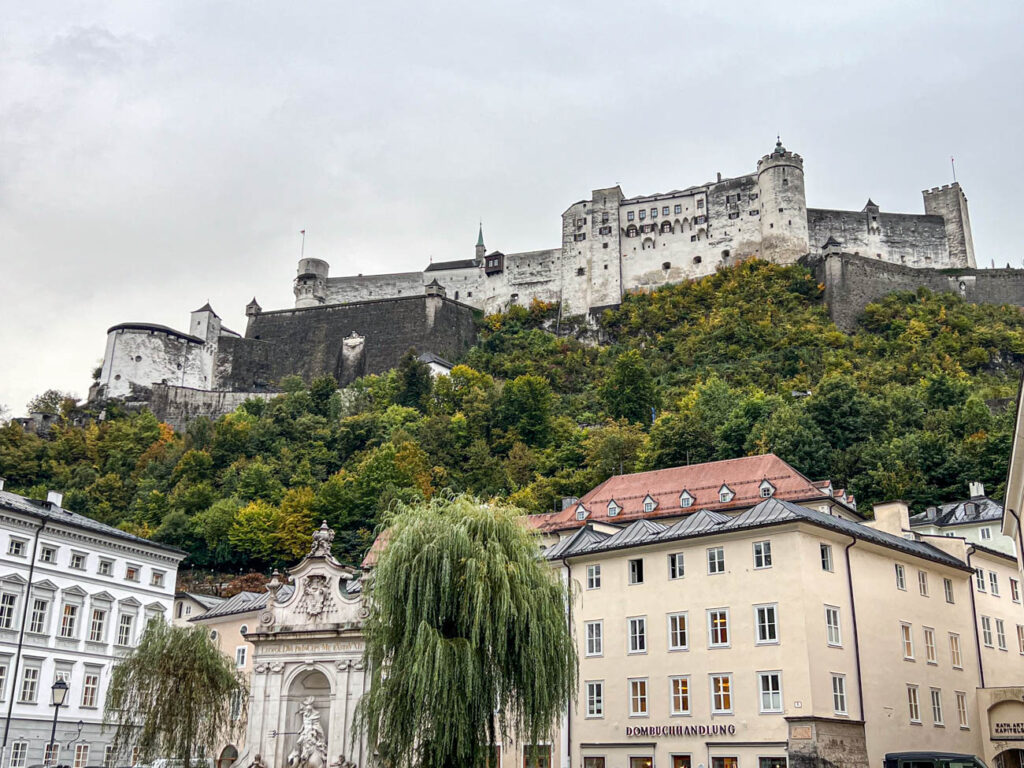
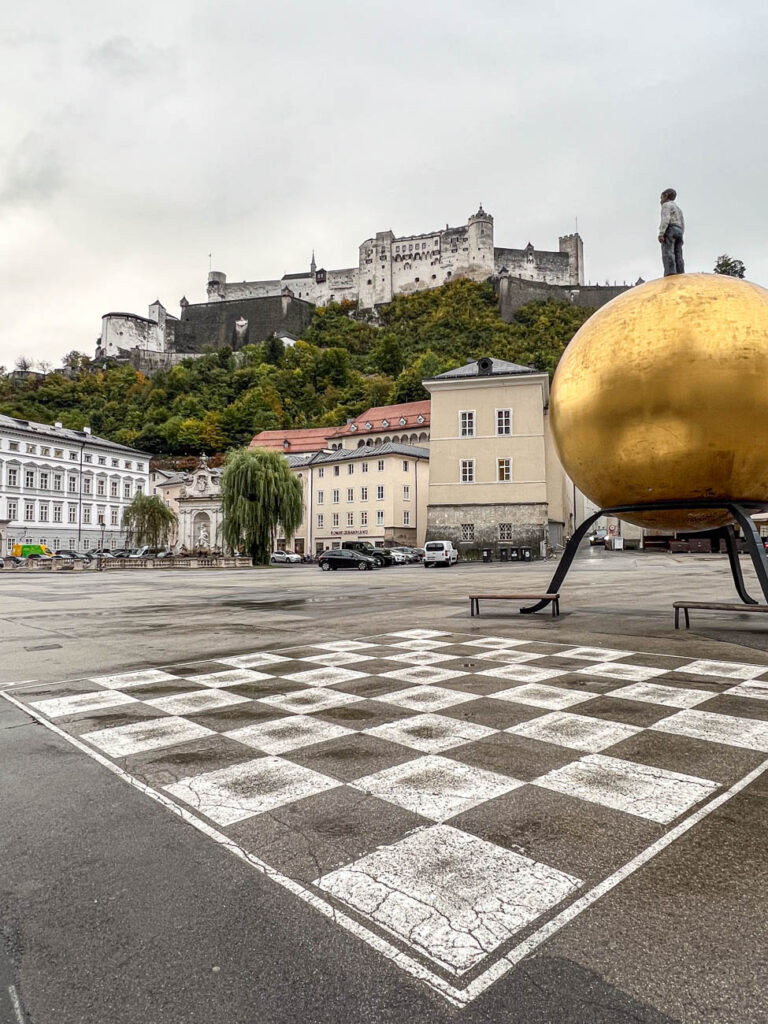
Dominating the view of Salzburg 506 meters (1,660 feet) above sea level on Festungsberg, Festung Hohensalzburg (Hohensalzburg Fortress) is one of the largest and best preserved medieval fortresses in Europe.
It was originally built in the 11th century and was opened to the public in the 1860s by Emperor Franz Joseph I.
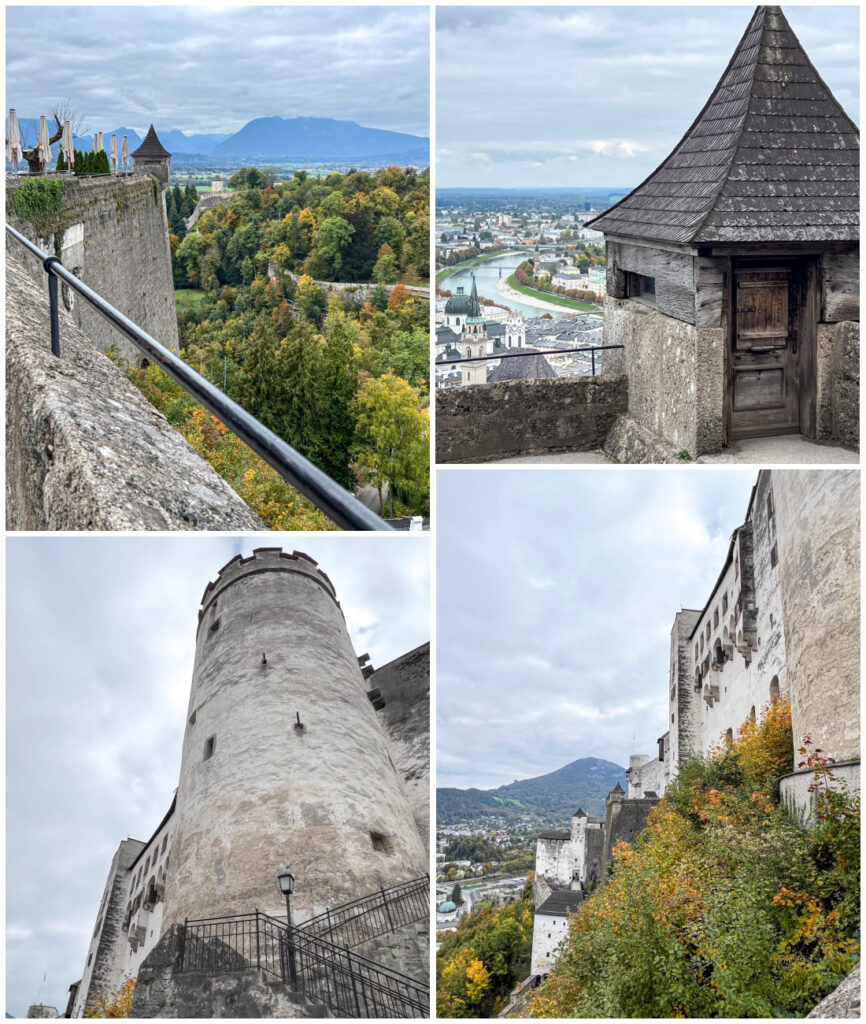
You can either reach the fortress via a funicular or hike about 20 minutes along a partially graveled footpath up to the top.
I personally used the funicular, the FestungsBahn, which takes about a minute. It has been in service since 1892 (originally powered by water) and is the oldest, still-operating funicular in Austria.
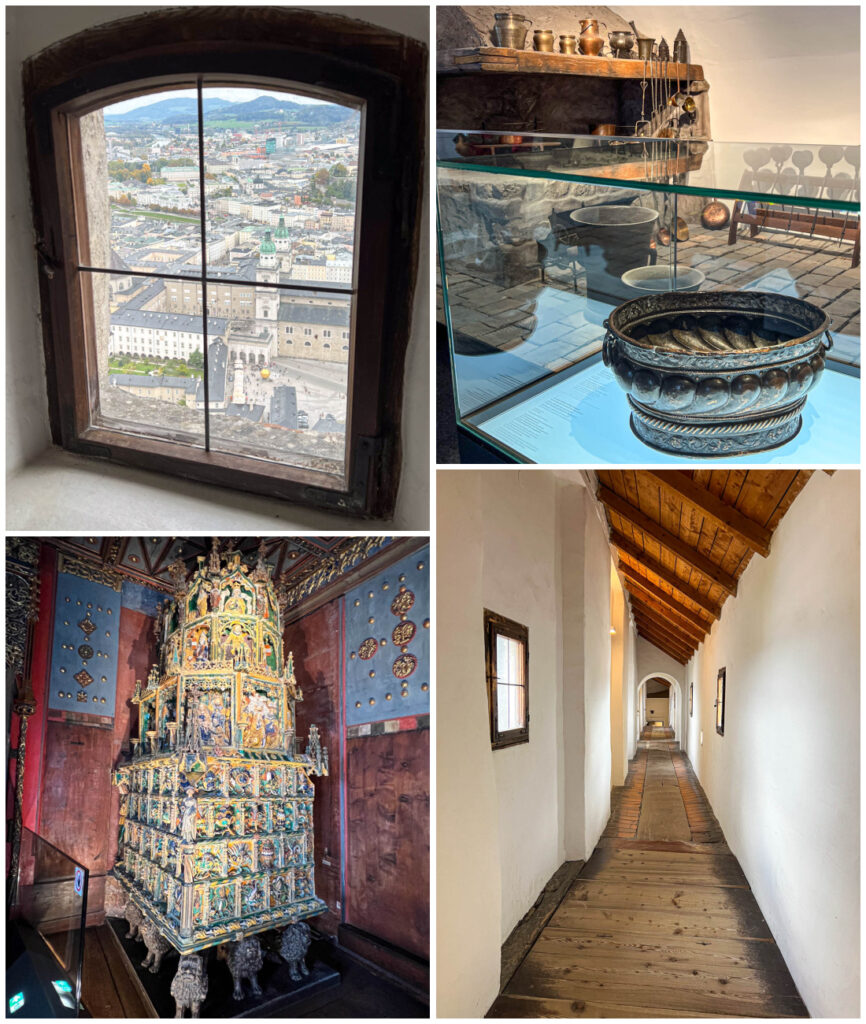
From the complex, there are incredible panoramic views of Salzburg and the surrounding area during nice weather.
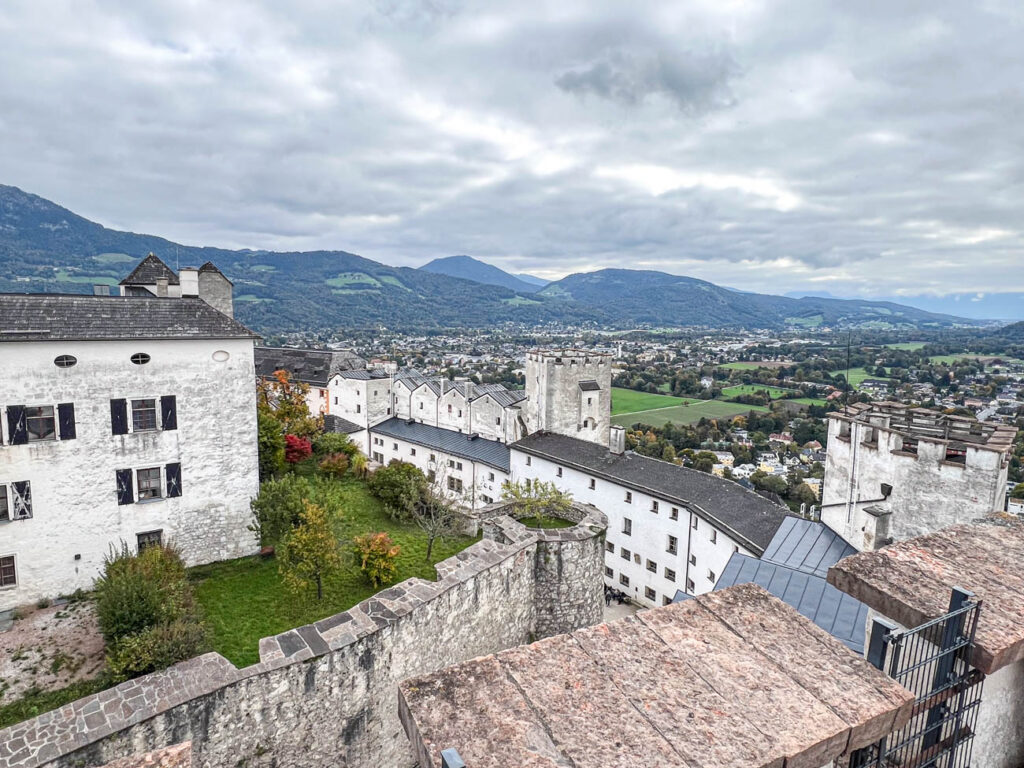
A few other highlights include the Prince’s Rooms with a unique look at late Gothic architecture, the multimedia Magic Theater, and interactive Fortress Games.
Festung Hohensalzburg is open year-round, but specific times vary based on the season. Tickets can be purchased on-site or online. I didn’t personally try them, but the fortress does have a couple of restaurants featuring Austrian cuisine.
Zur Küchenfee
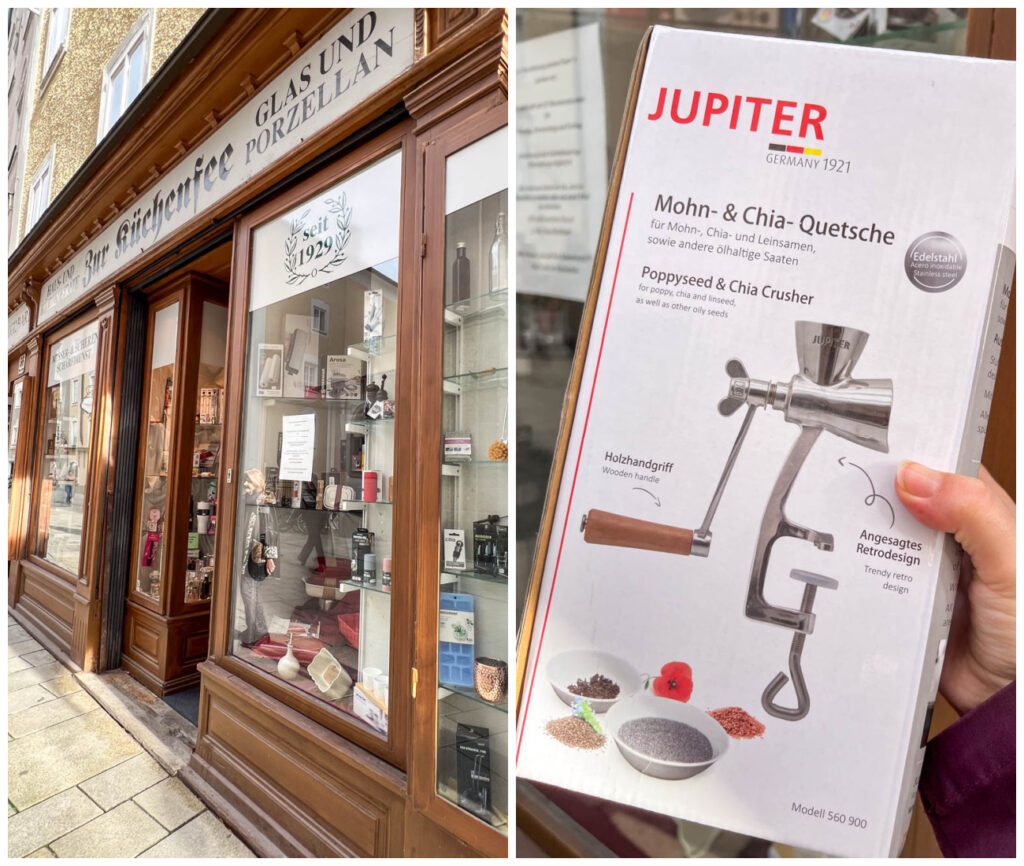
While walking through the city, I came across Zur Küchenfee north of the river at Linzer Gasse 56. Translating to “kitchen fairy” this small kitchen store has been in operation since 1929. It is packed with shelves upon shelves of kitchen supples and gadgets.
After making Nudle s Mákem (Czech Noodles with Poppy Seeds) last year and grinding the poppy seeds using a mortar and pestle, I have been wanting a poppy seed grinder and added it to the list for the next time I visited Central Europe.
I found the poppy seed grinder (Mohnquetsche) here and hope to attempt Mohnstrudel soon.
Petersilienerdäpfel
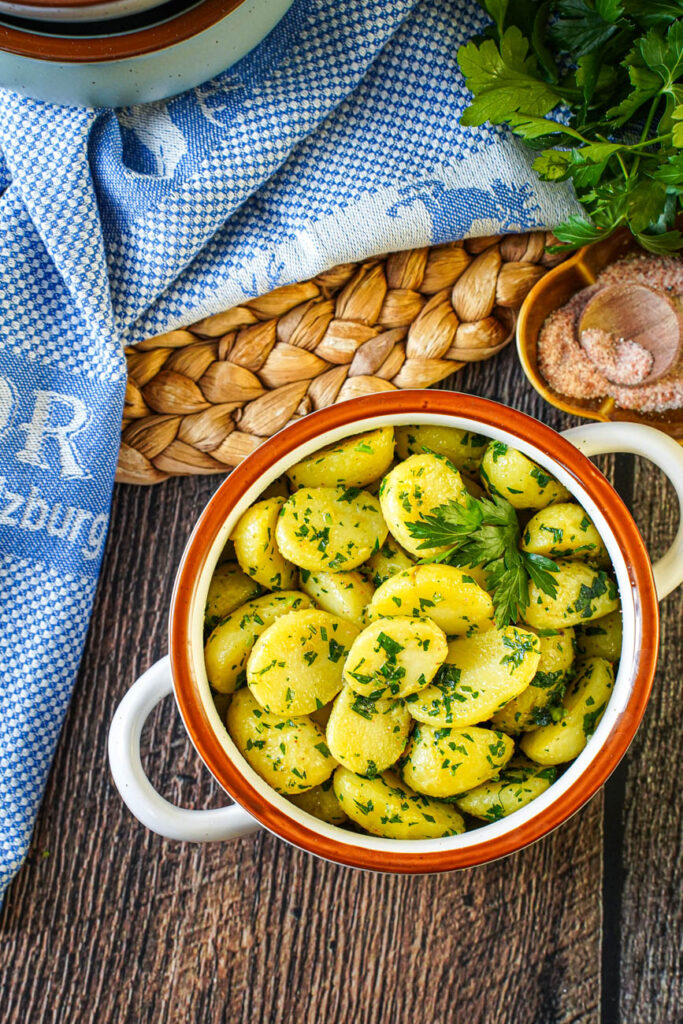
I enjoyed so many incredible dishes while in Salzburg and it was so difficult to narrow down which to use as inspiration for today’s recipe.
I really do want to try some of the more intricate pastries someday, but my mind kept going back to the Petersilienerdäpfel (Parsley Potatoes) I had at St. Peter Stiftskulinarium for something a little more comforting.
This easy side dish comes together with simply boiled potatoes, butter, and fresh parsley. It is perfect for pairing with a variety of meals such as Wienerschnitzel and fish.
Variations can be found across Central Europe including Petersilienkartoffeln in Germany, Petrezselymes Krumpli in Hungary, and Petrželové Brambory in Czechia.
A Few Petersilienerdäpfel Tips
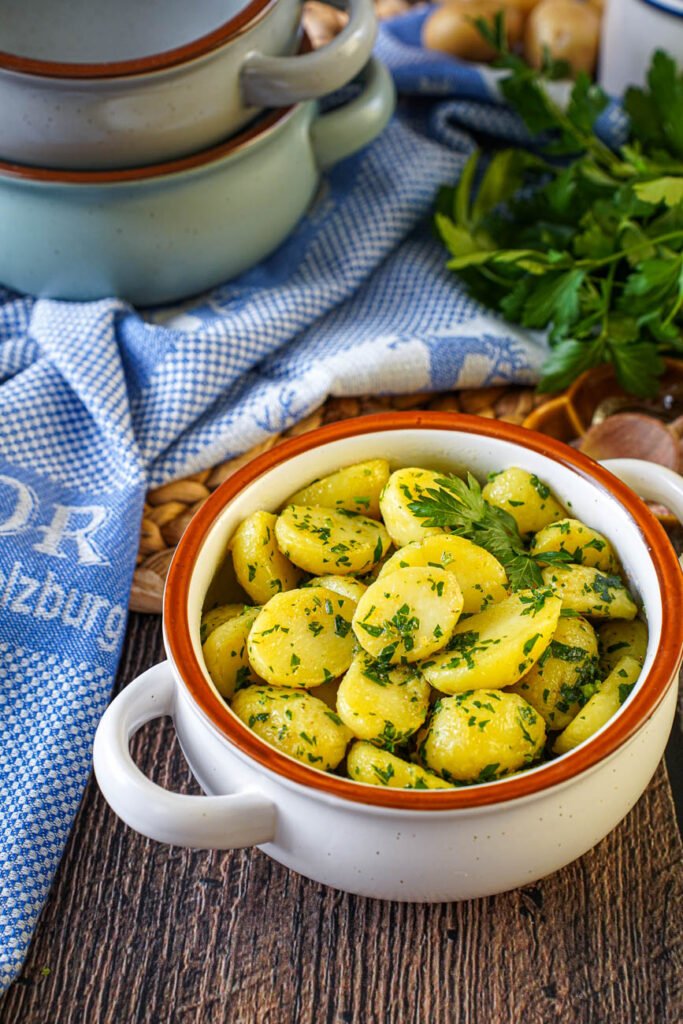
For the photos, I used baby Yukon Gold potatoes. These usually take about 10 minutes to simmer. You can swap for another variety, but cut larger ones into smaller, bite size pieces. Avoid starchy potatoes such as Russet, as they are likely to fall apart when tossing.
The exact boiling time will vary based on the exact size of the potatoes. Cook just until the thickest one can be pierced with a fork.
I peeled the potatoes after boiling since that is how I most often come across them. This is optional and you can leave the potato skins on to save time if desired. They were left on when served alongside the Wienerschnitzel at St Peter Stiftskulinarium.
I also cut the baby potatoes in half due to personal preference, but they can be left whole.
Add more or less fresh parsley as desired. I wrote 1/3 cup (20 grams) in the ingredient list, but often just grab a big handful and finely chop.
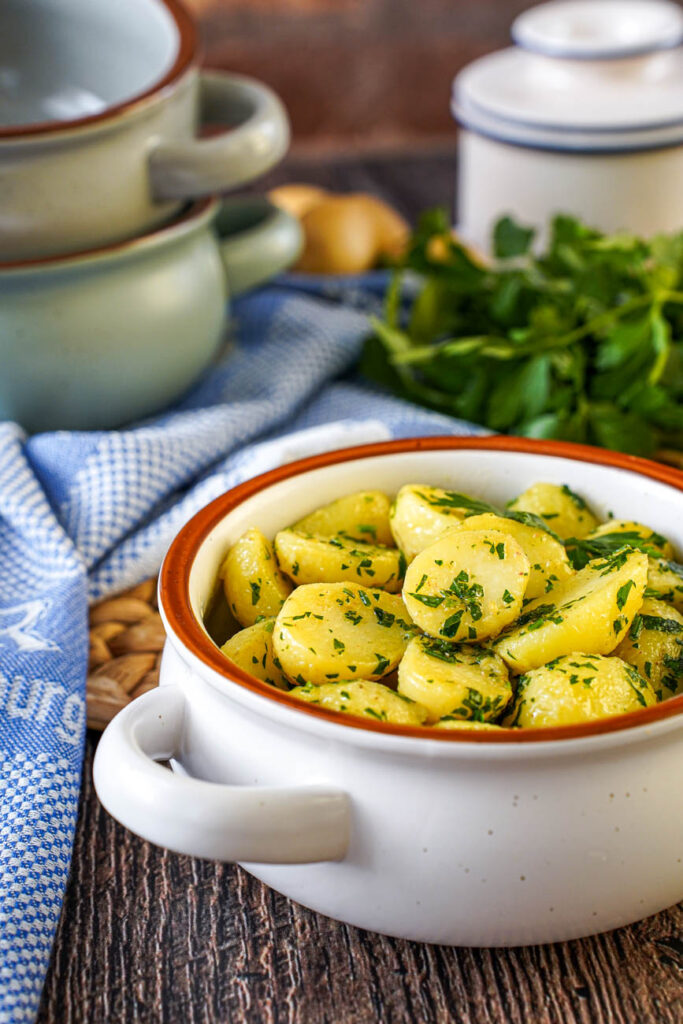
Petersilienerdäpfel (Parsley Potatoes) Recipe
Adapted from Vienna Sunday Kitchen
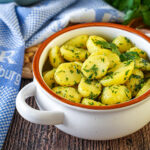
Petersilienerdäpfel (Parsley Potatoes)
Ingredients
- 1 pound (450 grams) baby Yukon Gold potatoes
- fine salt to taste
- 3 tablespoons (42 grams) unsalted butter divided
- 1/3 cup (20 grams) fresh parsley finely chopped
Instructions
- Place the potatoes in a large saucepan and cover with cold water 1 inch (2.5 centimeters) above the potatoes. Add a generous sprinkling of salt and bring the water to a boil.
- Once boiling, reduce heat to a low simmer and cook until the thickest potato can be pierced with a fork, about 10-15 minutes. Do not overcook.
- Gently drain the potatoes and set aside until cool enough to handle.
- Cut each potato in half and peel if desired.
- In a wide saucepan, melt 2 tablespoons (28 grams) of the butter over medium low heat.
- Add the potatoes, a large pinch of salt, and toss gently to coat.
- Add the last tablespoon (14 grams) butter and the parsley. Toss again until the butter is melted and the potatoes are evenly coated. Season with additional salt if needed.
- Serve warm as a part of a larger meal.
Leave a Reply