
Gennaro’s Hidden Italy: Regional Recipes to Treasure for Generations, written by Gennaro Contaldo, features a beautiful collection of historical and lesser known dishes from across Italy. A few highlights include Suricitti Marchigiani (Polenta Dumplings with Sausage and Broccoli), Crostata di Ricotta e Visciole (Ricotta and Cherry Tart), Pane Squarato (Aniseed Bread), Pasticcio di Pasta alla Ferrarese (Pasta Pie), and Affunnatiella Molisana (Green Peppers with Scrambled Eggs). I will also be sharing his recipe for Baci Panteschi (Flower-Shaped Ricotta-Filled Pastries) following the review.
Disclosure: I received a digital copy of this book from Interlink Publishing in exchange for my honest review. All comments and opinions are my own.
Gennaro Contaldo
Gennaro Contaldo is an acclaimed chef, food writer, restauranteur, and TV personality. He grew up in Minori on the Amalfi coast and started working in restaurants at the age of eight.
He was the co-host of the series Two Greedy Italians with Antonio Carluccio, regularly appeared on Saturday Kitchen, and is also the author of many other books:
- Gnocchi al Limone (Lemon Gnocchi) and Gennaro’s Limoni
- Carbonara di Salmone Affumicato (Smoked Salmon Carbonara) and Gennaro’s Fast Cook Italian
- Ndundari con Salsa di Pomodoro e Basilico and Passione
- Pappardelle con Ragu di Funghi Misti and Gennaro’s Pasta Perfecto
- Panini All’Olio (Italian Olive Oil Rolls) and Panetteria
Gennaro’s Hidden Italy
Gennaro begins Gennaro’s Hidden Italy with a short introduction, covering the history of regional cuisine in Italy from its development to current changes and evolutions with food trends.
Chapters are divided based on region: Central Italy, Islands, North, and South. Each chapter begins with an overview of the area, history of the cuisine, and notable dishes. The contents have a list of included recipes and page number for easy reference.
The photography is provided by David Loftus with food and prop styling by Libby Silbermann. Most of the recipes are paired with at least one vibrant, full page photo of the finished dish. You will also find landscape, ingredient, and action photos scattered across the pages.
Measurements are listed in US Customary and Metric. Titles are written in Italian or the local dialect and English. Each recipe has a headnote with background information, region, yield, helpful tips, and other suggestions.
Baci Panteschi (Flower-Shaped Ricotta-Filled Pastries)
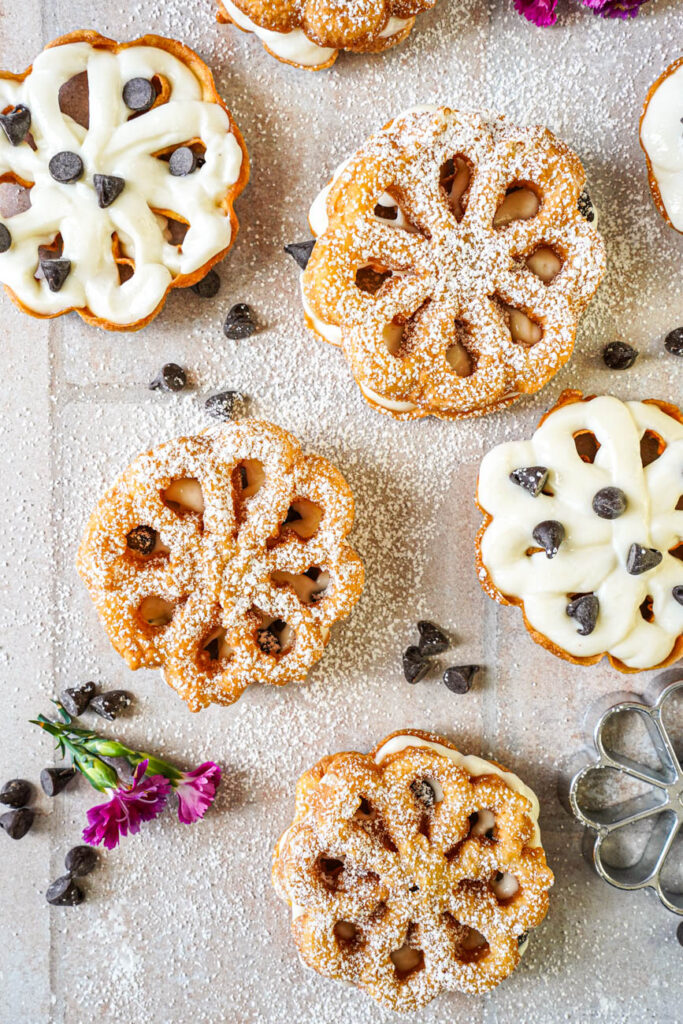
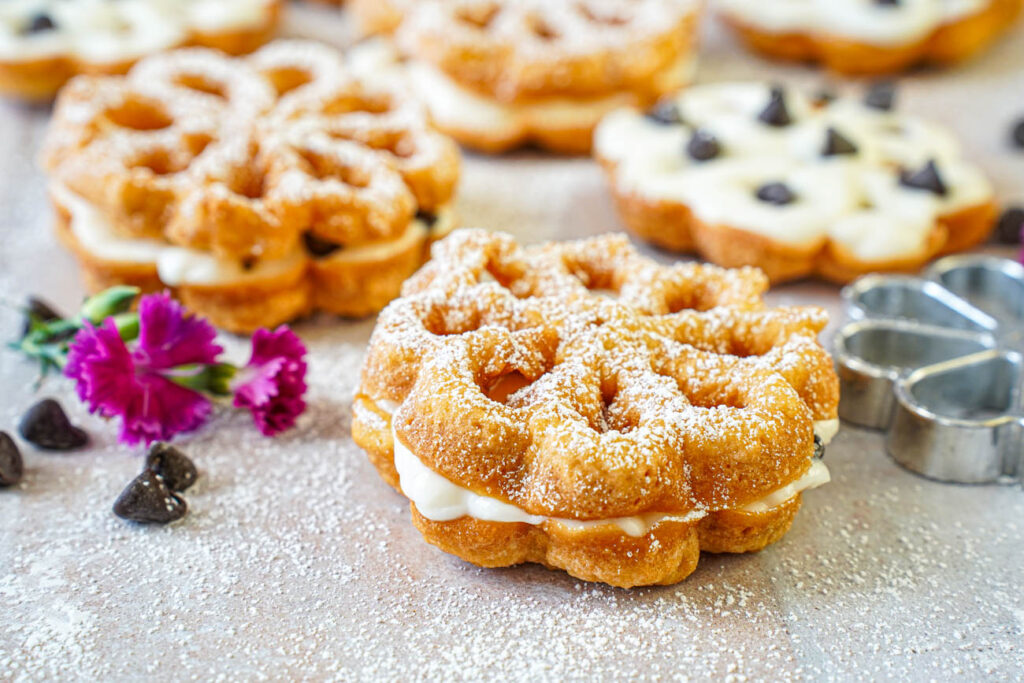
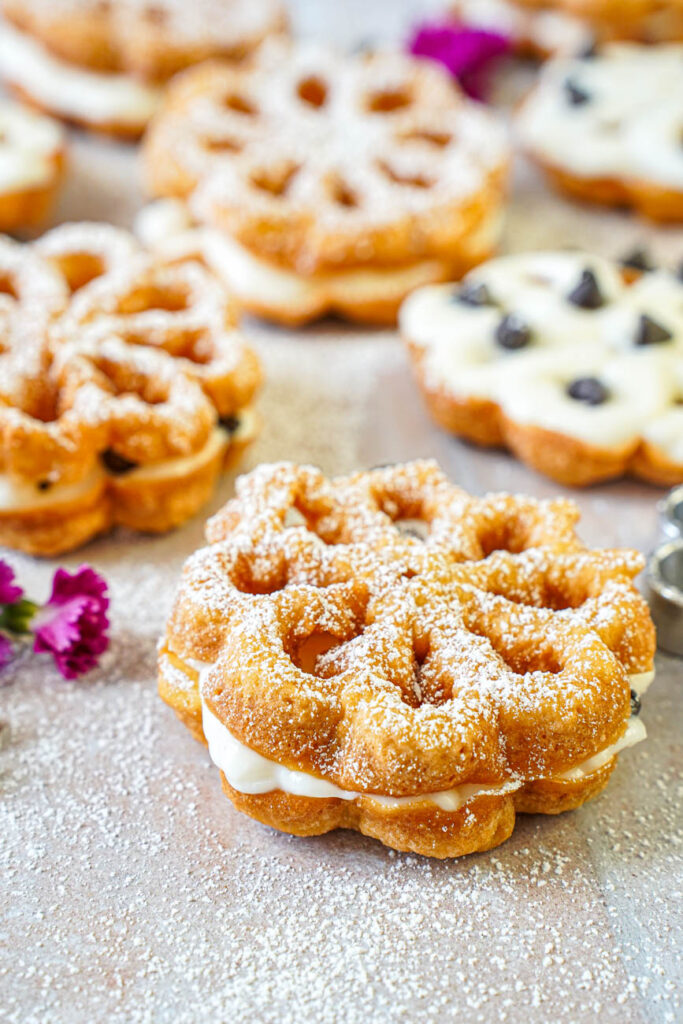
To pair with the review, I made Gennaro’s recipe for Baci Panteschi (Flower-Shaped Ricotta-Filled Pastries).
I have seen variations of cookies/pastries using a metal flower-shaped mold around the world from Rosettbakkels in Norway, Struvor in Sweden, and Buñuelos de Viento in Mexico to Nan Panjereh in Iran and Achappam in India, but this was my first time learning about Baci Panteschi!
In this version from the island of Pantelleria situated in the Mediterranean between Sicily and Tunisia, the flower-shaped fried pastries are filled with a sweet ricotta cream and chocolate chips for a wonderful contrast of flavors and textures.
Gennaro recommends serving the Baci Panteschi while still warm with a dusting of powdered sugar and alongside a sweet dessert wine, such as the local Passito di Pantelleria.
A Few Baci Panteschi Tips
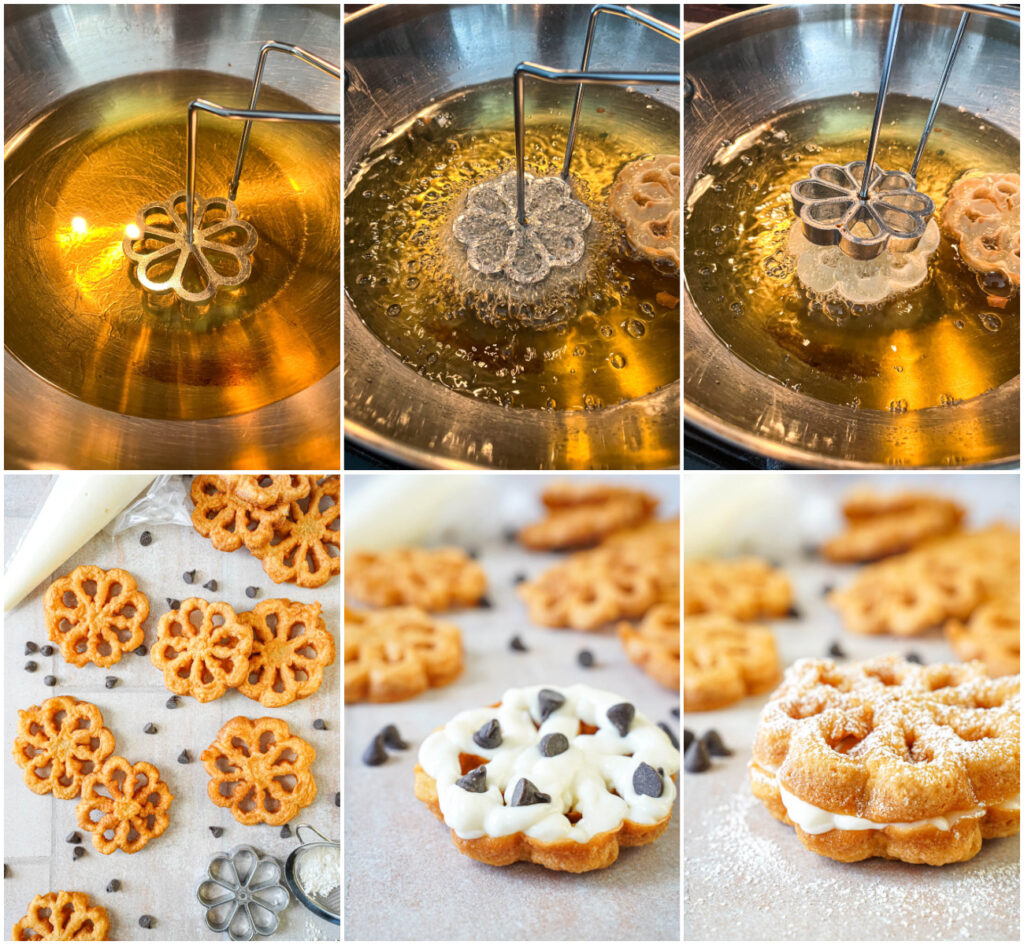
If you have never used a metal rosette/flower mold before (they can be found online or in some specialty kitchen shops), it may take a couple of tries or so to create the puffed, crisp pastries. I think it wasn’t until my third one that I really got the hang of it.
Sift the flour before stirring into the batter to keep any lumps from forming. It should be just thin enough to coat. If too thick, the batter may become too heavy and fall off the mold.
After heating the mold briefly, make sure to drain on paper towels before dipping in the batter. If there is any excess oil, the batter won’t stick long enough to transfer.
Quickly dip the mold about 3/4 of the way into the batter. If the batter covers the top, it won’t release into the oil.
These Baci Panteschi are best immediately after assembling for a contrast of the sweet cream with the warm and crisp shell. With time, the shell will soak in the moisture from the ricotta and lose that notable texture.
More Dishes
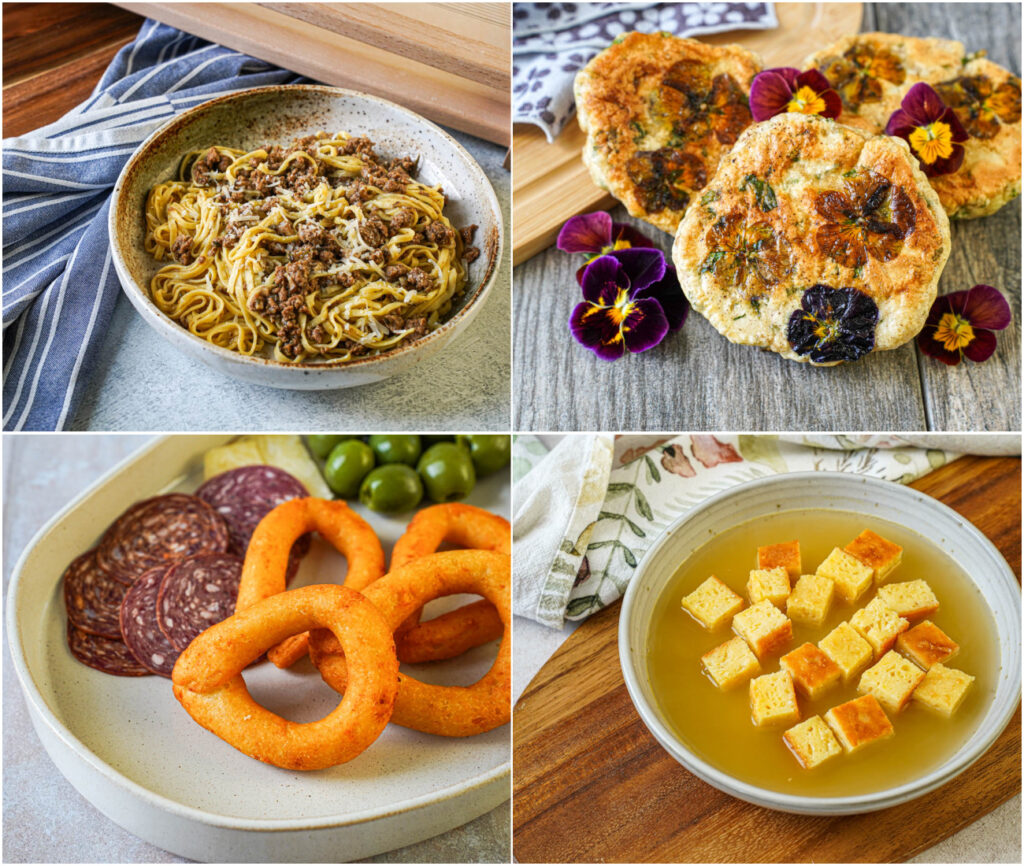
I also made Chitarra con Ragù di Agnello (Chitarra Pasta with Lamb Ragù), Frittelle Ubaldine (Medieval Pancakes), Gathulis (Cheesy Potato Fritters), and Zuppa Imperiale (Semolina Cubes in Meat Broth).
A few years ago, I bought a Chitarra (Italian guitar-like pasta tool with strings to cut the dough as it is rolled over the top) and am always looking for opportunities to use it. I was immediately drawn to the Chitarra con Ragù di Agnello (Chitarra Pasta with Lamb Ragù) from the mountainous Abruzzo region and it was such a comforting meal. After forming the semolina and saffron-based dough, it is cut into the individual strands, then boiled just until tender before pairing with an herb-infused ground lamb sauce.
Gennaro was inspired to make the Frittelle Ubaldine (Medieval Pancakes) after seeing the recipe in Libro de la Cocina, a 14th century cookbook from Tuscany. Originally flavored using an herb called nepitella that is difficult to source, Gennaro has adjusted the ingredients with a blend of mint, parsley, and basil, plus a few edible flowers. They were especially delicious warm from the pan with a drizzle of honey and a bit of lemon juice.
The recipe for Gathulis (Cheesy Potato Fritters) comes from Ogliastra, an inland region of Sardinia. Traditionally they are made with a local cheese called casu fisciu (has been swapped for the easier to find pecorino and feta) and fried in pork fat (swapped for sunflower oil). They were wonderful while still warm with a sprinkling of salt and alongside olives and cured meats.
The recipe for Zuppa Imperiale (Semolina Cubes in Meat Broth) comes from Emilia Romagna in Northern Italy. A semolina parmesan mixture is baked until set, then cut into small cubes and served in a hot meat broth. In the early 1800s, this soup was reserved for special occasions among nobility due to the cost of the ingredients.
Gennaro’s Hidden Italy is a fantastic pick for those interested in regional Italian cuisine with a focus on older and lesser known recipes. You will find something for every occasion from quick and easy meals to more intricate dinners perfect for larger celebrations. There are also symbols by the recipes to note if they are vegetarian, vegan, egg-free, and/or gluten-free. I especially love the assortment of fresh pasta and bread in a variety of styles.
Most of the ingredients can be found in larger American grocery stores. A few items may require further searching such as durum wheat semolina flour, porcini mushrooms, rapini, giardiniera, chestnut flour, orange flower water, guanciale, Tuscan kale, potato flour, and dried cicerchie.
Baci Panteschi (Flower-Shaped Ricotta-Filled Pastries) Recipe
Excerpt from Gennaro’s Hidden Italy
Baci Panteschi (Flower-Shaped Ricotta-Filled Pastries)
Ingredients
For the Batter:
- 1 1/4 cups (150 grams) 00 flour sifted
- pinch sea salt
- 1 egg lightly beaten
- 3/4 cup (generous, 200 milliliters) reduced-fat or whole milk
- abundant vegetable or sunflower oil for frying
For the Filling:
- 2 1/4 cups (500 grams) ricotta well-drained
- 2/3 cup (120 grams) superfine sugar
- pinch ground cinnamon
- handful chocolate chips
- confectioners' sugar (powdered sugar), for dusting
Instructions
- In a large bowl, combine the flour and salt, stir in the egg and gradually add the milk, whisking well to avoid any lumps, until you have a smooth batter-like mixture.
- Heat abundant oil (I went with about 2 inches/5 centimeters deep) in a deep pot, immerse the flower mold into the hot oil quickly, then use tongs to transfer it to paper towels to drain.
- Dip the top of the mold into the batter (do not immerse it completely or the flower shape will not come off when cooking) and then place straight into the hot oil, frying for about 30 seconds until golden and you have a flower pastry which slides out of the mold easily.
- Drain on paper towels. Repeat this process until you have used up all the batter.
- In a bowl, combine the ricotta, sugar and cinnamon until it is nice and creamy, then place in a pastry bag (or you can use a spoon).
- Arrange half the fried flowers on a serving plate and either pipe or spoon the creamy mixture on top.
- Scatter with a few chocolate chips, then lay a flower on top of each to create a sandwich, and press down gently.
- Dust with a little confectioners' sugar and serve immediately as these are best served warm.
Leave a Reply