
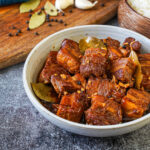
A recipe for Adobong Baboy (Filipino Pork Adobo)! Pieces of pork belly are slowly simmered in soy sauce, vinegar, and spices until tender.
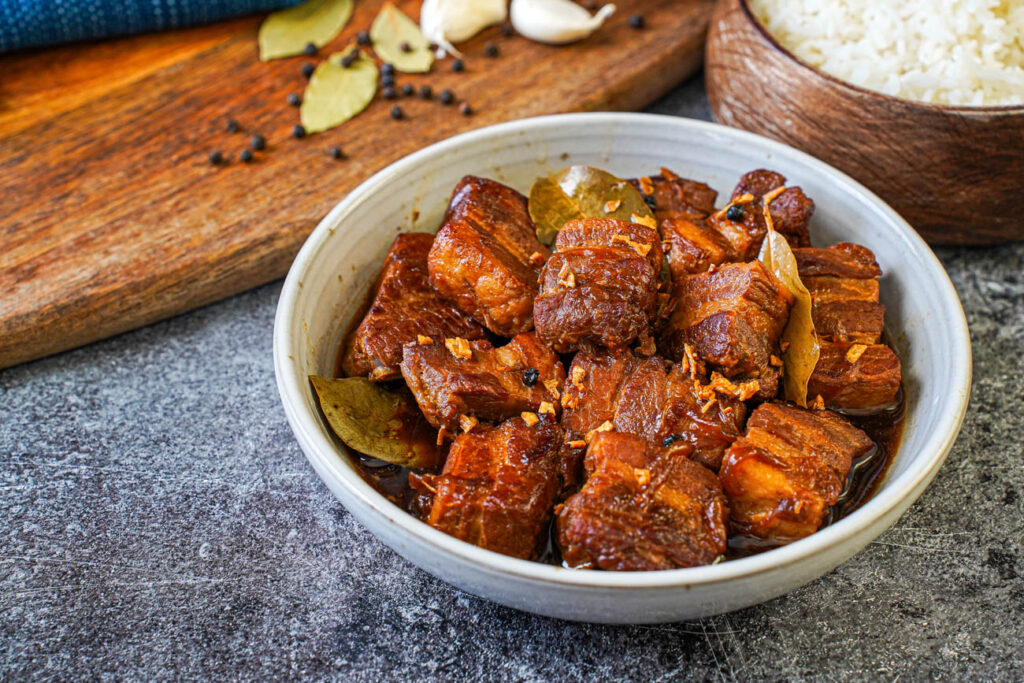
This Adobong Baboy (Filipino Pork Adobo) is such a comforting meal and it comes together all in one pot with minimal prep.
There are many variations in the exact cooking style and soy sauce/vinegar ratios based on region and family, but the recipe I am sharing today is how we enjoy at home and open to adjustments depending on personal preference.
Start by browning pork belly cubes until golden on each side, then remove to a plate. Sauté the onions and garlic next, then add back in the golden pork belly pieces.
Pour in the soy sauce, vinegar, bay leaves, black peppercorns, and water, bring to a simmer, partly cover, and cook for about 1-2 hours until tender.
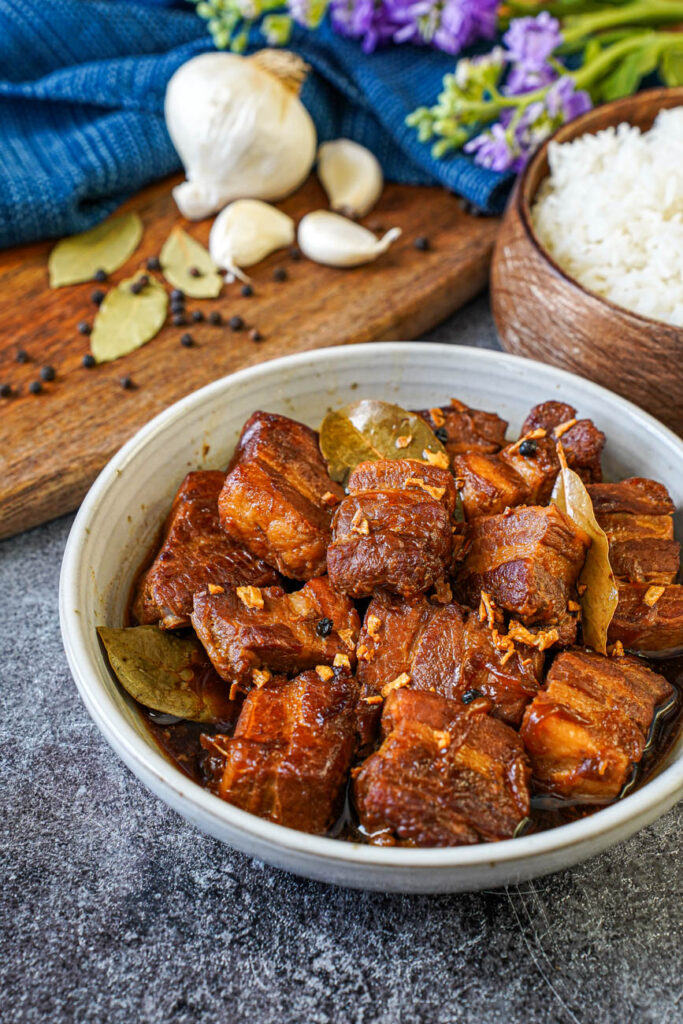
Serve warm with rice and optionally a sprinkling of fried garlic. It is even better the next day!
Notable Ingredients
I have been able to find pork belly in markets with East Asian ingredients, specialty butchers, and more recently in some larger grocery stores. Use boneless pork belly with even streaks of creamy white fat and lean meat. I generally get skinless, but you can also use skin-on for more texture.
I definitely love the Adobong Baboy with pork belly (Liempo), but it can be swapped for pork shoulder. If using pork shoulder (Kasim), the cooking time will be closer to 2 hours or a little longer to become tender.
Avoiding pork? Check out Foxy Folksy’s recipe for Chicken Adobo. Avoiding meat? Check out The Foodie Takes Flight’s Adobong Tokwa at Kabute (Tofu and Mushroom Adobo).
For best results, try to find a Filipino soy sauce. It is generally saltier. If using a different type, you may need to add a pinch of salt to round out the flavors.
I usually make this pork adobo using cane vinegar or coconut vinegar. If unavailable, swap in equal amounts for apple cider vinegar or unseasoned rice vinegar. If using white distilled vinegar, start with 1/3 cup (80 milliliters) and adjust as needed since it is stronger and more acidic.
While living in Los Angeles, I would get these vinegars from Seafood City in Carson or Cerritos. For those in Northern Virginia, I usually find them at Lotte Plaza Market in Chantilly.
A Few Pork Adobo Tips
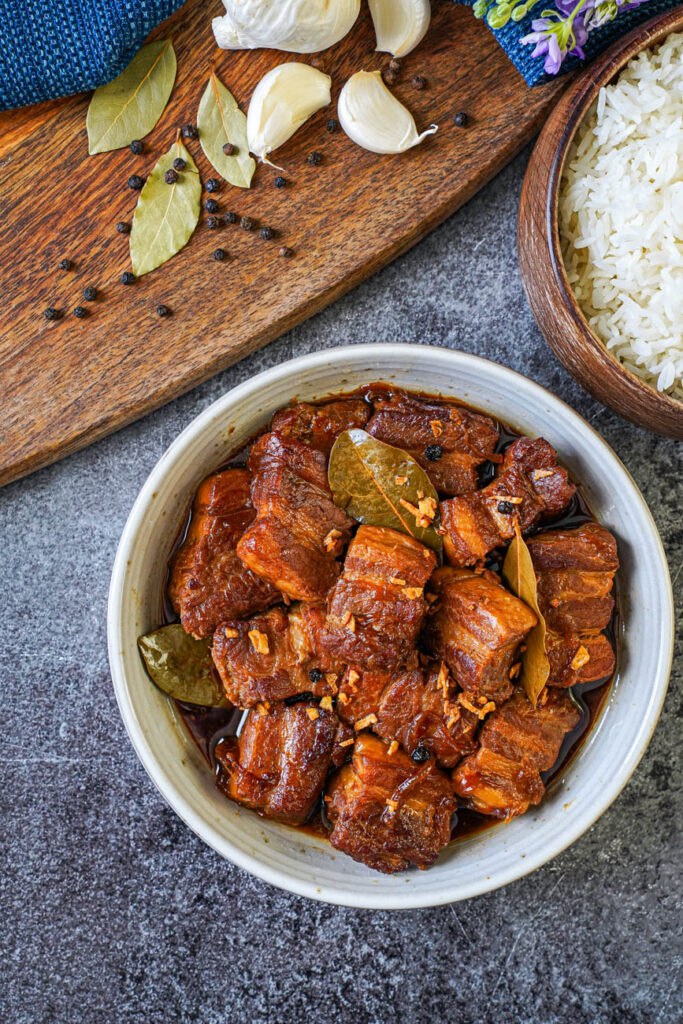
Arrange the pork in a single layer to brown on all sides. If they won’t all fit in a single layer, brown in batches. Do not overcrowd or the pieces will steam instead of sear.
Some recipes marinate the pork first. Some include onion while others don’t. I like to brown the meat first before simmering in the sauce, but have also seen others who simmer, then remove from the sauce and brown before serving.
Add just enough water to cover the pork pieces in the pot. For me, this is usually about 1-1 1/2 cups (240-355 milliliters).
Adjust the seasonings and ratio of vinegar to soy sauce as desired to taste towards the end of cooking (the flavors will concentrate as the sauce simmers). If too strong after simmering, dilute with a little more water and simmer for a couple of minutes before tasting again.
I generally don’t add salt to this recipe because there is enough with the soy sauce. Adjust as needed.
The garlic can also be adjusted more or less based on personal preference. For an extra burst of garlic and contrast in texture, I like to sprinkle a little fried garlic over the top right before serving.
When skimming excess oil off the top, try to remove as little as the soy sauce as possible.
Store leftovers in an airtight container in the refrigerator for up to three days (the flavors are even better after an overnight’s rest). Reheat on the stove in a wide pot over low heat. If too thick, add a splash or two of water.
Wanting to add more to the pork? Popular additions include potato and/or hard-boiled eggs. For another fun variation, check out Kawaling Pinoy’s Pork Adobo with Pineapple.
Looking for more Filipino Recipes?
Try my:
- Mechadong Baka (Filipino Beef Mechado)
- Filipino Spaghetti
- Longganisang Hubad (Filipino Garlic Sausage Patties)
This recipe was originally posted in August 2015 and updated in April 2026.
Adobong Baboy (Filipino Pork Adobo) Recipe
Adapted from Jeanelleats
Adobong Baboy (Filipino Pork Adobo)
Ingredients
- 2 tablespoons (30 milliliters) vegetable oil
- 2 pounds (1 kilogram) boneless pork belly cut into 1 1/2 inch (4 centimeter) cubes
- 1 medium onion peeled and thinly sliced
- 6 cloves garlic peeled and crushed
- 1/2 cup (120 milliliters) cane or coconut vinegar
- 1/3 cup (80 milliliters) soy sauce
- 1 cup (240 milliliters) water enough to cover the pork
- 2 tablespoons (25 grams) light brown sugar
- 10 whole black peppercorns
- 2 bay leaves
To Serve:
- steamed jasmine rice
- fried garlic optional
Instructions
- Drizzle the vegetable oil into a wide pot over medium heat.
- Once heated, add the pork belly (in batches if the pot is not wide enough to fit them in a single layer) and cook, turning occasionally, until golden brown on each side.
- Remove the pork to a plate and set aside. Discard all but a thin layer of oil.
- Add the onion to the pot and cook, stirring occasionally, until softened. Stir in the garlic and cook just until fragrant, 30 seconds to 1 minute.
- Add the browned pork back to the pot, then pour in the vinegar, soy sauce, and water. Pour in a little more water if it is not enough to just cover the pork.
- Stir in the brown sugar, peppercorns, and bay leaves.
- Once bubbling, reduce heat to a low simmer, partly cover the pot, and cook, stirring occasionally and skimming any excess oil off the top, until the liquid has reduced by about half and the pork is tender, 1-2 hours. Adjust seasonings to taste.
- Serve with freshly steamed jasmine rice and optionally a sprinkle of fried garlic.
Leave a Reply