


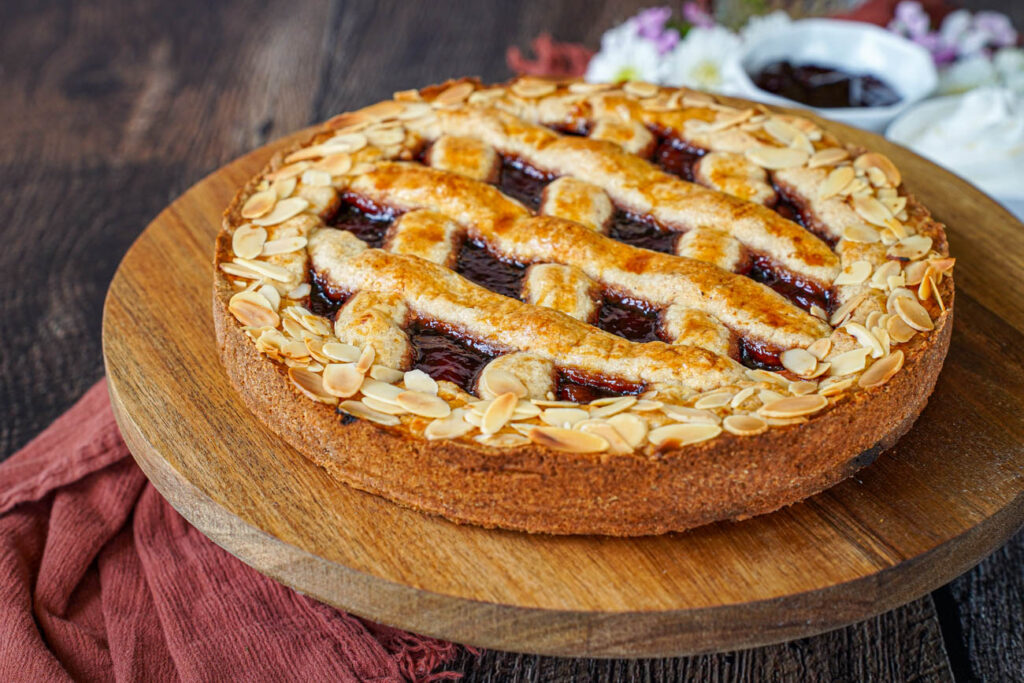
A recipe for Linzer Torte inspired by my time in Linz, Austria! Considered the oldest cake recipe in the world, this classic dessert pairs a spiced shortcrust base with a layer of red currant jelly.
Last fall, I visited Austria for the first time! I spent a little over a week traveling through Innsbruck, Salzburg, Wolfgangsee, and Linz, then finished with a few days in Germany to see friends before returning home. I completely fell in love with the country and miss everything already.
Today, I am covering my day trip to Linz along with a recipe for Linzer Torte.
Check out the rest of my trip:
- Kaspressknödel (Austrian Cheese Dumplings) and Innsbruck
- Schlutzkrapfen and Innsbruck
- Petersilienerdäpfel (Parsley Potatoes) and Salzburg
- Salzburger Nockerl and Salzburg
- Kaisersemmel (Kaiser Rolls) and Wolfgangsee
Linz
While narrowing down day trip options from Salzburg, I actually decided on Linz because I really wanted to try a slice of Linzer Torte in the city it originated.
Located in northern Austria about 32 kilometers (20 miles) from Czechia, Linz is the capital of Oberösterreich (Upper Austria) and the third largest city in the country following Vienna and Graz.
Along with being known for the Linzer Torte (and the smaller cookie version- Linzer Augen/Linzer Kekse/Linzer Plätzchen/Linzer Cookie), Linz is home to a vibrant collection of traditional and modern museums, festivals and seasonal events, sweeping views, stunning architecture, shopping, family friendly activities, and regional cuisine.
With a particular focus on digital art and technology, Linz also joined the UNESCO Creative Cities Network in 2014 for Media Arts.
Getting to Linz
From Salzburg, Linz is an easy day trip via the Railjet Xpress (RJX) and takes a little over an hour each way. It is also a little over an hour from Vienna (if you are traveling between the two cities, this is a great spot for a break), three hours from Munich, and almost four hours from Prague.
If using the trains, I highly recommend downloading the ÖBB app (Österreichische Bundesbahnen). The app is available in English and it is easy to search for and book trains/buses along with seat reservations (also recommended, especially if traveling with more people).
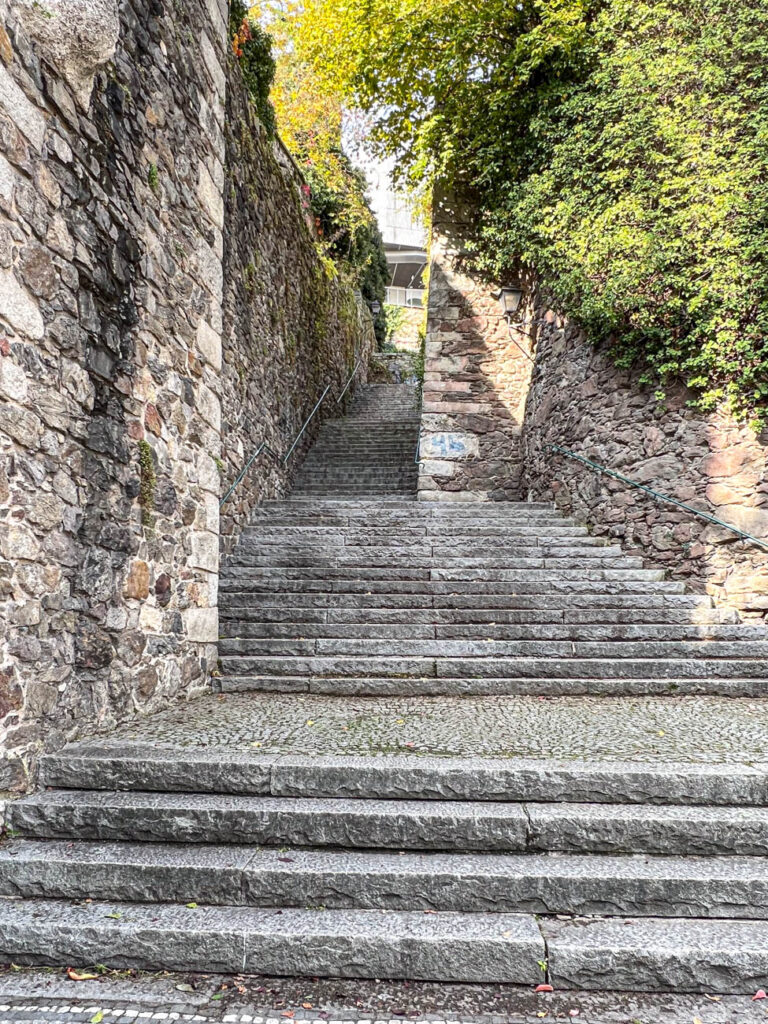
For travel within Linz, I bought a 24 hour Linz-Card. The card covers multiple museums, Linz AG Linien buses and trams within the city core zone/in der Kernzone Linz (the Pöstlinberg tram is only for 48 or 72 hour cards), and discounts for various cultural activities.
It was easy to order online (also available in person at the Tourist Information office on the Hauptplatz and in select museums/hotels) and simply show via my phone at ticket counters.
Konditorei Jindrak
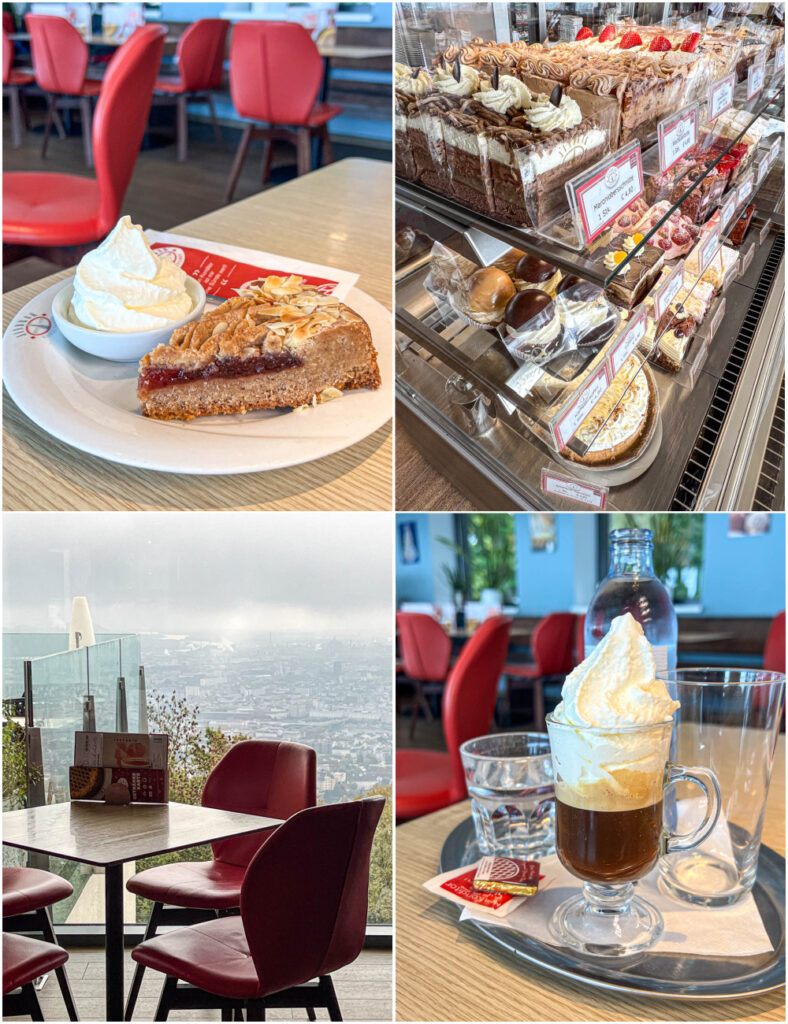
My very first stop after arriving in Linz was Konditorei Jindrak to enjoy a slice of Linzer Torte for breakfast!
Konditorei Jindrak was established in 1929 and now has nine locations in Linz and the surrounding area. I decided on their café on Pöstlingberg for the incredible views of the city below from the dining area.
Along with the Linzer Torte and other regional favorites, they offer seasonal cakes, pastries, cookies, breakfast, coffee, hot chocolate, tea, and souvenir packaging options for takeaway. Keep in mind that this location is closed on Mondays and Tuesdays.
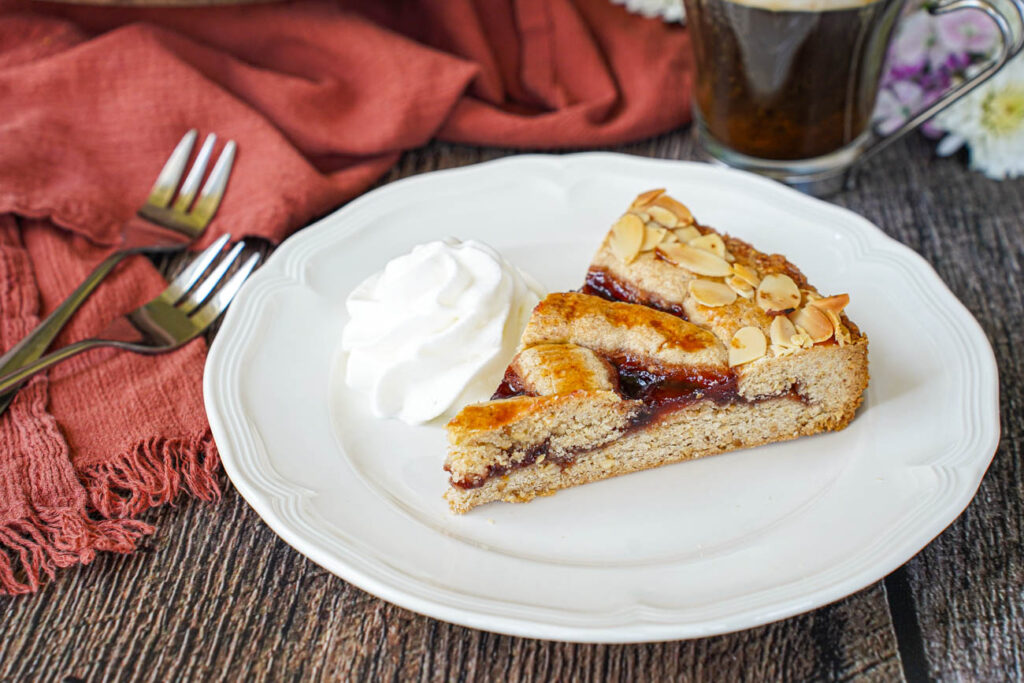
I definitely started the day on a decadent note with the Linzer Torte (pastry with a roasted nut base, layer of jam, and lattice pattern) alongside a bowl of whipped cream and an Einspänner– coffee topped with even more whipped cream for good measure.
Pöstlingberg
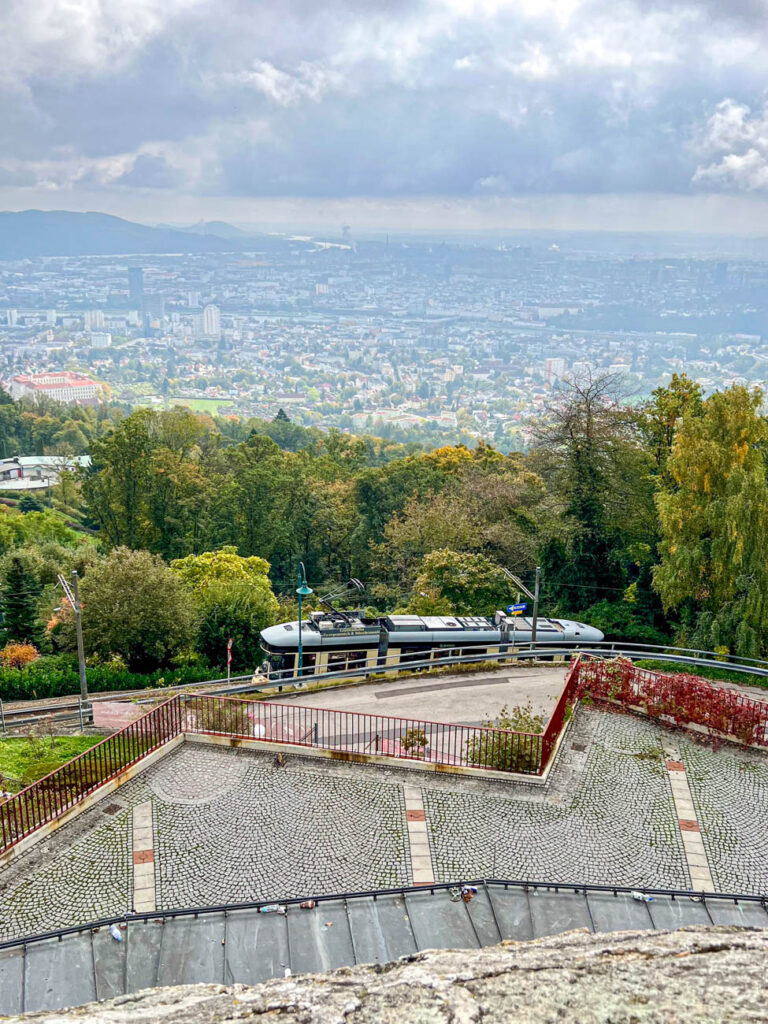
Pöstlingberg is a 539 meter (1,768 ft) hill located northwest of Linz. It is easily accessible from the Hauptplatz via the Pöstlingbergbahn (Linie 50).
This tram first opened on May 29th, 1898 with numerous improvements over time and connects the city center to the hill in about 20 minutes along the steepest adhesion railway in Austria and one of the steepest in the world with a maximum gradient of 11.6%.
Since the Linz-Card 24 hour pass did not cover the Pöstlingbergbahn (the longer passes do), I was able to get a ticket from the machine directly on the Hauptplatz tram stop (roundtrip or one way).
If you want to learn more about the Pöstlingbergbahn, the Pöstlingbergbahn-Museum is located in a small building at Landgutstraße 19, which served as the valley terminal for the tram until 2008. It is open seasonally from March to November on Saturdays, Sundays, and public holidays.
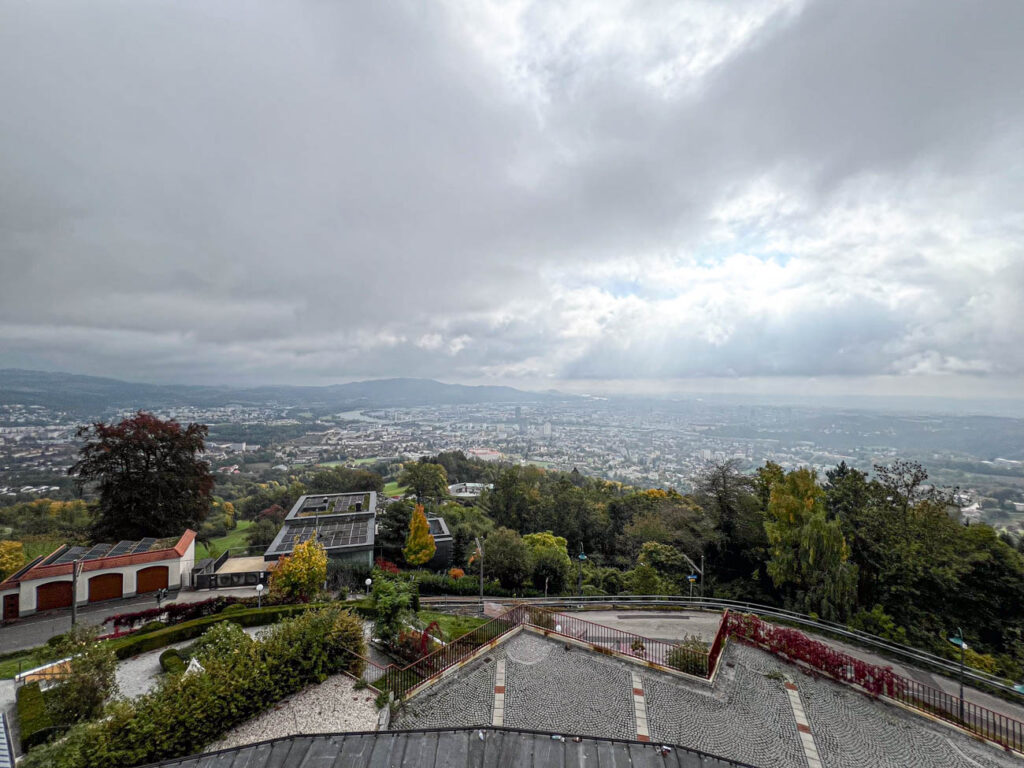
Once you reach the top, there is a viewing platform offering sweeping views of the city and Danube River below, Grottenbahn (a whimsical ride through a fairy tale realm), Gasthaus Kirchenwirt am Pöstlingberg, Pöstlingberg Schlössl, and of course Konditorei Jindrak. The zoo is also halfway up the hill.
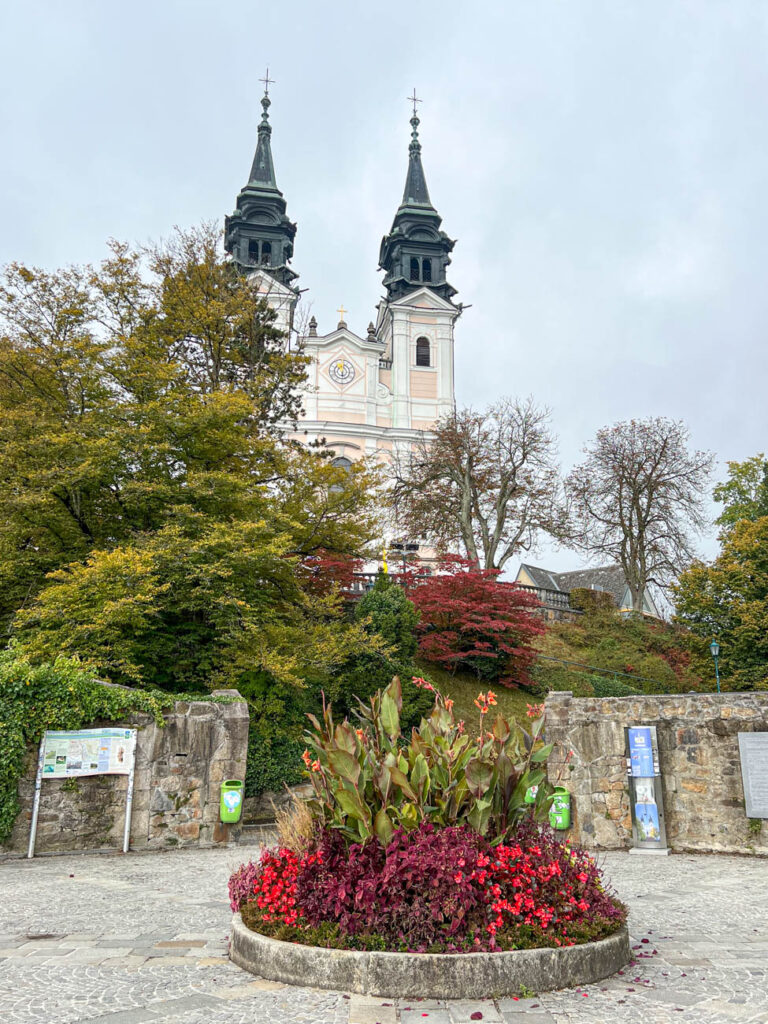
Resting on the very top is Pöstlingbergkirche- Basilika zu den Sieben Schmerzen Mariä (Basilica of the Seven Sorrows of Mary). This parish church and pilgrimage basilica was completed in 1748 and is now a popular location for weddings.
Hauptplatz Linz
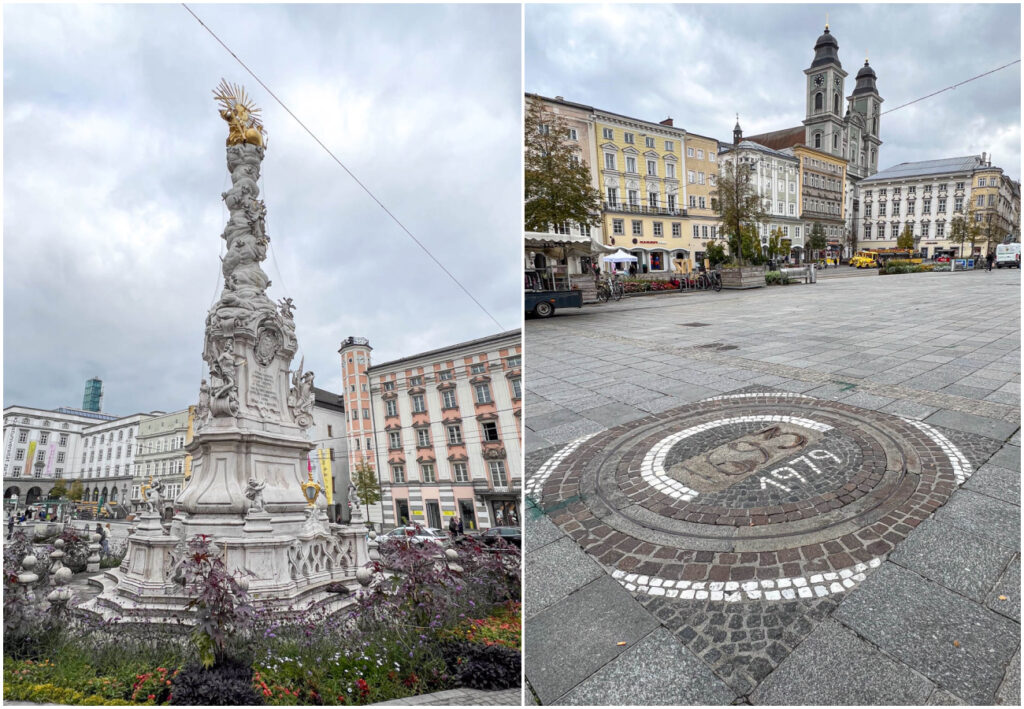
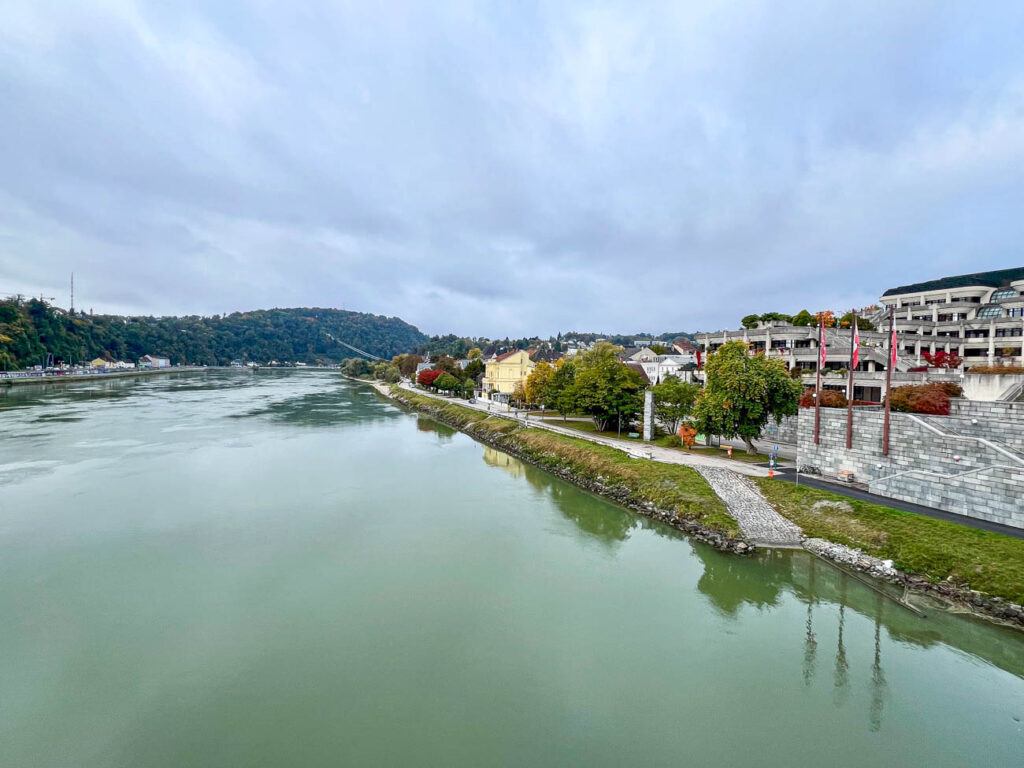
The Hauptplatz is the main square and city center of Linz along the southern side of the Danube (Donau) about 1.7 kilometers (1 mile) north of the Hauptbahnhof.
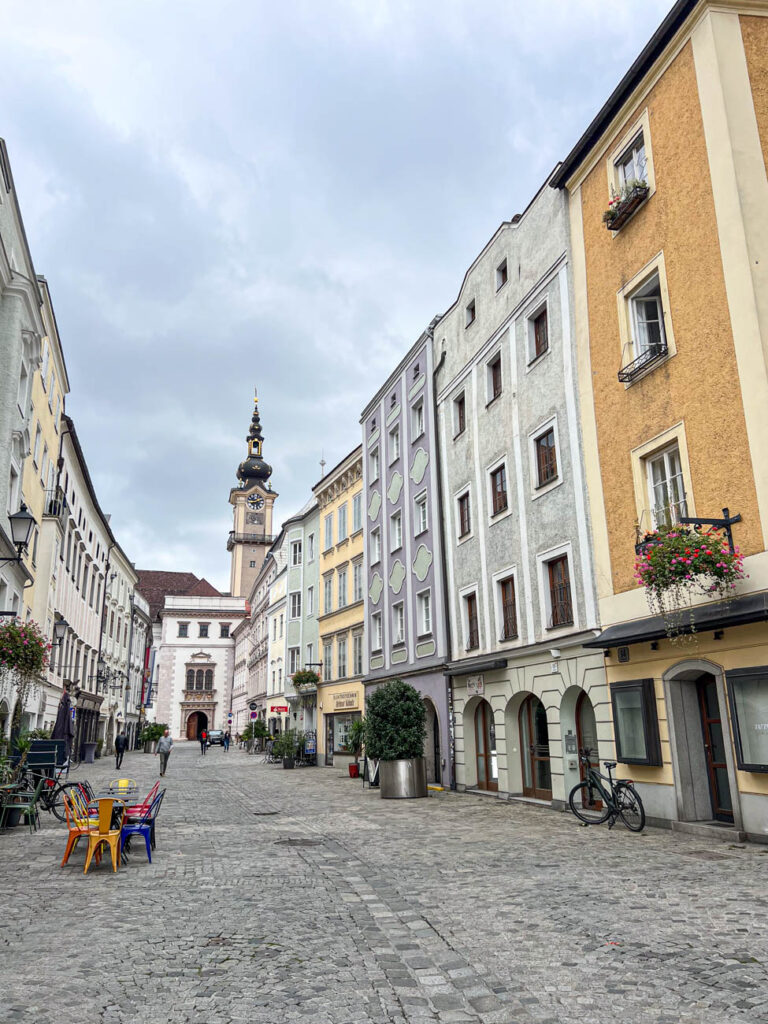
The square is surrounded by notable pastel buildings with the white marble Trinity Column (Dreifaltigkeitssäule) rising 20 meters (66 feet) in the center.
This creates an incredible backdrop for markets, festivals, and other seasonal events. You will also find a variety of shops and restaurants here with the tourist information office located in the Altes Rathaus (Old Town Hall).
Ars Electronica Center
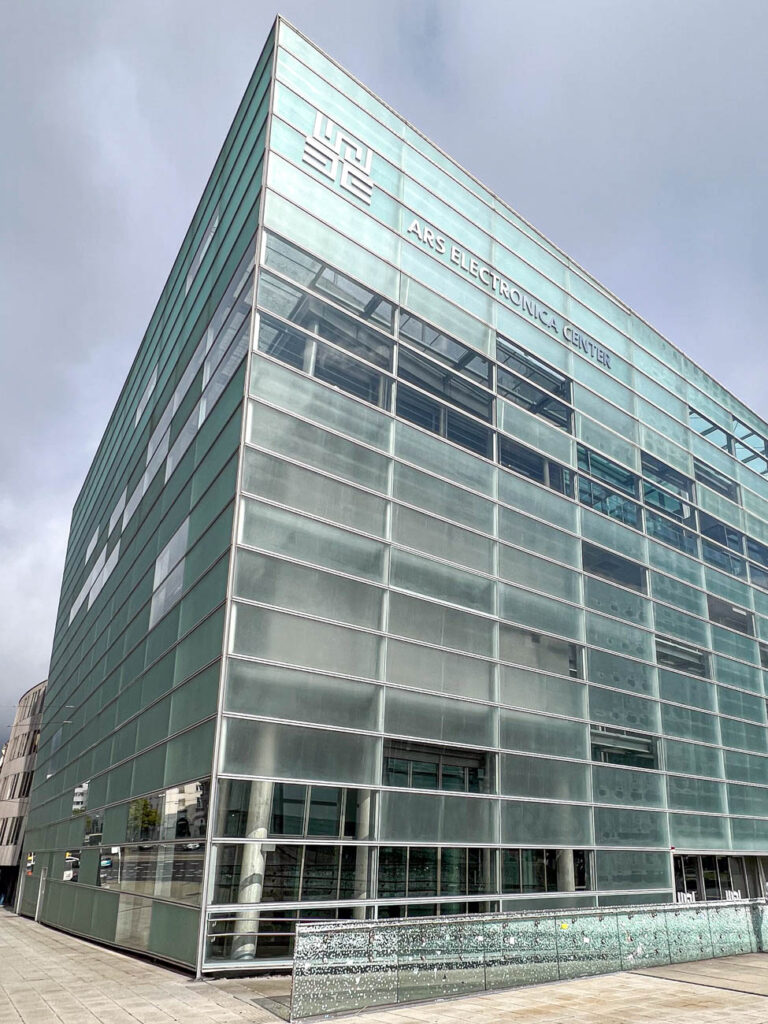
Linz is home to over 15 museums and special exhibits. I unfortunately could only fit in two during my short time in the city, but they were both fantastic and such a highlight of my trip.
I started with Ars Electronica Center just across the Danube from the Hauptplatz at Ars-Electronica-Straße 1. Also known as Museum der Zukunft (Museum of the Future), this innovative center was founded in 1979 and focuses on digital art and media culture with interactive exhibits spanning across multiple levels.
The current building was expanded and completed in 2009, then again in 2019, and has 38,500 LEDs across the facade which can be controlled via an app and wifi connection.
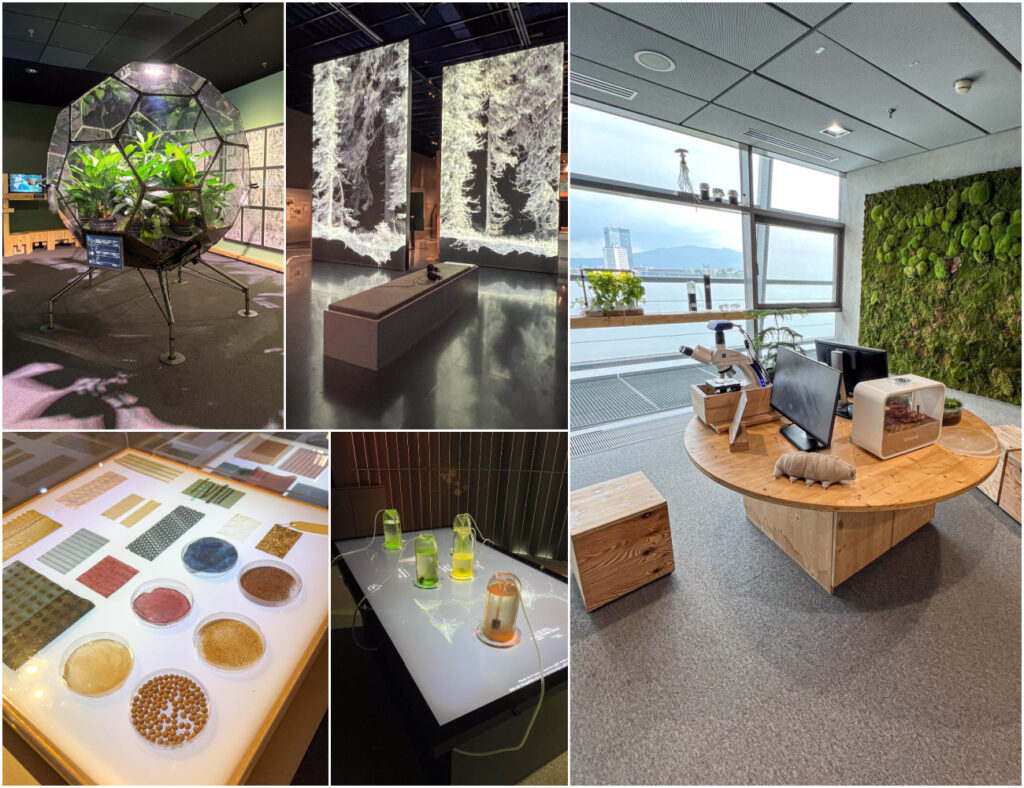
At the time of this post (2026), the center is open Tuesday-Sunday from 10 am to 5 pm with additional closures on December 24, December 25, December 31, January 1, and May 1. Admission is included with the Linz-Card.
I spent about 2 hours exploring everything from AI x Music and Neurobionics to geography during the digital age and interactions of natural systems on Earth. Younger visitors may enjoy the kids’ research laboratory and Deep Space 8K is particularly impressive with a new dimension of virtual reality on its 16 x 9 meter (52 x 30 ft) wall projection and floor projection.
The staff stationed on each floor were incredibly helpful in demonstrating specific aspects of the exhibits. I didn’t have the time (nor the stomach room), but the Qube on the 3rd and 4th levels features a blend of Austrian cuisine and modern patisserie.
The institute also hosts the annual Ars Electronica Festival (in September in 2026).
Neues Rathaus
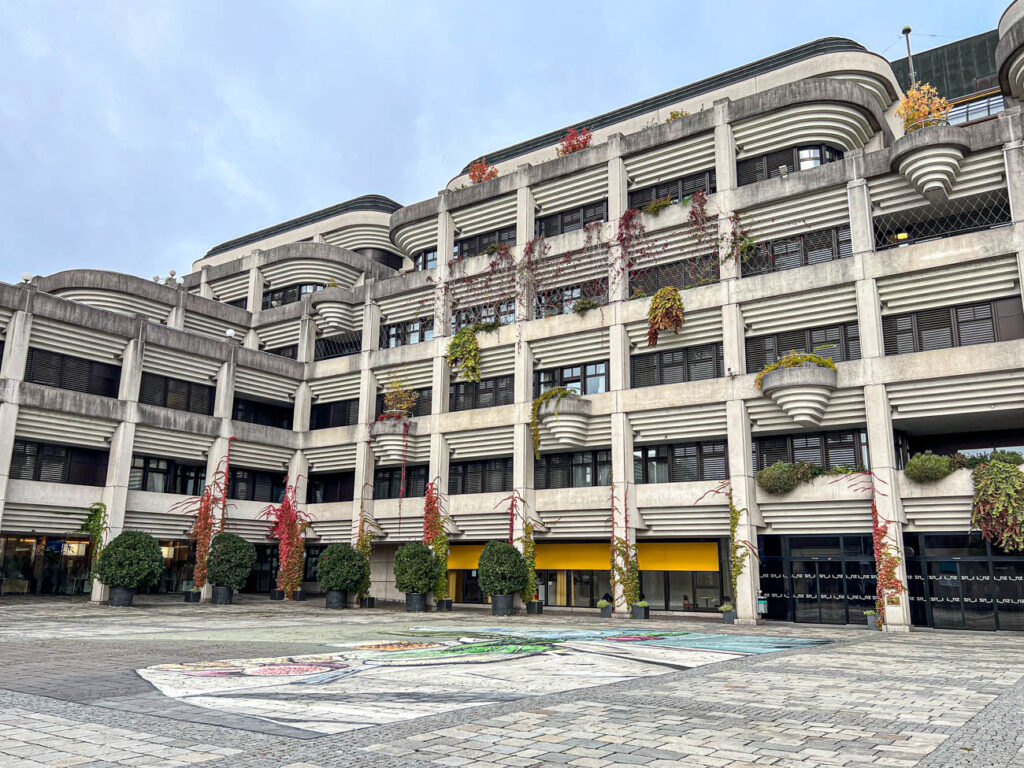
Across the Hauptstraße from Ars Electronica Center is the Neues Rathaus (New City Hall). Designed by Rupert Falkner and Anton Fürtler, the complex opened in 1985 and houses the magistrates’ offices and the city archive.
The building is open daily 10 am to 5 pm and has a large model of Linz on display, plus a ballroom for conferences and other events.
Schlossmuseum Linz
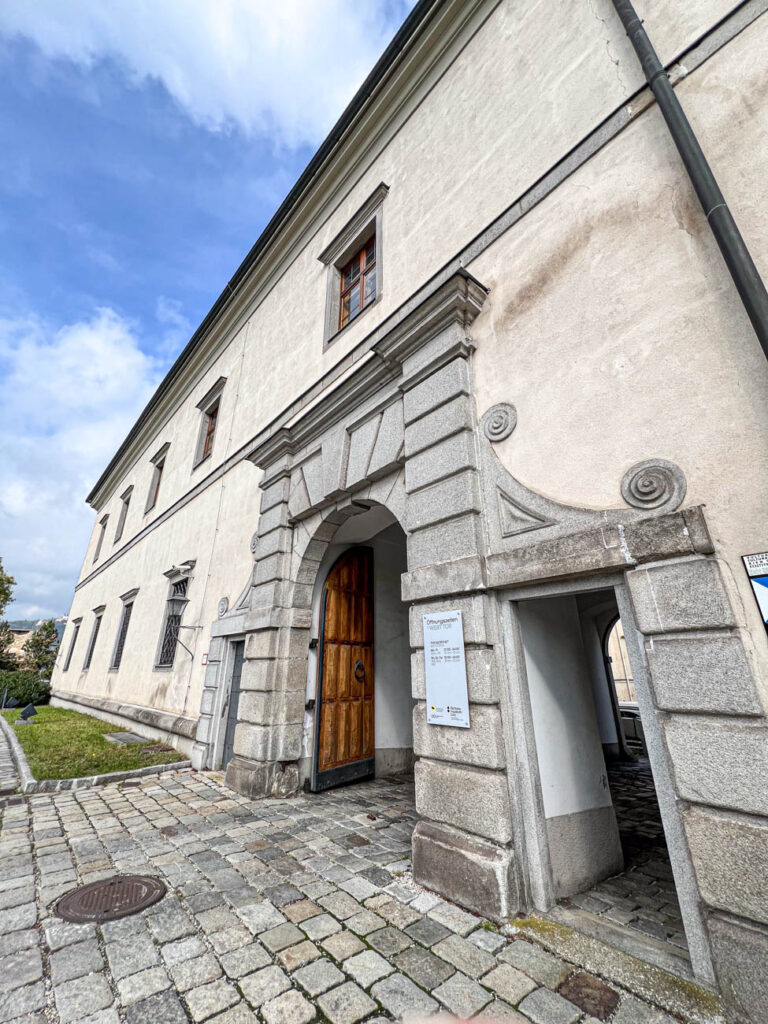
The second museum I visited was Schlossmuseum Linz at Schlossberg 1. Housed in Linzer Schloss (Linz Castle) on a hill overlooking the Hauptplatz and beyond, the museum has opened in parts since 1963 with the final south wing opening to the public in 2009.
Admission is included with the Linz-Card. At the time of this post (2026), Schlossmuseum Linz is open Tuesday-Sunday and public holidays from 10 am to 6 pm.
I walked up to the museum from the Hauptplatz via multiple stairs, but the Schlosslift was created in 2024 as a barrier free option through a set of tunnels and a lift.
Exhibits highlight Oberösterreich’s history, art, culture and technology across 18,000 m² from prehistory to the 21st century. There are also special rotating collections showcasing current international and regional topics.
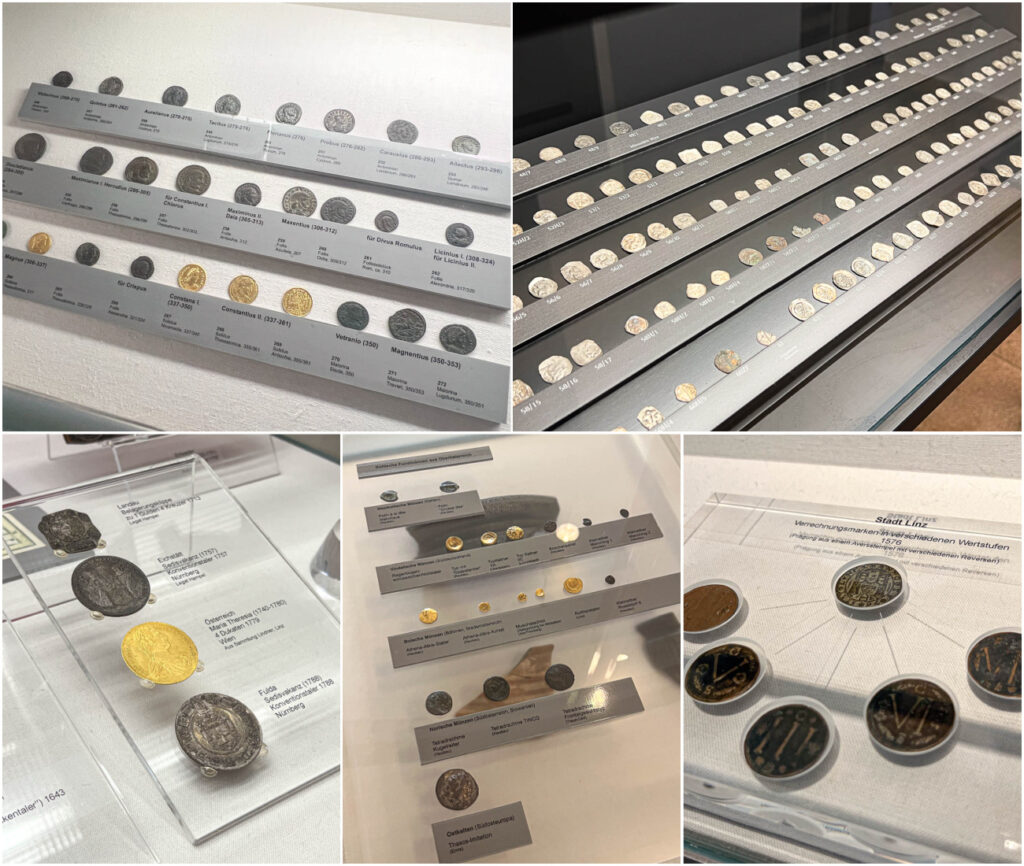
I spent about two hours here with most of my time actually in the Coin Cabinet. These two rooms are dedicated to coins spanning across 2,000 years from antique Celtic coins to Upper Austrian currency.
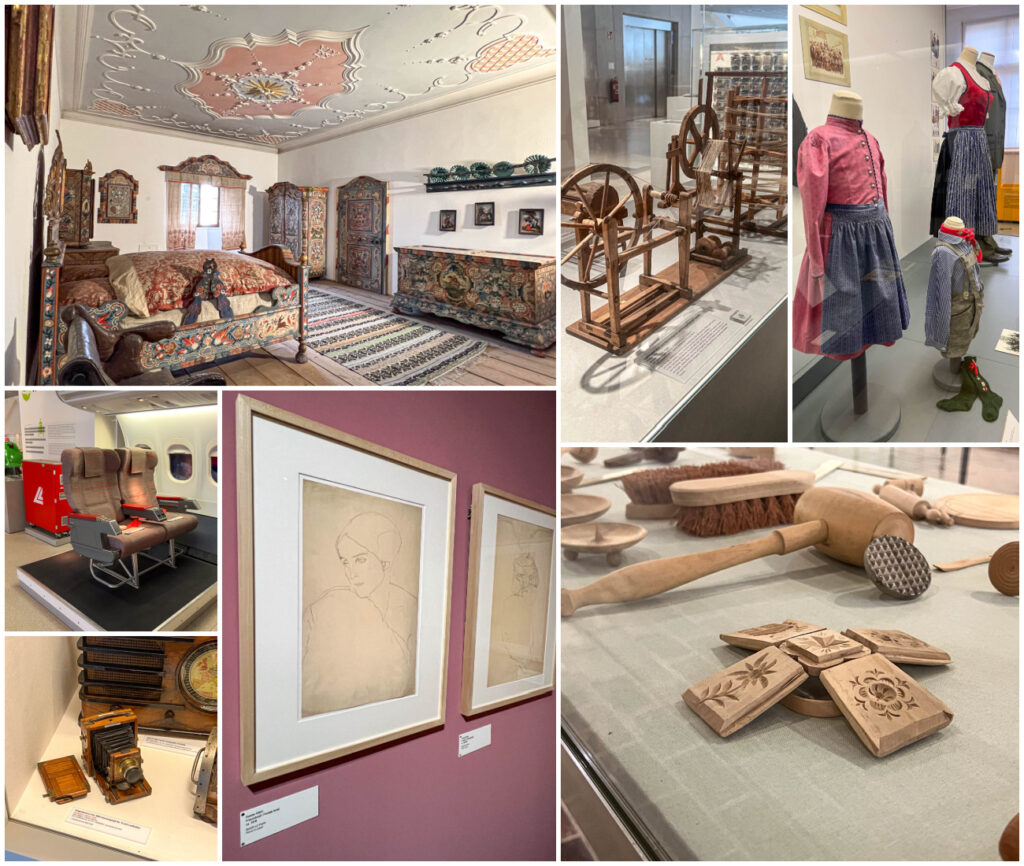
Other notable collections include Gothic art and paintings, Art Nouveau artists including Gustav Klimt, folk art, everyday items and clothing, transportation, archaeology, Roman artifacts, and interactive exhibits for families.
Mariendom
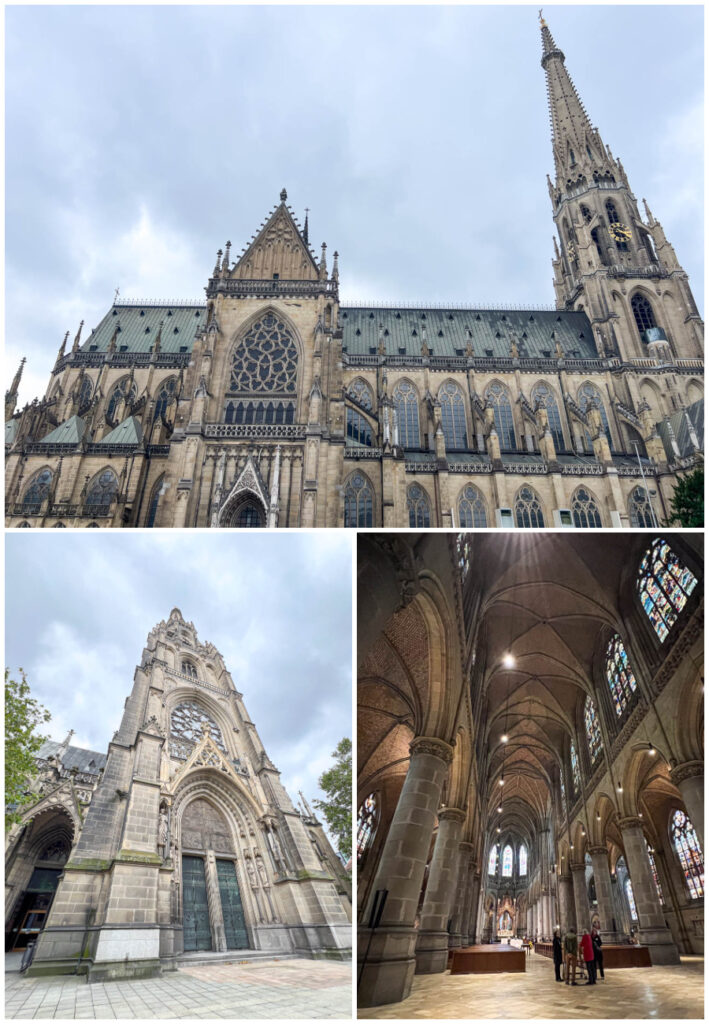
About 800 meters (1/2 mile) south of Hauptplatz is Mariendom. Also known as Mariä-Empfängnis-Dom or Neuer Dom (New Cathedral), this Neo-Gothic cathedral was completed in 1924 and is the largest church in Austria (but not the tallest- the tower is two meters shorter than Stephansdom in Vienna).
At 130 meters long and 5,170 square meters, the building can hold up to 20,000 people. The 142 stained glass windows portray portraits of donors, religious scenes, the history of Linz (Linzer Fenster/Linz Window), and even modern art (to replace the windows destroyed during WWII).
k.u.k. Hofbäckerei Café
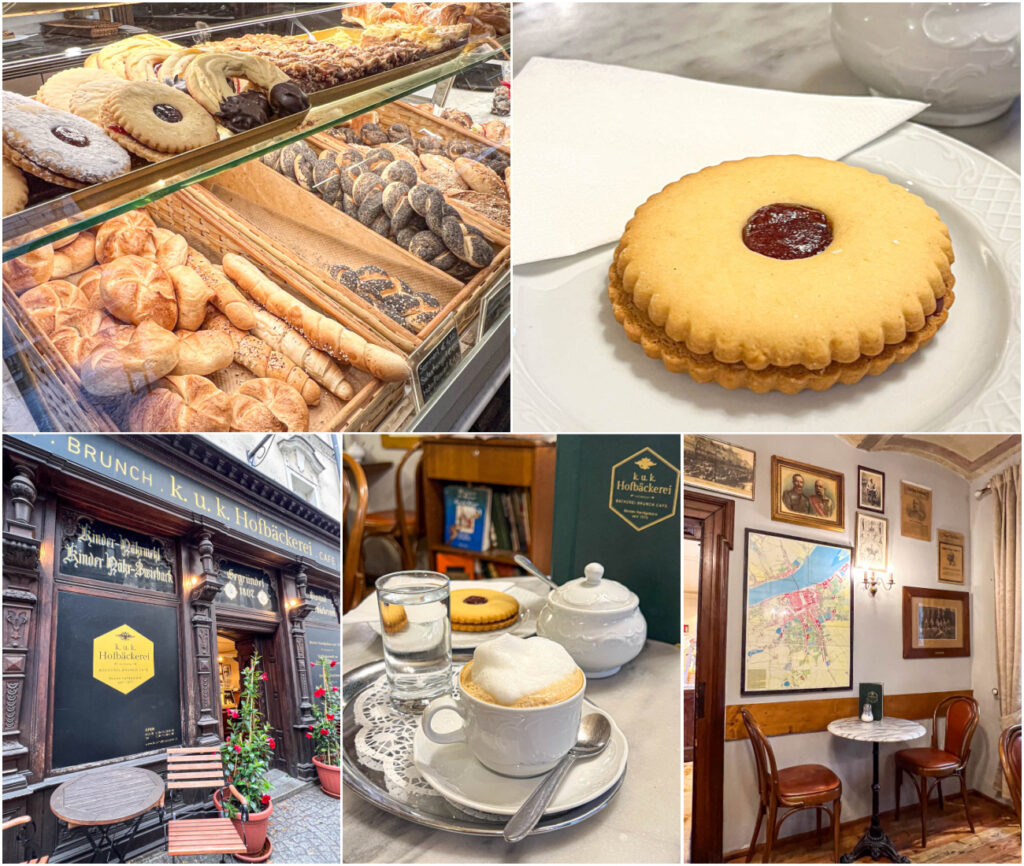
Before taking the train back to Salzburg, I stopped by k.u.k. Hofbäckerei at Pfarrgasse 17 for Linzer Augen (Linzer Cookies). It was definitely the treat and coffee-filled day.
k.u.k Hofbäckerei is the oldest bakery in Linz and has been operating since 1570 (with mentions of a „Bäckerzunftshaus“ as far back as 1371). The bakery features a variety of regional sweet and savory treats including Linzer Torte, breakfast, small bites, drinks, and gift packages for indoor/outdoor seating or take away. As a note, they are closed on Sundays.
I enjoyed a Melange (espresso, steamed milk, and a little milk foam on top) alongside the Linzer Auge.
Linzer Torte
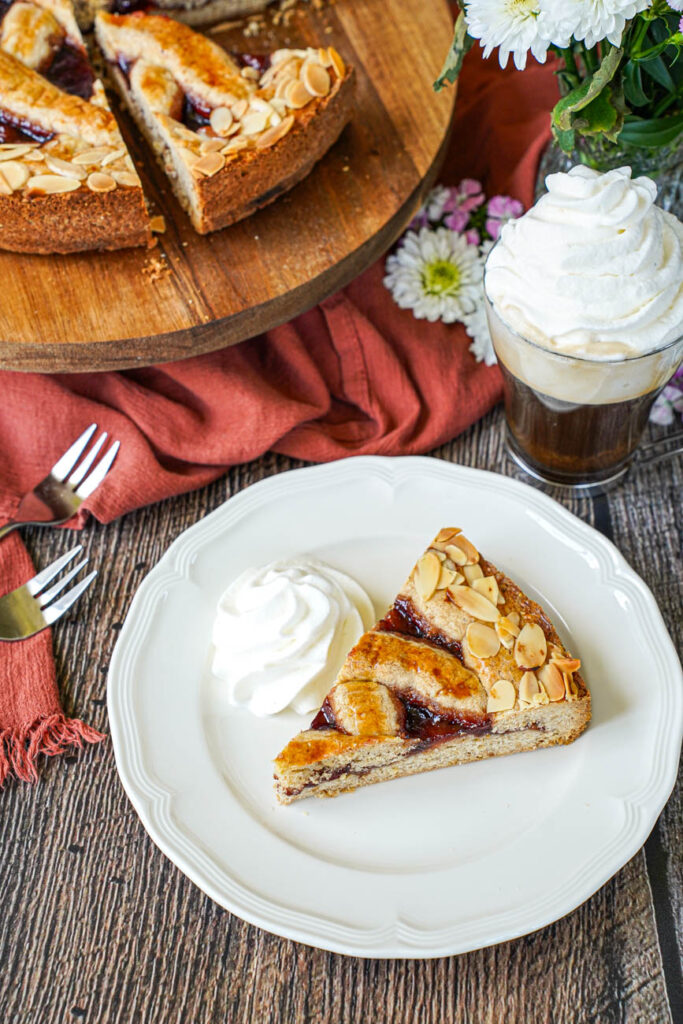
To pair with my post on Linz, I decided to make the classic Linzer Torte! Currently considered the oldest cake recipe in the world, the Linzer Torte was first mentioned in a manuscript by Countess Anna Margarita Sagramosa in 1653.
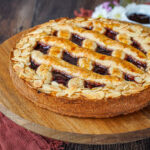
There are now multiple variations and the version I am sharing today was adapted by the slice I enjoyed at Konditorei Jindrak. A shortcrust base is packed with a blend of warming spices and roasted hazelnuts, then topped with a thin layer of red currant jelly and finally strips of additional dough in a lattice design to finish.
After baking until golden and set, the Linzer Torte is at its best after resting for at least a day and ideally 2-3 days before serving. This will give the flavors and textures a chance to settle. As long as it is out of the sunlight, the torte can last a week or two.
Enjoy at room temperature with a generous dollop of whipped cream and paired with a cup of coffee or tea.
Notable Ingredients
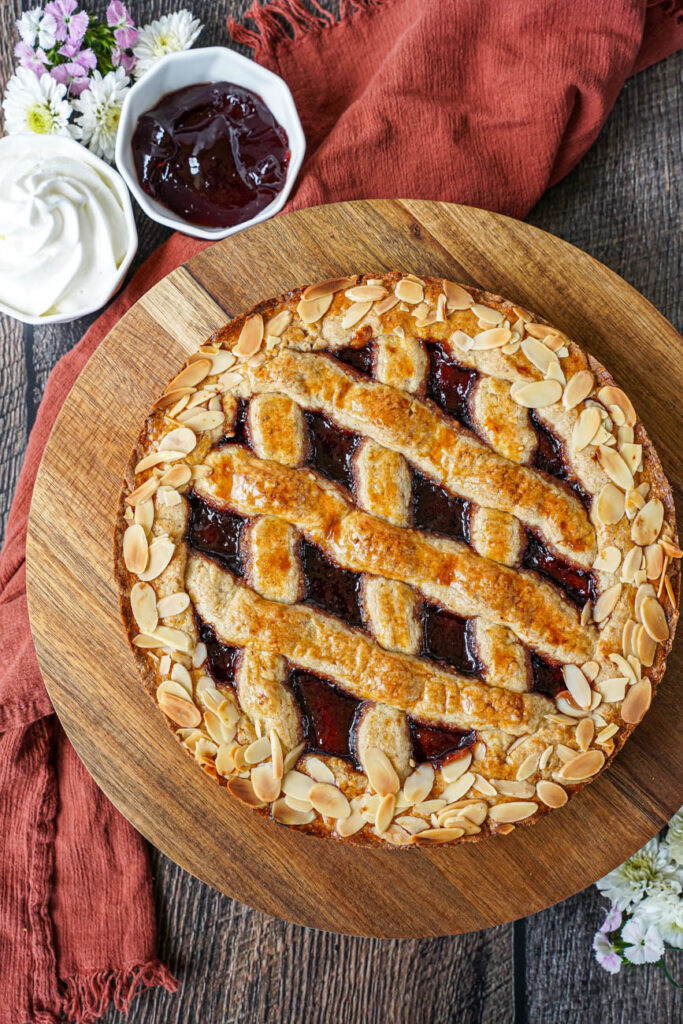
A couple of the ingredients I used in this Linzer Torte may be difficult to locate in some parts of the United States.
I personally prefer hazelnuts in the dough, but they can easily be swapped for equal parts almonds. For those in the DC area, I like to get hazelnuts already blanched and roasted at Cozmo One in Chantilly, Virginia.
I also love the Linzer Torte with red currant jelly/jam (known as Ribiselmarmelade in Austria), but often see it made with a seedless raspberry jam which is often more easy to find. For those in Northern Virginia, I have been able to locate red currant jelly at German Gourmet in Falls Church or online.
Vanilla sugar (Vanillezucker) adds a wonderful light vanilla flavor to the Linzer Torte. You can buy small packets of vanilla sugar in the European section of many larger supermarkets, but it is easy to make at home.
Simply scrape out the seeds of one vanilla bean and mix well with 2 cups (400 grams) granulated sugar. Store in an airtight container with the scraped out vanilla beans. If unavailable, swap for a teaspoon of vanilla bean paste.
A Few Linzer Torte Tips
I used cake flour for the shortcrust base for a more fine texture to contrast with the ground hazelnuts. If unavailable, swap for equal parts all-purpose flour. If you have Austrian flour available, go with Weizenmehl 700 glatt.
Chop the hazelnuts/almonds as fine as possible. I use a food processor and pulse the mixture until finely ground, but not yet releasing the oils to turn into a paste. If the pieces are too large, the crust won’t hold together and will be difficult to form/roll.
Some recipes use butter softened at room temperature, while others cut in cold, diced butter. After trying both methods, I went with the softened butter.
Mix together the ingredients just until it comes together to form a smooth dough. Over-kneading may create a tough texture. If the dough absolutely won’t come together and is still crumbly, add a splash or two of water.
Chilling the dough for one hour will make it more easy to handle. If chilling for longer, the dough may become too firm and may need to rest for a few minutes at room temperature before rolling.
There are a couple of different ways to form the lattice pattern over the top. I personally rolled the dough into ropes (no wider than 1/2 inch/1.25 centimeters- they will expand in the oven), then gently arranged them in the lattice/grid pattern. There is also a special tool to roll over a sheet of dough that will cut out a more intricate design. This is what is used to form the top at Konditorei Jindrak.
Don’t want the lattice design? You can roll the remaining dough into a thin sheet and cut out fun shapes such as hearts or stars for a themed treat.
Linzer Torte Recipe
Adapted from Konditorei Jindrak
Linzer Torte
Ingredients
Base:
- 5.3 ounces (150 grams) blanched and roasted hazelnuts
- 11 tablespoons (156 grams) unsalted butter softened at room temperature, plus more for greasing.
- 1 1/4 cups (155 grams) powdered sugar
- 2 1/2 cups (300 grams) cake flour
- 1 tablespoon (12 grams) vanilla sugar
- zest of 1 lemon
- 1 teaspoon baking powder
- 1 teaspoon ground cinnamon
- 1/4 teaspoon ground cloves
- 1/4 teaspoon fine salt
- 1 large egg
To Assemble:
- 1 cup (330 grams) red currant jam or raspberry jam
- 1 egg
- sliced almonds for garnish
Instructions
- Place the roasted hazelnuts in a food processor and pulse until finely ground, but not yet turning into a paste. Set aside.
- In the bowl of a stand mixer fitted with the paddle attachment or a large bowl, beat together the butter and powdered sugar until light and creamy.
- In another bowl, combine the ground hazelnuts, cake flour, vanilla sugar, lemon zest, baking powder, cinnamon, cloves, and salt.
- Beat the egg into the butter, then the hazelnut mixture just until a smooth dough comes together.
- Form the dough into a disc, wrap in plastic, and refrigerate for one hour.
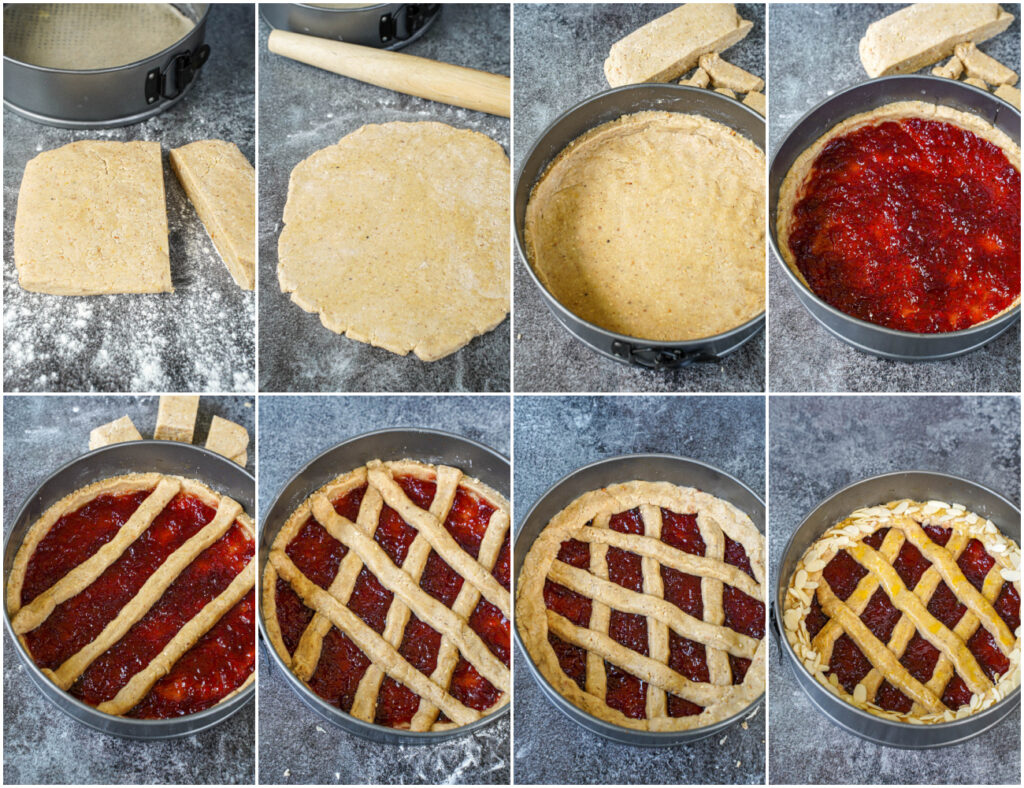
- Preheat the oven to 350˚F (180˚C). Grease a round 9 inch (23 centimeter) springform pan along the bottom and sides with butter. Cut out a 9 inch (23 centimeter) circle of parchment and place along the bottom of the pan.
- Remove the chilled dough from the refrigerator and place on a floured surface.
- Cut off 1/4 of the dough and set aside.
- Roll the remaining 3/4 of the dough into a circle slightly larger than 9 inches (23 centimeters) and gently transfer to the prepared pan. Press the dough across the bottom until even and about 1 inch (2.5 centimeters) up around the sides. If uneven, carefully use a butter knife to cut away the excess.
- Evenly spread the red currant jelly across the base of the dough, taking care to not get it on top of the sides.
- Roll the remaining dough into 6 ropes about 1/2 inch (1.25 centimeters) thick.
- Arrange the ropes gently over the jelly in a grid-like/lattice pattern- forming either diamonds or squares, 3 in each direction. Use a butter knife to cut away the excess.
- If desired, roll the excess dough into another rope to wrap around the perimeter of the torte and seal in the top strips.
- In a small bowl, beat the egg until smooth.
- Lightly brush the egg around the edge and across the strips of dough, taking care to not let any fall into the jelly.
- Sprinkle the sliced almonds around the edges of the torte.
- Place the springform pan on a rimmed baking sheet and bake the Linzer Torte in the preheated oven until golden brown and set, 35-45 minutes.
- Allow the torte to cool completely to room temperature before removing from the springform pan.
- For best results, store the Linzer Torte in an airtight container at room temperature for at least a day and ideally 3 days before slicing and serving.
Leave a Reply