
The Art and Craft of Japanese Cooking, written by Nancy Singleton Hachisu, features an incredibly detailed insight into regional Japanese artisans and chefs alongside 140 recipes with a focus on local and seasonal ingredients. A few highlights include Soba Sushi Rolls, Sour Cream Tofu, Snapper with Yuzu Beurre Blanc, Grilled Chicken Wings and Tomato in Clear Broth, and Cinnamon-Poached Fig with Vanilla Ice Cream. I will also be sharing a recipe for Homemade Soba following the review.
Disclaimer: I received this book from Tuttle Publishing in exchange for my honest review. All comments and opinions are my own.
The Art and Craft of Japanese Cooking is a newer and expanded rendition of Food Artisans in Japan, published in 2019 by Hardie Grant.
Nancy Singleton Hachisu
Nancy Singleton Hachisu is a cookbook author and food journalist specializing in Japanese artisanal ingredients and traditions. She grew up in California, married a Japanese farmer, and has lived in semi-rural Saitama prefecture with her family since 1988.
A James Beard Award Winner and Finalist, she has written multiple books and essays, including Japan: The Cookbook, Japan: The Vegetarian Cookbook, Preserving the Japanese Way, and Japanese Farm Food.
Her work has also been featured in Saveur, Food & Wine, Travel & Leisure, National Geographic Food, BBC Travel, and the Netflix series Salt Fat Acid Heat.
The Art and Craft of Japanese Cooking
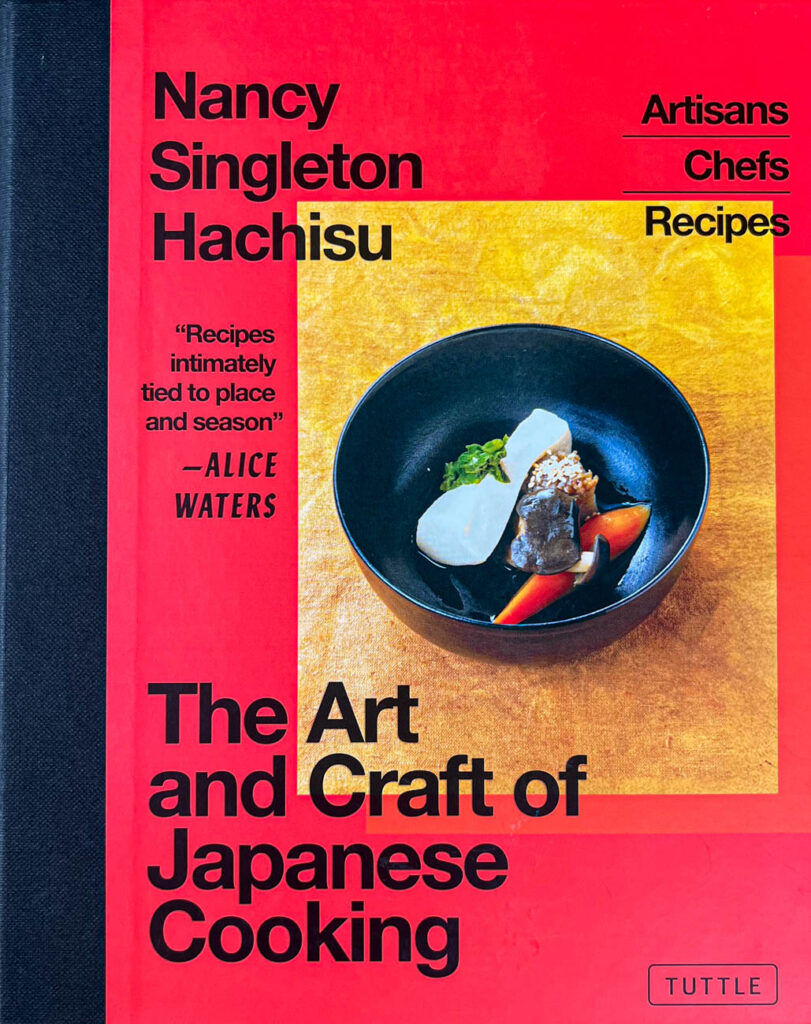
Nancy begins The Art and Craft of Japanese Cooking with an overview of her inspiration behind this beautiful book and the five essential elements of Japanese cuisine (Sa-Shi-Su-Se-So). The pages are filled with the history behind notable Japanese ingredients, profiles of local artisans, and stories from favorite chefs.
She has also put together guides for ingredient sourcing (I especially appreciate this), substitutions, basic pantry items, cutting styles, and more.
The Art and Craft of Japanese Cooking is divided into two parts: Regional Artisans of Japan and The Chefs & Their Recipes. The contents page has a list of the included regions, chefs, and specific recipes with page number for easy reference.
The photography is provided by Kenta Izumi and Kenji Miura. Many of the recipes are accompanied by a quarter to full page photo of the finished dish. The pages are also filled with scenes highlighting the chefs and artisans.
Measurements are listed in ounces/grams and cups/milliliters. Titles are written in English. Each recipe has a headnote with background information, ingredient notes, yield, and other helpful tips.
Homemade Soba
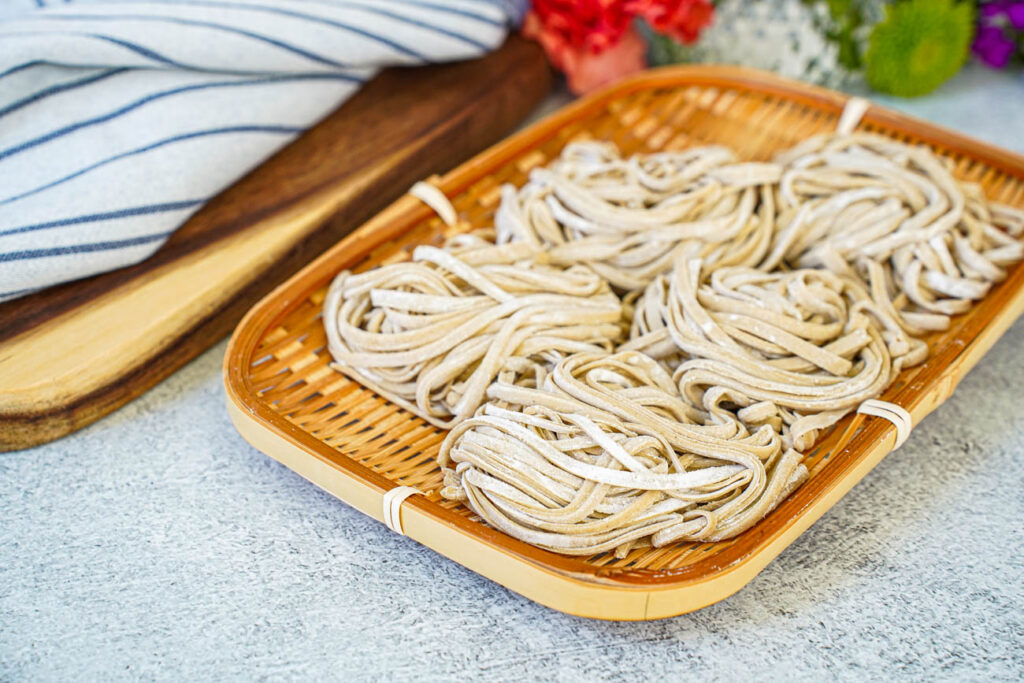
My daughter was especially excited to see Homemade Soba highlighted in a couple of different ways. It is a favorite of hers, but we had only attempted making the noodles at home a handful of times with varying results.
Soba are noodles made with either 100% buckwheat flour or a blend of buckwheat and wheat. They are incredibly versatile and perfect for every season in soups and salads or dipped in broth.
This particular recipe is for Nihachi-Style Soba (二八そば, 二八蕎麦) from Kanji Nakatani of Soba Ra with 200 grams of buckwheat flour and 50 grams of all-purpose flour. If you want more of a challenge, Nancy has also shared a recipe for Soba with Fresh Wasabi from Shinichiro Sakamoto of Yuyado Sakamoto using 225 grams buckwheat flour and only 25 grams all-purpose flour.
Notable Ingredients
The base of the soba noodles is buckwheat flour made from the inner kernel of the buckwheat seed. For best results, try to use Japanese buckwheat flour (Sobako, 蕎麦粉). It must be finely milled, not coarse.
For those in Los Angeles, I have been able to find Sobako at the Rolling Hills Nijiya Market location in Torrance.
Forming the Soba
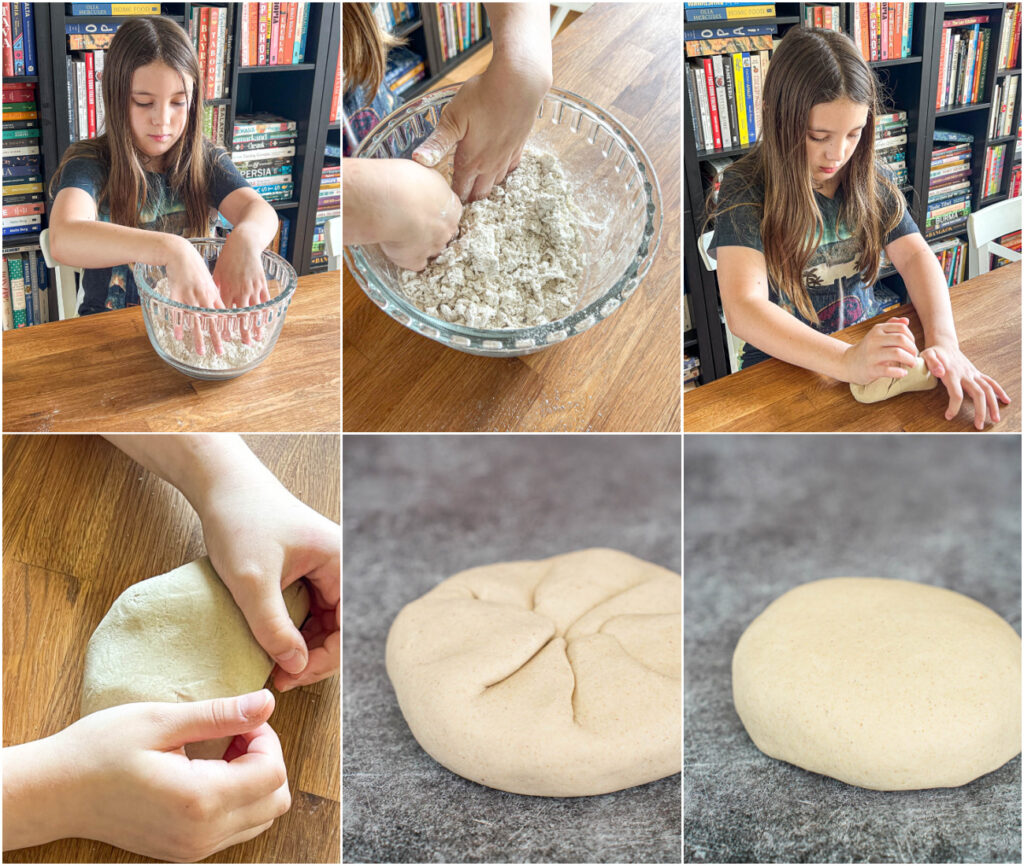
For those wanting to make noodles at home, Soba is definitely a fun project. It takes some practice to get a feel for the right consistency in the dough, but there is no resting time required!
Overall, you can have fresh soba noodles in as little as 30 minutes for quite the comforting meal with only a few ingredients.
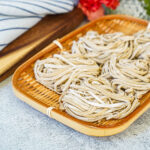
Start by slowly mixing water into the blend of buckwheat flour and all-purpose flour to bring together a dough. Knead well, for about 5 minutes, until smooth and pliable. Roll the dough into a thin sheet, fold in half, fold in half again, then use a sharp knife to cut the sheet into 1/16 inch (1.5 millimeter) noodles.
These noodles are ready to cook immediately after cutting. If you aren’t using them right away, they can also be refrigerated in an airtight container for up to 2 days.
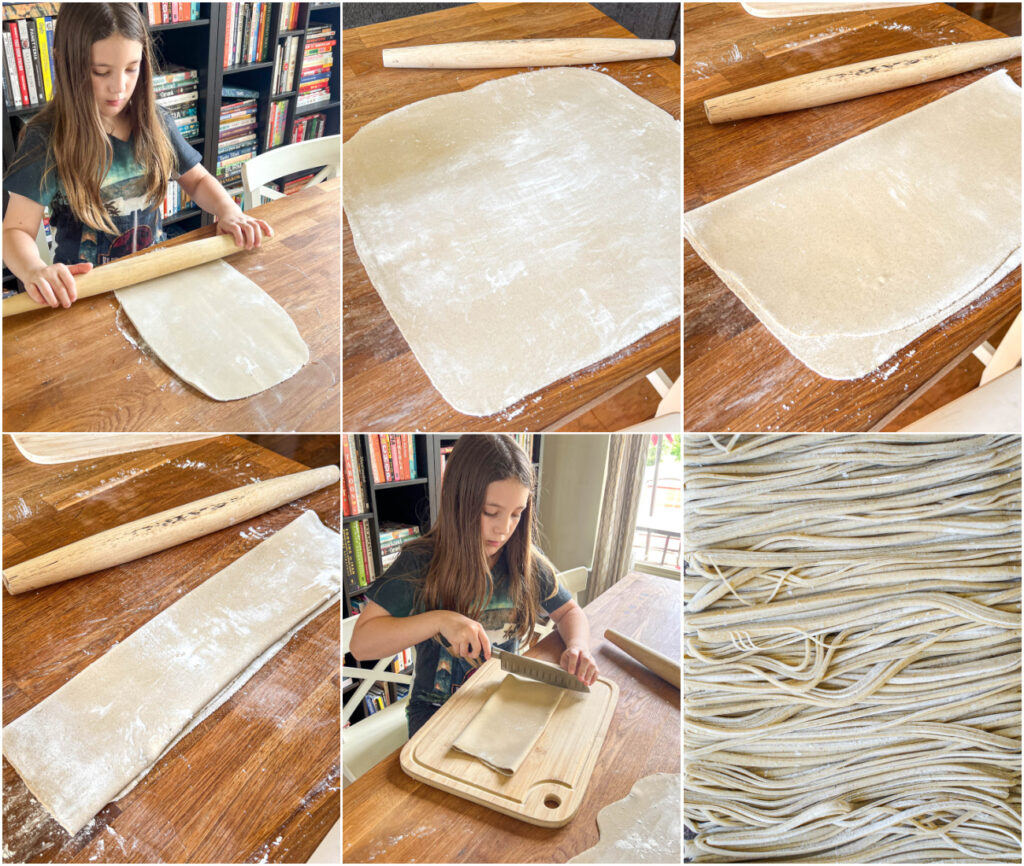
The exact amount of water required will depend on the flour and climate. Older buckwheat flour may need more water compared to freshly milled. Don’t try to rush the process by adding too much water at once or the dough may become too sticky to handle.
We particularly struggled with getting the soba the exact same width. They should be sliced thinly, about 1/16 inch (1.5 millimeters). Keep in mind that the noodles will expand while cooking.
If you want to get the soba more precise than we did, a couple of tools can help (which I will try to get at some point). A specialized Japanese knife with a long blade (蕎麦切り包丁) is perfect for cutting the noodles. A Komaita (駒板) is a wooden guide for making the noodles the exact same width.
Soba Serving Ideas
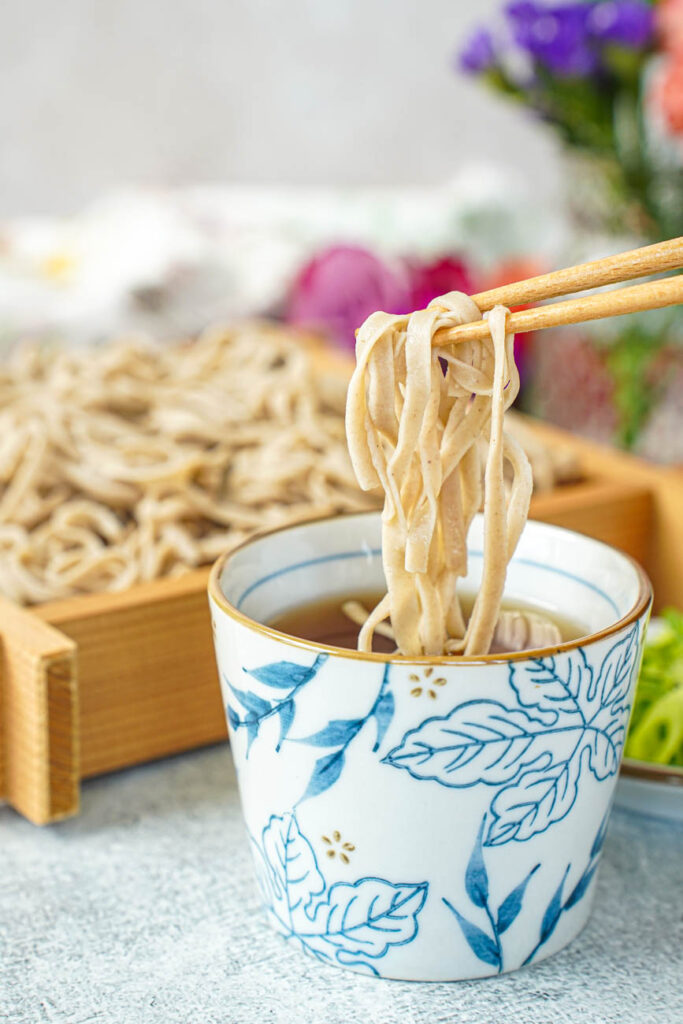
I especially loved the Homemade Soba alongside the mountain yam dipping sauce recipe in the book. Grated mountain yam (yamaimo- I was able to find it at Marufuji in Vienna, Virginia) is whisked with Mori Tsuyu until emulsified and served chilled.
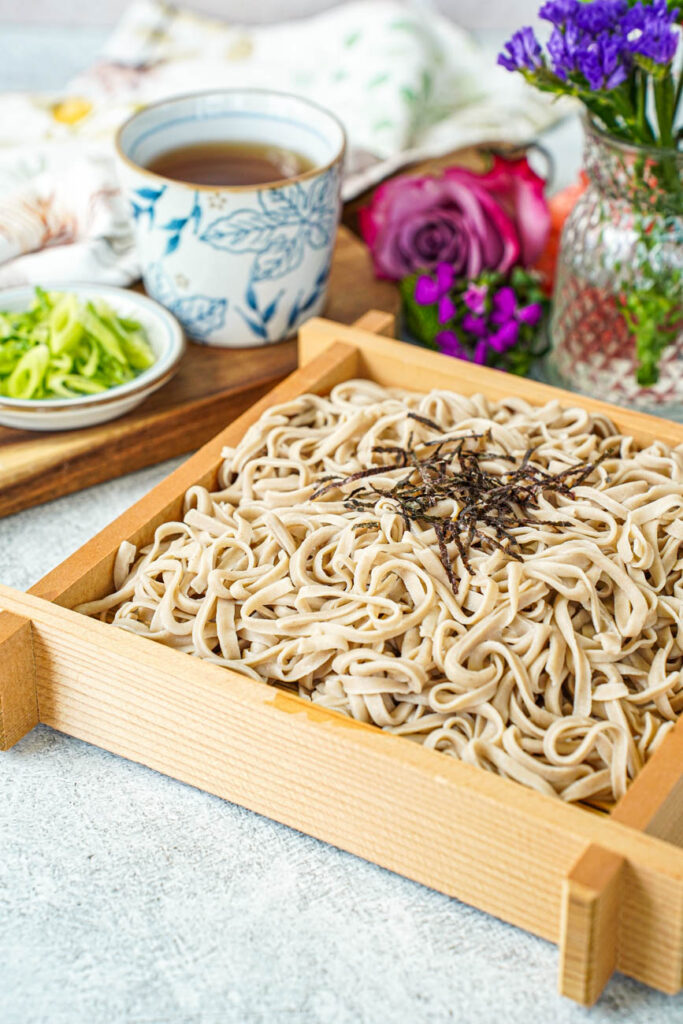
My daughter prefers (and requested to photograph) a basic Zaru Soba (ざるそば). Especially perfect this week with temperatures reaching over 100˚F (38˚C), the soba are served cold with a tsuyu dipping sauce, green onion, and shredded nori.
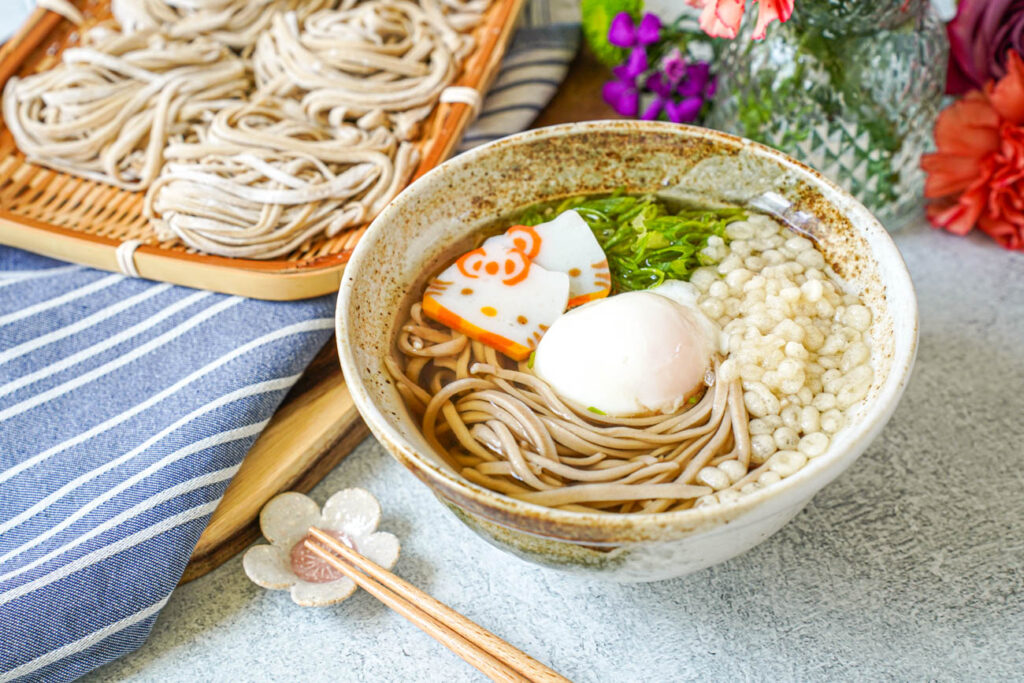
For a more warming option, the noodles can be served in a hot dashi-based broth with desired accompaniments to make Kake Soba (かけそば) or Toshikoshi Soba during the New Year.
More Dishes
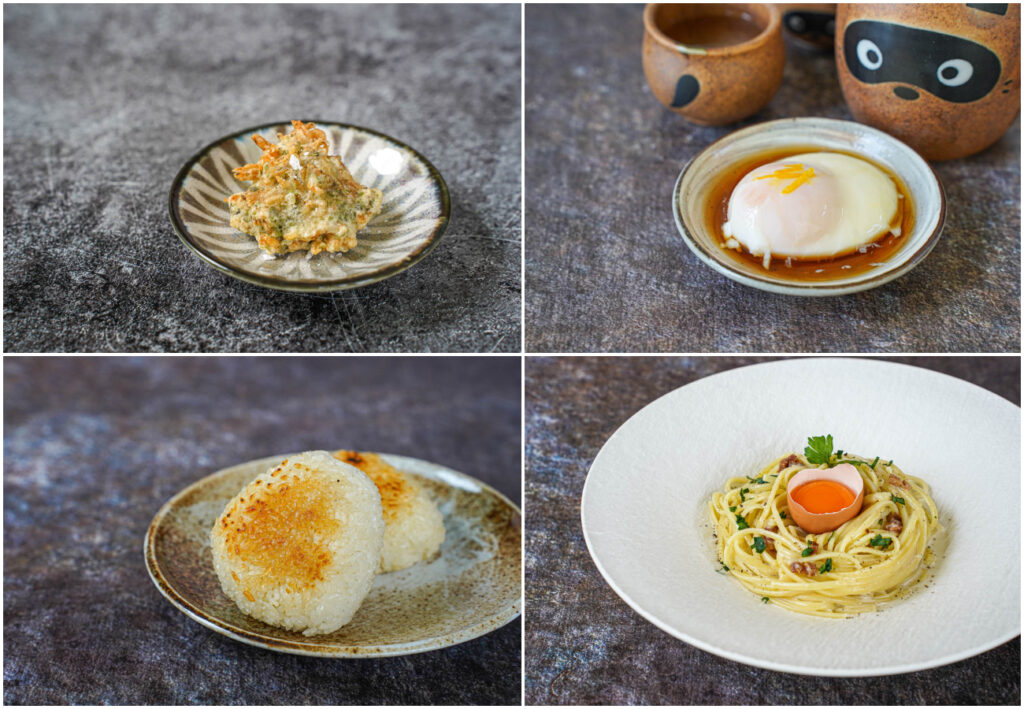
I also made Dried Shrimp and Green Nori Fritters, Slow-“Cooked” Eggs in Dashi, Fish Sauce-Grilled Rice Balls, and Deconstructed Carbonara.
The Dried Shrimp and Green Nori Fritters come from Kanji Nakatani of Soba Ro and Soba Ra in Honjo-shi, Saitama Prefecture. This type of kakiage has small dried shrimp and aonori (green nori powder) coated in a tempura, then fried in dollops until crisp and lightly golden. They are finished with a sprinkling of flaky sea salt.
The Slow-“Cooked” Eggs in Dashi is also in the chapter from Kanji Nakatani of Soba Ro and Soba Ra (I was apparently really drawn to this section). A wonderful accompaniment to warmed sake, eggs are gently poached in water between 140-175˚F (60-80˚C) to create a silky, delicate texture. It is served with a spoonful of a dashi-based sauce with a few threads of yuzu zest (or Meyer lemon since I have yet to see fresh yuzu here in Northern Virginia).
The Fish Sauce-Grilled Rice is from Shinichiro Sakamoto of Yuyado Sakamoto in Suzu-shi, Ishikawa Prefecture. Freshly cooked Japanese rice is folded with Japanese fish sauce to lightly infuse, then formed into triangles and grilled on each side until crisp and golden. They are fantastic alongside pickled vegetables.
The recipe for Deconstructed Carbonara comes from Takayoshi Shiozawa of Cainoya in Kyoto (previously in Kagoshima). I was immediately drawn in with the unique presentation. Al dente linguini is coated in a white wine cream sauce with rendered bacon pieces and cheese, then served with a half egg shell holding a yolk in the center. It is finished with truffle oil (or dried porcini), parsley, and pepper.
The Art and Craft of Japanese Cooking is a fantastic pick for those interested in Japanese cuisine with a focus on the ingredients, artisans, and chefs behind the food. Many of the recipes are restaurant quality with thoughtful plating, while still approachable with each aspect broken down for beginners and more advanced home cooks alike. Recipes range from traditional Japanese classics to innovative approaches with French and Italian influences.
Having a market nearby with Japanese ingredients will be helpful in locating items such as umeboshi, sashimi-grade seafood, shiso, myoga, Azuki beans, burdock, kudzu powder, Japanese sesame paste, mizuna, daikon, Japanese eggplant, aonori, enoki and other specialty mushrooms, katsuobushi, lotus root, and more.
Homemade Soba Recipe
Excerpt from The Art and Craft of Japanese Cooking
Homemade Soba
Ingredients
- 1 1/3 cups (200 grams) Japanese buckwheat flour sobako
- 1/3 cup (50 grams) unbleached all-purpose flour
- 1/2 cup (120 milliliters) water
- 1/2 cup (75 grams) uchiko flour or potato starch, for dusting
Instructions
- Combine the sobako and all-purpose flour together in a large bowl using your fingers.
- Measure 47% water into a cup with a spout: for 9 ounces (250 grams) combined weight of flour, that means about 1/2 cup (120 milliliters) water.
- Sprinkle generous 1/3 cup (100 milliliters) of the water over the flours in the bowl, and scissor your fingers through the flour until the water has been absorbed and the mixture is crumbly.
- Press the dough together with both hands to form a rough ball and transfer it to a large, flat work surface. Knead the dough for about 5 minutes, until smooth and pliable. This will take some elbow grease because the dough will be stiff, but don't flag or lose heart. Depending on the weather and the flours, the dough might want a bit more moisture. If the dough feels dry or continues to have cracks, dip your fingertips in the remaining water and rub it around the dough. Continue kneading and adding water if needed, until the dough achieves the desired consistency.
- Form the dough into a 1/2 inch (1 centimeter) thick disc and sprinkle with a small amount of uchiko flour.
- Using a long, thin rolling pin or dowel, roll the dough back and forth from the center into a 1/16 inch (1.5 millimeter) thick rectangle. Dust the dough and work surface generously with the uchiko flour and flip the dough to make sure it is covered in flour.
- Fold the dough in half lengthwise, then in half again to form a long, thin, folded log.
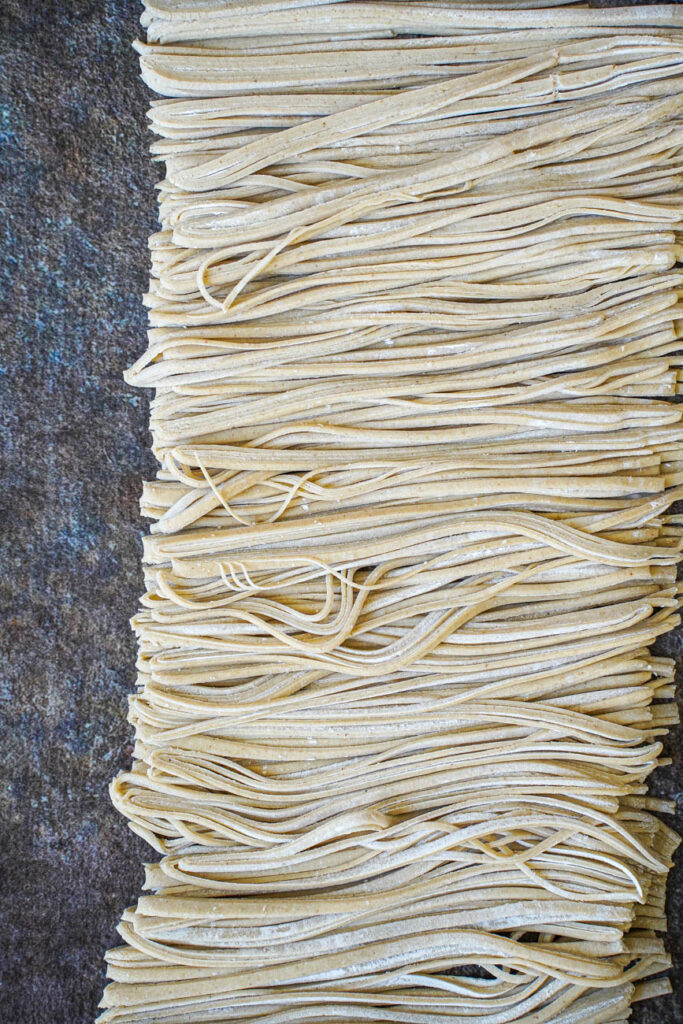
- With a fine, sharp knife, cut into thin noodles 1/16 inch (1.5 millimeters) wide.
- Dust the noodles with more of the uchiko, unraveling the coiled clumps into long strands, and making sure some of the flour gets between the strands to prevent them from sticking together.
- If you are not cooking right away, gently gather handfuls of noodles and align straight in a wooden or plastic container. Cover and refrigerate for up to 2 days.
- Bring a large pot three-quarters full of water to a rolling boil over high heat.
- Prepare a large bowl of cold water in the sink, and a medium bowl of ice water.
- Gather the soba noodles up gently in two hands and drop into the boiling water.
- As soon as the water returns to a boil, cook the noodles for 60-90 seconds, depending on thickness.
- Scoop out the noodles with a wire-mesh strainer, plunge into the bowl of cold water, and run more cold water into the bowl for several minutes to rinse and remove starch.
- Scoop the soba out of the water and dip in and out of the bowl of ice water to shock.
- Shake off and serve on noodle baskets.
Leave a Reply