
Around the World in 80 Cakes, written by Ruby Bhogal, features a stunning collection of decadent treats for every occasion and season from across the globe. A few highlights include West African Lime Cake, Indian Milk Cake, Dutch Slagroomtaart, Fijian Honey Cake, and Uruguayan Postre Chaja Cake. I will also be sharing her recipe for Moroccan Meskouta at the end of the post.
Disclosure: I received a digital copy of this book from Interlink Publishing in exchange for my honest review. All comments and opinions are my own.
Around the World in 80 Cakes is currently available for preorder and set to release on September 29, 2026 in the United States.
Ruby Bhogal
Ruby Bhogal graduated with an MA in Architecture and began baking as a productive outlet. This hobby turned into so much more and, in 2018, she was a finalist on The Great British Bake Off.
She now makes regular appearances in print, at live events, and on television. Ruby is also the author of One Bake, Two Ways.
Around the World in 80 Cakes
Ruby begins Around the World in 80 Cakes with a short introduction covering the inspiration behind this beautiful book and how it developed from her online series.
Chapters are divided based on continent: Africa, Asia, Europe, Oceania, and The Americas.
The photography is provided by Matt Russell. Most of the recipes are paired with a full page photo or whole layout of the finished cake.
My digital copy of Around the World in 80 Cakes was the UK version with metric measurements. The US version has US customary and metric, though metric is definitely recommended for accuracy. Titles are written in English or the original language. Each recipe has a headnote with background information, helpful tips, yield, region, technical level, hands-on time, specialty equipment, and other notes.
Meskouta
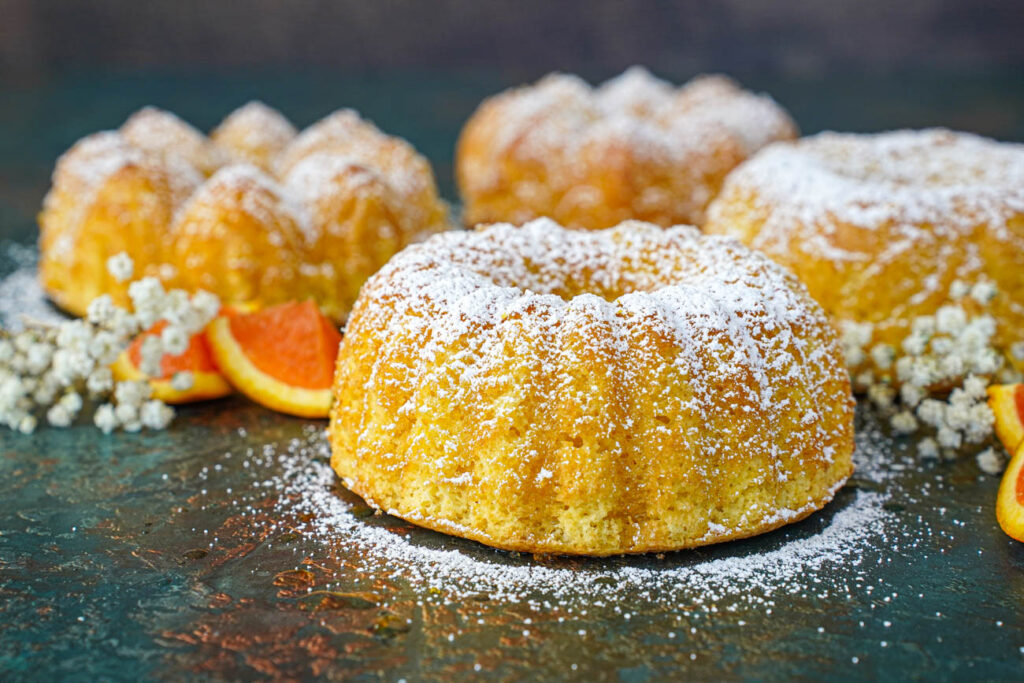
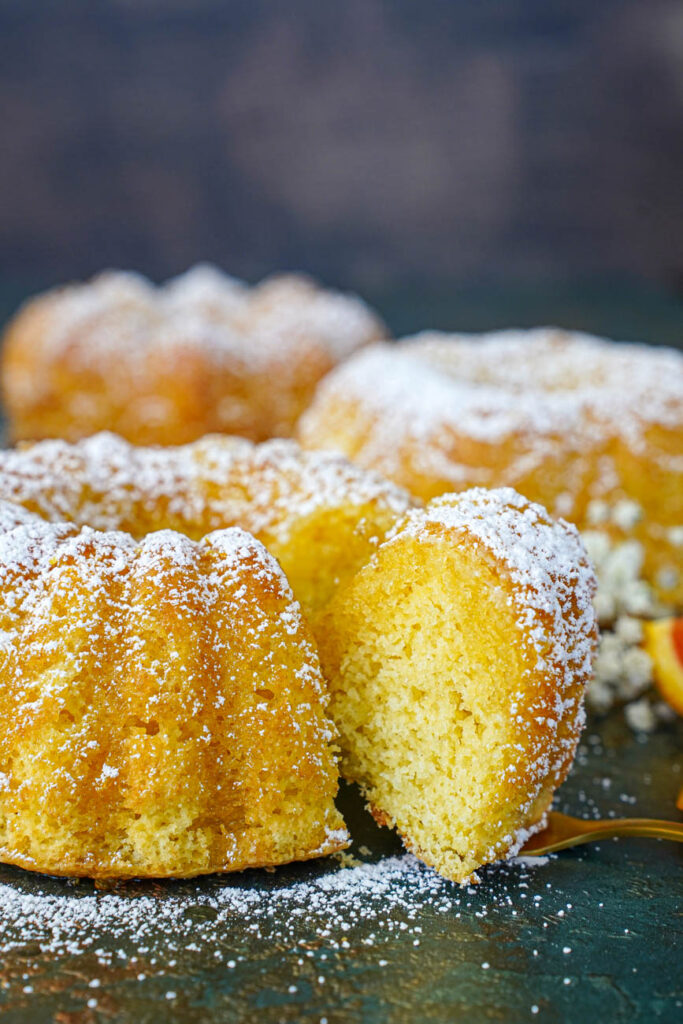
To pair with the review, I made Ruby’s recipe for Moroccan Meskouta! This is actually the very first cake in the book and it is such a fantastic start with a relatively beginner level and basic techniques.
Meskouta (مسكوتة) was developed in Morocco during the colonization by France and Spain. Butter was more difficult to find and expensive, so the cake was made instead with oil as the base. The oil is blended with orange zest, orange juice, flour, eggs, and sugar to create a delicate, yet moist and aromatic sponge perfect for winter citrus season.
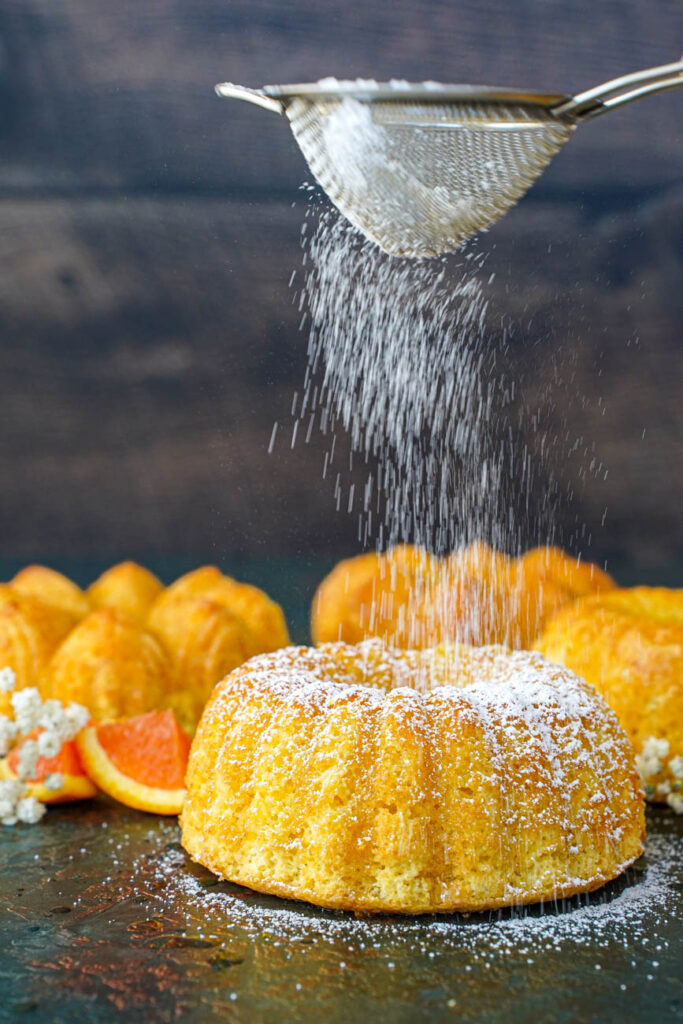
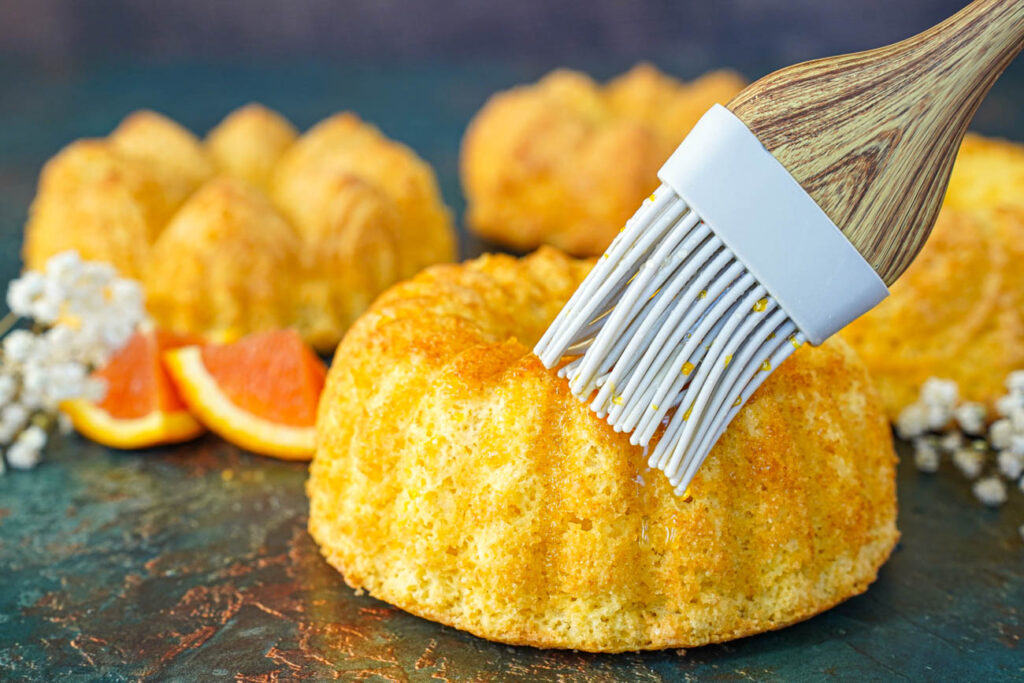
If that wasn’t citrusy enough, Ruby finishes the cake with a generous brushing of an orange syrup infused with cinnamon and mint inspired by Atay (traditional Moroccan tea) and a dusting of powdered sugar.
This Meskouta can be served either warm or cold. We personally opted for warm, but mostly because I was very impatient.
A Few Meskouta Tips
The instructions are made for a 10 inch (25 centimeter) bundt/tube pan. I ended up dividing the batter between four quartlet bundt cavities with a 10 cup capacity total.
If using different pans, the cooking time may vary. My smaller pans took about 25 minutes. Bake just until a toothpick inserted into the thickest part comes out with only moist crumbs and no liquid batter.
Make sure to grease and flour the cake tin well. It will stick otherwise, especially if you are using a more intricate design with lots of nooks and crannies.
The ingredients for Meskouta were traditionally measured using bowls and Moroccan tea glasses.
More Cakes
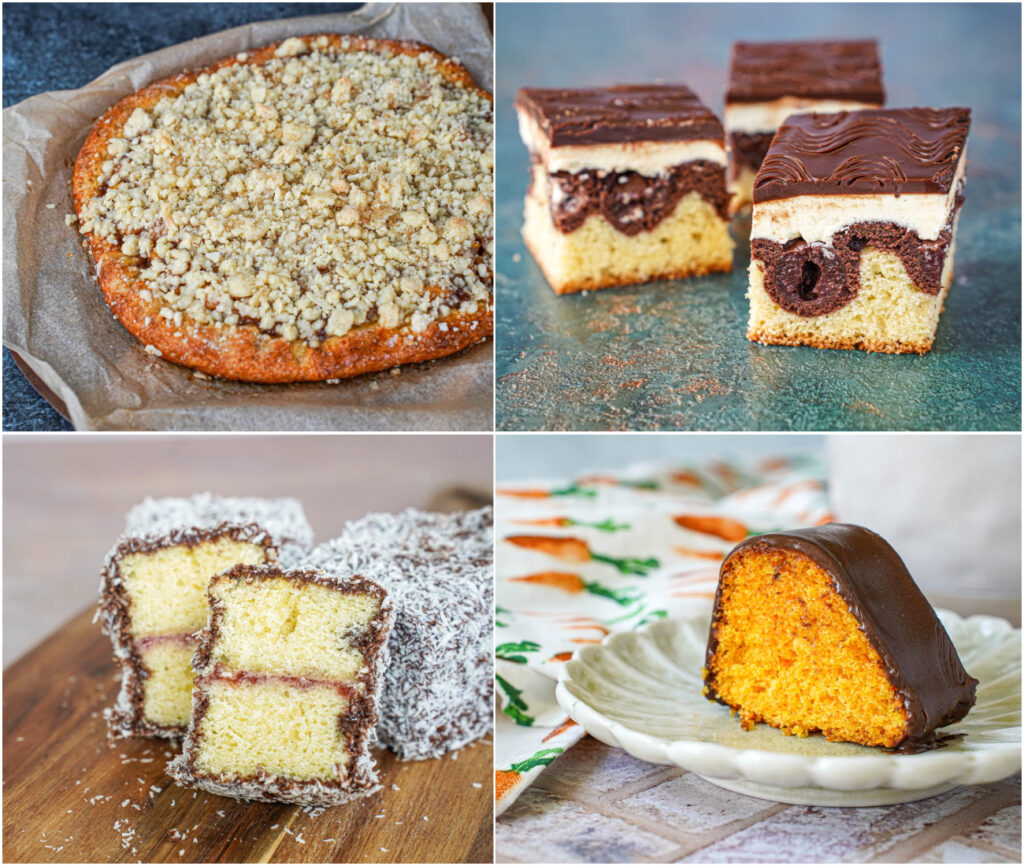
I also made the Czech Valašský Frgál, German Donauwelle, Australian Lamingtons, and Brazilian Bolo de Cenoura (Carrot Cake).
The Czech Valašský Frgál was such a fun option when my friend was visiting to celebrate her birthday. Originally from the Moravian Wallachia region of Czechia, its name translates to ‘failed’ due to being misshapen, but now it has been granted a Protected Geographical Indication. In Ruby’s version, the cake/pie is covered with a sweet apple caramel coating and crumbly streusel on top for a fantastic blend of flavors.
The German Donauwelle is named after the waves of the Danube River and is also known as Schneewittchenkuchen (Snow White Cake) due to its wavy layers of vanilla cake, chocolate cake, sour cherries, buttercream, and chocolate glaze. With its assembly as a sheet cake, it is a great option for celebrations and larger get-togethers.
The Australian Lamingtons come in a few different variations. In this version, a layer of tart jam is sandwiched between two almond vanilla sponges and coated in chocolate glaze and desiccated coconut to hold everything together. They can be made larger or smaller due to personal preference.
The Brazilian Bolo de Cenoura was my daughter’s particular favorite. Instead of grating carrots, this easy cake has carrots blended right into the batter to create a light and tender texture. After baking until set, the cake is covered in a rich condensed milk-based chocolate glaze to finish.
Around the World in 80 Cakes is an incredible pick for those interested in trying an exciting variety of cakes from nearly every continent. The cakes range from quick and easy creations perfect for a last minute craving to more intricate multi-layered works of art.
Many of the ingredients can be located in larger American grocery stores. Some items may require further searching such as sumac, cardamom pods, rose water, rose petals, pandan paste, dried lavender, black Dutch processed cocoa powder, pistachio cream, gelatine leaves, sultanas, and twaróg.
Meskouta Recipe
Excerpt from Around the World in 80 Cakes

Meskouta
Ingredients
For the Cake:
- 4 large eggs
- 300 grams golden caster sugar
- 135 milliliters extra virgin olive oil
- 180 grams plain flour sifted
- 80 grams potato starch sifted
- 2 1/2 teaspoons baking powder sifted
- 1/4 teaspoon salt
- zest of 2 extra-large oranges
- 130 milliliters freshly squeezed orange juice
- icing sugar to finish, powdered sugar
For the Soaking Syrup:
- 150 milliliters water
- zest of 1 extra-large orange
- 100 milliliters freshly squeezed orange juice
- 200 grams caster sugar
- 3 fresh mint leaves
- 1 cinnamon stick
Instructions
- Preheat the oven to 160˚C fan/180˚C/gas mark 4.
- Liberally grease and flour a 25 centimeter/10 inch fluted bundt tin.
Start with the cake:
- Add the eggs, sugar and extra virgin olive oil to a stand mixer bowl.
- Using the paddle attachment, mix on a medium-to-high speed for 8 minutes until the eggs are aerated, pale and doubled in volume.
- In a separate bowl, put the flour, potato starch, baking powder and salt and use a balloon whisk to combine.
- Add half of the flour mixture to the mixer bowl, along with the orange zest and half of the fresh orange juice.
- Combine on a low speed until only a few flour streaks are visible.
- Add the remaining flour and orange juice and mix on low until there are no flour streaks remaining. Use a runner spatula to scrape down the sides and base of the bowl to ensure all the ingredients are well mixed.
- Transfer the batter to the prepared bundt tin.
- Place the tin in the oven on the middle shelf and bake for 30-34 minutes until the top of the song is golden brown and springs back with lightly pressed. Use a skewer to test for doneness and, if it returns little crumbs but no batter, remove from the oven.
Whilst the sponge is baking, make the soaking syrup:
- Add all the ingredients to a pan, place over a medium heat and stir to combine, then bring to the boil.
- Reduce the heat to a simmer and cook for a further 5 minutes until lightly thickened, then remove from the heat and leave to cool.
- Once the sponge has baked, leave to sit in the tin for 5 minutes.
- Carefully turn out onto a large sheet of clingfilm and tightly wrap, then set aside at room temperature for 1 hour.
If you are serving the cake warm:
- Unwrap the sponge and arrange on a serving plate.
- Use a pastry brush to liberally apply the soaking syrup to the tops and side, then loosely cover again with the clingfilm and leave to soak for 30 minutes, before dusting with icing sugar to finish and serve.
If you are serving the cake cold:
- half-unwrap the sponge after 1 hour, apply the soaking syrup and then wrap again.
- Allow the sponge to cool to room temperature before placing it in the fridge.
- Remove the cake from the fridge 2 hours before serving and allow it to come up to room temperature.
- Dust the top with icing sugar and serve.
Leave a Reply