
Tanoreen: Palestinian Home Cooking in Diaspora features a beautiful collection of over 100 recipes inspired by Rawia Bishara’s childhood in Nazareth, her family, and life in Spain and Brooklyn. A few highlights include Red Pepper and Onion Flatbread (Khubz bil Filfil), Seafood Soup (Shorabit Akl Bahri), Spicy Vegan Swiss Chard Rolls (Silik Malfoof), Upside Down Lamb and Vegetables (Makloobeh), and Flourless Tangerine Apricot Cake. I will also be sharing her recipe for Scrambled Eggs with Halloumi following the review.
Disclosure: I received a digital copy of this book from Interlink Publishing in exchange for my honest review. All comments and opinions are my own.
Tanoreen is a new and expanded edition of Rawia’s Olives, Lemons & Za’atar published in 2014.
Rawia Bishara
Rawia Bishara is the chef and owner of the restaurant, Tanoreen, in Brooklyn, New York. Open since 1998, the restaurant and her work have received praise from numerous publications including The New York Times, The New Yorker, Travel & Leisure, and the Michelin Guide.
She was also nominated for the James Beard Foundation award for Best Chef in 2017. Rawia is the author of Levant: New Middle Eastern Cooking from Tanoreen, as well.
Tanoreen
Rawia begins Tanoreen with a short introduction of her family, her roots in southern Galilee, the opening of Tanoreen, and the development of this incredible book. She also covers a few pantry staples with descriptions and tips to help get started.
Chapters are divided according to the following: Breakfast; Mezze; Salads; Soups & Stews; Main Courses (Vegetarian, Fish & Shellfish, Chicken, Lamb & Beef); Sides; Pickles, Sauces & Seasonings; and Desserts.
The photography is provided by Peter Cassidy. Many of the recipes are paired with a quarter to full-page photo of the finished dish. The pages are also filled with a captivating assortment of landscape, market, and food scenes.
Measurements are listed in US Customary. Titles are written in English and Romanized Arabic. Each recipe has a headnote with background information, personal memories, ingredient notes, yield, and variations.
Scrambled Eggs with Halloumi
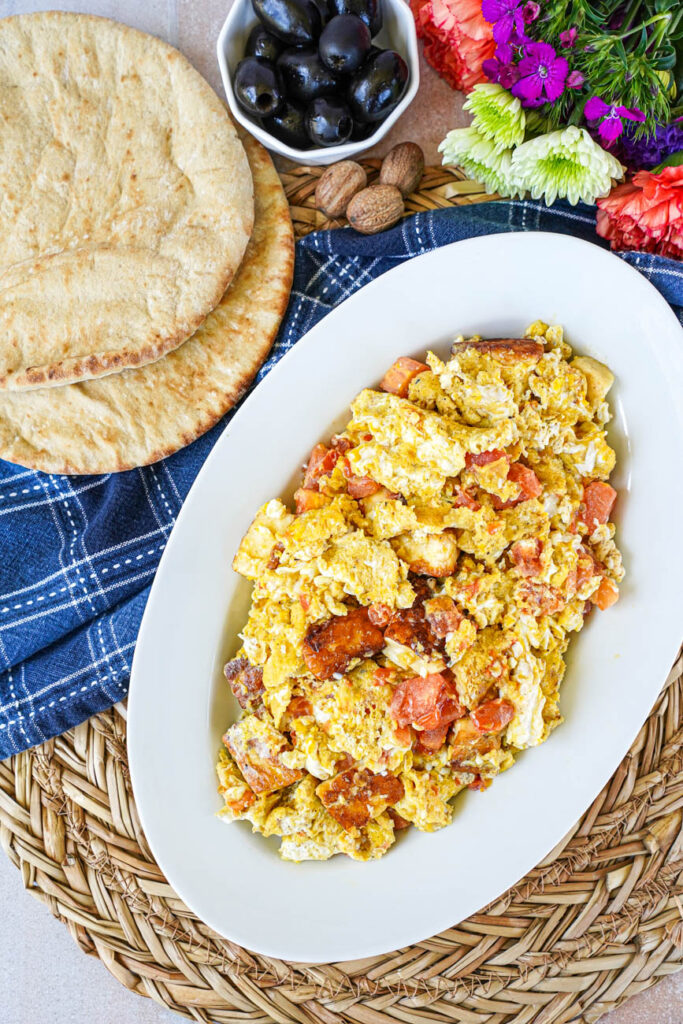
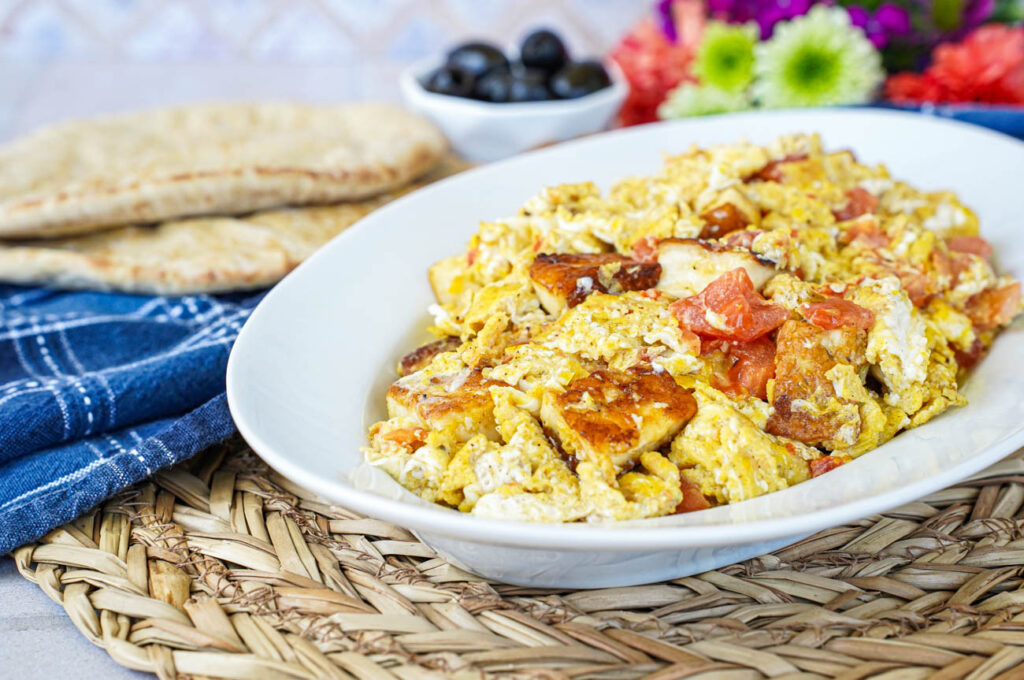
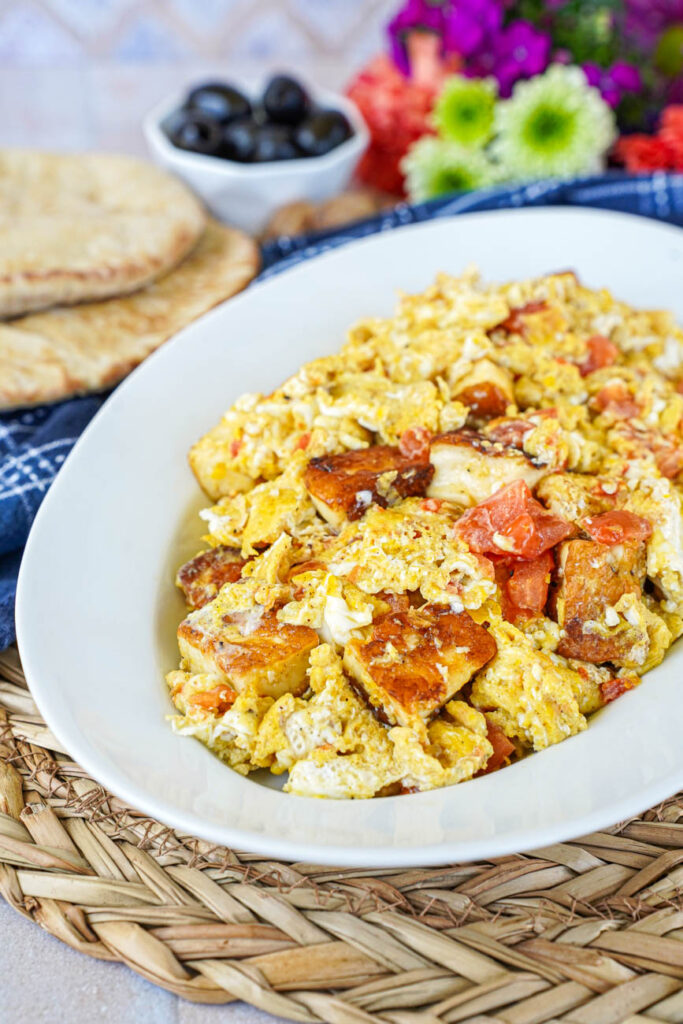
To pair with the review, we made Rawia’s Scrambled Eggs with Halloumi! An easy, yet flavorful addition to breakfast or brunch, eggs are cracked into a pan and lightly scrambled with golden halloumi pieces and tomatoes for a fantastic blend of textures.
Overall, everything comes together in about 20 minutes with only one skillet. Simply fry the halloumi on each side in the olive oil until golden, then add in the tomatoes and spices.
Once softened, break in the eggs and scramble everything together to your desired doneness (my kids prefer dryer while I like them with a bit more moisture).
Serve the Scrambled Eggs with Halloumi warm from the pan alongside Arabic Bread and olives (black or green).
Rawia mentions once you have this recipe down, it is easily customizable with an adjustment of the seasonings or adding in fresh herbs such as cilantro or basil.
Halloumi
Halloumi is a white, semi-hard cheese made from a mixture of goat and sheep’s milk (though occasionally cow’s milk is also used). Its high melting point makes the cheese popular for grilling or frying.
I have seen Halloumi in the refrigerated specialty cheese section of some larger grocery stores and markets with Mediterranean ingredients.
More Dishes
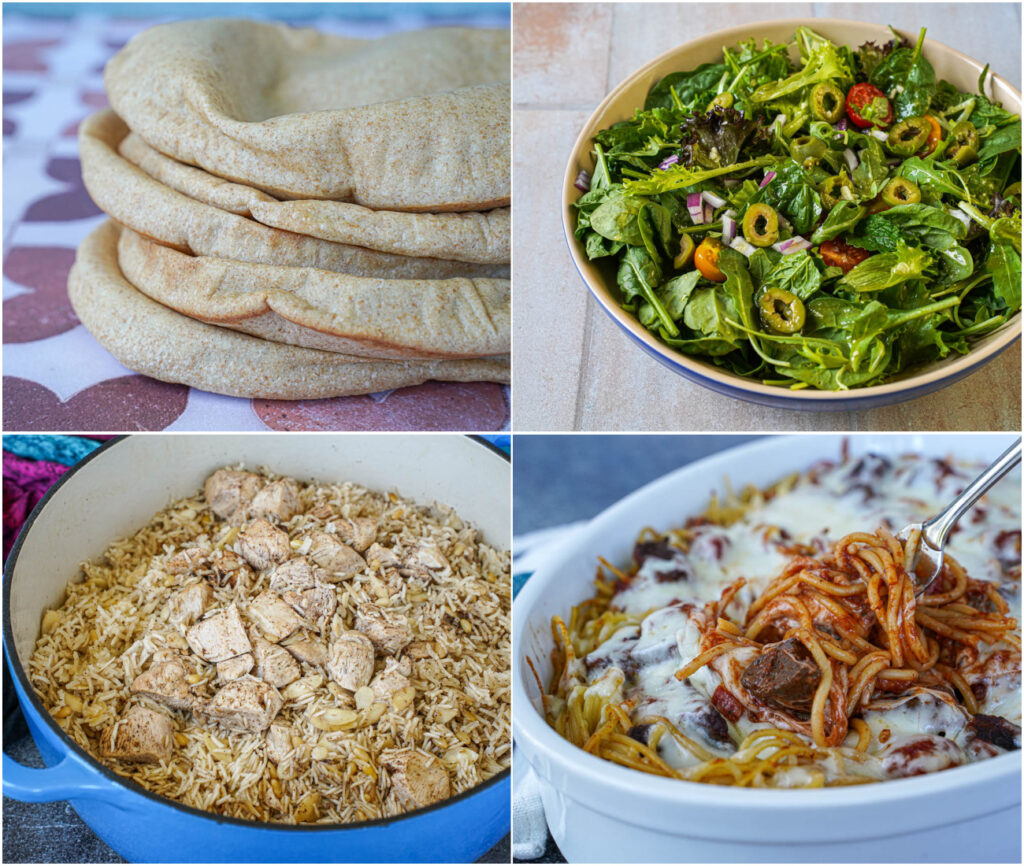
I also made Arabic Bread (Kmaj), Tanoreen Green Salad (Salata Khadra), Rice with Lamb and Pine Nuts (Mansaaf), and Beef-Baked Spaghetti (Sinniyat Macarona).
The homemade Arabic Bread (Kmaj) is so comforting on its own fresh from the oven or as the base/side for many recipes in the book from Za’atar Bread (Manakeesh) to toasted alongside Tanoreen’s Leek and Potato Soup. There are a couple of different variations in the ingredient list- I went with half all-purpose/half whole wheat flour and plain yogurt to form the soft, puffed bread.
Rawia created the Tanoreen Green Salad as a specialty at the restaurant for a tossed green salad option. Inspired by flavors around the world, an assortment of greens and vegetables are coated with a unique dressing of lemon, sesame, pomegranate molasses, olive oil, garlic, and ginger.
The recipe for Rice with Lamb and Pine Nuts (Mansaaf) pairs seasoned lamb with light and fluffy rice and crisp pine nuts and slivered almonds for an incredible contrast in textures. I went with the express mansaaf variation swapping the lamb for skinless chicken breast and chicken broth as one of the first meals following the move to our new home.
The Beef-Baked Spaghetti (Sinniyat Macarona) was my son’s favorite. Thick spaghetti noodles are tossed with a spiced tomato sauce and seasoned beef, then baked until set with a generous scattering of cheese (akawi, mozzarella, or halloumi) until set.
Tanoreen is a wonderful pick for those interested in homestyle Palestinian classics alongside inspiring, cross-cultural flavors. Recipes range from quick and easy small plates to larger meals and desserts perfect for family dinners or celebrations. There is also a nice blend of meat, seafood, and vegetarian (often vegan) options.
Having a market with Mediterranean or Middle Eastern ingredients nearby will be helpful with locating items such as sumac, za’atar, bulgur, pomegranate molasses, grape leaves, chile paste, quail, ghee, harissa, golden raisins, orange blossom water, mastic, katayfeh, mahlab, and rose water.
Scrambled Eggs with Halloumi Recipe
Excerpt from Tanoreen
Scrambled Eggs with Halloumi
Ingredients
- 1/2 cup extra-virgin olive oil
- 8-10 ounces halloumi cut into 1-inch cubes
- 2 plum tomatoes peeled and diced
- 1 teaspoon sea salt
- 1/2 teaspoon freshly ground black pepper
- 1/4 teaspoon ground nutmeg
- 10 to 12 large eggs
- Arabic bread and black or green olives for serving
Instructions
- Heat the oil in a large skillet over high heat until hot. (don't choose a nonstick skillet for this job).
- Add the halloumi and brown on all sides until golden, about 2 minutes total.
- Stir in the tomatoes, salt, pepper and nutmeg and cook until the tomatoes have just softened, but are not falling apart.
- Crack the eggs directly into the skillet. Cook for 1 minute after cracking the last egg, then, using a fork, scramble the eggs, 2 to 3 minutes or longer, depending on the texture you desire.
- Transfer the eggs to a large platter.
- Serve warm with the Arabic bread and olives.
Annie
Thanks for the excellent review.
The original cookbook had a small font size on a light grey background, I know you reviewed the re-release in digital form but what was the readability like for this edition?
The original cookbook had 149 recipes. It mentions that this 2026 version has new content. Do you know how many new recipes were added?
I am sad that the publisher did not add metric measurements to this edition. Seems a big oversight for a re-release. However, your review does entice me to check out the cookbook.
I love your blog so much. Thanks for your passion for multicultural cooking.
Tara
Hi Annie! Thank you for the kind words. They mean so much to me. I think I counted 150 in Tanoreen. I have not seen the original, so I do not know how the exact recipes compare. The dimensions between the books are roughly the same with an increase in the pages- 224 for the original and 256 in new.
For the digital copy, the font did seem on the smaller side. Background is white for the recipes with additional stories on a yellowish brown background.
Annie
Thanks so much h for the additional info. I appreciate it. I will request an interlibrary loan to see the physical book and keep an eye on the Kindle version in the meantime.
Happy kitchen times this weekend,
Annie