
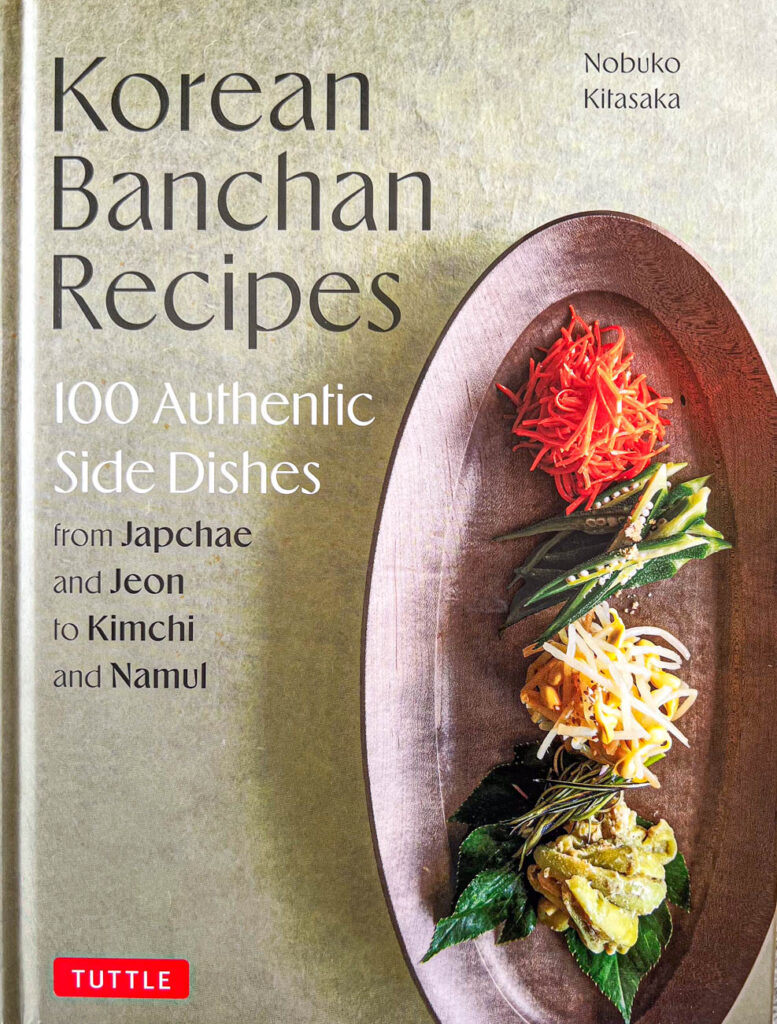
Korean Banchan Recipes: 100 Authentic Side Dishes from Japchae and Jeon to Kimchi and Namul, written by Nobuko Kitasaka, features a vibrant assortment of Korean sides and small plates for the home cook. A few highlights include Whole Garlic Jangajji, Spicy Mixed Octopus and Spinach, Carrot Namul, Water Kimchi with Citrus, and Shredded Sweet Potato Jeon. I will also be sharing her recipe for Pork and Kimchi Stir-Fry following the review.
Disclosure: I received this book from Tuttle Publishing in exchange for my honest review. All opinions and statements are my own.
Korean Banchan Recipes was originally published in Japan under the name, Mippanchan no Gohan Zukuri ga Raku ni Naru Kankoku no Jobisai 100” in 2023 and was translated into English by Makiko Itoh.
Nobuko Kitasaka
Nobuko Kitasaka has lived in Seoul, South Korea for over a decade. During that time, she has immersed herself in traditional Korean home cooking and is now the author of three Korean cookbooks.
She also hosts cooking classes and seminars and teaches the art of creating beautiful table settings.
Korean Banchan Recipes
Nobuko begins Korean Banchan Recipes with a short overview of Banchan with serving and storage ideas. She has also put together a guide for pantry staples and seasonings with descriptions and uses.
Chapters are divided based on type of Banchan: Jangajji Pickles, Quick and Easy Mixed Banchan, Namul Vegetable Side Dishes, Kimchis, Stir-Fries, Stewed and Simmered Dishes, A Feast with a Cut of Meat, and Jeon Pancakes. The contents page has a list of included recipes with page number for easy reference.
Every recipe is paired with a thumbnail to full page photo of the finished dish. There are also photos to highlight notable ingredients and specific techniques.
Measurements are listed in US Customary and often Metric. Titles are written in English with some words in romanized Korean or Japanese. Each recipe or section has a headnote with background information, ingredients, yield, serving ideas, shelf life, and helpful notes.
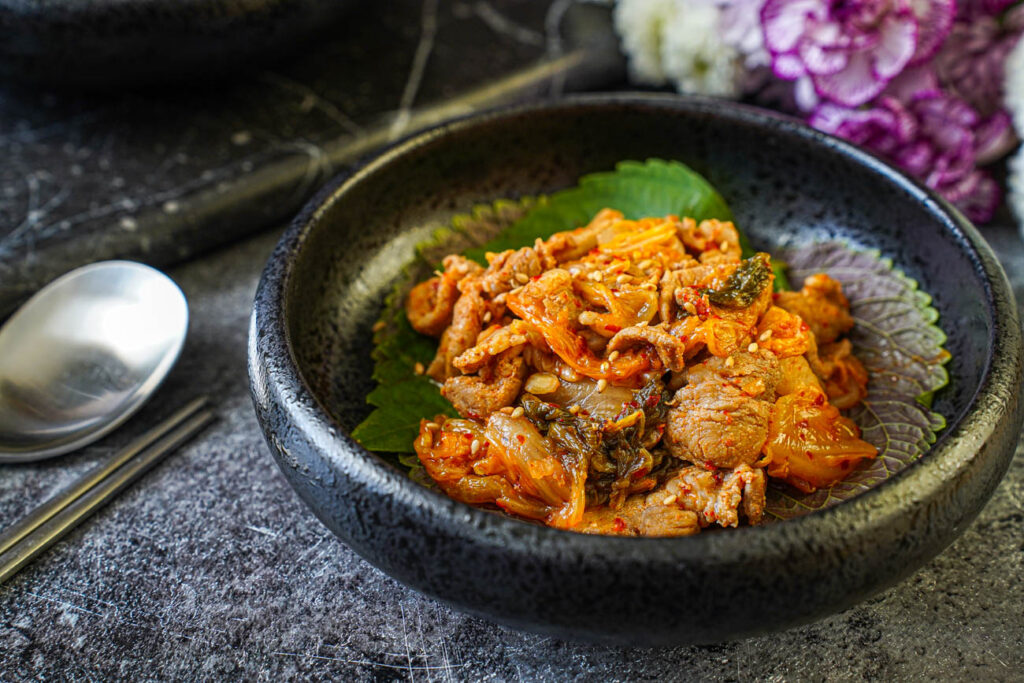
Pork and Kimchi Stir-Fry
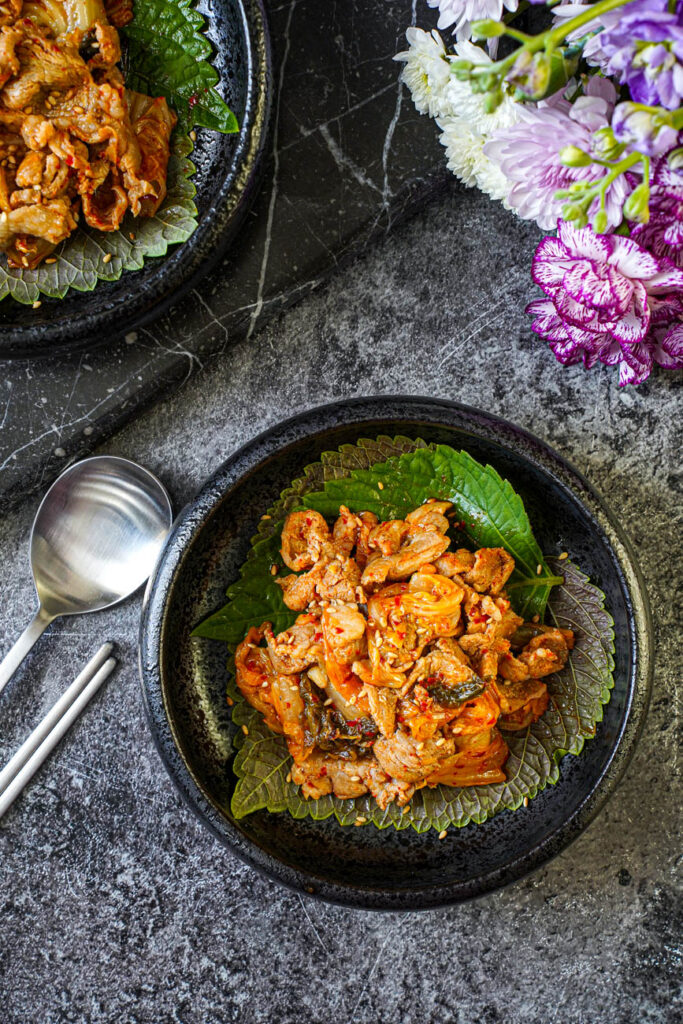
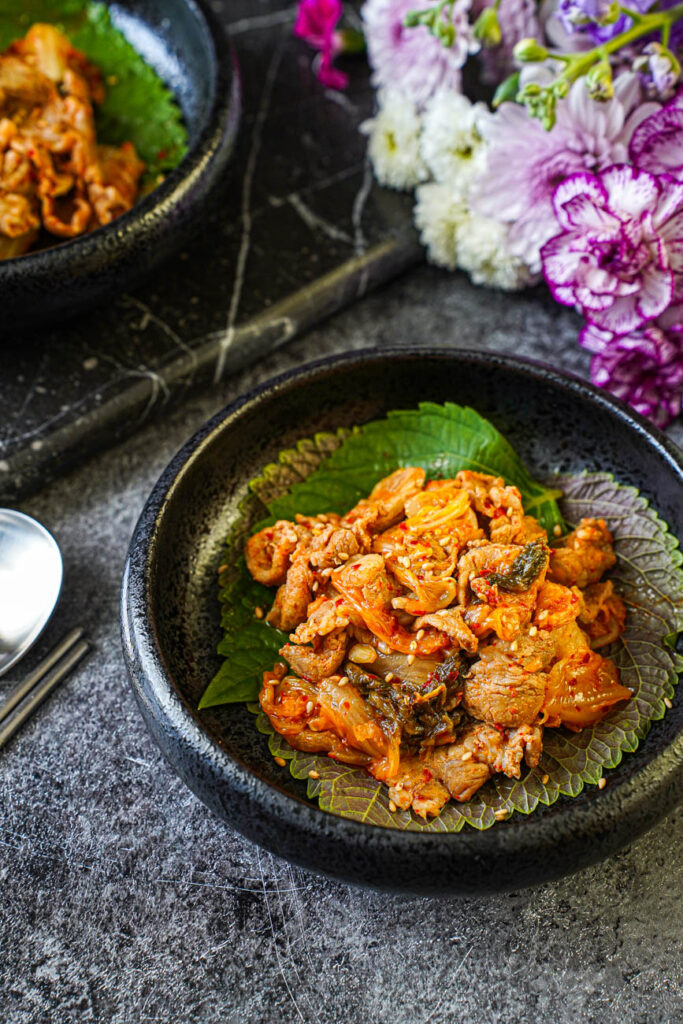
To pair with the review, I made Nobuko’s recipe for Pork and Kimchi Stir-Fry! This incredibly easy dish comes together in minutes with thinly sliced pork, chopped napa cabbage kimchi, and seasonings.
After briefly marinating the pork, stir-fry the meat until it changes color. Add in the napa cabbage kimchi and cook for a few more minutes to bring together the flavors.
Finish the Pork and Kimchi Stir-Fry with a drizzle of sesame oil and a sprinkling of sesame seeds.
Have any leftover sauce left in the skillet? You can use it to season fried rice. Nobuko states to press down the rice with a spatula to form a crispy layer.
Store leftovers in an airtight container in the refrigerator for up to three to four days.
Notable Ingredients
Nobuko recommends using a Napa Cabbage Kimchi that has turned sour through continuing fermentation. I used store-bought kimchi, but you can also go with a favorite homemade version. Roughly chop before stir-frying with the pork.
Mulyeot (물엿) is a Korean syrup and adds a light sweetness to round out the flavors of the pork and kimchi. It can either be a clear corn syrup or a brown rice syrup. If unavailable, swap for equal parts honey.
For those in Northern Virginia, I have been able to locate both of these ingredients at Lotte Plaza Market in Chantilly or H-Mart in Centreville.
More Banchan
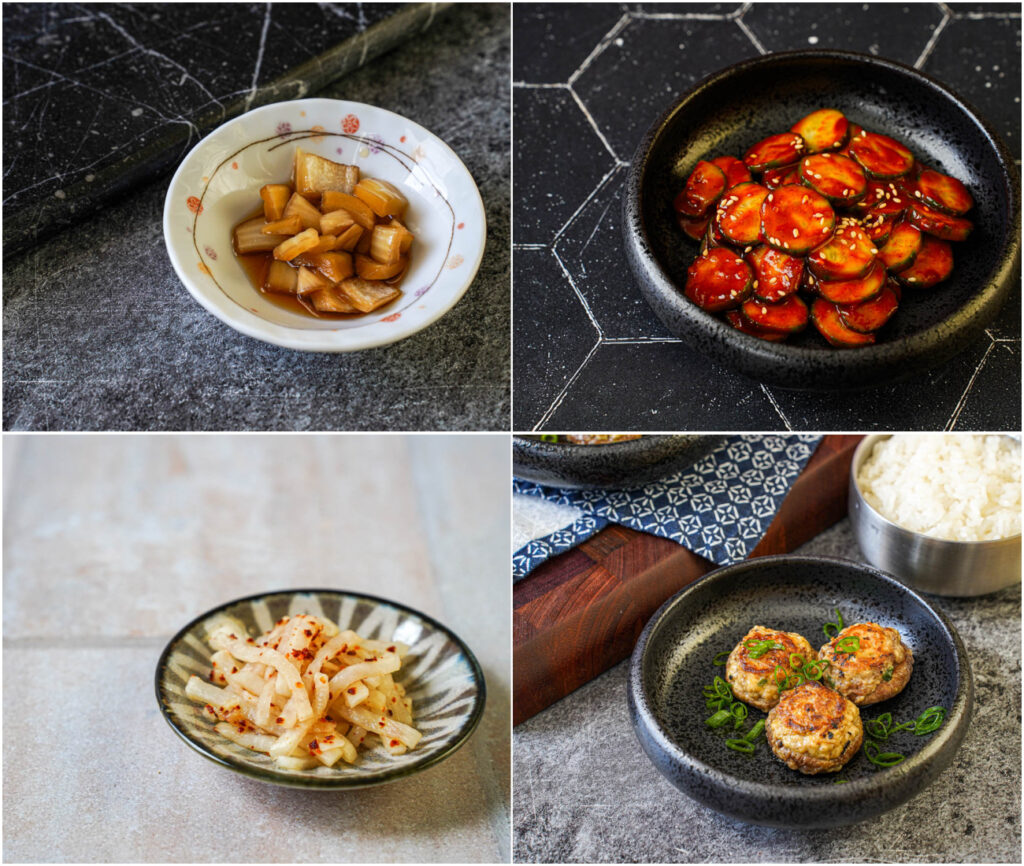
I also made Onion Jangajji, Cucumber with Gochujang, Spicy Daikon Radish, and Stuffed Shiitake Jeon.
The Onion Jangajji comes together by marinating diced onions in a soy sauce brine for a blend of sweet and sour flavors. Nobuko recommends adding them to fried rice or jeon.
The Cucumber with Gochujang is quite the vibrant side with sliced baby cucumbers coated in a lightly sweetened gochujang garlic sauce. They were wonderful with somyeon (thin noodles).
The Spicy Daikon Radish is another vibrant side with radish slices coated in ground chili pepper, fish sauce, sugar, rice vinegar, and garlic. We paired the radish with grilled pork.
The Stuffed Shiitake Jeon recipe was a personal favorite. Shiitake mushrooms are filled with a seasoned ground beef tofu mixture, then coated and pan-fried until golden.
Korean Banchan Recipes is a great pick for those interested in a variety of Korean small plates with a particular focus on vegetables and fermented dishes. There is a wide range from light and refreshing vegetables to more bold seasonings and stir-fried meats. Some come together in as little as 15 minutes, while others require a day or longer to ferment.
Having a market with Korean ingredients nearby will be helpful in locating items such as perilla leaves, king oyster mushrooms, lotus root, semi-dried horse mackerel, gochujang, mulyeot, roasted soybean powder, garlic chives, perilla oil, dried jujubes, and more.
Pork and Kimchi Stir-Fry Recipe
Excerpt from Korean Banchan Recipes
Pork and Kimchi Stir-Fry
Ingredients
- 7 ounces (200 grams) pork thinly cut and roughly chopped
A Ingredients:
- 1 tablespoon sake
- 1/2 tablespoon soy sauce
- 1 teaspoon grated garlic
- 1 teaspoon mulyeot or honey
- 1 teaspoon sesame oil
To serve:
- 1 1/3 cups napa cabbage kimchi
- 1 teaspoon rapeseed or canola oil
- 1 teaspoon roasted white sesame seeds
- 1 teaspoon sesame oil
Instructions
- Put the pork and the A ingredients in a bowl and mix.
- Roughly chop up the napa cabbage kimchi.
- Heat the rapeseed or canola oil in a skillet over medium heat, and stir-fry the pork.
- When the meat changes color, add the kimchi, and stir-fry slowly over medium-low heat for 7 to 8 minutes.
- Sprinkle with the sesame seeds and drizzle on the sesame oil.
Mimi Rippee
This sounds wonderful! Those are some beautiful shiso leaves!