


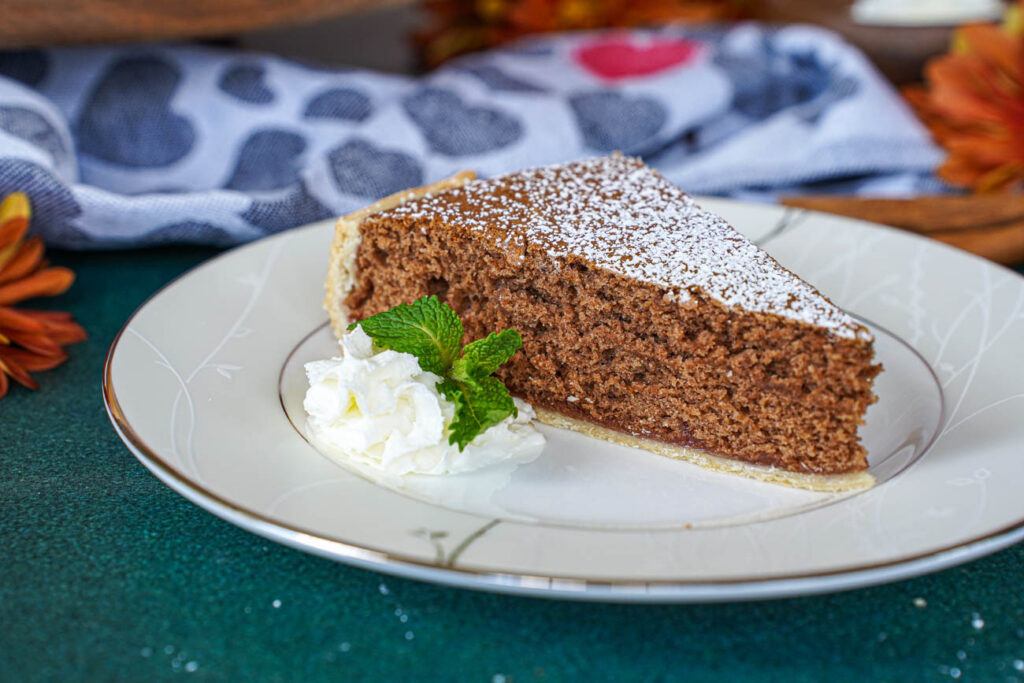
A recipe for Zimtfladen (Swiss Cinnamon Tart) inspired by my time in St. Gallen, Switzerland! This sweet tart has a shortcrust base with a thin layer of jam and spiced cinnamon cake filling.
St. Gallen
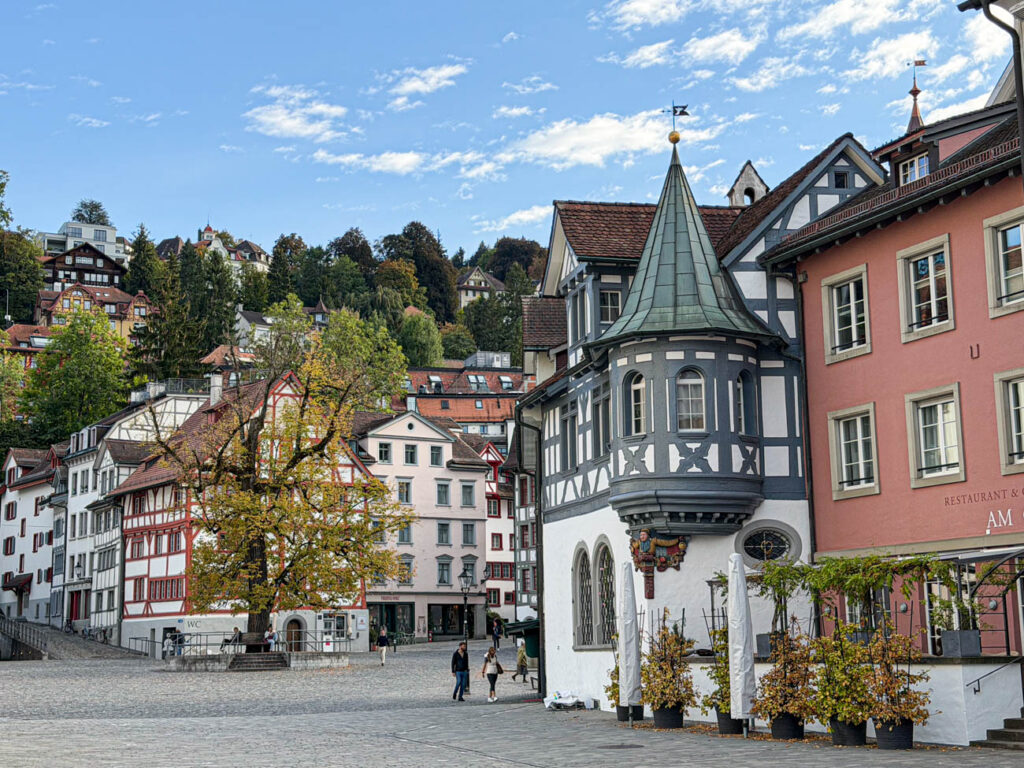
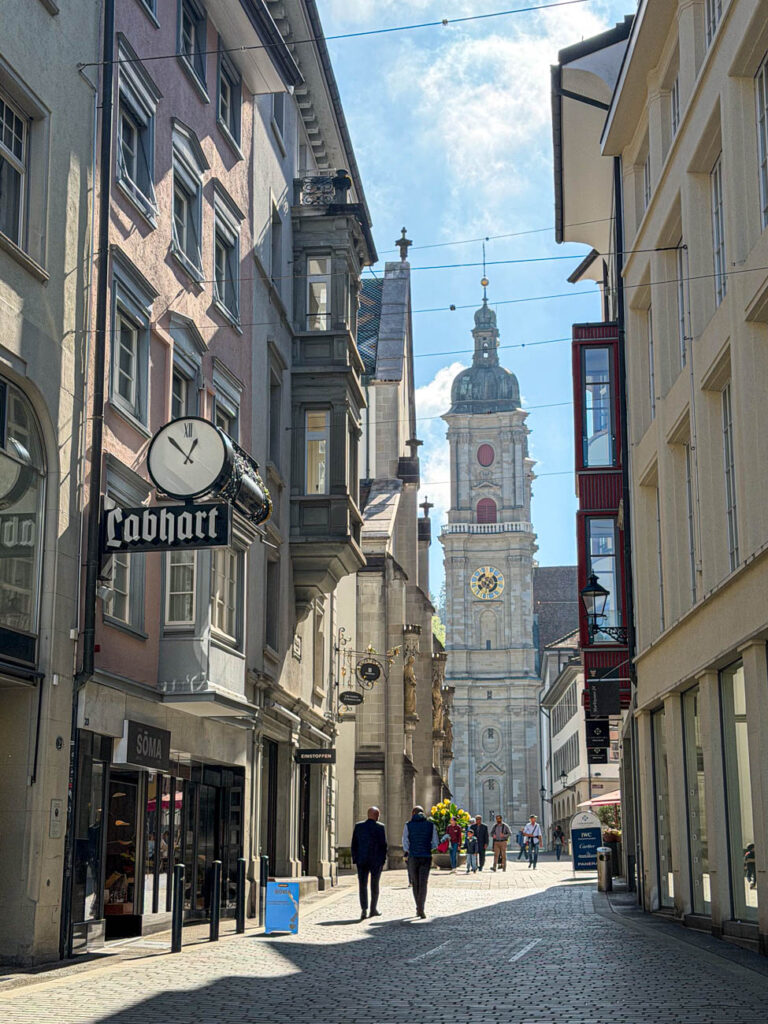
St. Gallen is located in northeastern Switzerland with a history dating back to the year 612 A.D.
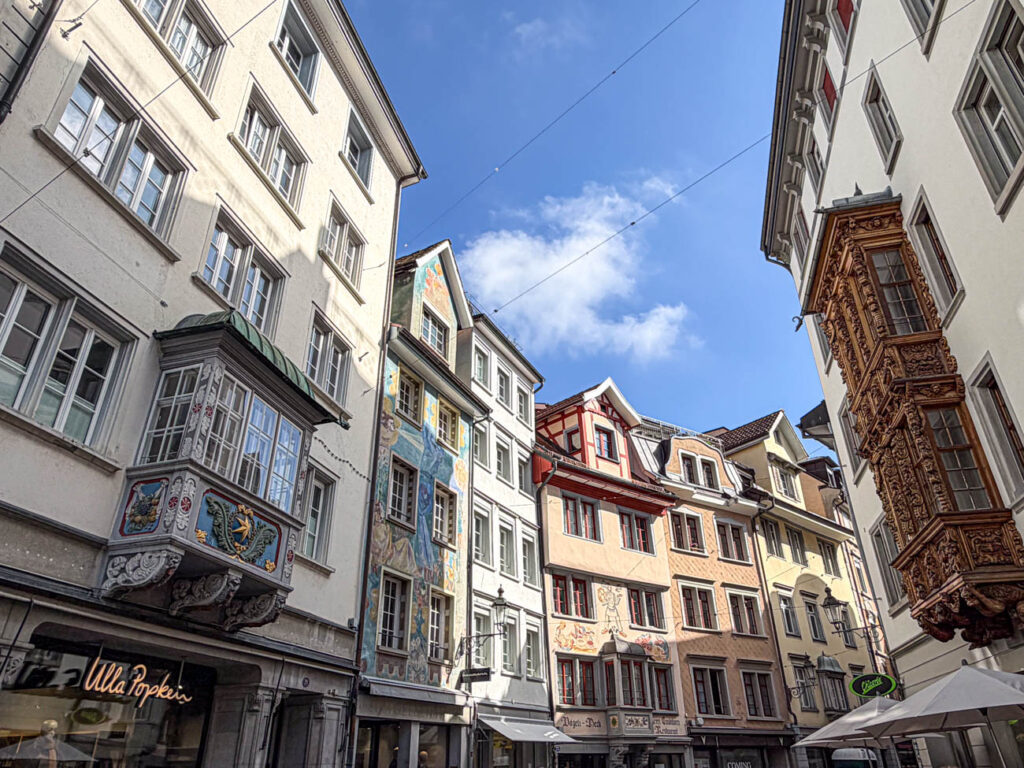
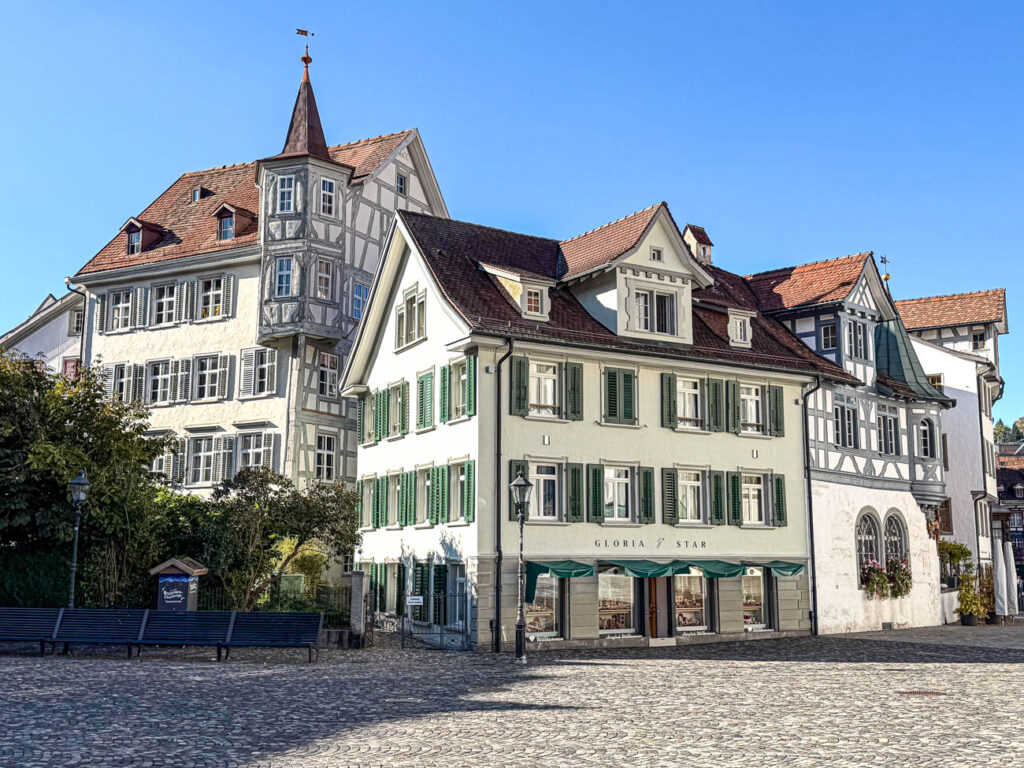
This beautiful city is the capital of the Canton of St. Gallen and home to the University of St. Gallen, textiles, picturesque cobblestone streets and timber-framed architecture, the Abbey of St. Gall with its stunning Stiftsbibliothek, notable museums, and Olma Messen.
There is also a distinct regional cuisine, particularly with a focus on the four Bs- Bratwurst (St. Galler Bratwurst), Beer (Brauerei Schützengarten is Switzerland’s oldest brewery), Bürli (crusty bread rolls), and Biber (spiced gingerbread with a sweet almond paste filling).
The official language in this part of Switzerland is German with Swiss German (St. Galler-Dütsch) as the predominant spoken language.
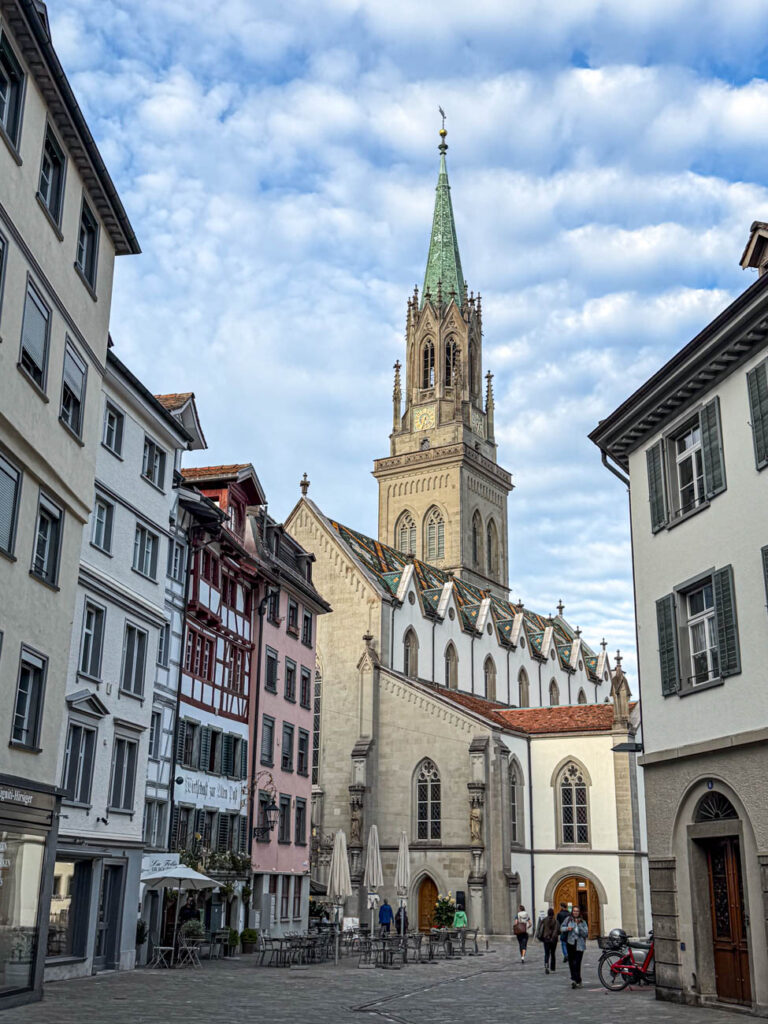
Today, I am covering a few favorite cafés, museums, and my hotel stay along with a recipe for Zimtfladen (Swiss Cinnamon Tart).
In the next post, I will be sharing my time at Olma Messen, notable restaurants, and the Stiftsbibliothek (Abbey Library of St. Gall).
Getting to St. Gallen
I flew directly from Dulles (IAD) to Zürich (ZRH), then took a one hour train from Zürich Flughafen to Bahnhof St. Gallen. Smaller nearby airports are Flughafen St. Gallen-Altenrhein (ACH, limited commercial flights) and Flughafen Friedrichshafen (FDH).
Via the train, St. Gallen is about 30 minutes from Bregenz, 35 minutes from Konstanz, 2 hours from Luzern, 3-4 hours from München, 4 1/2 hours from Geneva, and 5 1/2 hours from Frankfurt am Main.
St. Gallen is also a perfect base for day trips to Liechtenstein, Appenzellerland, Bodensee, and neighboring towns.
I highly recommend downloading the SBB Mobile app (available in English). I used this throughout my time in Switzerland to plan routes and find the platforms/trains ahead of time. They will also note closures and reroutes if necessary.
During my 2024 trip to Switzerland with the whole family, I used the Swiss Travel Pass (the kids were also included with the Swiss Family Card).
Since I was hopping between countries this time, regional cards were the better option. My stay at the hotel in St. Gallen did come with a city guest pass: the Mobility-Ticket St.Gallen-Bodensee. This complementary guest card covers public transportation on trains and buses within OSTWIND network zones 210, 211, and 231.
I actually ended up purchasing an OSKAR Card to cover attractions, my day trip to Liechtenstein, and part of my trip (to the Swiss border) to reach my next stop in Lindau, Germany.
This card is available through participating partner accommodations for between 2-7 days and includes travel on the entire OSTWIND network (St. Gallen, Toggenburg, Appenzell region, Thurgau, Schaffhausen, and Liechtenstein) and one time entry to over 60 attractions and experiences.
Confiserie Roggwiller
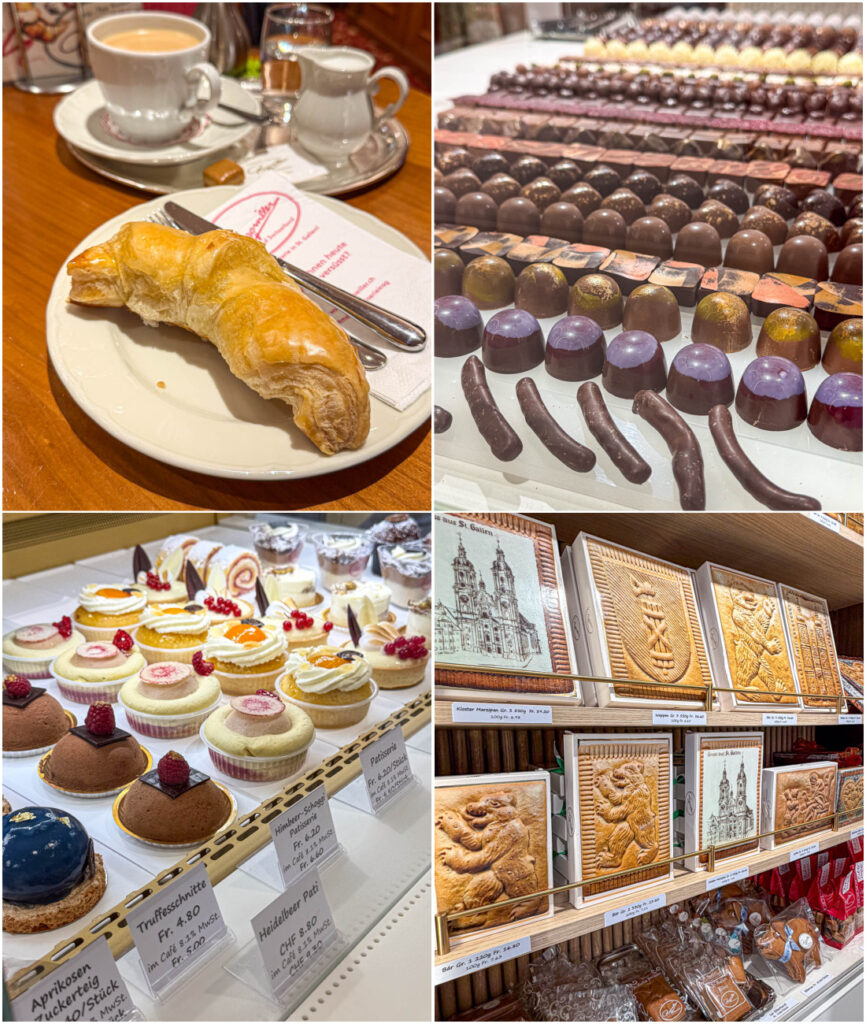
My very first stop after arriving in St. Gallen was Confiserie Roggwiller for a much needed coffee.
This gorgeous shop at Multergasse 17 has been in business since 1941 with a vibrant assortment of pastries, St. Galler Biber, chocolates, cakes, and tortes.
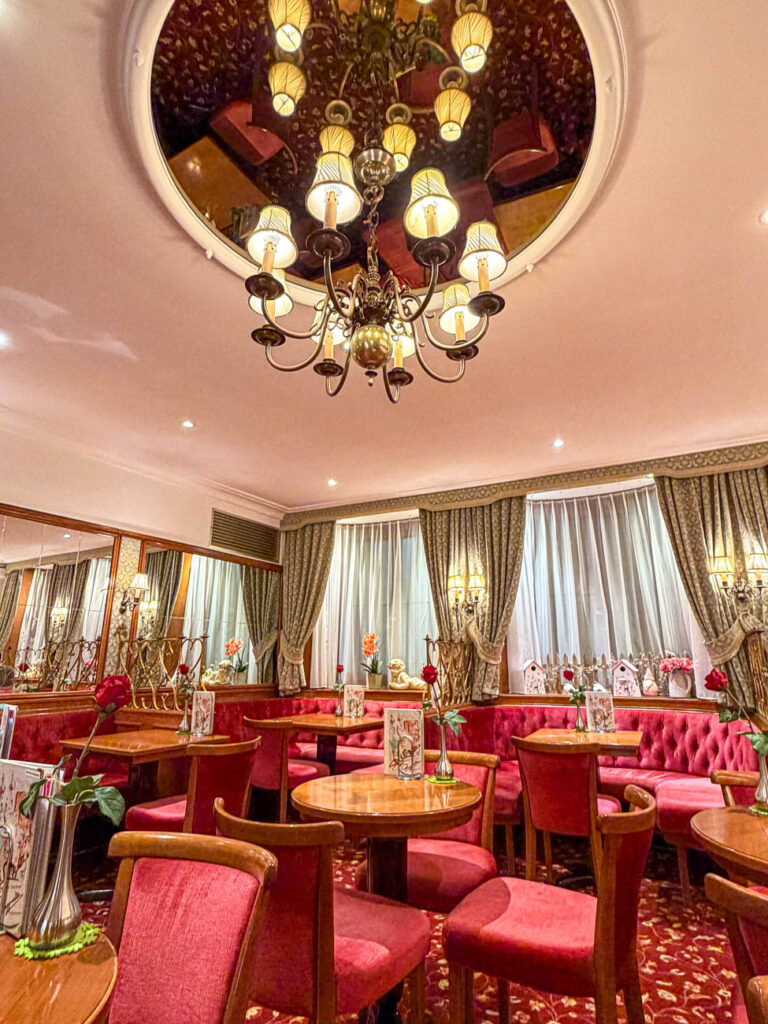
You can take the pastries to go or enjoy them in the elegant Vienna-style tea room with coffee or other drinks. I decided on the Mandelgipfel (crescent roll filled with a sweet almond paste) and a Milchkaffee (milk coffee).
This location is closed on Sundays and holidays, but you can still visit their branch by the train station if you need a last minute treat or souvenir.
Roter Platz
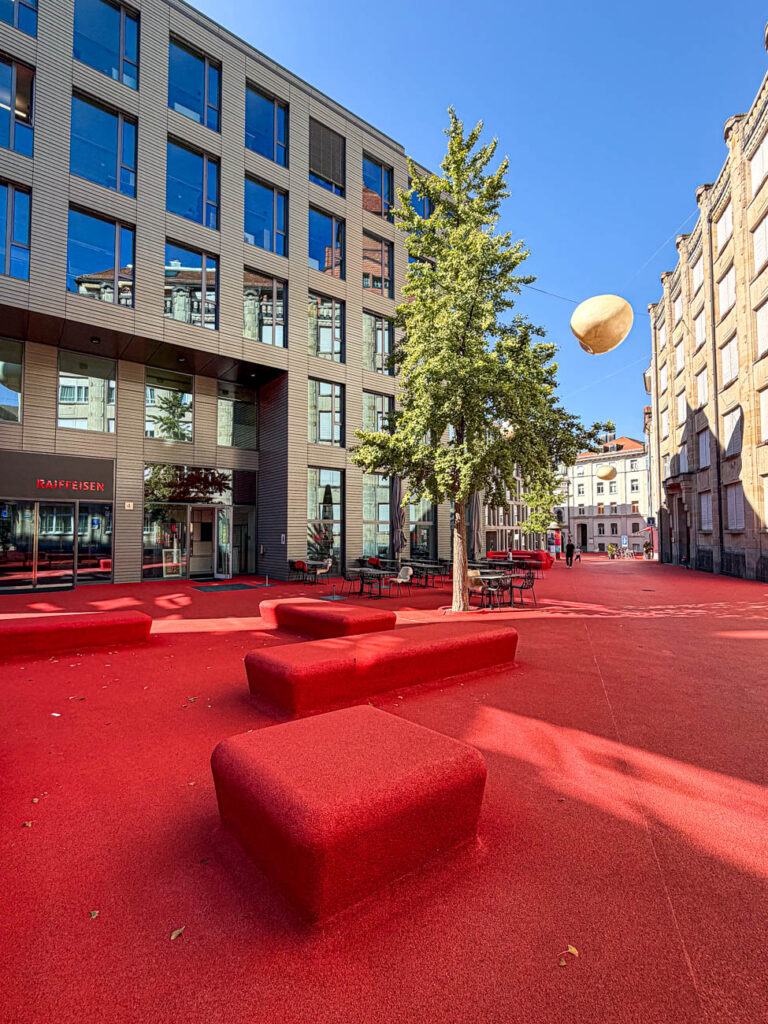
Also known as the Stadtlounge and Switzerland’s largest outdoor living room, Roter Platz in the Bleicheli district has been covered in a very red rubberized carpet since 2005.
Designed by multimedia artist Pipilotti Rist and architect Carlos Martinez, this area is home to not only a red floor, but also benches, tables, chairs, loungers, sculptures, and color-changing floating lights in direct contrast to the surrounding metal and wooden buildings.
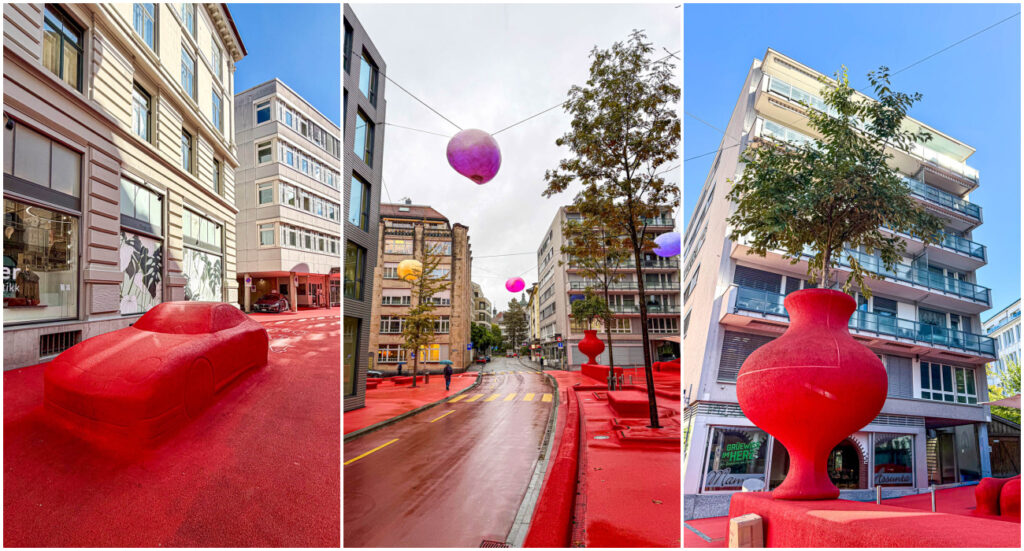
It is open to the public 24/7 as an urban space for play, relaxing, casual meetings, and meals.
Kulturmuseum St. Gallen
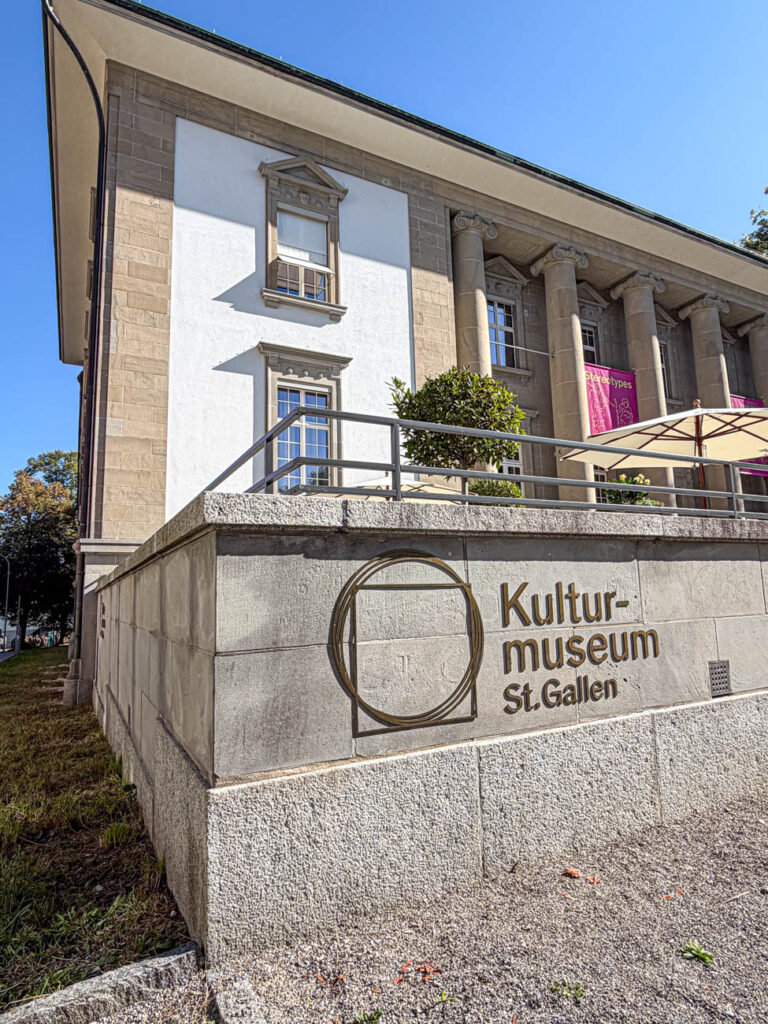
Kulturmuseum St. Gallen (St. Gallen Cultural Museum) is situated on the northern end of the Stadtpark at Museumstrasse 50.
Known as the Historisches und Völkerkundemuseum St. Gallen until the end of 2022, this museum has been open since 1921 with a focus on regional history, archaeology, and ethnology.
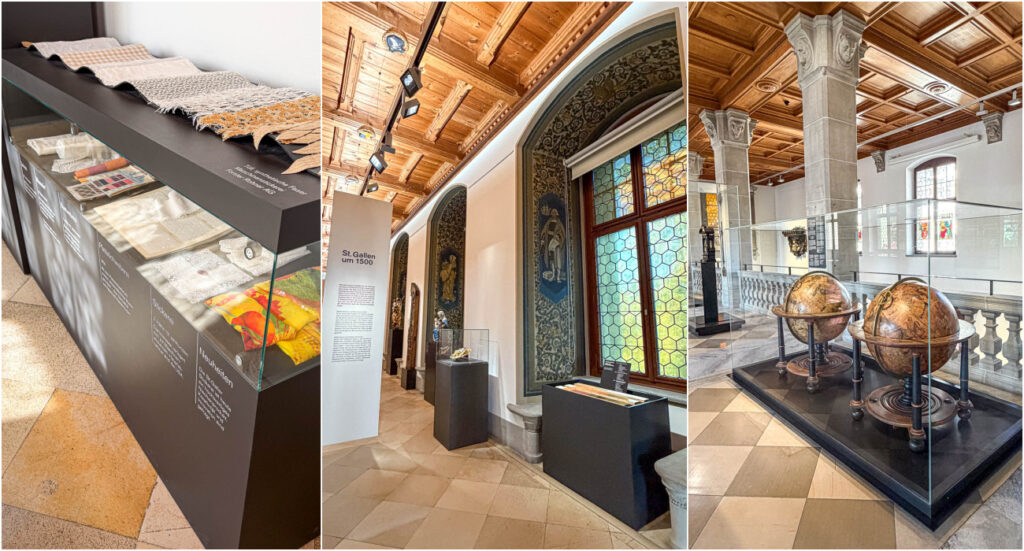
The museum is now home to around 70,000 objects with permanent and special exhibits ranging from prehistory to current day. I appreciated the focus on medicine, textiles, local clothing, and porcelain.
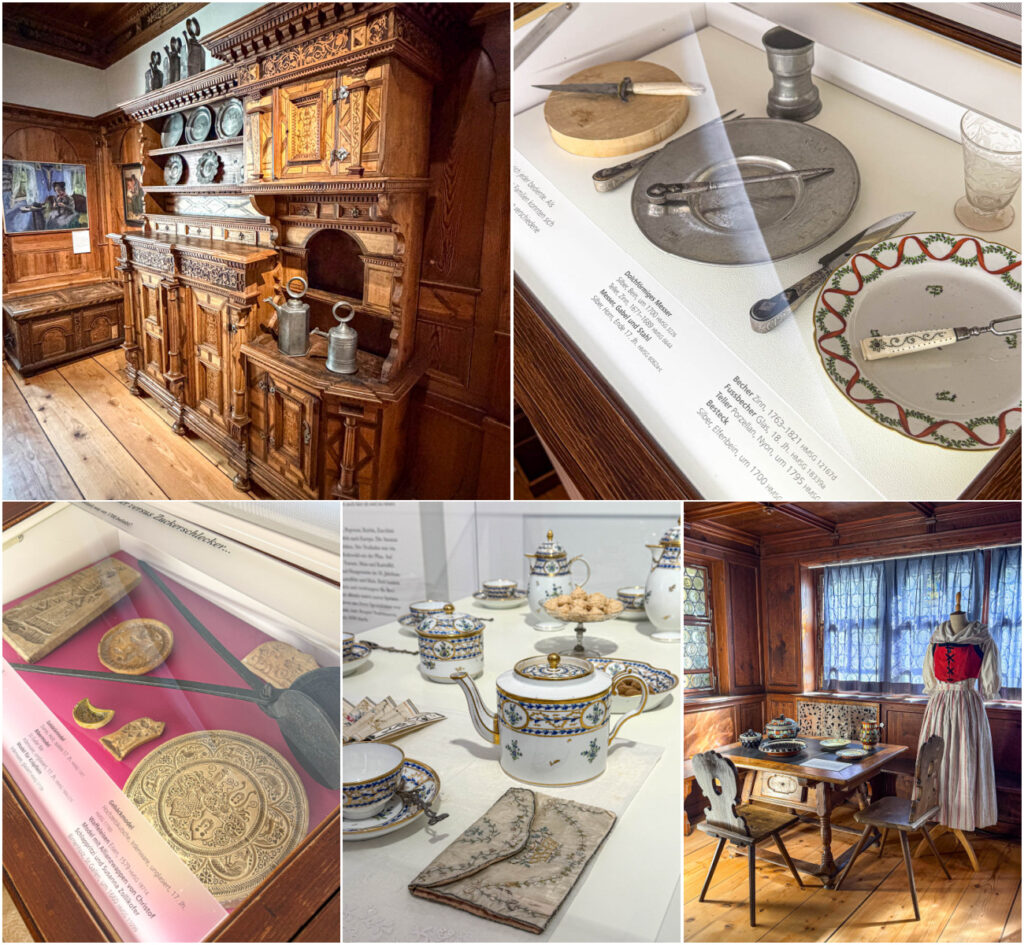
Other highlights include a scale city model based on how St. Gallen looked in 1642, historic rooms from the 16th to 18th centuries, and children’s museum.
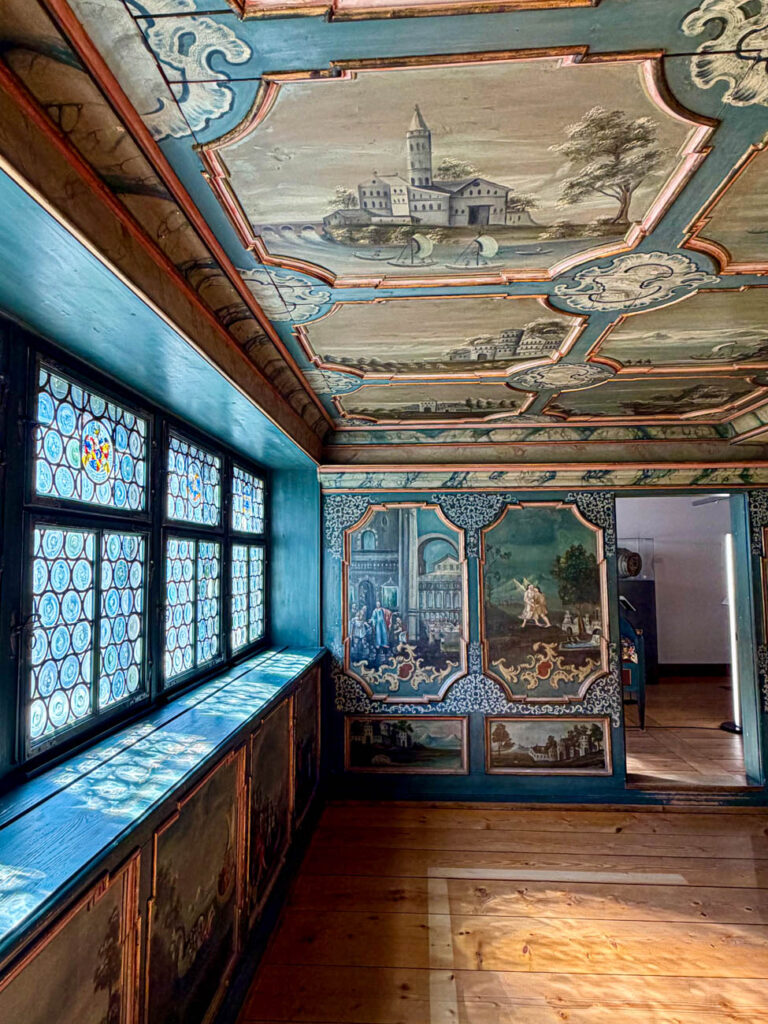
Kulturmuseum St. Gallen is currently open Tuesdays-Sundays (closed on Mondays and notable holidays). Entrance is included with the Oskar Card, Swiss Museum Pass, Bodensee Card Plus, and for those up to the age of 18.
Allow for around 2 hours to explore the exhibits at a relaxed pace.
MuCafé
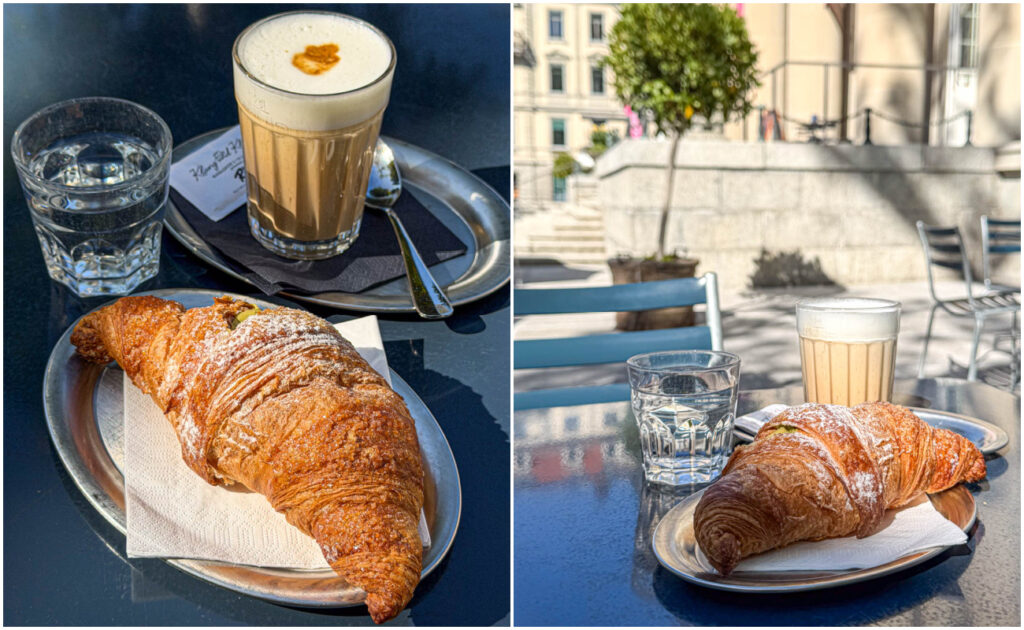
MuCafé is located inside the Kulturmuseum St. Gallen and a perfect stop before or after enjoying the exhibits. They have an assortment of coffee, cornetti, panini, soup, and select bar drinks depending on the time of day. You can also check out their website for special events.
There are a few seats inside or an outdoor patio by the entrance with views of the surrounding park. I absolutely loved the roasted flavor of the Pistachio Cornetto alongside a Latte Macchiato.
Textilmuseum St. Gallen
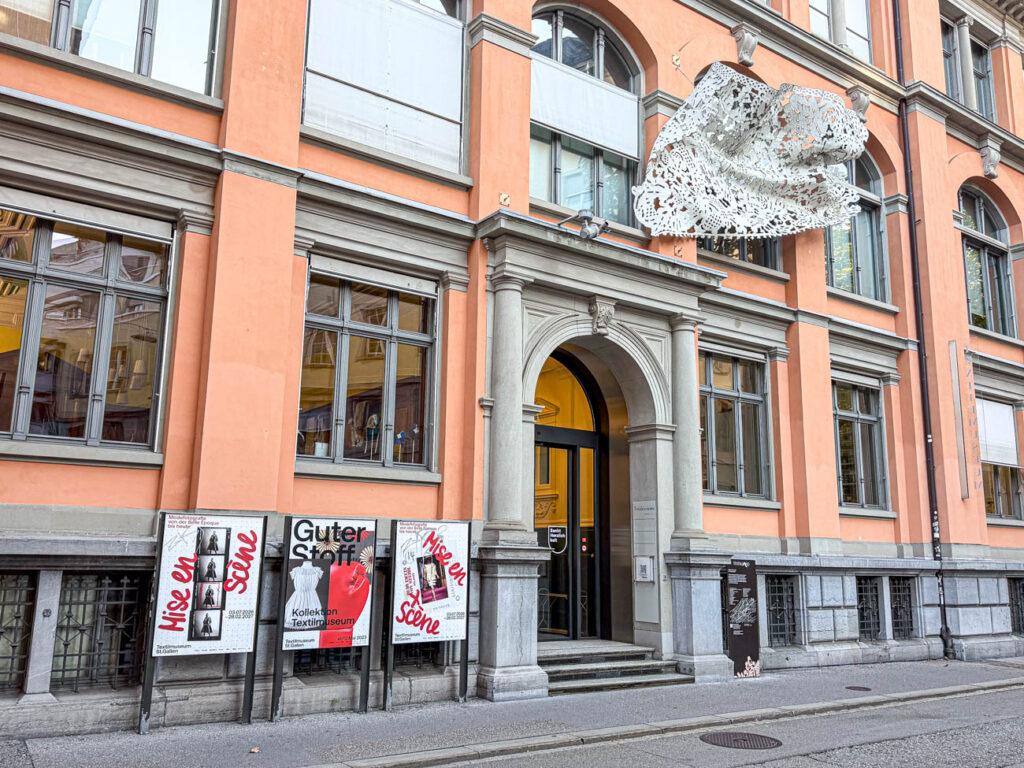
St. Gallen is known for its historic and innovative textile industry (including being the birthplace of the Schiffli Embroidery Machine) and this history is highlighted at the Textilmuseum St. Gallen/St. Gallen Textile Museum.
Founded in 1878 under the name Industrie- und Gewerbemuseum (renamed in 1982), Textilmuseum St. Gallen at Vadianstrasse 2 is home to one of the most important textile collections in Switzerland ranging from antique fabrics to modern Swiss textiles.
The exhibits feature historical fabrics, handworked lace, embroideries, patterns, sample books, drawings, and photographs. There is even one of the few still functional hand embroidery machines from 1890 that uses 156 needles simultaneously.
As a note, the Textilmuseum is set to close temporarily on February 28th, 2027 for extensive renovations that will take an estimated three years.
I spent about 1 1/2 hours here, but will definitely have to visit again someday after the reopening. Entrance is included with the Bodensee Card Plus, Oskar Card, and Swiss Museum Pass.
RegioHerz
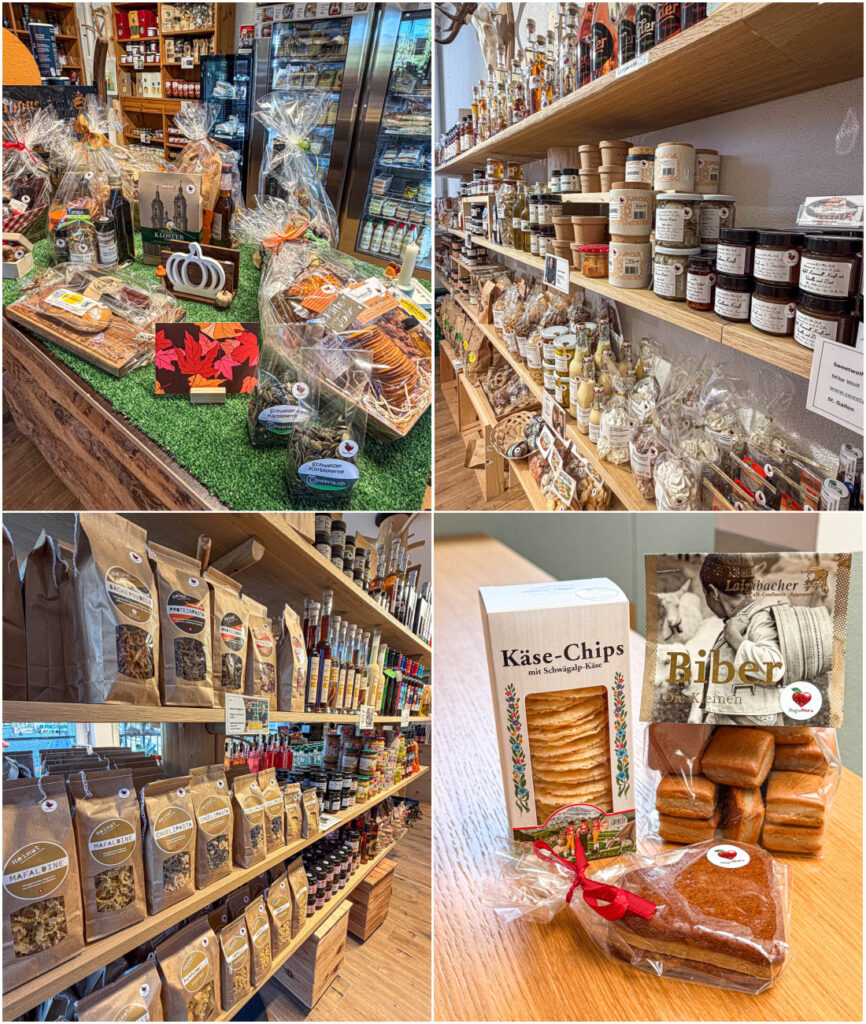
While walking through the Altstadt, I was so happy to come across RegioHerz. Tucked away in the Marktplatz (I also spotted them at Olma Messen), this fantastic shop is packed with over 220 local products with a particular focus on seasonal items.
Their shelves are filled with dried pasta, wine, beer, spirits, jams, preserves, cheese, meat, cookies, oils, gift baskets, pastries, and more with every single item coming from either St. Gallen, Thurgau, or the Appenzell.
I ended up taking home some Käse-Chips (mit Schwägalp-Käse), Biber (spiced gingerbread with almond paste), and a reusable cloth bag I used for shopping during the remainder of my trip and now at home.
Rohners Chloschterbeck
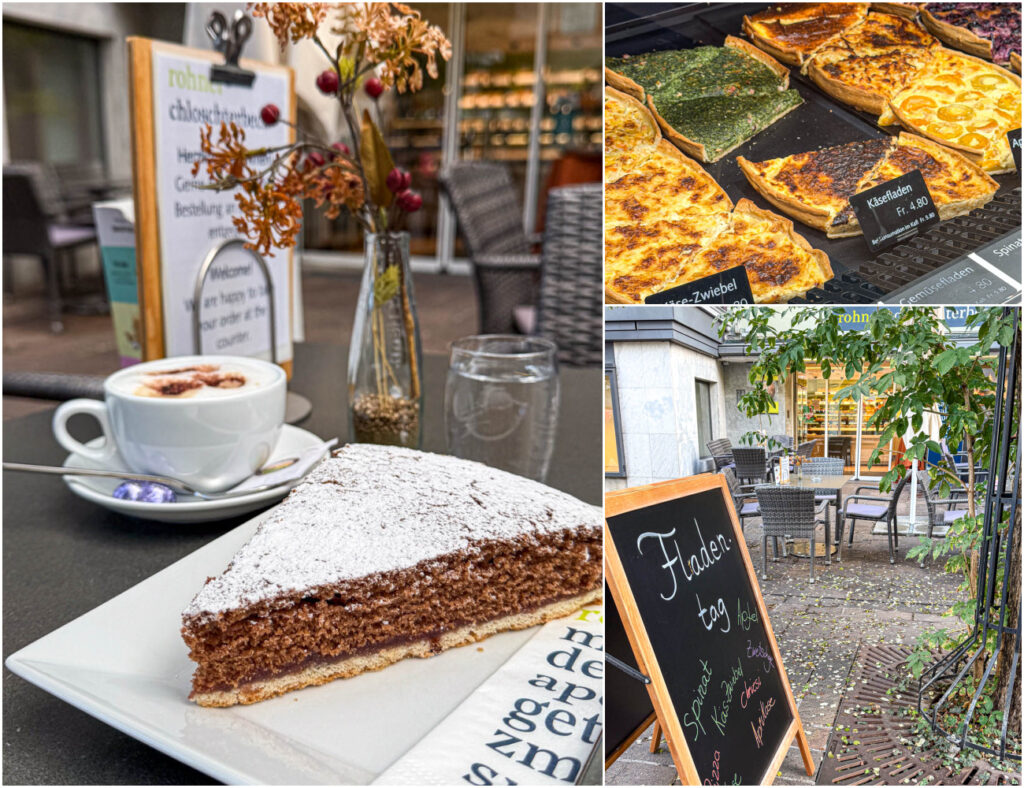
On my last morning in St. Gallen, I stopped by Rohners Chloschterbeck at Webergasse 1 before heading to the train station. It happened to be Friday- the bakery’s Fladentag (Fladen Day), so there was quite the assortment on display.
I was immediately drawn to the Zimtfladen (Cinnamon Tart/Cake). This pastry from both Appenzeller cantons (Ausserrhoden und Innerrhoden) and the Toggenburg region of St. Gallen has a shortcrust base with a layer of jam (the bakery used raspberry), and a spiced batter topping.
I first read about the pastry in Zuckersüsse Schweiz by Cuisine Helvetica and was so unbelievably excited to finally have the opportunity to try it in person.
Tenz Momo
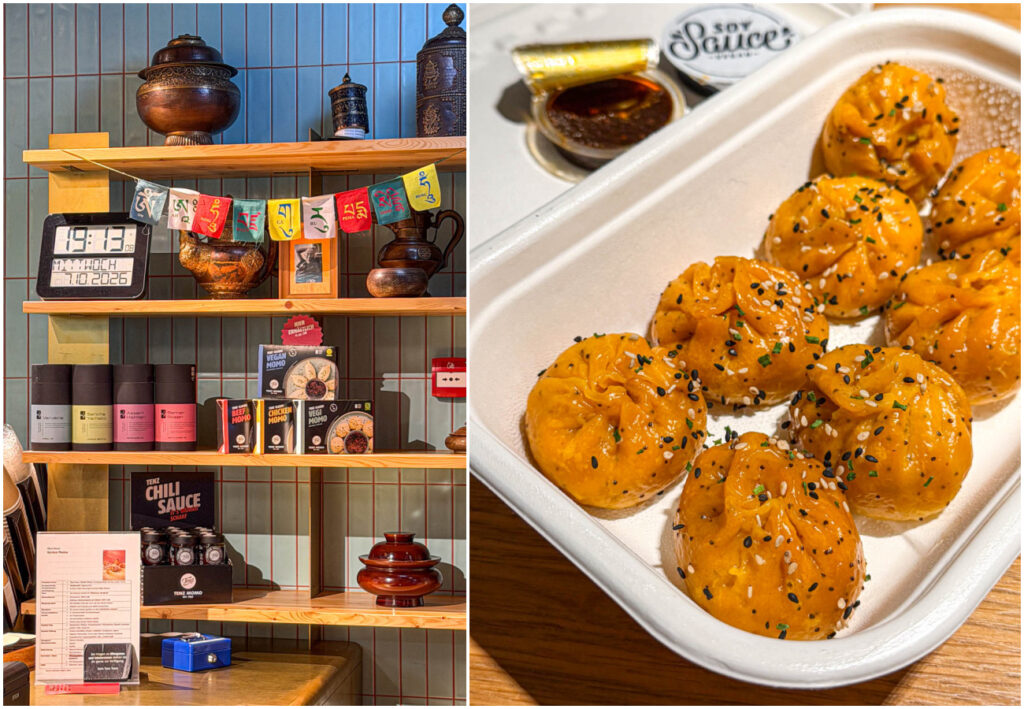
I actually had Tenz Momo on my list for when I was going to be in Zürich, but came across their St. Gallen location at the Bahnhof late one evening after my day trip to Liechtenstein.
Founded by Tenzin Tibatsang in 2014 with a food truck at the Zürcher Street Food Festival, Tenz Momo has now grown to multiple restaurants, take-away spots, and festivals (I also spotted them at Olma Messen) across Northern Switzerland. Their menu has an assortment of Momo, Sha Paley, Tsepaley, and Chili Sauces, often with fusion of Tibetan and Swiss flavors.
During my October visit, they had a seasonal Kürbis Momo using pumpkins from Jucker Farm in Seegräben. It was perfect for a last minute light meal filled with spice.
Sorell Boutique-Hotel City Weissenstein
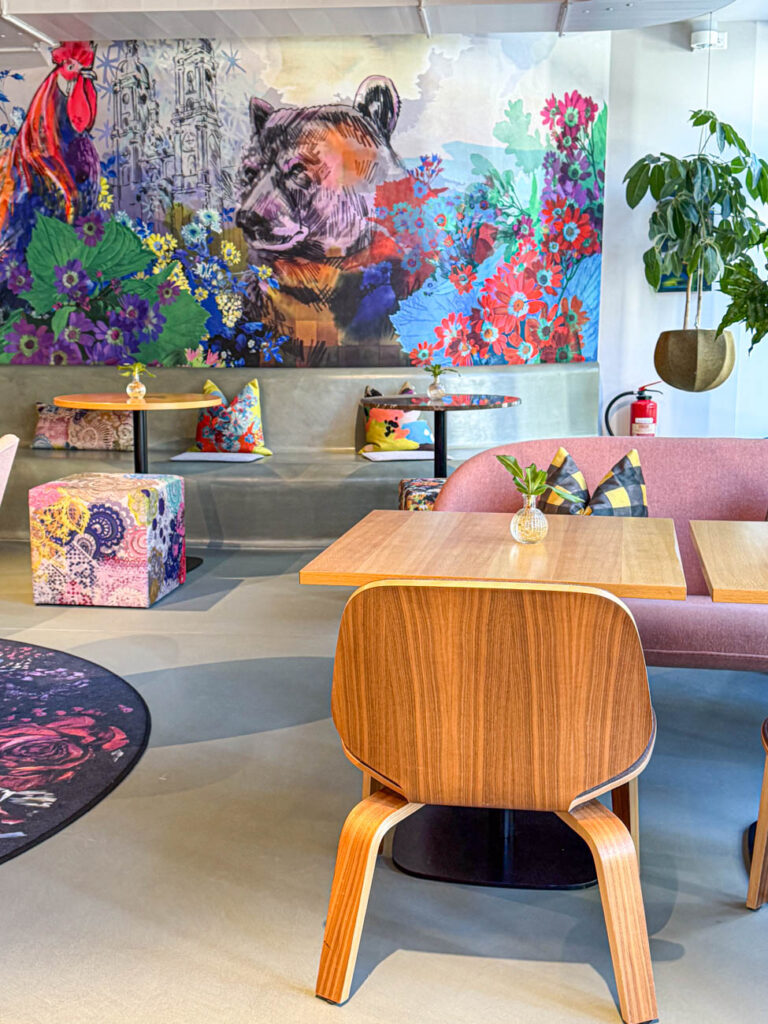
For my time in St. Gallen, I stayed at Sorell Boutique-Hotel City Weissenstein.
Located at Davidstrasse 21, this hotel was an easy walk just 350 meters (1/4 mile) south of the Bahnhof and within walking distance to nearly everything I visited while in the city (I did take a bus to the Kulturmuseum and to Olma Messen).
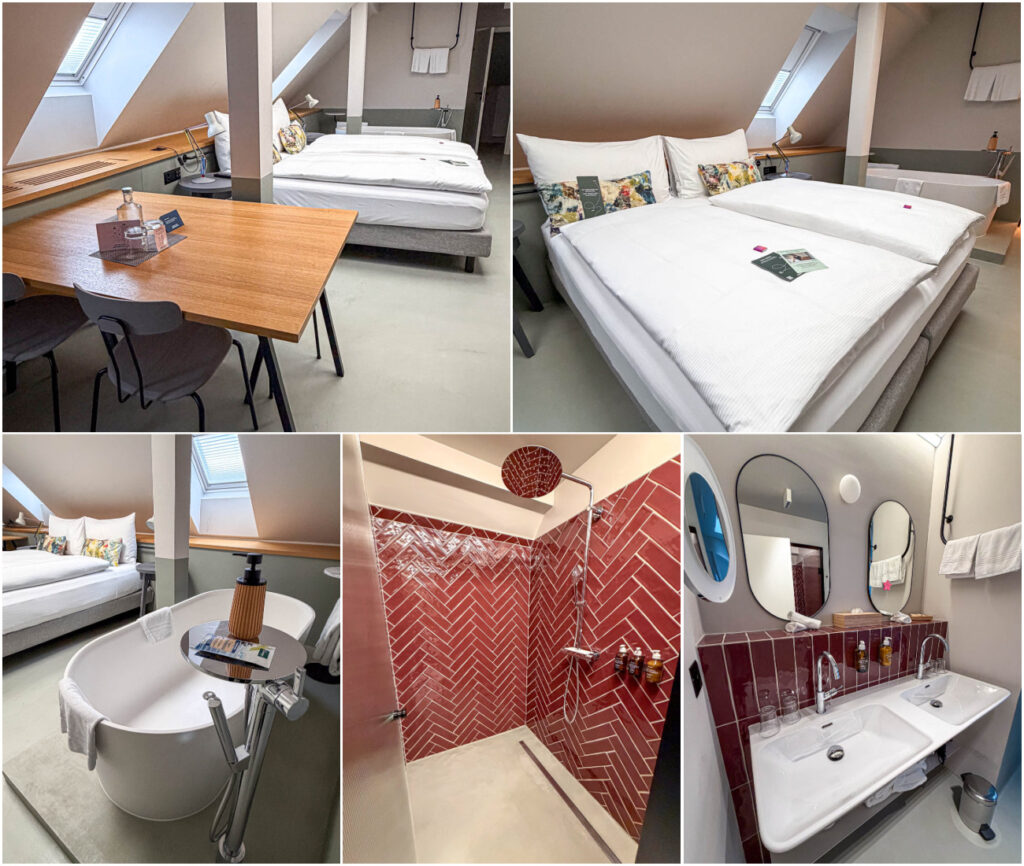
There are 32 stylish rooms (one is accessible) on the property with a blend of cozy and modern elements.
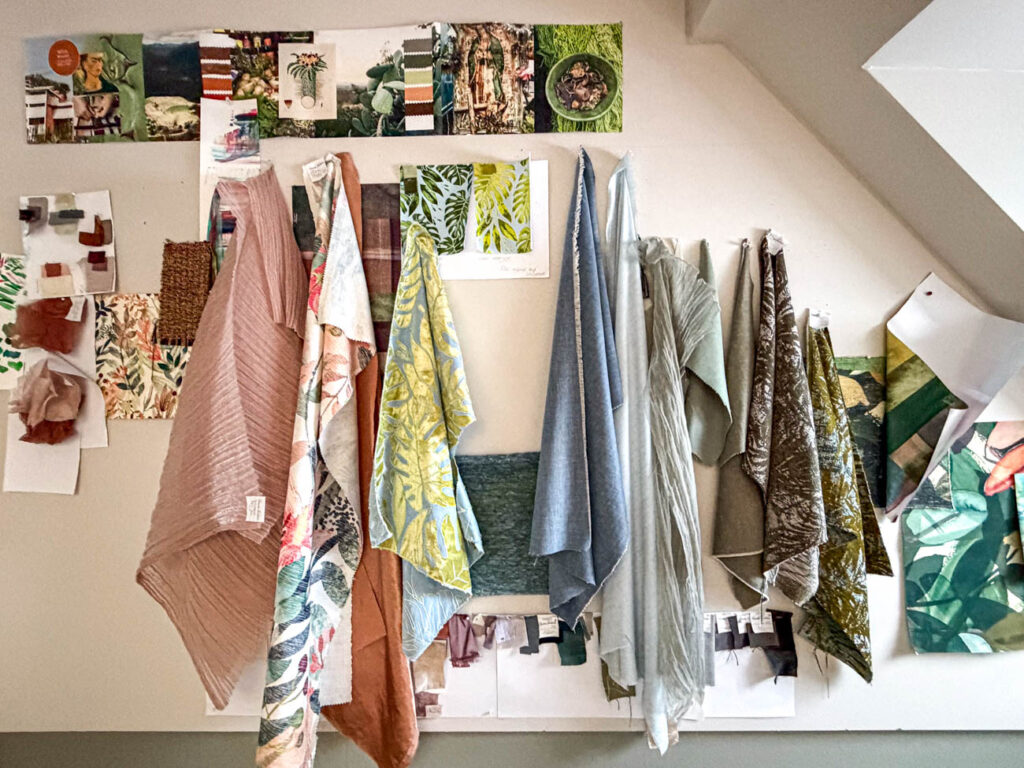
I booked the Fashion Atelier (Design Studio) room and particularly loved the whole wall celebrating local textiles with hanging fabrics, samples, and photos. Available for up to two people (I was traveling solo), this room also has a free-standing bath, king size bed, rain shower, two sinks, air conditioning, kettle, Nespresso machine, spacious table, television, and even a yoga mat to borrow.
The Deluxe Doppelzimmer and the Grand Deluxe Zimmer are better for families with a kitchenette and four person capacity.
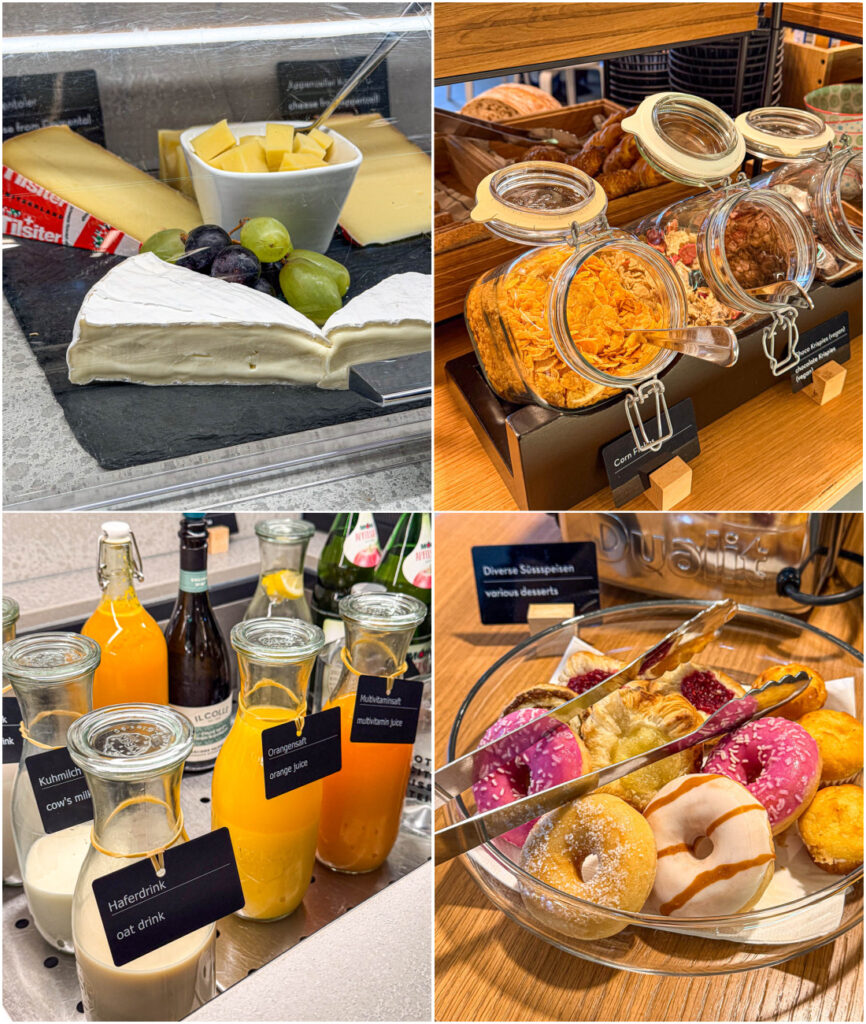
Breakfast was also included with the room rate. Every morning, there was a spread in the Lobby-Lounge with cheese, bread, homemade jam, local honey, cereals, pastries, meat, eggs, milk, juice, coffee, and tea.
Zimtfladen (Swiss Cinnamon Tart)
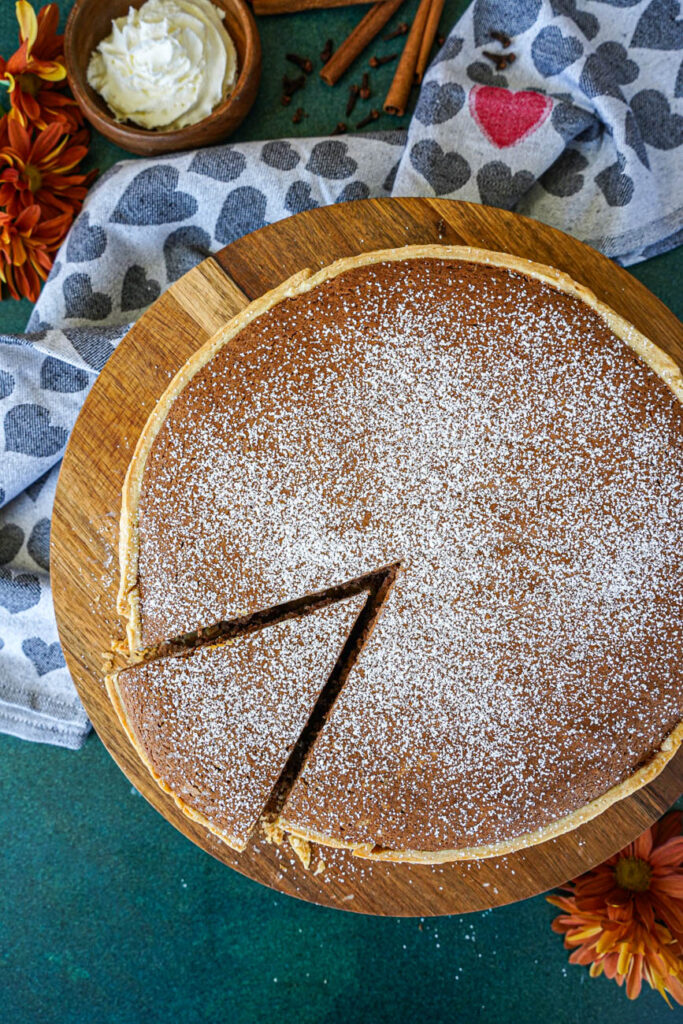
After enjoying a slice of Zimtfladen at Rohners Chloschterbeck, I couldn’t wait to learn how to make it at home with inspiration from Cuisine Helvetica’s recipe.
Fladen (Wähe) is a type of tart/cake/flatbread with a shortcrust base and a variety of sweet or savory filling options such as Käsefladen (cheese), Rahmfladen (cream), Schlorzifladen (dried pear), Osterfladen (Easter Tart), and Apfelfladen.
For this Zimtfladen found in Appenzell (Ausserrhoden and Innerrhoden) and the Toggenburg region of St. Gallen, the shortcrust base (Mürbteig) is covered with a thin layer of jam and an aromatic cinnamon batter before baking until golden and set.
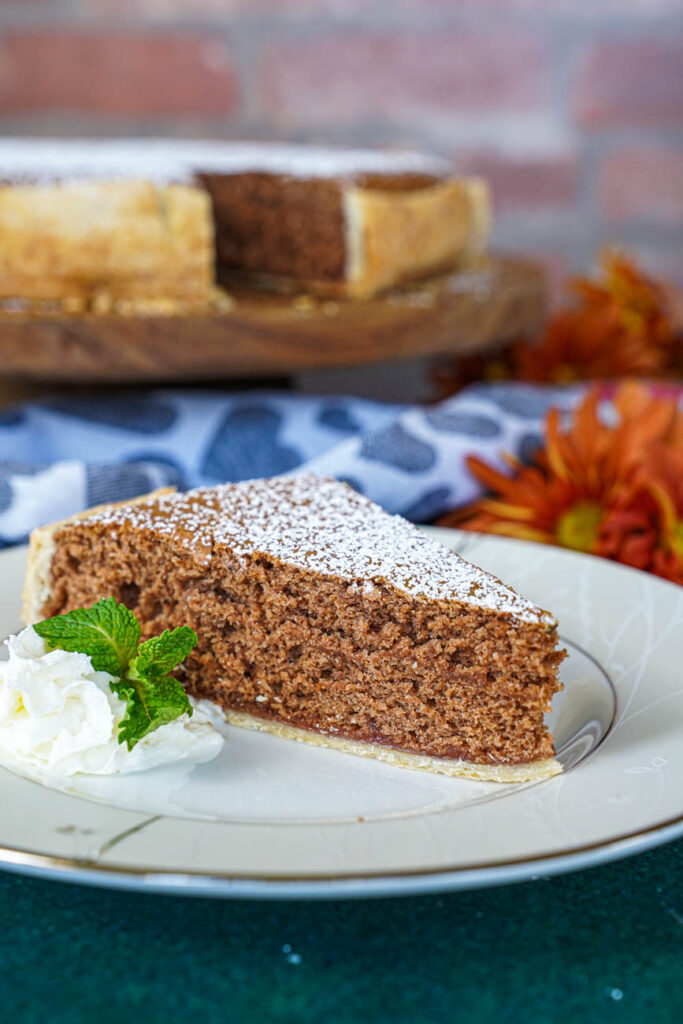
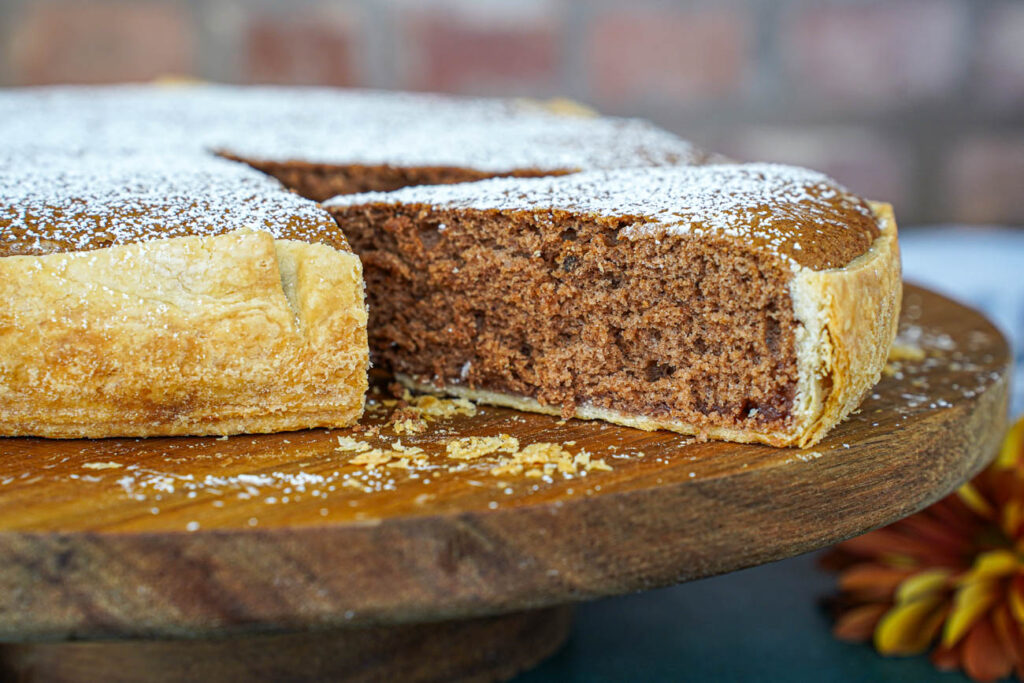
It is especially perfect while still warm with a light dusting of powdered sugar and a dollop of whipped cream. Store any leftover Zimtfladen in an airtight container at room temperature for up to two days.
Forming the Shortcrust Base
To help create that light and flaky texture in the base, use cold butter and chilled water. Take care not to overwork the dough. You want to mix everything just until soft and smooth.
I generally use a dough blender to cut in the diced butter. You can also use two forks or the tips of your fingers. Try to work as quickly as possible to keep the butter from melting.
Add just enough water to bring the dough together. You may not need the full 1/2 cup (120 milliliters).
The lemon zest is optional. I like to include it as a bright contrast to the warming spices.
Refrigerating the dough will make it easier to handle and roll into a thin circle without tearing. If you refrigerate for longer than an hour, you may need to place it at room temperature for a few minutes or so before handling.
If the dough tears when transferring to the baking pan, gently press it back together and, if needed, use any excess scraps from around the edges to patch it.
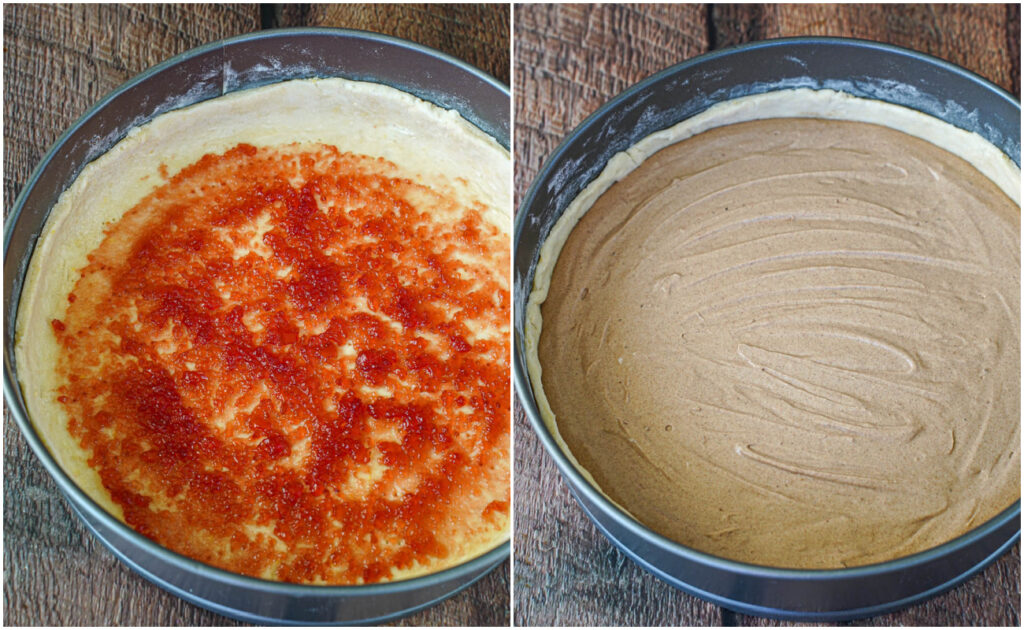
Make sure to prick across the entire bottom of the dough with a fork before adding the jam. This will help it cook more evenly.
Don’t want to make your own dough? Some recipes use a store-bought Blätterteig (Puff Pastry).
A Few More Zimtfladen Tips
Do not pack in the flour when measuring or you may end up with too much. To measure flour, gently spoon it into the measuring cup and level with a knife without pressing down. The most accurate way to measure is by weight.
I went with red currant jam to cover the shortcrust base as a personal preference, but raspberry is also popular. Add enough to create a thin layer and barrier between the batter and crust. If the jam is too thick to spread, microwave very briefly- just until able to be spread but not so warm that it melts the butter in the crust.
For the spices, I used a blend of cinnamon (recipe tested with Ceylon Cinnamon), cocoa powder, cloves, and ginger. Some recipes include a mixture called Birnbrotgewürz. This is a Swiss spice mix especially popular for making Birnbrot/Birnenweggen.
Zimtfladen (Swiss Cinnamon Tart) Recipe
Adapted from Cuisine Helvetica
Zimtfladen (Swiss Cinnamon Tart)
Ingredients
Shortcrust Base:
- 1 1/2 cups (190 grams) all-purpose flour
- zest from 1 lemon optional
- 1/4 teaspoon fine salt
- 6 tablespoons (85 grams) unsalted butter cold and diced
- 1/2 cup (120 milliliters) cold water
Zimtfladen:
- 3-4 tablespoons (44-60 milliliters) red currant or raspberry jam
- 1 cup (200 grams) granulated sugar
- 2 large eggs
- 1 cup (240 milliliters) heavy cream
- 1 1/4 cups (160 grams) all-purpose flour
- 2 tablespoons (16 grams) ground cinnamon
- 1 tablespoon (6 grams) unsweetened cocoa powder
- 1 teaspoon baking powder
- 1/2 teaspoon ground cloves
- 1/4 teaspoon ground ginger
- pinch fine salt
- powdered sugar for dusting
- whipped cream for serving
Instructions
To make the shortcrust base:
- In a large bowl, combine the 1 1/2 cups (190 grams) flour, lemon zest, and salt.
- Add the diced butter and blend in using two forks, your fingers, or a dough blender until combined with a crumbly texture and no pieces are larger than the size of a pea.
- Slowly add the cold water (you may not need the full 1/2 cup, 120 milliliters) just until the dough comes together.
- Form the dough into a flattened disc, wrap in plastic, and refrigerate for 30 minutes or up to 2 days.
To Assemble:
- Grease a 10 inch (26 centimeter) Fladen pan, pie pan, or springform pan with butter and lightly dust with flour or line with baking paper. Set aside.
- On a lightly floured surface, roll the refrigerated dough into an even, thin circle about 14 inches (35 centimeters) wide.
- Transfer to the prepared pie pan, pressing down along the bottom and edges to remove any air bubbles. If needed, carefully cut away any uneven edges.
- Prick the bottom of the crust a few times with a fork, then cover with a thin, even layer of the red currant or raspberry jam.
- Transfer the pan to the refrigerator while you prepare the filling.
- Preheat a conventional oven to 400˚F (200˚C) and place a rimmed baking sheet larger than the pan on the bottom rack of the oven.
- In a large bowl, whisk together the sugar and eggs until light and frothy.
- Whisk in the heavy cream.
- In a medium bowl, whisk together the 1 1/4 cups (160 grams) flour, cinnamon, cocoa powder, baking powder, cloves, ginger, and salt.
- Whisk the spiced flour mixture into the cream mixture just until combined and no streaks remain.
- Pour the batter into the chilled crust and lightly spread the top to create an even layer.
- Transfer the pan to the preheated oven and bake for 15 minutes.
- Decrease the temperature to 350˚F (180˚C) and continue to bake until the batter is set and a toothpick inserted in the center comes out clean, another 20-25 minutes.
- Allow the Fladen to rest at room temperature for 10 minutes before removing from the pan.
- Serve warm or at room temperature, optionally with a dusting of powdered sugar and dollop of whipped cream on the side.
Leave a Reply